


Stablecoin market surpasses $300 billion
We may earn commissions from affiliate links or include sponsored content, clearly labeled as such. These partnerships do not influence our editorial independence or the accuracy of our reporting. By continuing to use the site you agree to our terms and conditions and privacy policy.

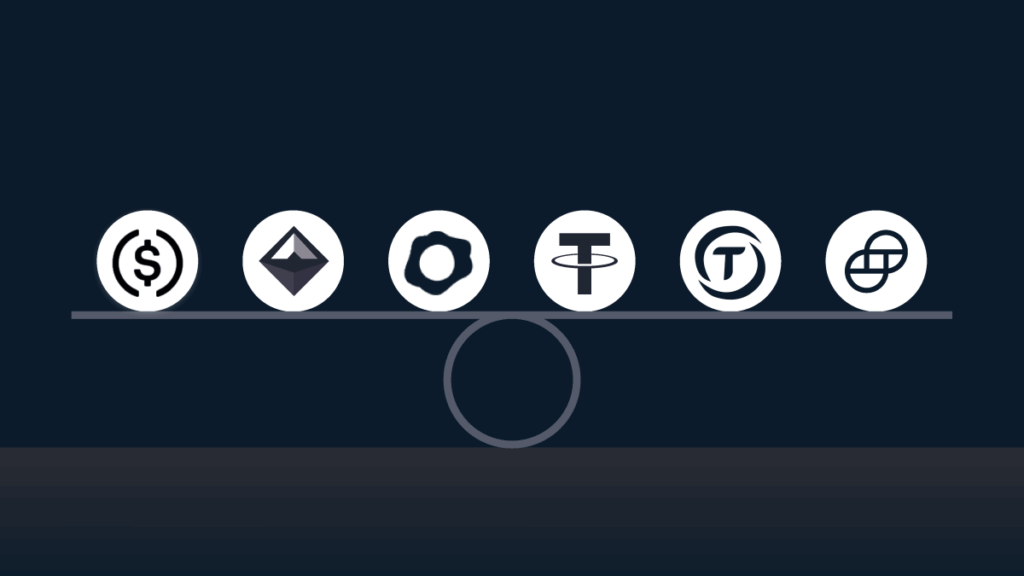
The stablecoin market has crossed the $308 billion market capitalization threshold, signaling less of a speculative peak and more of a structural transformation of global financial infrastructure.
Daily spot volume for USDT already exceeds $75 billion, and in countries like Brazil, over 90% of digital asset flows pass through stablecoins.
Industry research shows that more than 90% of banks, payment operators, and fintech companies are either already integrating stablecoins or conducting pilot programs. This marks a distinct transition—from a crypto trading tool to a parallel settlement layer for global payments.
Initially created as a hedge against digital asset volatility, stablecoins today are used for cross-border payments, liquidity management, and corporate settlements. While traditional international bank transfers can take between three and five business days, blockchain-based stablecoin transactions are finalized within minutes, 24 hours a day.
Concentrated market with a dominant dollar model
The market structure remains highly concentrated. Around 99% of circulating stablecoins are fiat-backed, with nearly all denominated in US dollars. Two issuers control approximately 90% of the supply. The full fiat-backing model—via cash and short-term government securities—dominates due to its simplicity, liquidity, and regulatory compatibility.
The role of stablecoins is expanding particularly in developing economies, where they function as “synthetic dollars” under conditions of inflation or capital restrictions. In developed markets, they are being integrated into B2B payments, trading platforms, and digital asset infrastructure. More than half of the major fiat trading pairs on centralized exchanges are already denominated in stablecoins, underscoring their central role in market liquidity.
Risks, regulation, and the path to a trillion-dollar market
Despite the growth, risks remain. Concentration among a small number of issuers increases systemic vulnerability, and past events have shown that even leading stablecoins can temporarily lose their dollar peg during liquidity or banking stress. Additional concerns relate to reserve transparency, counterparty risk, and the ability of issuers to freeze funds for regulatory reasons.
As regulatory regimes mature worldwide, standards for reserve disclosure and auditing are tightening, which simultaneously boosts confidence and increases operational pressure on issuers. Analysts predict that with accelerated institutional adoption, the total market could approach $1 trillion in the coming years.
For corporations and financial institutions, the question is no longer whether stablecoins have strategic importance, but how to integrate them into existing systems for liquidity management and cross-border payments.
The $308 billion capitalization reflects not just growth, but a transition to a new stage of financial infrastructure, where the movement of value becomes faster, cheaper, and more constant.
Stablecoins are gradually positioning themselves not as a peripheral crypto tool, but as a core layer for global settlement—a parallel network operating continuously behind the scenes of the traditional financial system.


 Commentaries



Fill in necessary fields and publish