


How to Buy Solana in 2026: The Most Promising Top 10 Crypto?
We may earn commissions from affiliate links or include sponsored content, clearly labeled as such. These partnerships do not influence our editorial independence or the accuracy of our reporting. By continuing to use the site you agree to our terms and conditions and privacy policy.


Solana’s lightning–fast transactions and dirt–cheap fees make it crypto’s speed demon.
When we add that Solana is trading at a high price and there’s a growing ecosystem of meme coins, DeFi protocols, and NFTs, getting exposure to this high–performance blockchain requires knowing the right entry points.
Stay until the end to see how to buy and sell Solana, where to store it, and how to make the best of your $SOL tokens.
How to Buy Solana with Best Wallet
Best Wallet streamlines SOL purchases by combining self-custody security with built-in fiat on-ramps. You control your private keys while accessing instant buying power through multiple payment providers.
Step 1: Download Best Wallet: Install the app from official stores (iOS/Android) and create your wallet with biometric security enabled.
Step 2: Complete Identity Verification: Quick KYC takes 2-3 minutes – upload ID and verify your phone number to unlock fiat purchasing.
Step 3: Select “Buy” and Choose Solana: Tap the buy button, select SOL from the crypto list, and view real-time prices from multiple providers.
Step 4: Choose Payment Method: Connect your credit card, debit card, or bank account. PayPal and Apple Pay work well for faster checkouts.
Step 5: Confirm Purchase: Review fees, confirm transaction details, and receive SOL directly in your self-custody wallet within minutes.
Your Solana lands in your wallet immediately – no exchange withdrawals or additional transfer fees required.
The Best Solana Wallets
The right Solana wallet balances security, convenience, and access to features.
Here are the top options for different user types:
- Best Wallet: Mobile–first solution with built–in DEX aggregator, fiat on–ramps, and seamless DeFi access. Perfect for active traders who want self–custody without complexity plus low fees.
- Ledger Nano X/Stax: Premium hardware wallets supporting 5,500+ cryptocurrencies with Bluetooth connectivity. The Stax model features a curved E–Ink display and wireless charging for tech enthusiasts.
- Trezor Model T: Open–source hardware wallet with touchscreen interface and excellent security track record. Ideal for users who prioritize transparency and multi–signature functionality.
- Cypherock X1: Revolutionary seedless hardware wallet using Shamir Secret Sharing across four cards. Best for inheritance planning and eliminating single points of failure.
- Keystone: Air–gapped hardware wallet with QR–code signing and full open–source firmware. Perfect for security purists who want to verify every line of code.
How to Buy Solana ($SOL) with Credit Card?
Buying Solana ($SOL) with a credit or debit card is one of the fastest ways to get exposure to the Solana network without complex setups.
Most major crypto exchanges and apps let you buy crypto instantly with Visa or Mastercard, with lower fees than traditional brokers.
Here’s how it works:
- Create a free account on a trusted platform and verify your identity (KYC) to comply with regulations.
- Link your card details securely – most platforms support multiple options, including Google Pay, Apple Pay, and direct bank transfer for future deposits.
- Select Solana (SOL) from the list of supported cryptocurrencies, enter the amount in USD, EUR, or other fiat currencies, and confirm your payment method.
Your purchased SOL coins will appear in your exchange wallet instantly.
For extra security, transfer them to a non-custodial wallet where you control your private keys. Always do your own research, check fees, and understand the risks before taking action.
Is Solana a Good Investment?
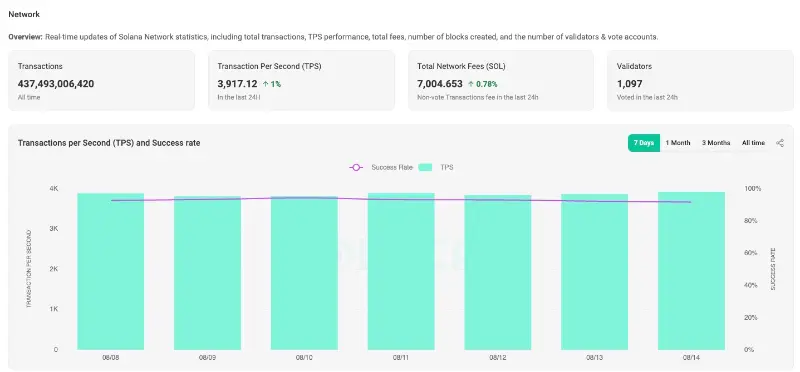
Solana has strong investment fundamentals, with a high-throughput blockchain that processes over 65,000 transactions per second while maintaining sub-penny fees.
The network hosts a thriving ecosystem of over 400 projects across DeFi, NFTs, gaming, and Web3 applications, generating real economic activity.
And we have to say that Solana is more active than ever, with even 200 million transactions processed daily in 2025.
On May 13, 2025, Solana surpassed major blockchain networks, generating $7.9 million in revenue. Solana has also achieved Significant institutional adoption, including partnerships with Visa for USDC settlements, Google Cloud validator nodes, and integrations with traditional finance platforms like Shopify.
However, Solana faces legitimate concerns around network stability – the blockchain experienced eight major and ten partial incidents, ranging from 17-hour downtimes to 5-hour outages. Technical debt from rapid scaling and validator centralization remains an ongoing challenge.
The investment thesis depends on Solana maintaining its speed advantage while improving reliability. Layer 2 solutions and protocol upgrades address stability issues, but execution risk remains. Token unlocks through 2025 could create selling pressure, though staking mechanisms help offset increases in circulating supply.
SOL’s correlation with broader crypto markets means macro conditions heavily influence price action. Rising interest rates and regulatory uncertainty affect all risk assets, not just Solana specifically.
For investors seeking exposure to high-performance blockchains, Solana offers significant upside potential if its technical challenges are successfully resolved. Position sizing should reflect the higher volatility and execution risks inherent in newer blockchain infrastructure.
Trading Solana Futures on CoinFutures
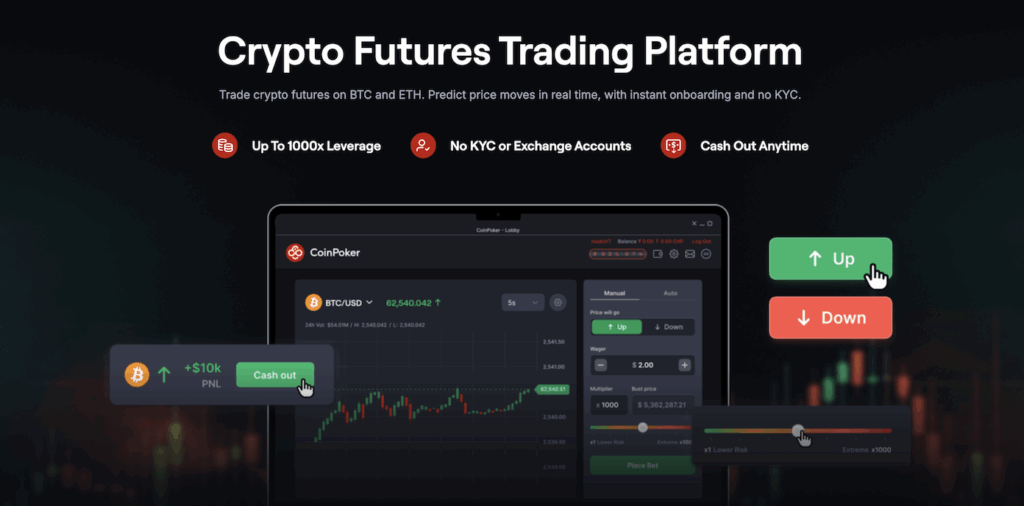
Want to trade Solana without actually holding SOL? CoinFutures delivers leveraged exposure up to 1000x for traders who seek amplified price movements.
You’re betting on direction using USDT collateral rather than purchasing actual tokens.
The platform gamifies futures trading. The result? Derivatives become accessible to retail investors hunting volatility. Long SOL if you’re bullish on ecosystem growth, short it when network outages create selling pressure. Profit flows from moves in either direction without storage concerns.
Setting up takes minutes with no KYC requirements – just fund accounts with crypto or cards. Real-time PnL tracking, liquidation alerts, and automatic stop-losses protect funds from complete liquidation during volatile swings. It’s no coincidence that CoinFutures is among the best crypto day trading platforms right now.
CoinFutures excels for short-term speculation and hedging spot positions. Got SOL you don’t want to sell? Open small shorts to hedge downside risk. Think ecosystem expansion will drive prices higher? Leverage long positions for amplified gains.
The platform is perfect for traders who want SOL exposure alongside other cryptocurrencies without managing multiple wallets or exchange accounts.
Solana vs Ethereum
Solana prioritizes speed and cost efficiency while Ethereum focuses on security and decentralization. This creates different risk-reward profiles for investors considering blockchain exposure. You can buy Ethereum if you prefer battle-tested infrastructure with more substantial network effects.
But we made a table to make it more comparable.
| Factor | Solana | Ethereum |
|---|---|---|
| Transaction Speed | Theoretical: up to 65,000 TPS
Actual peak: ~2,000–4,000 TPS, real-time around 1,000 TPS |
~15–30 TPS on L1 bases; L2s add speed, but base remains limited |
| Average Fees | $0.001 | ~$4–$10 but can spike |
| Market Cap (December 2025) | $74 billion | $390 billion |
| Developer Activity | Growing | Most established |
| Upside Potential | Higher (5–10x possible) | Moderate (2–3x likely) |
| Network Stability | Improving but concerning | Rock solid |
How High Can Solana Go?
SOL price predictions for 2025 range from conservative $300 targets to aggressive $500+ moonshot scenarios, but it all depends on network adoption and broader crypto market conditions.
Raoul Pal, a former Goldman Sachs executive and macro strategist, suggests Solana could reach $500-$600 if it captures significant market share from Ethereum’s ecosystem. In a YouTube interview, Pal specifically mentioned “somewhere between $500 and $1,000” as reasonable price points for the next bull run.
Technical analysis shows SOL breaking above $250 resistance could trigger momentum toward $400, with Fibonacci extensions suggesting $480 as the next primary target. On-chain metrics support bullish scenarios – developer activity increased 40% year-over-year, while daily active addresses doubled since 2023 lows.
However, several factors could limit upside. Token unlocks release approximately 20 million SOL monthly through mid-2025, creating potential selling pressure. Network outages remain a risk that could trigger sharp selloffs during critical moments.
Conservative estimates target $300-350 based on current fundamentals and moderate ecosystem growth. Aggressive scenarios that reach $500+ require perfect execution of scaling solutions and significant institutional adoption.
What is Solana Used For?
Solana’s ultra-fast transaction processing enables applications that require real-time responsiveness, which other blockchains can’t efficiently support.
- DeFi Protocols – Serum, Raydium, and Jupiter enable high–frequency trading with minimal slippage thanks to Solana’s speed advantage.
- NFT Marketplaces – Magic Eden and OpenSea’s Solana integration support mass NFT trading without prohibitive gas fees.
- Gaming Applications – Play–to–earn games like Star Atlas leverage fast transactions for seamless in–game economies and item trading.
- Meme Coin Trading – Solana meme coins like BONK and WIF benefit from low transaction fees, enabling frequent trading and speculation.
- Mobile Apps – Saga phone integration and mobile–first dApps leverage Solana’s smartphone–friendly performance.
- Payments Infrastructure – USDC transfers and merchant payments benefit from near–instant settlement times and minimal fees.
Should I Buy Solana Now?
The decision to buy SOL should depend on risk tolerance and investment horizon, rather than trying to time the market perfectly.
With prices around $120–$140, Solana is sometimes seen by long-term investors as a potential accumulation zone, especially when using a dollar-cost averaging strategy spread over several months. Due to high volatility, one-time entries still carry increased risk.
For short-term traders, technical levels remain essential: the $145–$155 zone acts as a key resistance level, which, if broken, could open the way towards $175–$190. In turn, support in the $110–$120 range remains an important area of defense in the event of a deeper correction.
Due to its higher volatility relative to Bitcoin and Ethereum, SOL often makes up a smaller portion of a portfolio — typically 1–3% of total exposure in more conservative strategies. Risks related to the network’s stability history, regulations, and macroeconomic factors should also be considered.
The most sensible approach remains to gradually build a position based on your own analysis and risk management, rather than emotions or FOMO.
How to Stake Solana?
Staking SOL generates passive income while securing the network, with rewards typically ranging from 5–8% APY depending on validator performance and network conditions.
Native staking requires choosing validators with high uptime and reasonable commission rates. Stake accounts lock for several days during unstaking, requiring planning for liquidity needs.
| Platform | APY Range (Fact-Checked) | Minimum | Features |
|---|---|---|---|
| Phantom Wallet | Up to 9% APY | ~0.05 SOL for fees | Native & liquid staking via PSOL |
| Marinade Finance | 6–8% APY (fluctuates) | Any amount | Liquid staking, mSOL, instant unstake |
| Binance | ~5.9% APY | 0.01 SOL | Liquid staking via BNSOL |
| Kraken | 3–6% (flexible) / 6–10% (bonded) | Not specified | Professional staking, different terms |
Liquid staking protocols like Marinade and Lido issue receipt tokens (mSOL, stSOL) that maintain liquidity while earning rewards. These tokens can be used in DeFi protocols for additional yield opportunities.
Conclusion
Buying Solana in 2026 offers exposure to high-performance blockchain infrastructure with significant upside potential. Best Wallet provides the easiest entry point for beginners, while hardware wallets secure larger holdings for long-term investors.
Solana’s speed advantages enable unique applications impossible on slower networks, from high-frequency DeFi to mobile gaming. However, network stability
concerns and execution risks require careful position sizing within diversified portfolios.
Start with small amounts to understand the ecosystem, use dollar–cost averaging to reduce timing risk, and remember that crypto investing requires patience and risk management. Whether SOL reaches $300 or $500, building positions gradually beats trying to time perfect entries.
The blockchain space rewards early adopters who can stomach volatility while backing innovative technology. Solana fits that profile – just remember to buy Bitcoin and Ethereum first for portfolio stability before speculating on higher–risk alternatives.
How to Buy Solana FAQs
Where to buy Solana?
Will Solana go up?
Can you mine Solana?
Where to buy Solana meme coins?
What does Solana do?
Does MetaMask support Solana?
Resources:
