


Ethereum Futures Trading: Top ETH Futures Platforms
We may earn commissions from affiliate links or include sponsored content, clearly labeled as such. These partnerships do not influence our editorial independence or the accuracy of our reporting. By continuing to use the site you agree to our terms and conditions and privacy policy.



Futures track the Ethereum (ETH) spot price and let traders enter positions with a small upfront margin. In addition to high leverage, futures support both long and short trading, allowing traders to speculate on rising and falling ETH prices.
Read on to discover the top Ethereum futures trading platforms for 2026. Discover how seasoned crypto investors trade ETH futures with leverage and the best practices they follow to mitigate liquidation risks.
The Best Ethereum Futures Platforms Ranked
These safe trading platforms offer Ethereum futures markets with low margin requirements:
- CoinFutures: Amplify ETH/USDT Futures Trades by up to 1000x
- MEXC: Trade 900+ Futures Markets With Ultra-Low Commissions
- Margex: Earn 7% Staking APYs on Futures Margin Collateral
- Bybit: Buy and Sell Ethereum Delivery Futures Without Funding Fees
- Coinbase: U.S.-Friendly Futures Trading Exchange With USD Settlement
Best Ethereum Futures Trading Platforms Reviewed
We tested popular Ethereum futures exchanges to identify the overall top platforms. The research team explored user-friendliness, leverage limits, funding rates, commissions, and order execution via a weighted scoring system.
We discuss our findings in the following reviews. Read on to choose the right futures platform for you.
1. CoinFutures: The Highest-Leverage ETH Futures Platform at 1000x
High-risk, high-return traders use CoinFutures for its market-leading leverage facilities. It lets platform users trade ETH futures with leverage of up to 1000x. The minimum position size starts at $1, which gives traders $1,000 in market exposure. CoinFutures also offers 1000x leverage on other futures markets, including Bitcoin (BTC), Dogecoin (DOGE), and BNB (BNB).
While CoinFutures offers significant upside potential, traders also access risk management safeguards. As linear-style products, simulated futures limit the trader’s risk to the original bet. Stop-loss orders are also available, so traders can avoid liquidation in the event of adverse price movements.
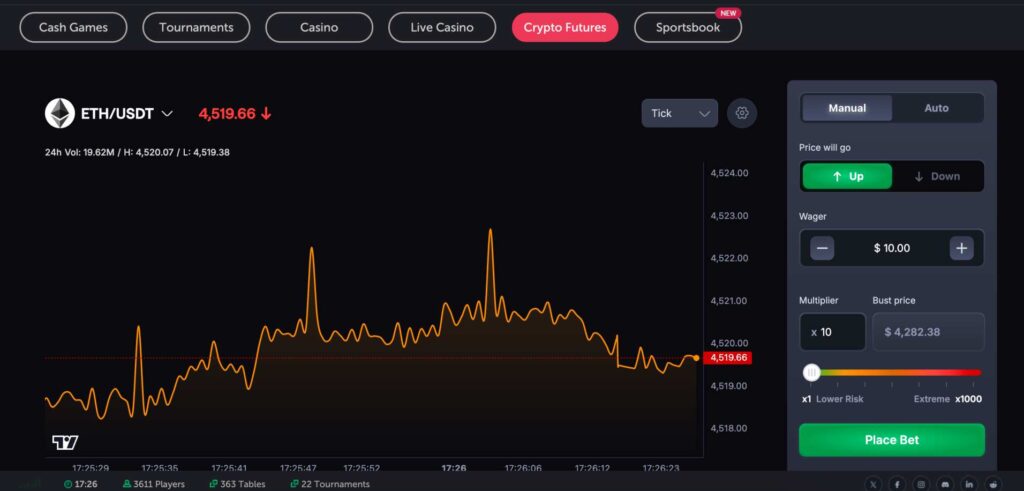
The trading platform provides an easy user experience from the outset. Users register anonymously and instantly deposit funds with crypto or fiat. The futures dashboard lets users enter long and short positions without requiring prior experience. They simply enter the ETH/USDT direction, bet size, and leverage multiple, and confirm the trade.
CoinPoker, the parent organization of CoinFutures, offers a range of security mechanisms. It uses the enterprise-grade platform Fireblocks to ring-fence customer funds, and the tier-one institution stores those funds in MPC-backed cold wallets. CoinPoker publishes asset reserves daily so that users can verify the firm’s client-owned deposits at any time.
Pros
- Go long or short on ETH futures with 1000x leverage
- Register, deposit, and trade without KYC
- The trader’s maximum loss potential is the original bet size
- Simple and clean trading dashboard with user-friendly charts
- Trade other popular futures markets like BTC and DOGE
- Get started with $1 trades
Cons
- Users cannot deposit funds via bank transfer
- Doesn’t support copy trading tools
2. MEXC: Extensive Futures Trading Exchange With 900+ Altcoin Markets
MEXC offers over 900 futures markets via perpetual contracts. Traders go long or short on the best cryptocurrencies to buy, including ETH, Solana (SOL), Floki (FLOKI), Pepe (PEPI), and Uniswap (UNI). When trading ETH futures, platform users access leverage of up to 500x.
While most users trade linear contracts, MEXC also supports futures that settle in ETH. These inverse contracts offer higher market exposure, as ETH price movements impact the collateral balance more aggressively.
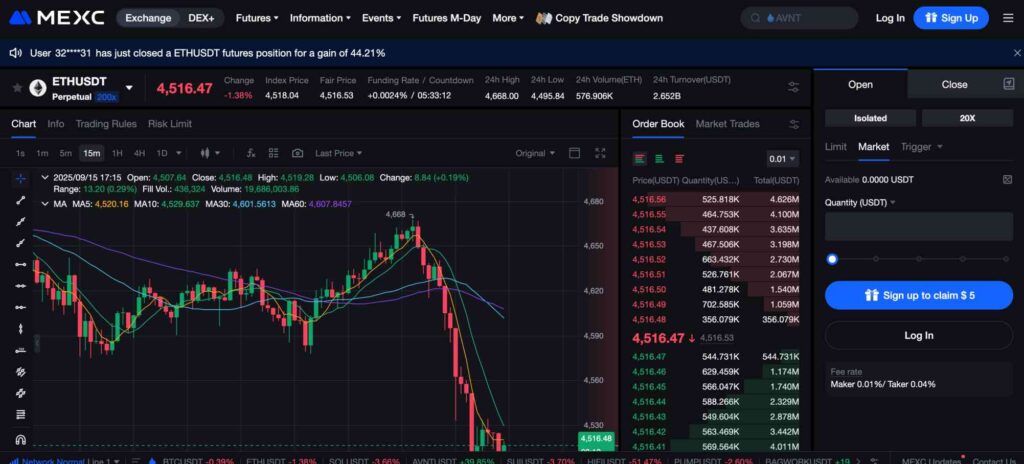
Seasoned traders rate MEXC’s trading platform for its advanced tools such as custom order types, indicators, and TradingView integration. MEXC is also popular for its low fee structure, since traders pay just 0.01% or 0.04% on limit and market orders.
The exchange accepts various payment methods, including crypto wallet transfers, debit/credit card purchases, and SEPA bank deposits. Peer-to-peer deposits are also available, which include dozens of local payment methods and fiat currencies.
Pros
- With over 900 futures, the best option for market diversification
- Lists ETH futures markets with linear and inverse settlement
- Commissions start from just 0.01%
- Deposit methods include crypto and traditional payment types
Cons
- The platform increases margin requirements on inverse contracts
- Doesn’t accept U.S. clients
3. Margex: Use ETH Balances for Both Staking Rewards and Futures Collateral
Margex helps futures traders maximize crypto yields via a dual-staking initiative. While users deposit ETH into the staking pool to earn ~7% APY, they simultaneously use those funds for margin collateral. This innovative structure enables traders to enter high-leverage positions while generating passive yields simultaneously.
The futures provider has a 1% margin requirement on ETH/USDT positions, which is slightly higher than the industry average. Users can provide collateral in any account currency, including stablecoins like Tether (USDT) and USDC (USDC).
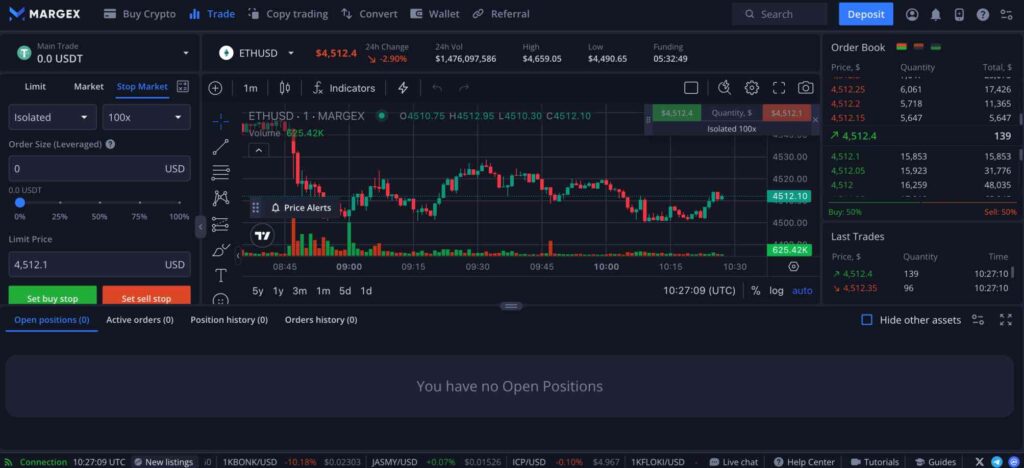
The simple pricing structure charges 0.019% to market makers and 0.06% to takers. Funding rates apply to longs or shorts every eight hours, and fees vary by pair and market conditions.
Margex remains a good choice for traders who prefer a passive experience, as it offers fully fledged copy trading features. Users copy experienced futures traders in real-time, and monitor positions on the Margex app.
Pros
- Earn ~7% APY on ETH staking pools
- Allocate staking funds to futures margin collateral
- Offers a free demo platform for practice trading
- Open an account without KYC procedures
Cons
- 100x leverage limit is lower than many ETH futures platforms
- No tier-one regulators authorize the exchange
4. Bybit: Enter Longer-Term Positions via ETH Delivery Futures
Bybit offers delivery futures on the ETH/USDT pair, which remains the best option for longer-term predictions. It offers contract expiration dates up to nine months ahead, and traders keep positions open without incurring funding rates. These derivative types enable cross and isolation margin, and each contract value is 1 ETH.
Another option on Bybit is perpetual futures. Users margin and settle the contracts in ETH, USDT, or USDC, and access leverage facilities of up to 200x. Unlike delivery contracts, Bybit perpetuals incur eight-hour funding fees.
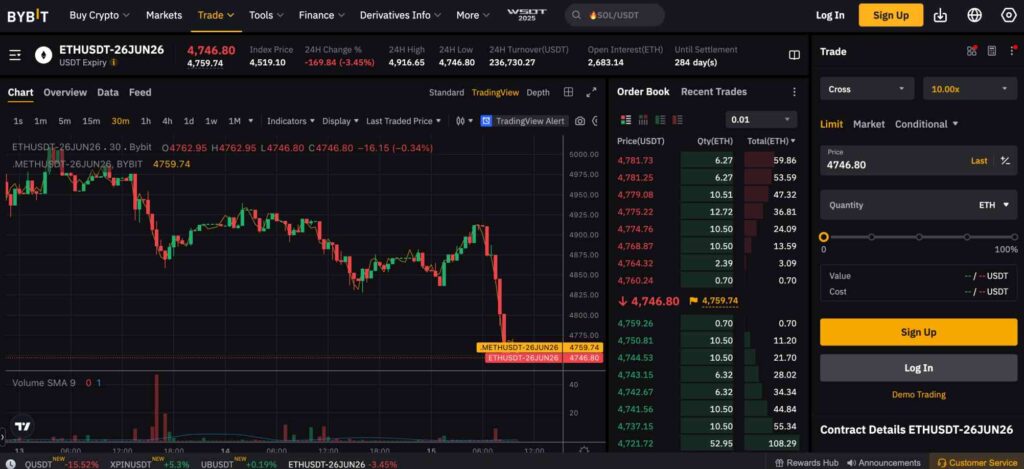
The Bybit exchange, now ranked the second-largest for daily trading volume, supports high-level trading tools and deep liquidity. Advanced traders may deploy automated systems with custom outputs, which buy and sell ETH futures 24/7. Those without an existing strategy copy other traders for a passive experience.
Trading commissions vary by the VIP tier and order type. Non-VIP users pay 0.02% and 0.055% on limit orders and market orders, while top-tier account holders avoid commissions entirely.
Pros
- Speculate on the long-term ETH price via delivery contracts
- Hold until the expiration date without funding fees
- Also supports perpetual ETH futures with 200x leverage
- Advanced trading tools include automated bots
Cons
- Welcome bonuses have challenging wagering terms
- Traders in some regions face geolocation restrictions
5. Coinbase: U.S.-Regulated Trading Platform With USD-Settled ETH Futures
Coinbase is one of the few crypto trading platforms to offer regulated futures markets to U.S. clients. It recently secured CFTC approval, which allows American retail traders to apply leverage in a licensed arena.
As per CFTC requirements, Coinbase users add margin in USD, and the contracts also settle in the fiat currency. This framework streamlines the collateral process, since users fund account balances via ACH, domestic wire, e-wallets, or instant debit/credit card payments. We found ACH is the best funding option, as the exchange does not charge transaction fees.
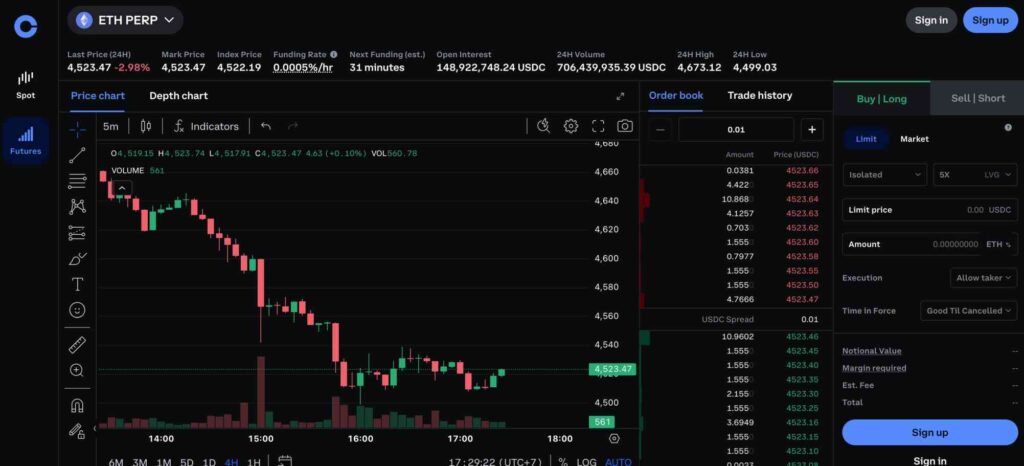
Coinbase markets its Ethereum futures as perpetual-style contracts. The contracts carry five-year expiration dates, although regular funding fees increase long-term holding costs.
As ETH futures are nano-sized, each has a small contract value of 0.1 ETH. U.S. traders may apply leverage of up to 10x, and the highest account tier secures 0.02% commissions.
Note: Coinbase has a separate ETH futures platform for non-U.S. clients. It offers higher leverage limits and access to considerably more markets.
Pros
- Provides a regulated exchange, including futures, for U.S. retail traders
- ETH futures are margined and settled in USD
- Affordable contract values of 0.1 ETH
- Deposit funds fee-free via ACH
Cons
- Leverage on the ETH/USD market caps at 10x
- The U.S. exchange doesn’t support other altcoin futures
Comparing the Top Ethereum Futures Exchanges
We’ve compared the best crypto day trading platforms for ETH futures in the table below:
| Type of ETH Futures | ETH Futures Leverage | Initial Margin | U.S. Friendly? | KYC? | Futures Trading Fees | |
| CoinFutures | Simulated futures | 1000x | 0.1% | Yes | No | Traders choose between a variable fee or a profit commission |
| MEXC | Perpetual futures | 500x | 0.2% | No | No | 0.01% (limit orders) and 0.04% (market orders) |
| Margex | Perpetual futures | 100x | 1% | No | No | 0.019% (limit orders) and 0.06% (market orders) |
| Bybit | Perpetual futures and delivery futures | 200x | 0.5% | No | No | 0.02% (limit orders) and 0.055% (market orders) |
| Coinbase (U.S.) | Perpetual-style futures | 10x | 10% | Yes | Yes | Depends on the account tier. Minimum commission of 0.02% |
What are Ethereum Futures?
Ethereum futures are derivative products that provide exposure to ETH price movements without requiring actual asset ownership. Traders buy or sell contracts to speculate on rising or falling prices, generating profits when their predictions are correct.
A growing number of crypto traders use futures because they can enter positions without needing to cover the position’s value fully. They deposit an initial margin, which, depending on the futures platform, is typically at least 1%. This derivative structure means traders multiply their Ethereum trades by significant amounts, since a 1% margin converts to 100x leverage.
Various Ethereum futures markets exist. Many platforms offer ETH/USDT futures via perpetual contracts, which track the ETH price and never expire. Traders choose between linear and inverse contracts based on their settlement preferences, and between isolated or cross-margining as per their risk-reward profile.
Some platforms also offer delivery futures. These instruments mirror traditional futures, as they expire on a set date. Delivery futures often support medium- to long-term expiration periods, allowing traders to gain exposure to ETH over longer timeframes.
How Does Ethereum Futures Trading Work?
The main concept of Ethereum futures is that traders predict whether the ETH price increases or decreases at some point in the future. Futures traders enter the market with a buy order to speculate on rising prices and sell orders if they expect the opposite.
Unlike spot trading, where investors purchase ETH as a long-term investment, futures require a small percentage of the market exposure. This advantage lets traders amplify their available capital and potentially boost their trading profits.
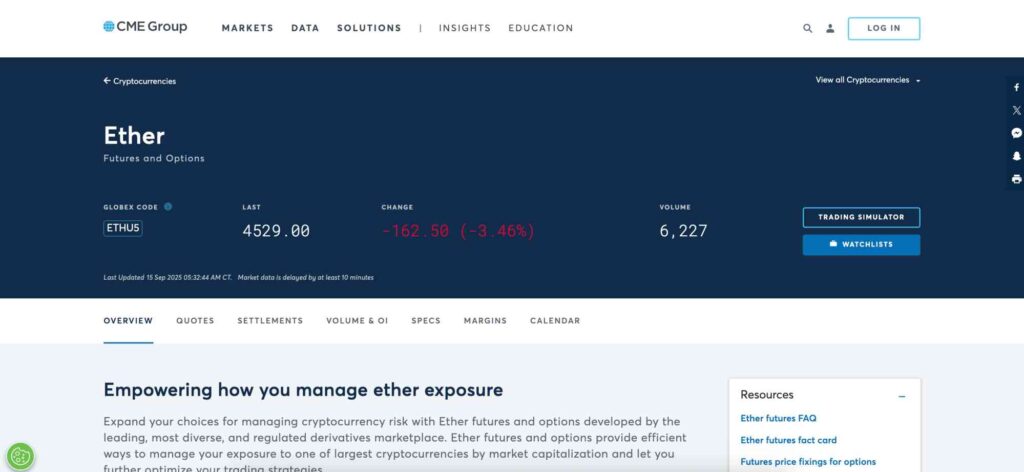
If you trade perpetual or simulated futures, which remain the most popular derivative contracts for ETH, you can exit positions at any time. While they lack expiration dates, these contracts incur regular funding fees. Either long or short traders pay those fees, depending on the imbalance between buy and sell orders.
At most Ethereum futures trading platforms, linear contracts with isolated margin are the default setting. This ensures that traders limit their potential losses to the initial margin and that platforms cannot use general account funds to cover liquidation. We talk about margin types and liquidation risks in more detail later in this guide.
Ethereum Futures Example
The following example explains how ETH futures work in practical terms:
- A futures trader places an ETH/USDT buy order. They risk $500 with 50x leverage, which represents a 2% initial margin and a $25,000 position size.
- ETH/USDT trades 6% above the entry price. The trader exits the position to lock in their profits.
- Before fees, the trader makes $1,500 (6% of $25,000), since the profit margin is calculated against the total market exposure.
- While ETH rose by just 6%, the trader secured a 200% return based on the original $500 stake.
How to Trade Ethereum Futures
We now walk you through the ETH futures trading process with a real platform. Discover how to buy or sell futures on CoinFutures, which is the best option for beginners.
Step 1: Open a Futures Account and Download CoinPoker
The first step is to open an account with CoinFutures. Visit the CoinFutures website, click “Register”, and complete the sign-up form. No KYC verification is required, as the platform only collects an email address and password.
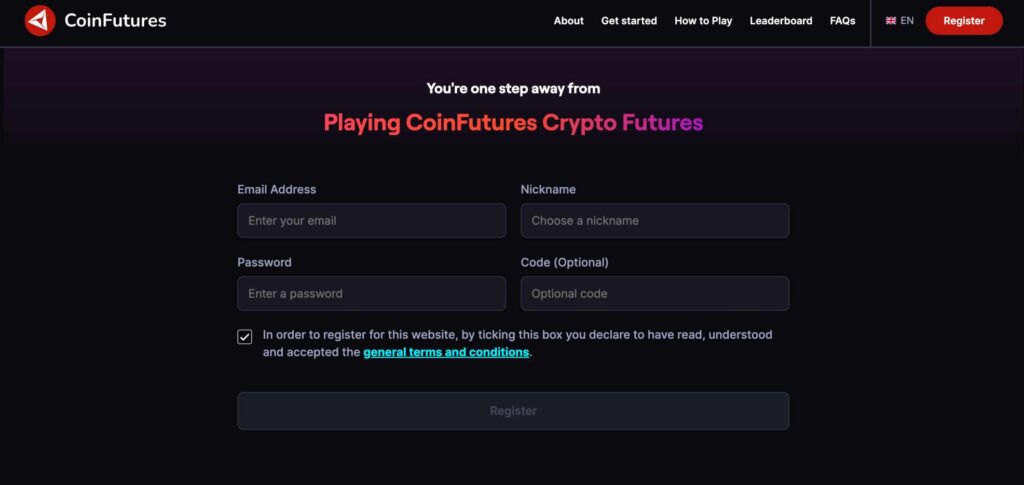
To access the futures trading interface, download the CoinPoker (CoinFutures’ parent company) desktop software or mobile application. Then enter your email and password to log in.
Step 2: Deposit Funds into the Futures Account
CoinFutures offers fast deposits and withdrawals across a wide range of payment methods.
To deposit crypto:
Select a coin or token from the list of available options. Account holders can deposit BTC and top altcoins, including ETH, SOL, BNB, and Polygon (MATIC). The platform also accepts stablecoins, including USDT and USDC.
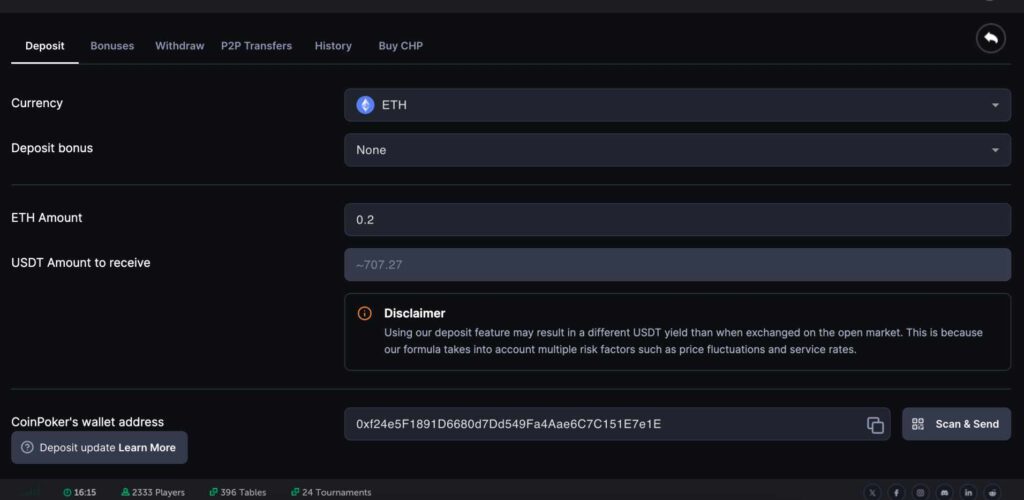
CoinFutures generates a new wallet address for your preferred digital asset. Open your private wallet and complete the crypto transfer.
To deposit fiat money:
Fiat methods include Google/Apple Pay, PIX, and debit/credit cards (Visa and MasterCard).
CoinFutures has a $10 minimum deposit requirement and handles payments safely; however, users are required to provide some basic personal information. If you prefer complete anonymity, deposit cryptocurrencies instead.
Step 3: Go to the ETH/USDT Futures Market
Go to the “Crypto Futures” section and click “BTC/USDT” to change the futures market.
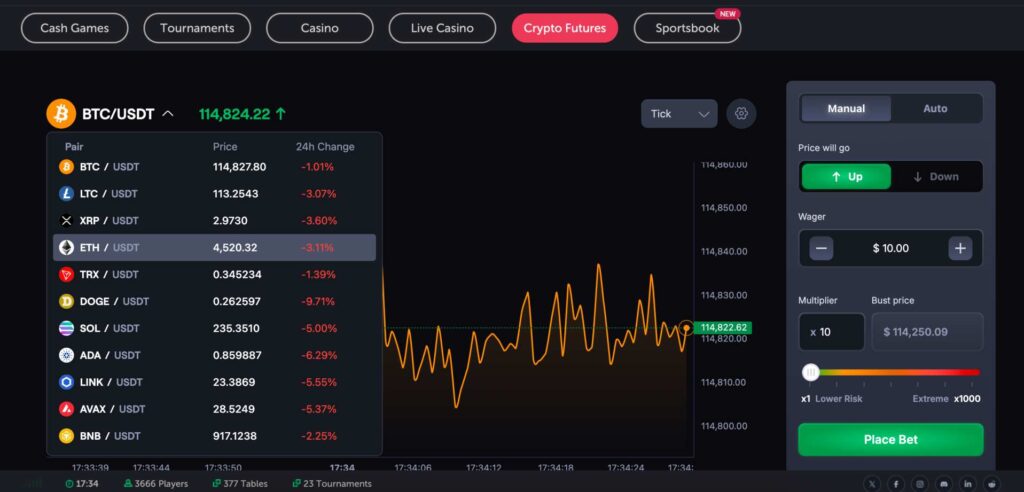
Once you select “ETH/USDT”, CoinFutures displays real-time price charts and the order dashboard. Change the chart timeframe to suit your strategy, from five seconds to five minutes.
Step 4: Set up the Ethereum Futures Trading Order
To the right of the ETH/USDT chart, select an “Up” or “Down” order. These orders reflect long and short positions, respectively.
Enter your initial margin in the “Wager” box. This is the amount you risk on the ETH futures trade, and if the position liquidates, you lose those funds.
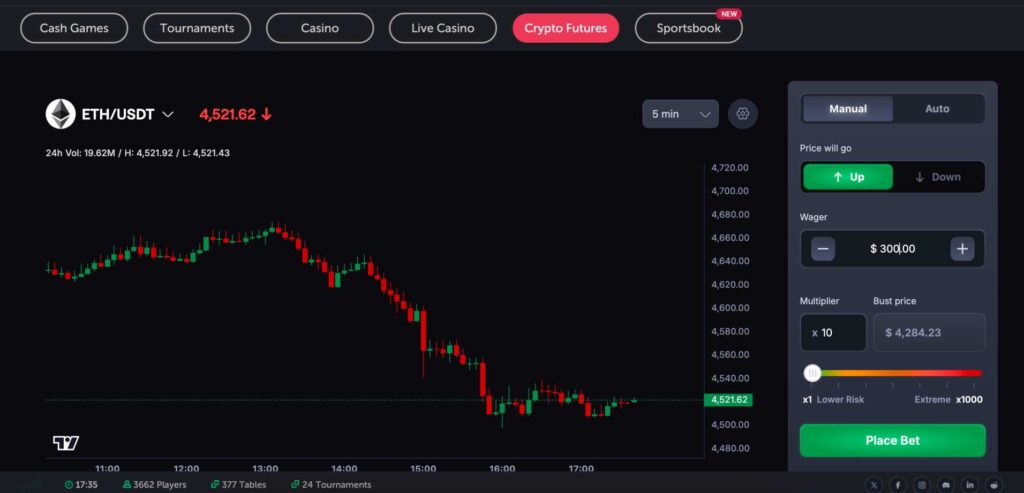
CoinFutures offers leverage of up to 1000x, which amplifies the wager size. Remember that trading with excessive leverage increases the likelihood of liquidation.
Before setting up a stop-loss order, ensure you review the “Bust Price”. On CoinFutures, this is the liquidation price, and it’s determined by your market direction and leverage multiple. Adjusting the leverage amount also modifies the bust price.
Step 5: Set Stop-Loss Level and Place Ethereum Futures Trade
CoinFutures traders use stop-loss orders to close positions before they approach liquidation. While you still incur a loss, if the stop-loss triggers, you retain a percentage of the initial margin. Otherwise, you lose the entire margin on a liquidated trade.
Click “Auto” and enter the stop-loss level. Some traders input a specific ETH/USDT exit price, while others choose a USD amount.
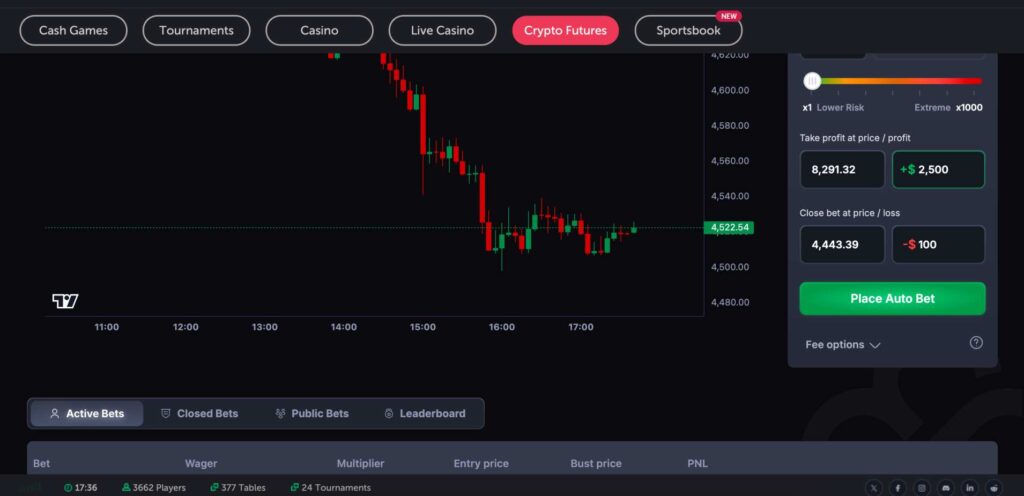
Seasoned futures traders also recommend setting take-profit orders. Enter the target profit amount in USD or state the exact exit price.
Then confirm the ETH futures trade by clicking “Place Auto Bet”.
Ethereum Futures vs Options
Ethereum futures and options are both derivative products, allowing traders to speculate on price movements rather than owning ETH coins. They allow for both long and short trading without requiring coverage of the full contract value.
One of the key differences between futures and options is the trader’s obligation upon settlement. With Ethereum futures, contract holders must buy or sell the underlying asset at the closing price. Positions typically settle in USDT, so platforms adjust the trader’s USDT balance. Inverse contracts are the exception, as these contracts settle in ETH.
Options traders have no obligation to buy or sell on the expiration date. They forfeit the initial premium when the options expire worthless.
Traders manage futures and options risks in different ways. When futures traders select isolated contracts, they risk an initial margin, and they cannot forfeit more than this amount. Options traders risk a premium, which, just like margin, is a small percentage of the position size.
Ethereum futures remain more accessible, yet a major benefit of options is that they eliminate liquidation risks and funding fees. Options traders can hold positions until expiration in a more risk-averse and cost-effective manner, while still utilizing leverage.
Key Things to Know About Ethereum Futures Trading
This section is a must-read before trading ETH futures for the first time. It explains the core fundamentals in more detail, including the different types of futures contracts, which determine settlement and margin risks.
Ethereum Futures Type
Traders typically have access to the following futures products:
- Perpetual Futures: Buy and sell Ethereum futures without expiration dates. Perpetual contracts incur funding fees, which ensure they align with real Ethereum spot prices. Since exchanges offer perpetual futures via traditional order books, traders rely on platform liquidity.
- Simulated Futures: A more beginner-friendly way to trade ETH, simulated futures eliminate order books. Traders can open long and short positions directly with the platform, streamlining the futures trading process. Simulated futures never expire, and they incur funding fees, just like perpetuals.
- Delivery Futures: Some exchanges offer delivery futures with expiration dates. The key benefit is that traders may hold their contracts until expiration without incurring funding fees. While delivery futures appeal to swing traders with longer-term predictions, they involve liquidation risks and weaker correlation against the ETH price.
Perpetual and simulated futures suit casual traders, while institutional clients use the Chicago Mercantile Exchange (CME). Ethereum CME futures have large margin requirements, making them unsuitable for most retail clients.
Contract Settlement
The best crypto futures trading platforms let traders choose how their contracts settle.
The most risk-averse option is linear contracts, which exchanges typically call “USDT-M”. Traders add margin in USDT, and their profits and losses also settle in USDT via balance adjustment. This framework ensures that only the margin collateral is exposed to the ETH price.
The alternative option is inverse contracts. Also called “Coin-M” on futures exchanges, traders fund their margin in ETH rather than USDT. The collateral balance faces greater exposure to ETH price fluctuations, so traders increase the risk of liquidation. Experienced traders use inverse futures because they offer higher profit potential.
Isolated Margin vs Cross Margin
Most futures exchanges offer isolated and cross-margin solutions. The margin selection has a significant impact on the trader’s risk-reward spectrum.
The default option, isolated margin, is the most risk-averse. If the trader deposits an initial margin of $100 on an ETH futures trade, they will relinquish that $100 only if the trade is liquidated. Traders cap the risk potential while still trading with leverage.
Cross margin increases the trader’s risk above the initial margin. They apply the same margin collateral on multiple positions, which allows them to gain additional market exposure. However, if just one futures position liquidates, it could liquidate all existing orders. To cover those losses, the exchange may retain the trader’s entire account balance.
Liquidation Price
If the ETH price reaches the liquidation price, the exchange automatically closes the position. As a result, traders lose the initial margin.
The liquidation price depends on the leverage multiple and whether you’re long or short. For example, on a 100x long trade, liquidation occurs when the ETH price declines by approximately 1%. A long trader reducing the leverage to 10x requires a much larger 10% price decline to experience liquidation.
Risk Management
While liquidation remains the riskiest part of Ethereum futures trading, various mitigation trading strategies help traders avoid it.
Alongside trading with modest leverage multiples, traders can avoid liquidation entirely with a stop-loss order. The exchange closes the position if the stop-loss price is triggered above or below the liquidation level.
While stop-loss execution is never guaranteed, orders are usually filled when trading ETH futures, as the large-cap asset attracts deep liquidity.
Traders who input small position sizes relative to their trading account balance also mitigate risk. Limiting the risk potential to 1% of the trader’s bankroll helps avoid a complete drawdown during losing streaks.
Profit-taking is also important, particularly when using leverage. Consider cashing out small amounts as the position value increases. You can use trailing stop-loss orders to automatically set the exit price, which helps you stay in the market while preserving your gains.
What are the Benefits of Trading Ethereum Futures?
Ethereum futures offer the following advantages to crypto traders:
- Low Margin and High Leverage: Many futures platforms offer leverage of over 100x on the ETH/USDT market. MEXC caps the leverage multiple to 500x, while CoinFutures doubles those limits to 1000x. You can’t buy or sell Ethereum with leverage when using traditional spot exchanges.
- Significant Upside Potential: Since futures allow for high leverage limits, traders can potentially generate substantial profits. A small price movement of 1% offers limited growth, yet with 100x leverage, the trading gains amplify to 100%.
- Limited Downside: While some contract types, such as cross margin, may result in losses exceeding the initial margin, isolated futures limit risk to the initial stake. This mechanism creates an appealing risk-reward ratio. Traders increase their position sizes with leverage, thereby exposing themselves to capped losses rather than uncapped ones.
- Trade Bullish and Bearish ETH Markets: Ethereum futures let traders go long or short with buy and sell orders. Regardless of broader crypto sentiment, futures traders aim to capitalize on gains during any market cycle.
- Hedging Against Portfolio Risks: Although short-term traders typically trade futures products, traditional investors use them to manage risk. Instead of selling ETH during uncertain market conditions, investors short-sell futures to hedge against declining prices. Investors typically offload their futures contracts once the near-term risk has passed.
Pros & Cons of Ethereum Futures Trading
ETH futures carry the following benefits and drawbacks:
Pros
- Futures platforms offer low margin requirements and high leverage limits
- Traders can generate massive profits even with a small initial margin
- Choose isolated futures contracts to limit the downside potential
- Go long or short on the ETH price 24/7
- ETH investors mitigate market uncertainty by hedging futures
Cons
- The complexity of futures contracts makes them intimidating for beginners
- Traders face liquidation risks regardless of the futures product
- Contract holders do not own ETH coins when trading futures
- Some contract types offer unlimited risk exposure
- Exchanges charge regular funding fees on open futures orders
Conclusion
Traders buy and sell Ethereum futures to access significant capital and unlock long and short facilities on the ETH price. While several futures platforms offer high leverage and competitive fees, CoinFutures is our overall top pick for 2026.
CoinFutures offers a beginner-friendly futures platform that requires no KYC and features a low margin requirement of just $1. Platform users can leverage up to 1000x on ETH/USDT futures, making it a popular choice for traders with limited funds.
FAQs
What are Ethereum futures?
What are the benefits of trading Ethereum futures?
Are Ethereum futures more risky?
What’s the minimum amount you need to trade Ethereum futures?
How do I trade Ethereum futures?
What is the best Ethereum futures trading platform?
References
- Empowering how you manage ether exposure (Chicago Mercantile Exchange)
- Margin trading: A beginner’s guide to margin trading crypto (Gemini)
- Ether futures – margins (Chicago Mercantile Exchange)
- Opening, holding, and closing a position in the futures market (Coinbase Derivatives LLC)
