





Bitcoin Futures Trading: Top BTC Futures Platforms
We may earn commissions from affiliate links or include sponsored content, clearly labeled as such. These partnerships do not influence our editorial independence or the accuracy of our reporting. By continuing to use the site you agree to our terms and conditions and privacy policy.



Bitcoin (BTC) futures are popular derivative products that support long and short trading, and high leverage limits of 100x or more. Their low margin requirements enable traders to access significant market exposure without having to hold BTC directly.
This beginner’s guide explores how Bitcoin futures work, the best platforms to trade them, and what risk management strategies to deploy. Read on to learn about maintenance margin, liquidation, and contract settlement, and trade Bitcoin futures contracts safely in 2026.
The Best Bitcoin Futures Platforms Ranked
We’ve handpicked the following Bitcoin futures platforms for a safe trading experience:
- CoinFutures: Top-Rated Crypto Futures Platform With Leverage of up to 1000x
- MEXC: Trade BTC Futures With 500x Leverage at Commissions of Just 0.01%
- Margex: Trade 100x Futures Passively via Automated Copy Trading Features
- Binance: The Largest Bitcoin Futures Trading Platform for Liquidity and Volume
- Coinbase: A Great Choice for U.S. Traders Seeking CFTC-Regulated Futures Markets
Best Bitcoin Futures Trading Platforms Reviewed
To choose the right Bitcoin futures exchange, traders must consider security mechanisms, platform reputation, trading commissions, and margin requirements. Having access to charting tools, technical indicators, deep liquidity, and fast execution speeds is also essential.
The following reviews help traders select the best BTC futures platforms for their trading needs.
1. CoinFutures: A User-Friendly and Safe Futures Trading Platform With a 0.1% Margin Requirement
CoinFutures is a licensed platform that supports Bitcoin futures, as well as a wide selection of altcoin markets, including Ethereum (ETH), Dogecoin (DOGE), and XRP (XRP). Since the platform has a small margin requirement of just 0.1%, users may trade futures with leverage of up to 1000x.
The beginner-friendly dashboard is ideal for first-time traders, and the $1 minimum trade requirement appeals to budget-conscious users. Those with risk-adjusted trading strategies may use stop-loss and take-profit orders. These orders trigger automatically based on the target price without relying on liquidity. This is because CoinFutures offers “simulated” futures products, which allow users to avoid traditional order books.
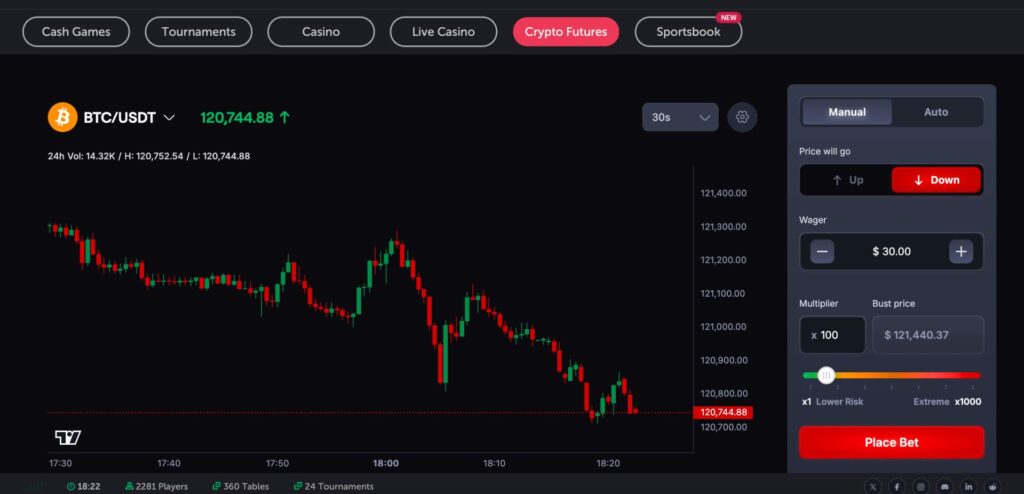
We tested the onboarding process and found it took less than five minutes to get started. Accounts only require an email address and nickname, so users do noty need to carry out know-your-customer (KYC) steps. The platform accepts popular cryptocurrencies and fiat payment methods, and it processes withdrawals instantly.
As a reputable 1000x crypto leverage trading platform, CoinFutures protects user funds with cold storage solutions, Fireblocks vaults, and multi-party computation (MPC) technology. The CoinFutures website updates its proof of reserves daily, which allows users to verify the platform’s asset holdings. We carried out an extensive CoinFutures review if you would like to read more.
Pros
- The most beginner-friendly BTC futures platform in the market
- Offers a maximum leverage limit of 1000x
- Open an account without KYC procedures
- Trade long and short from just $1
- Fast deposits and withdrawals
- Accepts crypto and fiat money payment methods
- The platform updates proof of reserves daily
Cons
- Limited charting tools like trend lines and indicators
- Users cannot deploy automated trading bots
2. MEXC: Low-Fee Crypto Trading Platform With Futures Leverage of up to 500x
MEXC, a global exchange with over 40 million active users, offers BTC futures with a maximum leverage of 500x. It supports various futures contract types to suit different risk-reward profiles. Beginners prefer linear contracts, since they limit risk to the initial margin. Those with a higher risk appetite trade inverse futures. As they settle in BTC, the profit potential is much higher.
In addition to BTC, MEXC supports over 900 altcoin futures markets. It remains a popular choice to trade top meme coins like Shiba Inu (SHIB), Floki (FLOKI), and dogwifhat (WIF), as well as Layer 1 coins such as ETH, Solana (SOL), and BNB (BNB).
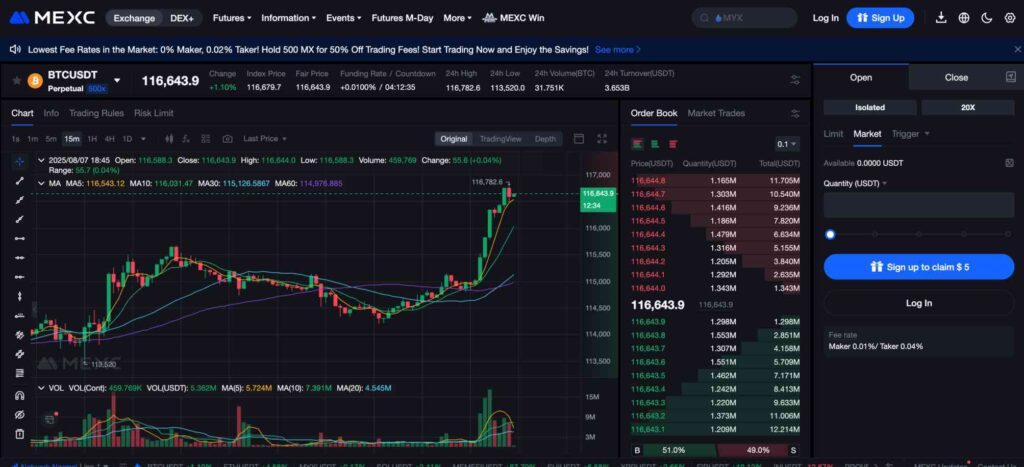
MEXC users benefit from industry-leading fees. Limit orders cost just 0.01% per side, and unlike other exchanges, traders avoid minimum volume requirements. If you prefer market orders for their instant execution, MEXC charges a higher commission of 0.04%. Futures traders may also be subject to funding rates every eight hours, depending on the market direction.
Pros
- Top global exchange with 500x leverage on BTC/USDT futures
- Access over 900 altcoin futures markets
- Limit orders cost just 0.01% without volume requirements
- Offers no-KYC accounts with high withdrawal limits
Cons
- Inexperienced traders may find the trading dashboard overwhelming
- Market orders are four times more expensive than limit orders
3. Margex: U.S. Clients Get 10x Leverage on BTC Futures in a Regulated Environment
We found that Margex is a good option for inexperienced futures traders. The mobile and desktop exchange offers a simple, intuitive dashboard with a minimal learning curve. The user-friendly order system helps novice traders go long or short without feeling intimidated, and the demo account lets traders practice risk-free.
Margex offers BTC/USDT futures contracts with linear settlement with a maximum leverage limit of 100x. It also supports other popular cryptocurrencies like ETH, XRP, DOGE, and SushiSwap (SUSHI).
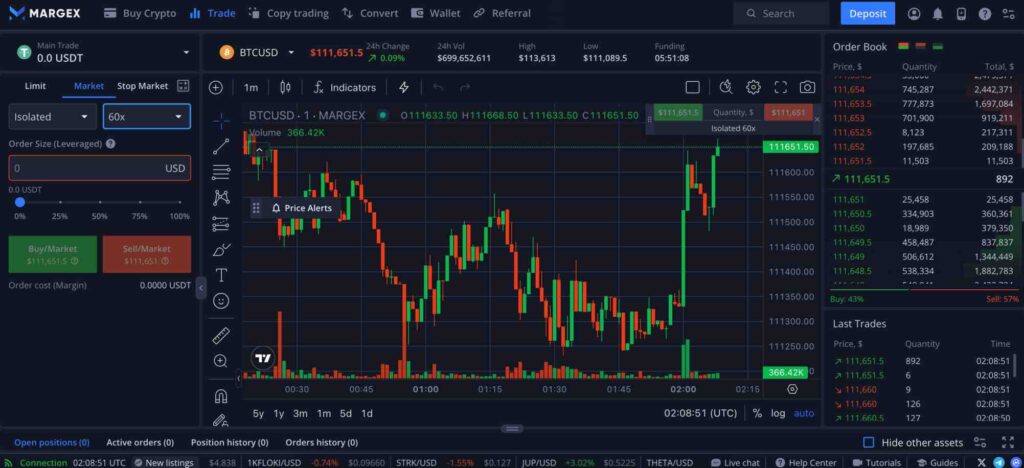
The copy trading feature also appeals to beginners with limited futures trading experience. Users select a seasoned trader and investment amount, and the platform automatically copies their positions. Margex has a native copy trading app for iOS and Android, so users may track their positions on the move.
Trading fees are slightly above the market average, as makers and takers pay 0.019% and 0.06%. The exchange offers no commission discounts for higher volumes.
Pros
- The futures trading dashboard is beginner-friendly
- BTC/USDT futures offer 100x leverage
- The copy trading feature lets users replicate seasoned futures traders
- Accounts only require an email address
Cons
- High trading commissions compared with the market average
- Doesn’t offer sub-one-minute chart timeframes
4. Binance: Access Institutional-Grade Liquidity and Powerful Futures Trading Tools
Exchange data confirms that Binance is the largest exchange for derivative trading, which includes both perpetual and delivery futures contracts. As the BTC/USDT market typically generates tens of billions of dollars in daily trading volume, futures traders access deep liquidity 24/7. They also get tight spreads and fast execution speeds, making Binance a top choice for low-margin strategies.
The exchange offers linear and inverse contracts, and expiration dates cover quarterly and bi-quarterly markets. Traders get leverage of up to 125x on BTC and ETH markets, and reduced limits on other altcoin pairs.
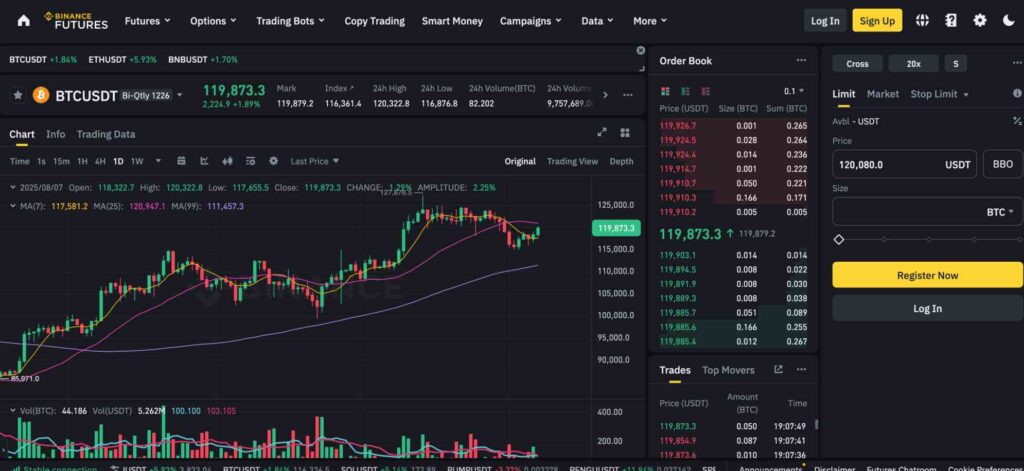
While Binance’s trading dashboard offers powerful tools for advanced traders, less experienced users trade passively via the copy trading tool. Binance supports automated futures trading bots, too. These bots trade perpetual futures nonstop based on pre-programmed systems.
Pros
- Offers substantial futures trading liquidity 24/7
- Users apply leverage of up to 125x
- Advanced trading tools and charting features for seasoned traders
Cons
- The exchange has mandatory KYC requirements
- Users in some countries cannot access derivative markets
5. Coinbase: U.S. Clients Get 10x Leverage on BTC Futures in a Regulated Environment
Coinbase is the best option for U.S. clients, since the exchange offers a licensed futures trading platform with domestic approval. As the Commodity Futures Trading Commission (CFTC) regulates Coinbase, retail traders legally trade Bitcoin futures in a safe environment. While Coinbase is secure and offers a range of crypto services, the CFTC limits futures leverage to 10x. Non-U.S. traders get higher limits at 20x.
Coinbase offers futures markets on its “Advanced” platform, which comes packed with trading and analysis features. Traders access deep liquidity, technical indicators, trend lines, and a wide range of custom order types.
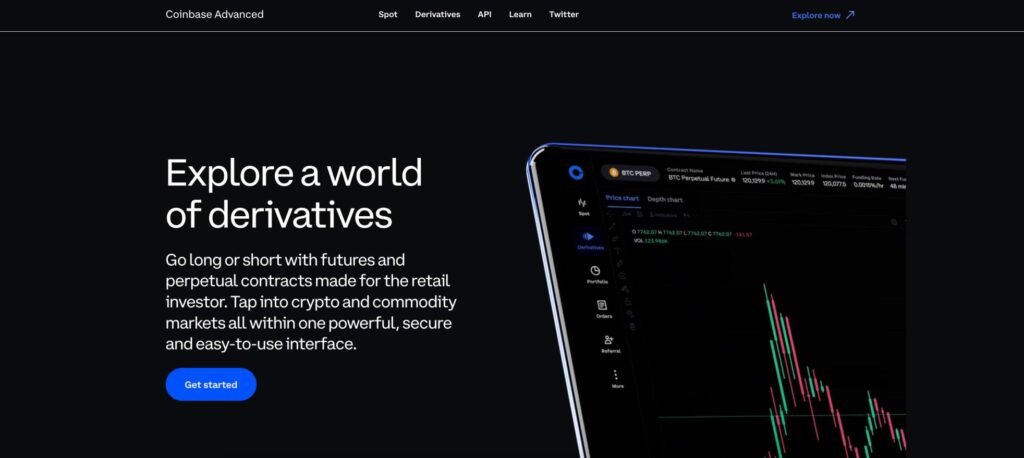
A key drawback for U.S. accounts is limited market access. While they trade BTC and ETH futures only, international clients get exposure to over 150 other crypto pairs, as well as commodities, pre-launch markets, and a digital asset index. Non-U.S. traders also get lower fees, which are reduced to 0% for high-volume traders.
Pros
- CFTC approval enables U.S. retail clients to trade BTC futures
- Advanced trading tools include trend lines and indicators
- The exchange is heavily regulated and safe
- Users easily deposit funds with debit/credit cards and local bank transactions
Cons
- The platform limits U.S. clients to just two futures markets
- U.S. traders must meet a 10% initial margin requirement
Comparing the Top Bitcoin Futures Exchanges
Here are the best Bitcoin futures trading platforms compared by core factors:
| Type of BTC Futures | BTC Futures Leverage | Initial Margin | U.S. Friendly? | KYC? | Futures Trading Fees | |
| CoinFutures | Simulated futures | 1000x | 0.1% | Yes | No | Traders choose between a variable fee or a profit commission |
| MEXC | Perpetual futures | 500x | 0.2% | No | No | 0.01% (limit orders) and 0.04% (market orders) |
| Margex | Perpetual futures | 100x | 1.0% | No | No | 0.019% (limit orders) and 0.06% (market orders) |
| Binance | Perpetual futures and delivery futures | 125x | 0.8% | Not for derivatives | Yes | 0.02% (limit orders) and 0.05% (market orders) |
| Coinbase | Perpetual futures | 10x (U.S.) 20x (international) | 10% | Yes | Yes | Varies by the trader’s location and 30-day volume |
What are Bitcoin Futures?
Bitcoin futures are derivative instruments that provide exposure to the BTC price. They’re unlike traditional crypto investments, as futures traders speculate on BTC without owning coins. The futures contracts loosely track BTC price movements, and traders profit when they correctly predict rising and falling prices.
Futures enable long and short trading, so they provide more flexibility than spot trading markets. They also let traders enter positions with a small percentage of the overall trade value. This is called “margin”, and it amplifies the futures position by considerable amounts. If the margin requirement is 1%, traders access $10,000 worth of capital with an initial deposit of just $100.
As Bitcoin futures traders incur liquidation risks, the market is significantly riskier than standard trading. The most effective risk mitigation strategy is to reduce leverage limits, and use stop-loss orders to exit losing positions before they liquidate.
How Does Bitcoin Futures Trading Work?
Bitcoin futures involve traders speculating on anticipated price movements. They place buy or sell orders depending on whether they predict higher or lower prices. Regarding stakes, futures platforms have minimum margin requirements, which are usually a fraction of the total position size. For example, CoinFutures users trade BTC/USDT futures with a 0.1% margin. This margin framework amounts to a maximum leverage multiple of 1000x.
The drawback when trading futures with high leverage limits is that liquidation risks rise. If the futures trade hits the liquidation price, the exchange closes it, and users forfeit their initial margin.
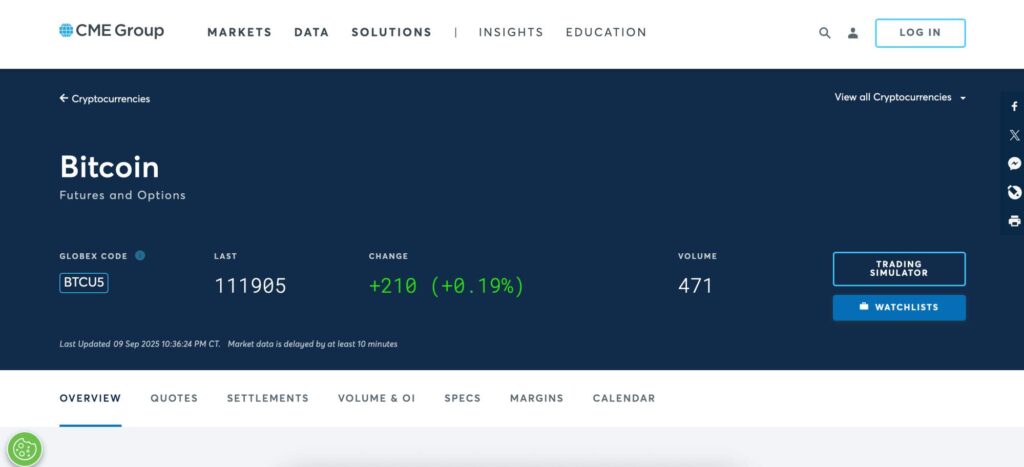
The best Bitcoin futures trading platforms offer different contract types. Most crypto traders use perpetual futures. These contracts let traders avoid expiration dates, as they remain open in perpetuity. Another option is delivery futures, when the contract expires on a predetermined date.
Traders must also understand the contract margin structure. By default, exchanges offer linear futures contracts. Traders post their margin in a stablecoin, so profits and losses are posted in Tether (USDT) or USDC (USDC). Inverse futures require margin in BTC, and the futures settle in the same currency. We suggest that users stick with linear contracts to reduce market exposure, as unfavorable prices liquidate inverse contracts more aggressively.
Bitcoin Futures Example
Here is an example of a Bitcoin futures trade:
- A trader is bearish on Bitcoin, so they set up a futures sell order. They enter a $20,000 BTC/USDT position and post a 2% margin, so they limit the initial collateral to $400.
- The BTC/USDT price declines by 4% overnight. The trader closes their futures trade to lock in an $800 profit (4% of the $20,000 position).
- This futures trade delivers a 200% profit, even though the BTC price dropped by just 4%. This is because of the margin framework. As a 2% initial margin reflects 50x leverage, the trader amplified their profits by 50 times.
How to Trade Bitcoin Futures
Read on to open a BTC futures trading position with leverage. We explain how to get a futures account, set up a long or short order, and protect your capital through risk management controls.
Note: This walkthrough explains the futures trading process with CoinFutures. Research shows that CoinFutures is the best option for beginners and intermediate traders.
Step 1: Open a Futures Account and Download
Visit the CoinFutures website to open an account. Enter an email address and choose a nickname and password. Verify the email to confirm the new account.
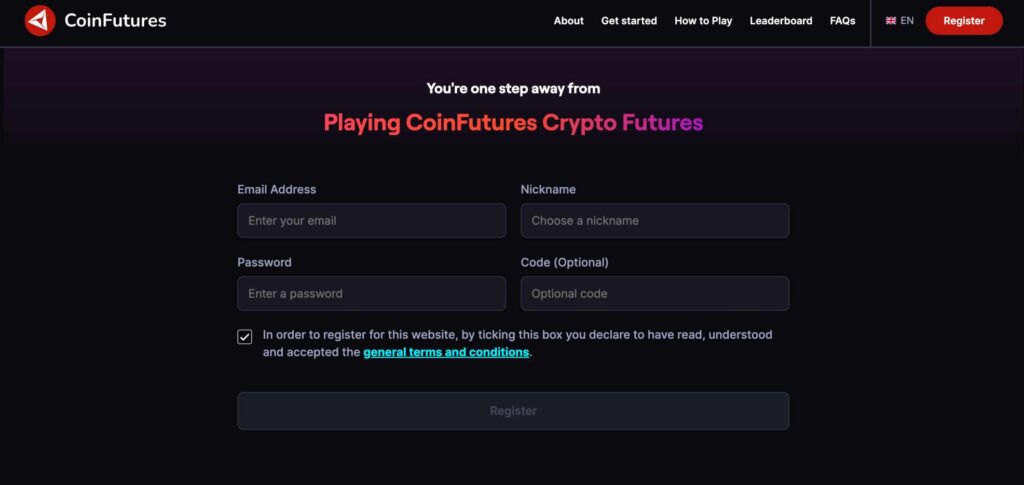
You will then be prompted to download the CoinPoker software to a desktop or mobile device. Note that CoinPoker is CoinFutures’ parent company, which is why you need its software.
Step 2: Deposit Funds into the Futures Account
Account holders deposit funds via the CoinPoker software. The best option is to deposit digital assets from a private wallet. The software provides a unique wallet address for your preferred coin or token, and accepted cryptocurrencies include BTC, ETH, USDT, USDC, and SOL.
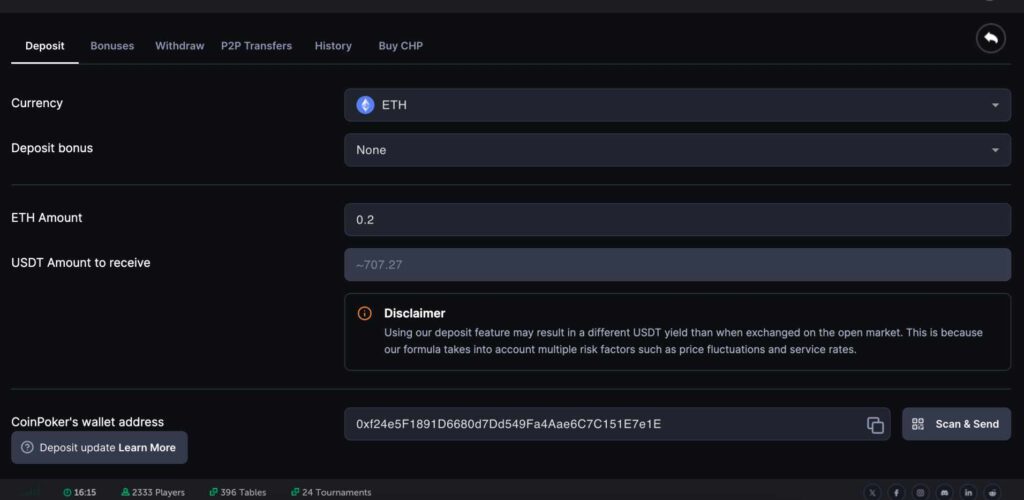
CoinFutures accepts traditional payment methods for those without digital assets, including Visa, MasterCard, PIX, Google Pay, and Apple Pay. Unlike crypto deposits, fiat payments require KYC details and a $10 minimum.
Step 3: Go to the BTC/USDT Futures Market
Click the “Crypto Futures” button on the CoinPoker software. By default, the platform shows the BTC/USDT futures market.
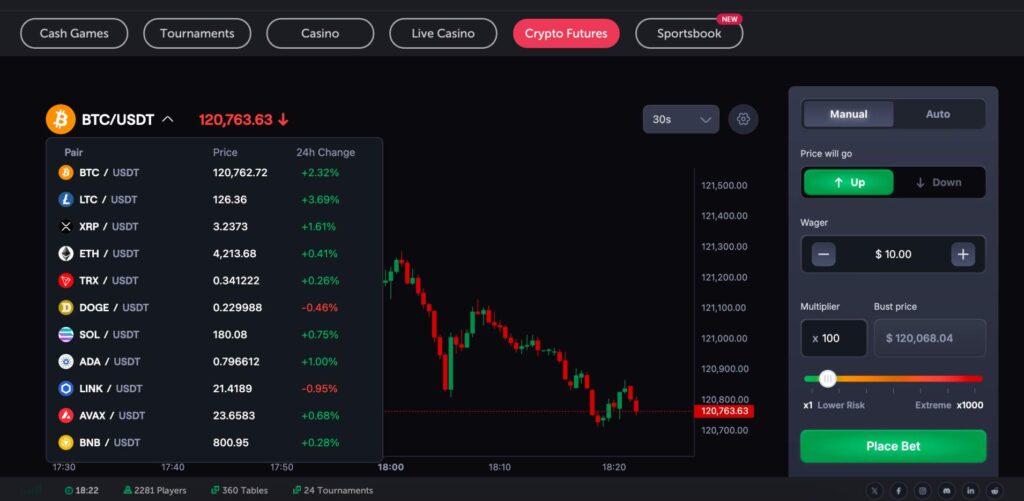
You can also explore other trading pairs. CoinFutures supports the best altcoins, including ETH, DOGE, and Litecoin (LTC).
Step 4: Set up the Bitcoin Futures Trading Order
The next step is to enter your trade parameters. The dashboard is located next to the BTC price chart. Select “Up” or “Down” based on the long or short prediction.
Then enter the “Wager”, which reflects the initial margin requirement. The minimum and maximum wager sizes are $1 and $1,000, and you cannot lose more than this amount.
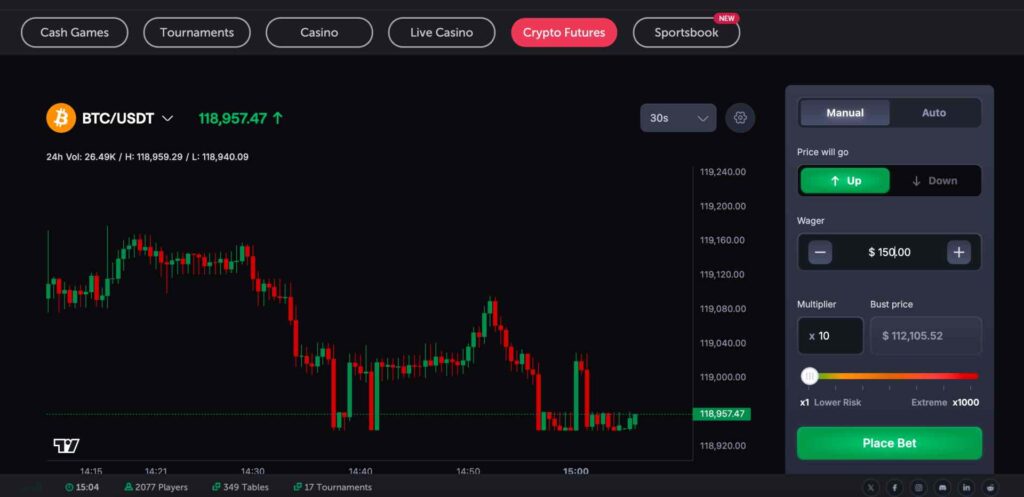
Select the leverage multiple to amplify the wager size. CoinFutures supports a maximum leverage multiple of 1000x. Adjust the leverage size to assess the liquidation price (“Bust Price”). If BTC/USDT reaches that price, CoinFutures liquidates the trade. Lower leverage reduces the liquidation risk.
Step 5: Set Stop-Loss Level and Place Bitcoin Futures Trade
Experts agree that stop-losses help protect trading balances over time. They ensure the trading platform closes your future position before the liquidation level. You get to choose the stop-loss threshold based on your risk tolerance and market prediction.
Click the “Auto” button on the CoinFutures dashboard, then set the stop-loss price. You can also state a maximum loss amount in USD.
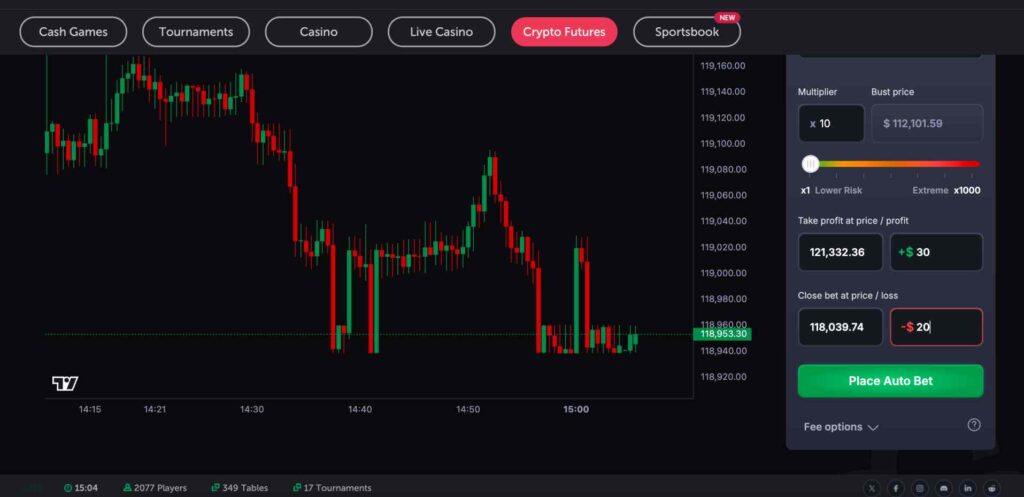
We also recommend setting a take-profit price. This order instructs CoinFutures to close the trade when the profit target triggers.
Review the trade parameters and click the “Place Auto Bet” to proceed. The Bitcoin futures order executes instantly.
Bitcoin Futures vs Options
Futures and options enable traders to long and short Bitcoin without asset ownership.
Traditional futures require traders to buy or sell Bitcoin on or before the expiration date, which ranges from days to months. While perpetual futures come without expiration dates, contract holders are obligated to buy or sell the underlying asset when they close the trade.
Options, which always have an expiration date, do not force traders to exercise the contracts when they expire. This is because of the “Premium” system, where traders pay a small upfront fee for the right but not the obligation to buy or sell Bitcoin.
In terms of risk, options are generally less risky than futures, although only when traders purchase call or put options (rather than sell them). They risk no more than the initial premium, which typically reflects a fraction of the total trade size. Futures traders limit their downside by trading Bitcoin linear contracts with isolated margin. The maximum loss potential remains capped at the initial margin, and contracts settle in stablecoins.
Key Things to Know About Bitcoin Futures Trading
If you’re still confused about key Bitcoin futures terminology, read on. This section explains important concepts surrounding contract types, margin, liquidation, and risk management.
Bitcoin Futures Type
Here are the three main contract types for Bitcoin futures trading:
- Perpetual Futures: Provides exposure to the Bitcoin price without expiration dates, which allows traders to keep positions open indefinitely. Every few hours, exchanges charge long or short traders a funding fee to help align perpetual and spot trading prices. This system increases or decreases the trader’s margin balance.
- Simulated Futures: Operates similarly to perpetual futures in terms of non-expiry and frequent funding rates. The key difference is that simulated futures use algorithms to determine prices, and they don’t rely on order books or liquidity. Simulated futures appeal to entry-level traders with limited derivative experience.
- Delivery Futures: The traditional contract type, delivery futures have expiration dates. Short-term timeframes usually cover daily, weekly, and monthly contracts. Quarterly contracts are popular too, which settle on the last Friday of each quarter. Delivery futures do not incur funding fees like simulated or perpetual contracts.
Ensure you know what futures contract you’re trading before placing orders. The contract type directly impacts the trade duration, exit strategy, and potential fees.
Contract Settlement
Bitcoin futures exchanges settle contracts in various ways. Most traders use linear contracts that settle in USDT. The initial margin and trading profits/losses are denominated in the stablecoin, making them more user-friendly and risk-averse.
Inverse contracts use a non-linear structure, since traders use the underlying coin (BTC) for margin and settlement. When the BTC price fluctuates, it generates greater pressure on the margin balance. This makes inverse contracts likelier to face liquidation, although they also offer a higher upside potential on successful predictions.
USDT-M vs Coin-M Futures
The best crypto futures trading platforms use different terms to distinguish margin types:
- USDT-M = Linear contracts that settle in USDT. Some exchanges also offer USDC-M contracts.
- Coin-M = Inverse contracts that settle in BTC (or another coin when trading altcoin futures).
Isolated Margin vs Cross Margin
The margin type is another important distinction when learning how to trade Bitcoin futures. Seasoned traders recommend that beginners use isolated margin, which is typically the trading platform’s default mode. It helps traders reduce the potential downside, as exchanges retain the initial margin only on liquidated trades.
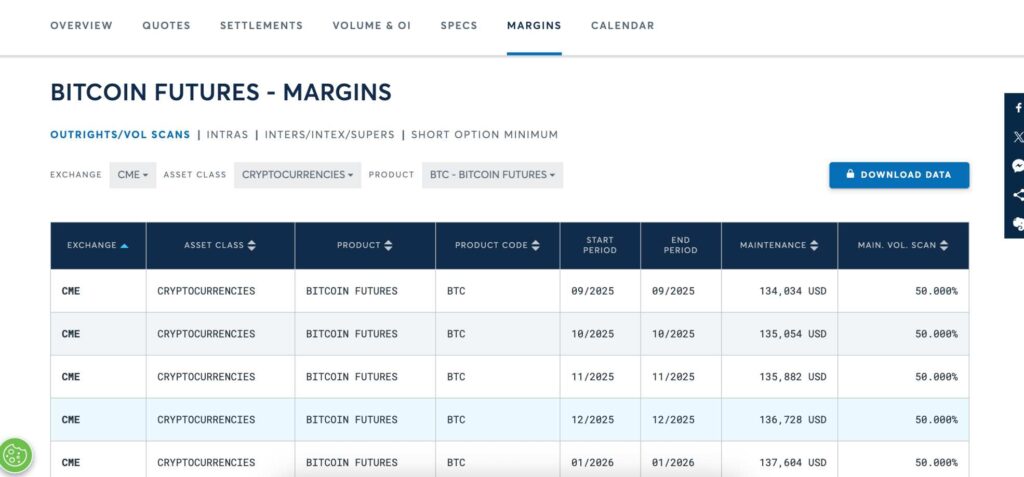
Cross margin is much riskier, since traders use their entire exchange account balance as collateral. This also means that traders risk liquidation on all outstanding positions, prompting exchanges to close each one simultaneously. While risky, cross-margin contracts provide traders with increased market exposure, as they can open additional positions without needing to deposit more funds.
Liquidation Price
Futures platforms show traders the exact liquidation price when they set up orders. The liquidation price reflects the initial margin percentage. If the trader uses 50x leverage, they require a 2% margin to open the position. In general, that position liquidates if the BTC price moves adversely by 2%.
A trader using 4x leverage has a much wider margin of safety, as liquidation requires a 25% position decline.
Risk Management
The best way to manage your risk is to avoid excessive leverage multiples. You gain a much better chance of evading liquidation, and you can keep the trade open for longer periods.
Stop-loss orders are a must when trading Bitcoin futures. You limit the loss potential, as stop losses close the trade automatically at the target price.
Successful futures traders also use bankroll management practices. They cap exposure at a fixed percentage of their trading capital, which helps protect their balance against critical drawdown.
What are the Benefits of Trading Bitcoin Futures?
Bitcoin futures provide more advantages over traditional spot trading, including:
- Low Margin Requirements: Futures allow crypto traders to enter positions with a small upfront margin. While the margin requirement varies by the platform, BTC/USDT futures typically require just 1%. At MEXC, the margin reduces to 0.2%, and just 0.1% at CoinFutures.
- Isolated Contracts Ensure Limited Risk: Isolated Bitcoin futures let traders access high leverage multiples without risking excessive funds. If you stake $20 on a 1000x trade, you gain $20,000 in market exposure, yet you risk only $20.
- Trade Both Price Directions: Since futures are derivative products, they enable long and short trading. This makes futures suitable for any market cycle, whether prices are bullish or bearish.
- Highly Accessible: Although exchanges sometimes restrict traders from certain countries (often the U.S. and the UK), some Bitcoin futures trading platforms eliminate KYC requirements. Traders register without providing personal information, which creates an inclusive environment.
- Hedging Strategy: Some traders use BTC futures as a hedging instrument. If they hold BTC in their portfolio and remain concerned about upcoming market risks, they may purchase BTC futures. This process offsets adverse price movements, as the futures operate inversely to the original BTC investment.
Pros & Cons of Bitcoin Futures Trading
Summarized below are the pros and cons of BTC futures:
Pros
- Trade Bitcoin with low margin requirements and high leverage multiples
- Futures also provide exposure to popular altcoins
- Using isolated contracts caps the loss potential
- Futures let traders and investors speculate on rising and falling markets
- Many futures platforms accept traders from any country
- Futures help traders hedge portfolio risk
Cons
- Futures are complex derivative products
- Traders lose their initial margin when exchanges liquidate positions
- Futures do not provide asset ownership
- Inverse and cross-margin contracts vastly increase the investment risk
- Some futures markets incur regular funding fees
Conclusion
Bitcoin futures offer the most accessible way to long and short BTC with high leverage. Carefully understanding the fundamentals is crucial, particularly margin types, contract settlement, and liquidation risks. Choosing the right futures platform also matters, since exchanges differ in commissions, execution speeds, funding fees, and other core factors.
If you’re an entry-level trader, CoinFutures is our top pick for Bitcoin futures trading in 2026. It offers BTC/USDT markets with 1000x leverage, complete with a user-friendly trading platform with risk management tools. CoinFutures requires just $1 to open futures trades, and the platform accepts both crypto and fiat payments.
FAQs
What are Bitcoin futures?
What are the benefits of trading Bitcoin futures?
Are Bitcoin futures more risky?
What’s the minimum amount you need to trade Bitcoin futures?
How do I trade Bitcoin futures?
What is the best Bitcoin futures trading platform?
References
- How to Avoid Common Pitfalls When Trading Crypto Derivatives (Coinbase)
- Definition of a Futures Contract (Chicago Mercantile Exchange)
- Help Protect Your Position Using Stop Orders (Charles Schwab)
- Understanding Futures Expiration & Contract Roll (Chicago Mercantile Exchange)