





Best Leverage Crypto Trading Platform in 2026
We may earn commissions from affiliate links or include sponsored content, clearly labeled as such. These partnerships do not influence our editorial independence or the accuracy of our reporting. By continuing to use the site you agree to our terms and conditions and privacy policy.



Leverage is a powerful tool to amplify crypto investments by using borrowed capital. Some platforms offer unprecedented multiples of up to 1000x, which turns a $50 buy or sell order into a $50,000 position. Crypto traders access leverage in various ways, including perpetuals, futures, and options.
This guide explores the top crypto trading exchanges in 2026 for limits, account minimums, supported markets, derivatives, fees, and more. Learn how to make risk-averse trades with leveraged cryptocurrencies as a first-time trader, especially considering market volatility.
Best Crypto Leverage Trading Platforms Ranked
According to our methodology, ranked below are the top leverage trading crypto exchanges:
- CoinFutures – The Overall Best Place to Trade Leveraged Cryptocurrencies With 1000x Multiples
- Margex – Trade 100x Futures Passively via Automated Copy Trading Features
- MEXC – Best Option for Asset Diversification With Over 900 Tradable Futures Markets
- Bybit – User-Friendly Bots That Automatically Buy and Sell Futures With Leverage
- Binance – A Great Choice for Experienced Traders Seeking High-Level Charting Tools
- Coinbase – CFTC-Regulated Futures for the U.S. Market With 5-year Perpetual Contracts
- KuCoin – Trade 3x Leveraged Tokens Without Margin or Liquidation Risks
Reviewing the Top Crypto Leverage Trading Platforms
The following platform reviews help traders make informed decisions. We discuss the best crypto leverage trading platforms in great detail and cover key factors such as commissions, available derivative instruments, security, and payment methods.
1. CoinFutures – Trusted Crypto Futures Platform With a 0.1% Margin Requirement
CoinFutures is the overall best place to trade digital assets with leverage, especially if you seek ultra-low margin requirements. Traders enter positions with a small 0.1% margin, obtaining leverage of up to 1000x. Platform users adjust leverage amounts to suit their risk profile, as CoinFutures allows any multiple from 1x.
The trading provider, which operates on proprietary desktop software and mobile applications, lets users trade with risk-averse strategies. The margin (“wager”) reflects the maximum loss potential regardless of leverage applied. Traders reduce risk further by setting stop losses and take profits. These tools eliminate the need to constantly monitor crypto prices.
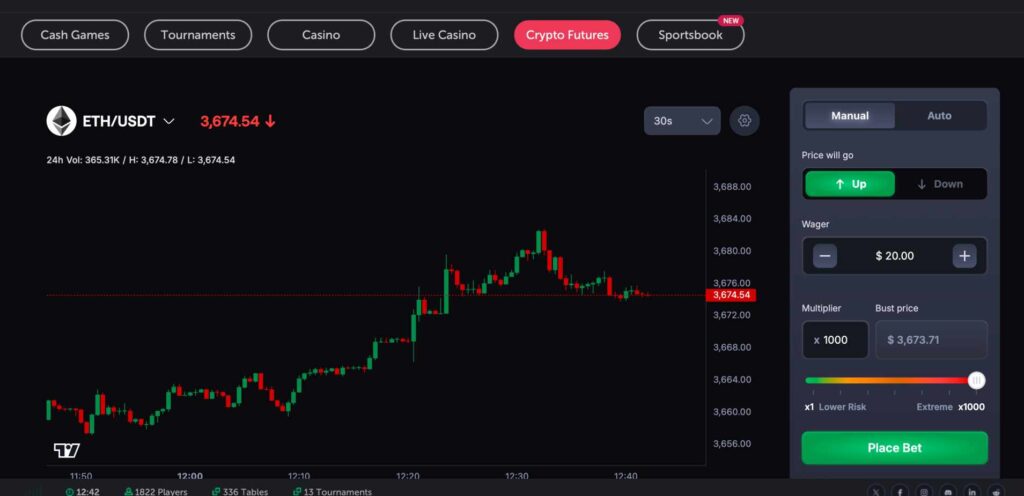
Another benefit is that CoinFutures offers simulated futures rather than perpetuals or deliveries. These beginner-friendly products support both long and short trading without requiring limit orders or liquidity from other participants. As CoinFutures clearly displays the liquidation price (“bust price”), novice traders understand risk.
In addition to Bitcoin, CoinFutures supports the best altcoins, including Dogecoin, Solana, and XRP, as well as Ethereum, Cardano, and Litecoin.
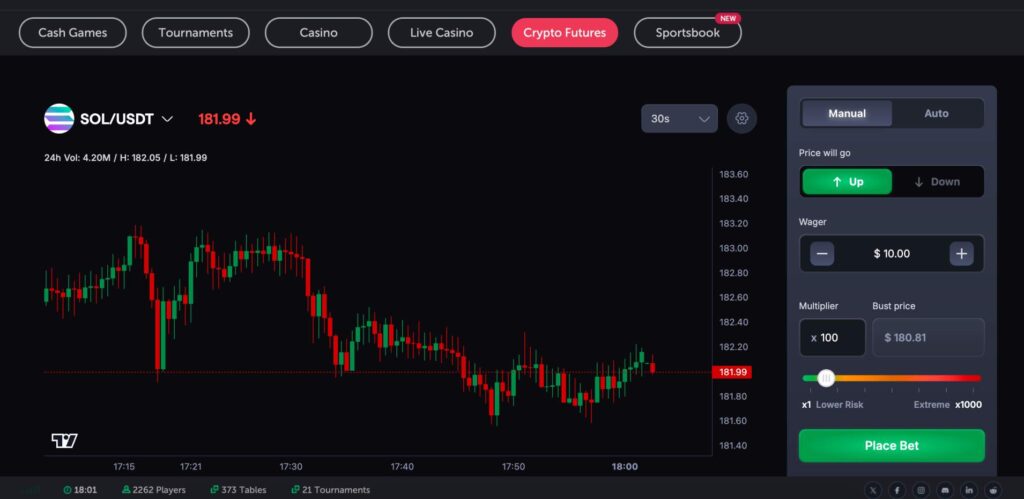
As a global crypto leverage trading platform, users open accounts without providing KYC details such as nationality or government-issued ID. Payments are anonymous and safe, as CoinFutures accepts wallet-to-wallet transfers. Several fiat payment methods are available, too, including debit/credit cards and Google/Apple Pay.
Pros
- In our view, the overall best crypto leverage trading platform in 2026
- Trade Bitcoin, Ethereum, Dogecoin, and other top assets long or short
- Leverage multiples range from 1x to 1000x on all markets
- Platform users cannot lose more than the wager on any single position
- Offers anonymous accounts and instant payments
- The parent company, CoinPoker, is a regulated provider that launched in 2017
Cons
- Traders cannot access advanced analysis tools like technical indicators
- Lacks support for perpetual and delivery futures
2. Margex – Top-Rated Copy Trading Tool Lets Users Trade Leveraged Products Passively
Complete beginners like Margex for its passive trading experience. The exchange, which provides perpetual futures markets, offers a built-in copy trading tool. Users review vetted futures traders based on key metrics such as profitability and risk, then choose an investment amount. Thereafter, buy and sell positions are automatically replicated in the user’s Margex account.
Alternatively, traders may manually speculate on Margex futures. The platform uses transparent order book systems, and deep liquidity ensures tight spreads and fast execution speeds. Traders pay 0.019% or 0.06% per side for limit and market orders, respectively. The downside is that Margex offers no discounts for higher trading volumes.
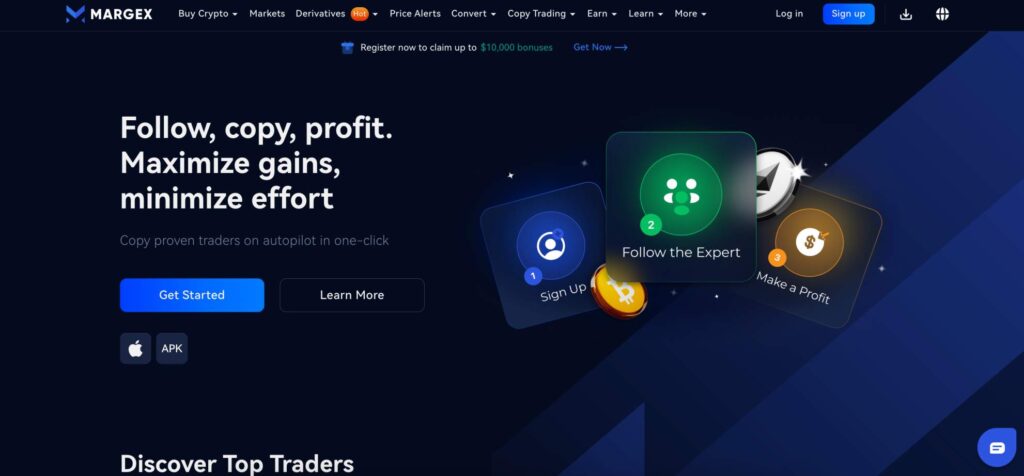
About 55 futures pairs are listed, including the best meme coins like Pepe, Floki, and Bonk. Minimum leverage is 5x on all markets, and limits range from 25x to 100x depending on the pair. Bitcoin, Ethereum, and other large caps offer the biggest multiples, and like most exchanges, this framework mitigates volatility risk. All in all, it can safely be recommended as one of the best 100x leverage crypto trading platforms.
Pros
- Copy successful leveraged traders passively
- Perpetual futures offer maximum leverage of 25x to 100x
- Supports 55 derivative markets, including popular meme coins
- Accepts crypto and fiat payment methods
Cons
- The platform’s unregulated framework may concern some traders
- 0.06% per side on market orders is expensive
3. MEXC – Global Exchange With 900+ Perpetual Contracts and Leverage of up to 500x
MEXC offers the industry’s largest selection of leveraged products. With over 900 perpetual futures, traders go long and short on a diverse range of digital assets. Alongside market leaders like Bitcoin, Solana, and XRP, MEXC supports new cryptocurrencies with small-cap valuations. It’s also popular for trading meme coins with leverage. Markets include Moo Deng, Popcat, Fartcoin, Bonk, and OFFICIAL TRUMP.
Leverage limits are high, as MEXC offers 500x on large-cap pairs like BTC/USDT. In less liquid markets, limits are lower, though they are usually at least 100x. Advanced trading features include custom price charts and indicators, as well as drawing tools such as horizontal rays and parallel lines.
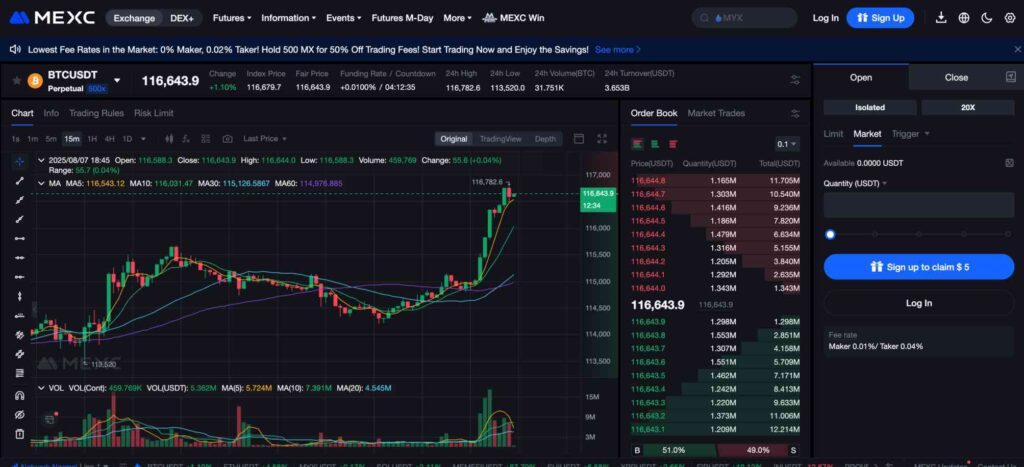
MEXC, which offers anonymous accounts with high withdrawal limits, offers industry-leading fees. Traders placing limit and market orders pay 0.01% or 0.04% per side. During promotional periods, the exchange offers 0% commissions on some futures pairs.
Pros
- The largest selection of perpetual markets, with over 900 pairs
- Trade leveraged futures from just 0.01% per side
- Top assets offer 500x leverage
- Get started without providing personal information or KYC documents
Cons
- Sign-up bonuses have unfavorable wagering terms
- MEXC does not accept U.S. traders
4. Bybit – Automated Trading Strategies to Speculate on Leveraged Perpetual Futures
Bybit provides crypto leverage trading solutions via automated bots with predefined strategies. The process is beginner-friendly, as users simply choose their preferred strategy and amount, and the bot begins trading. Bybit bots operate 24/7 across all market conditions, and backers pay only standard trading commissions.
One example is a futures combo bot that short sells OFFICIAL TRUMP, dogwifhat, and Fartcoin with 3x leverage. The strategy has yielded an APY of over 788% since its inception. A less risky bot uses the high-frequency strategy to long Dogecoin with 2x leverage, and it capitalizes on market dips automatically.
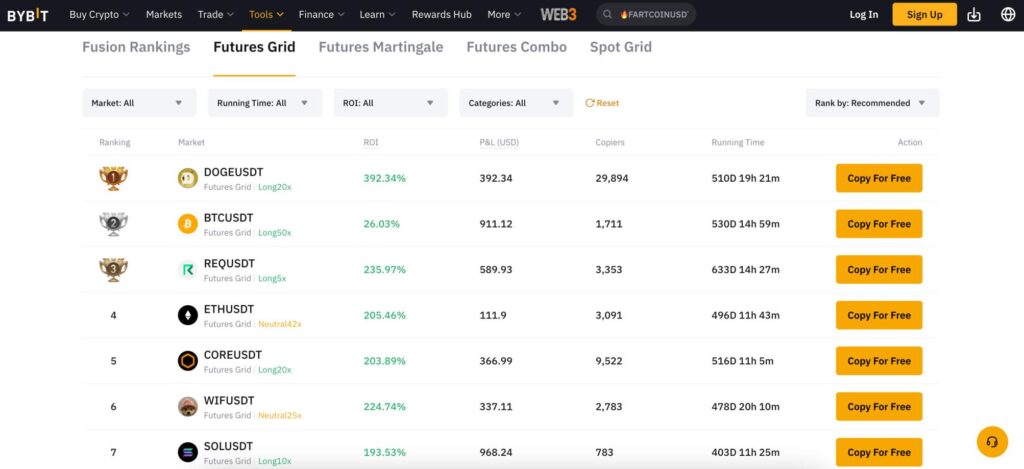
Bybit also suits experienced derivative traders. It offers hundreds of perpetual futures and options contracts for Bitcoin, Ethereum, and Solana. Traders access a maximum leverage of 200x depending on the market. Bybit charges an entry-level commission of 0.055% per side. It reduces the commission to 0.02% when traders provide liquidity.
Pros
- Copy automated bots that trade futures markets 24/7
- The exchange supports hundreds of derivative products
- Offers a maximum leverage cap of 200x
Cons
- Operates as an unregulated offshore trading platform
- Blocks IP addresses from some regions
- Market takers pay much higher fees than makers
5. Binance – The World’s Largest Crypto Exchange for Derivative Volume and Liquidity
Serious traders who demand deep liquidity and tier-one trading tools prefer Binance. As the world’s largest exchange for spot and derivative volume, platform users get minimal slippage and reliable order execution. The built-in trading dashboard provides real-time price and volatility data, along with over 100 technical and economic indicators.
The exchange supports multiple-leverage trading in crypto markets, including over 500 perpetual contracts and delivery futures for Bitcoin and Ethereum. Binance is a top-rated options platform, too, with extensive chains that cover popular altcoins like Dogecoin and Solana.
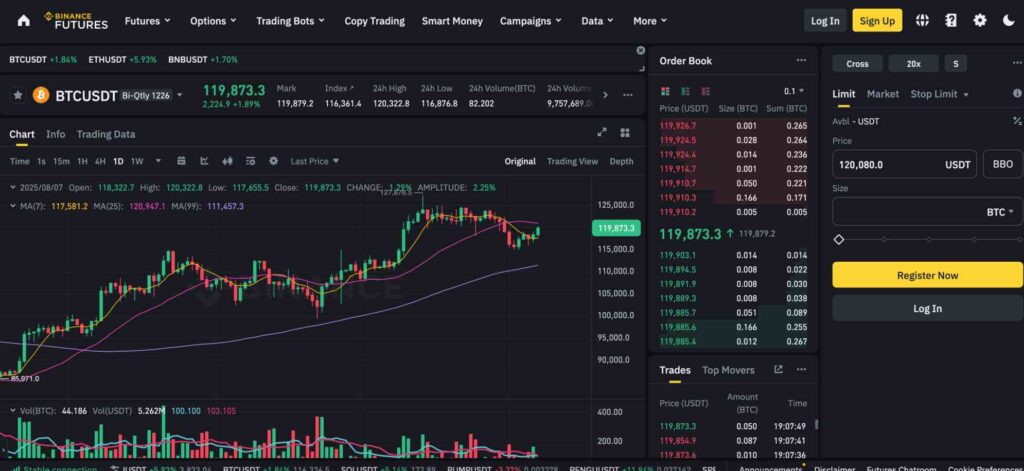
Maximum leverage varies depending on the market and derivative instrument, although Bitcoin and other large-cap cryptocurrencies offer up to 125x. For commissions, futures traders pay 0.018% on limit orders. The fee rises to 0.045% on market orders. Options contracts cost 0.03% with no discounts for large volumes.
Read our experts’ full analysis and review of Binance for more information.
Pros
- The world’s biggest exchange for liquidity and volume
- Leverage instruments include options, perpetuals, and delivery futures
- Get leverage of up to 125x on major pairs
Cons
- Leverage isn’t available in the U.S.
- No longer offers KYC-free accounts
6. Coinbase – Great Option for U.S. Traders Seeking Leveraged Futures in a Regulated Environment
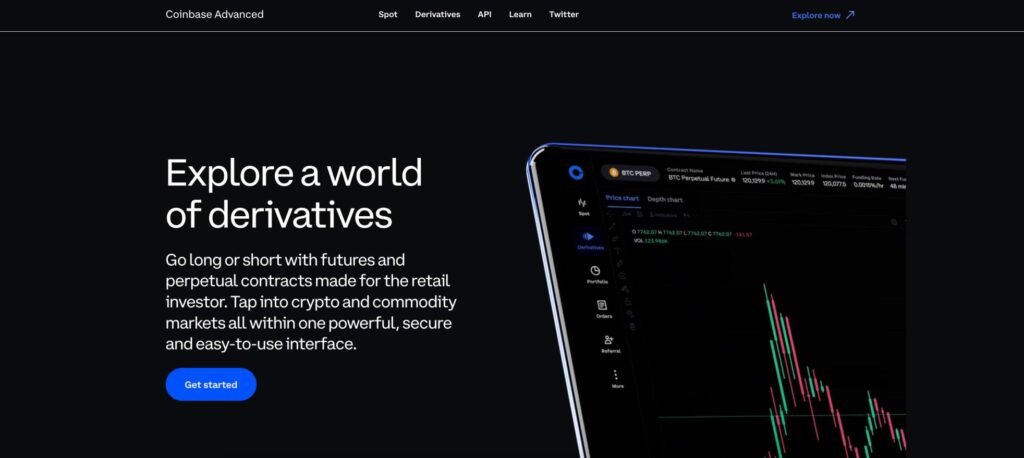
Coinbase remains the safest and most regulated crypto trading platform. Launched in 2016 and regulated by a wide range of tier-one licensing bodies, Coinbase recently launched U.S. perpetual futures markets. The launch enables U.S. retail clients to trade Bitcoin and Ethereum derivatives in a CFTC-regulated environment.
Futures instruments are “nano” style, so contract values are 0.01 BTC and 0.1 ETH. As the platform sets a minimum margin requirement of 10%, U.S. clients get a maximum leverage of 10x.
However, global compliance and institutional-grade security come at a cost. Like many Coinbase products, futures traders pay high commissions. The exchange charges a funding fee of 0.02% per side, with funding applied hourly (most platforms apply funding every 8 hours). Entry-level traders who are unable to meet the 30-day trading minimums pay much higher fees.
Coinbase accounts require extensive KYC procedures, including document uploads and selfies. Users must submit an additional application to trade perpetuals. Deposit methods include PayPal and debit/credit cards, although local bank payments like ACH are considerably cheaper.
Pros
- Regulated futures trading platform for U.S. retail clients
- Backed by one of the most trusted exchanges globally
- Advanced trading tools include technical indicators and bespoke orders
- Deposit USD via ACH without paying fees
Cons
-
- Maximum leverage limits are just 10x
- Perpetual futures markets include BTC/USD and ETH/USD only
-
- Long onboarding process before users unlock derivative access
7. KuCoin – Eliminate Liquidation Risks When Speculating on Leveraged Digital Assets
KuCoin offers an alternative way to trade cryptocurrencies with leverage. Its derivative products are called “leveraged tokens” and they let users trade long and short without facing liquidation risks.
The exchange offers “Up” and “Down” markets with 2x or 3x leverage, and positions are rebalanced each day. If trading the BTCUP 3x market, for instance, you profit 3% for every 1% Bitcoin price increase. The same system works when prices fall, but in reverse. KuCoin supports leveraged tokens across other popular markets, including Aave, Gala, SushiSwap, Uniswap, and BNB.
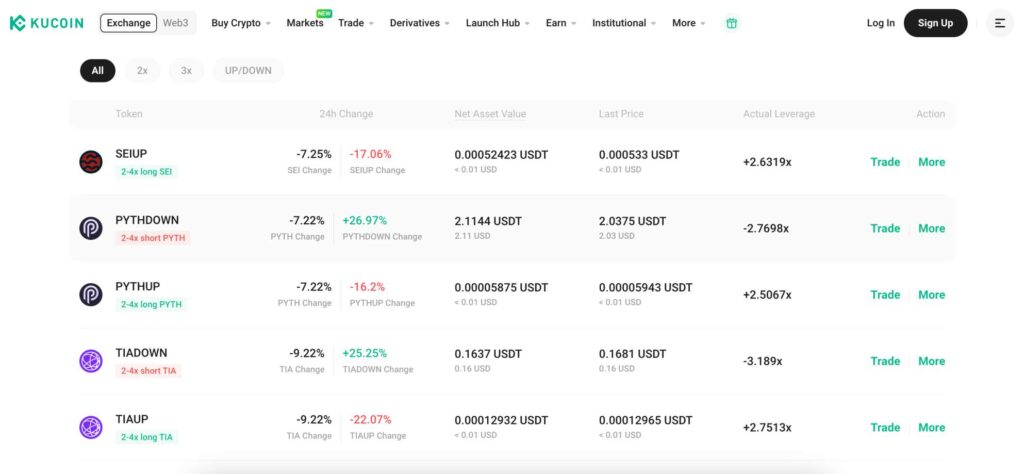
Regarding fees, traders pay standard spot trading commissions that start at 0.1% per side for makers and takers. Holding the exchange’s native token, KCS, or meeting 30-day trading volume targets, reduces commissions.
The leverage trading crypto platform supports conventional derivative markets, including over 460 perpetual futures. Traders may also access simplified options, although these are aimed at beginners who don’t feel comfortable using options chains.
Pros
- Trade 2x and 3x leveraged tokens without liquidation risks
- No upfront margin is required
- Also offers perpetual futures and simplified options
Cons
- Traders cannot access any markets without completing KYC verification
- Fee discounts require KCS tokens or over $1 million in monthly trading volume
Comparing Crypto Leverage Trading Exchanges
Here are the best high-leverage crypto trading providers compared by key research metrics:
| Leverage Instruments | Tradable Leverage Markets | Max Leverage | Minimum Margin | U.S. Friendly? | KYC? | Standard Trading Fees | |
| CoinFutures | Simulated futures | 11 | 1000x | 0.1% | Yes | No | Traders choose between a variable fee or a profit commission |
| Margex | Perpetual futures | 55+ | 100x | 1.0% | No | No | 0.019% (limit orders) and 0.06% (market orders) |
| MEXC | Perpetual futures | 900+ | 500x | 0.2% | No | No | 0.01% (limit orders) and 0.04% (market orders) |
| Bybit | Perpetual futures, options | 700+ | 200x | 0.5% | No | No | 0.02% (limit orders) and 0.055% (market orders) |
| Binance | Perpetual futures, delivery futures, options | 570+ | 125x | 0.8% | Yes, but spot trading only | Yes | 0.02% (limit orders) and 0.05% (market orders) |
| Coinbase | Perpetual futures | 2 | 10x | 10.0% | Yes | Yes | Commissions from 0.02% with a $0.15 minimum per contract |
| KuCoin | Leveraged tokens, perpetual futures, options | 470+ | 125x | 0.8% | No | Yes | Maximum commission of 0.1% (leveraged tokens) and 0.06% (perpetuals) |
How Does Leverage Work in Crypto?
Leverage is a tool used in many trading markets, including stocks, forex, and crypto. It enables traders to boost their trading capital, often by significant amounts. Most crypto exchanges with leverage require an upfront margin that is multiplied by the chosen leverage.
A trader with a $100 margin who trades Bitcoin at 50x leverage opens a $2,500 position. Trading gains are multiplied by the total leveraged position, rather than the initial margin. This mechanism lets crypto investors target substantial profits while mitigating risks to manageable amounts.
In crypto, several derivative products support leverage, although the most common is perpetual futures. These derivatives function like traditional futures but without an expiration date, so traders can keep positions open for any timeframe. Some platforms also offer delivery futures, where users buy or sell contracts with a predetermined maturity date. Simulated futures, options, and leveraged tokens are other ways to access crypto leverage.
While each derivative instrument operates uniquely, common characteristics exist. Traders do not own cryptocurrencies when they trade with leverage. This framework means they cannot withdraw assets to a private wallet, as derivatives are financial contracts created by platforms. Another shared feature is that leveraged products support long and short trading. Regardless of the market dynamics, traders may speculate on rising or falling prices.
High-leverage trading can generate massive returns when traders predict future prices correctly, but it’s also risky. Adverse price movements result in liquidation if the position drops below the margin balance. In this instance, the exchange closes the position, and the trader loses their initial margin. We talk about liquidation risks later in this guide.
Benefits of Trading Crypto with Leverage
This section explores the advantages of leverage when trading digital assets.
Access Substantial Trading Capital
No matter the budget, leverage provides crypto traders with a significant capital boost. The best 1000x leverage crypto trading platforms require an upfront margin of just 0.1%. To long or short cryptocurrencies with $10,000 in market exposure, platform users need just $100 in their trading account.
High leverage amplifies potential profits, helping traders with limited funds achieve far greater returns.
Leverage is Highly Accessible
Research shows that anyone can access crypto leverage online. This highly accessible market often requires small trade sizes, as platforms like CoinFutures require a $1 minimum per position. The platform also offers no-KYC accounts. Traders from around the world can buy and sell leveraged assets even if domestic providers aren’t available.
Trade Bullish, Bearish, and Sideways Markets
While leveraged products vary by instrument, derivatives always back them. Derivatives are financial contracts between two or more parties that track the underlying crypto. This framework provides traders with exposure to digital assets without owning them, and allows them to speculate in both market directions.
During bullish markets, traders go long their preferred derivative, whether that’s a futures contract or a call option. They enter short-selling positions during bearish markets, inviting profit opportunities despite weak crypto sentiment.
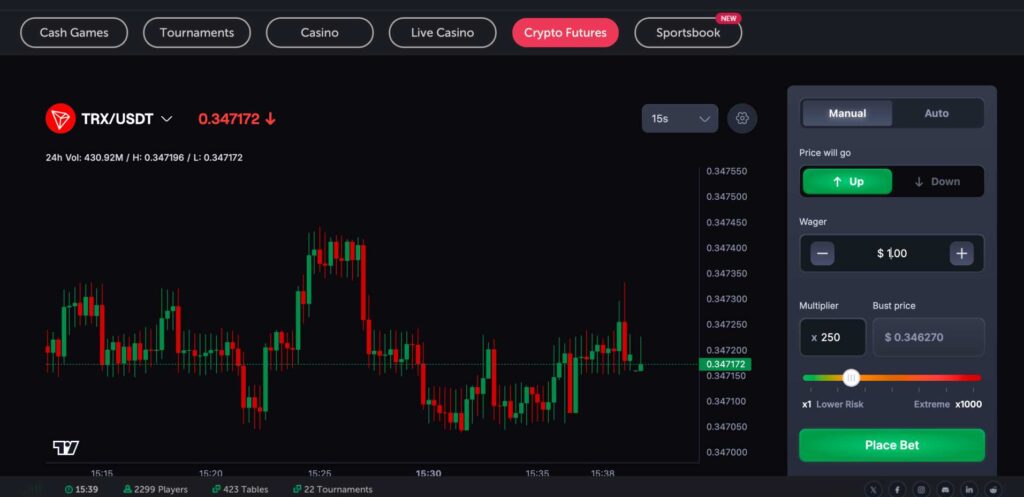
Leverage is also a useful trading tool during sideways markets, where crypto prices trade within a tight consolidation zone. Margins are small during these periods, yet high leverage amplifies those returns.
Hedge Against Market Uncertainty
Long-term crypto investors frequently use derivatives to hedge against uncertainty.
Cashing out traditionally triggers an asset disposal, and if the sale yields profit, the investor is likely liable for capital gains tax. Through derivatives, the investor can instead take the opposite position via futures or options. The result is that they protect portfolio balances against volatile markets while avoiding the need to dispose of assets.
Best Practices When Choosing a Platform for Trading Cryptocurrencies with Leverage
Choosing the right platform with leverage is just as important as selecting the derivative instrument itself. It is worth choosing exchanges that offer transparent fees, clearly defined liquidation levels, and flexible control over the amount of leverage. Intuitive interfaces and built-in risk management tools, such as stop-loss and take-profit, are also a great help.
A wide range of markets allows for better diversification of strategies. It is also important that the platform provides fast order execution, high liquidity, and secure payment methods.
What to look for:
- Transparent fee structure
- Clearly defined margin requirements and liquidation levels
- Intuitive interface and risk mitigation tools
- Wide range of markets and leveraged instruments
- High liquidity and fast execution
- Secure and convenient deposit and withdrawal methods
Potential Risks of Leverage Crypto Trading
All crypto trading markets carry risk, yet leveraged derivatives amplify those risks. This is because of liquidation, where exchanges close positions when they decline by unfavorable amounts. When you face liquidation, the platform retains the original margin, so you effectively lose 100% of the initial wager.
It’s important to note that liquidation risk increases as the leverage multiple rises. 10x leverage amounts to a 10% margin requirement, which means liquidation occurs if the trade value drops by 10%. Increasing the leverage to 200x reduces the margin and liquidation buffer to just 0.5%. When you factor in volatile crypto markets like meme coins, a 0.5% price move can occur in seconds.
Traders mitigate leverage risks in several ways. Alongside keeping leverage multiples sensible, they set stop-losses. This tool ensures exchanges close declining positions before they’re liquidated. Risk-averse traders also limit margin amounts to 1-2% of their total exchange balance. This strategy protects trading capital from critical drawdowns.
Pros & Cons of Crypto Leverage Trading
Summarized below are the advantages and disadvantages of leverage in crypto:
Pros
- Leverage provides a significant boost in trading capital
- Some exchanges offer multiples of up to 1000x
- Derivatives support leveraged markets, which allow long and short trading
- Leverage platforms are highly inclusive, with small minimums and global access
- Speculate on cryptocurrencies without storing them in non-custodial wallets
- Instruments like futures and options facilitate hedging strategies
Cons
- Traders lose their initial margin when leveraged positions liquidate
- Some leverage products invite unlimited loss potential
- Positions often incur funding fees every few hours
- You don’t own or control cryptocurrencies when using leverage
- Most derivatives suit short-term traders only
Key Things to Know Before You Trade Crypto with Leverage
Read on for key considerations regarding crypto leverage trading. Learn about choosing the right derivative product, leverage-specific fees, and proven risk management tactics to reduce liquidation risks.
Select the Right Leveraged Product
A wide range of derivative products offers leverage, and each has its own pros and cons. Factors like trading experience, risk tolerance, and financial goals help traders choose the right instrument.
Our research confirms that first-time traders like CoinFutures for its beginner-friendly framework. In simulated futures, traders go long or short based on “Up” and “Down” predictions. CoinFutures accepts only wager amounts (in USD) and multiples, making leverage trading suitable for inexperienced users.
Intermediate traders often prefer perpetual or delivery futures, which rely on limit or market orders, liquidity, and other traditional exchange features.
Seasoned crypto investors use options. This derivative product requires a strong grasp of options chains, Greeks, and contract specifications.
Is Leverage the Same as Margin?
Leverage and margin have an inverse relationship. Traders pay an upfront margin, a percentage of the trade value. Entering a $50,000 position with an initial $500 wager reflects a 1% margin. On the other hand, that $500 wager represents 100x leverage.
Leverage Fees Often Make Long-Term Investing Unviable
Investing in cryptocurrencies on spot exchanges offers simple, predictable fees. Traders usually pay a percentage commission based on the total investment amount before withdrawing the coins to a private wallet.
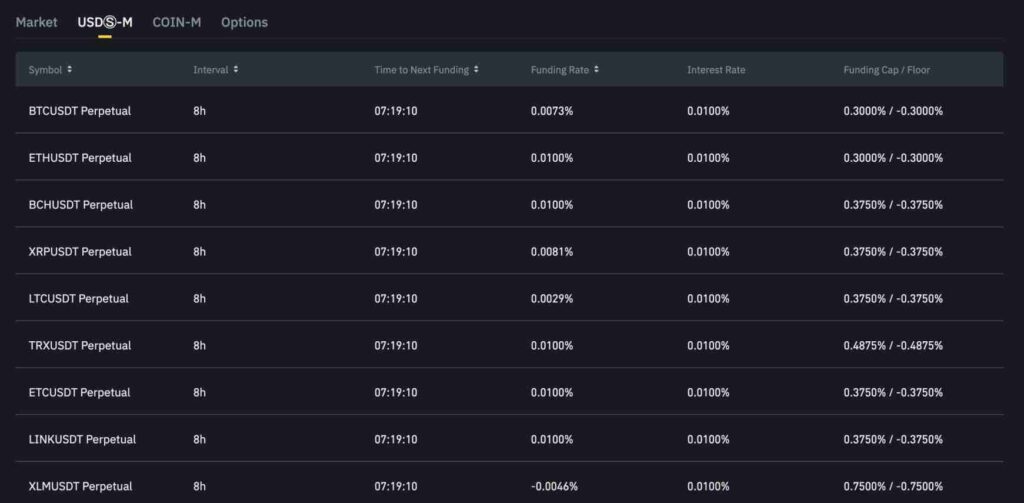
Most leveraged markets have ongoing fees called “funding”. Platforms typically charge funding fees every eight hours, and the charge depends on how much the trader has borrowed. This pricing structure makes long-term positions unviable, even when trading instruments without expiration dates.
Learn About Risk Management Strategies
The best way to approach crypto leverage trading is with a predetermined risk management plan.
Start with a bankroll management strategy. Some experts recommend risking no more than 1% of the trader’s available capital, and even less when trading more volatile markets like meme coins. The concept ensures that trading risk aligns with the existing balance, and position sizes rise or fall depending on the portfolio’s performance.
Another risk management strategy is to set stop-losses and take-profits before entering new trades. The stop-loss reduces liquidation risk by closing the trade before the initial margin is depleted. Take-profits secure trading gains automatically, based on the trader’s profit target.
Consider the risk spectrum of certain trading pairs as well. If you’re using 100x leverage on a micro-cap token with weak liquidity, the chances of avoiding liquidation are almost zero. The same leverage multiple on a major pair like BTC/USDT is significantly more risk-averse, since volatility levels remain lower.
How to Trade Crypto Leverage
We explain how to trade cryptocurrencies with leverage on the CoinFutures platform, which ranks as the overall best option for beginners. Read on to trade popular digital assets with a 0.1% margin requirement in under five minutes.
Step 1: Open an Account and Download CoinPoker
Click “Register” on the CoinFutures website and complete the account form. The provider requires an email address, password, and nickname.
Unlike many top crypto futures trading platforms, CoinFutures does not require KYC. This is a major benefit for many traders, particularly those wanting to avoid uploading government-issued ID.
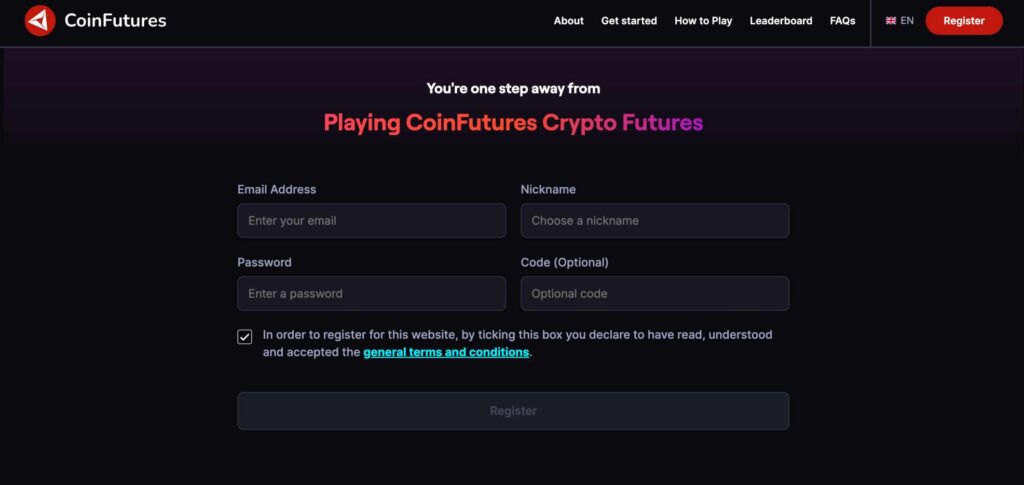
Next, download the CoinPoker software or mobile app. CoinPoker is CoinFutures’ parent company, and it has been in business since 2017. The interface ensures a premium trading experience, fully optimized for the chosen operating system.
Step 2: Deposit Crypto or Fiat
CoinFutures offers a quick deposit process without account minimums.
Depositing digital assets works similarly to any other crypto platform. You select a crypto and network, and the CoinFutures system generates a unique wallet address. Open your private wallet, paste the address, and complete the transfer. Most cryptocurrencies arrive in 1-2 minutes, though Bitcoin deposits take about 10-15 minutes.
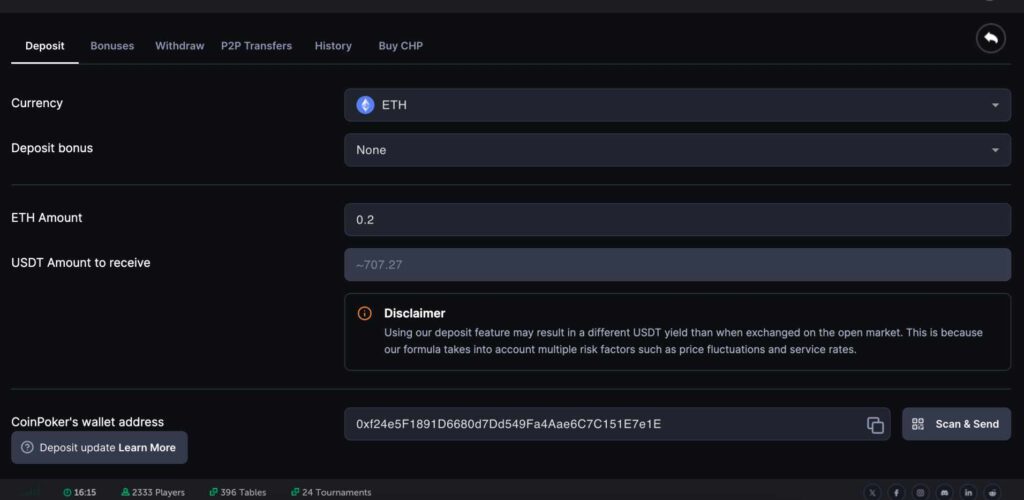
CoinFutures handles fiat payments, too. Deposit options include Google/Apple Pay and Visa and Mastercard debit/credit cards.
Step 3: Choose a Simulated Futures Market
Once the deposit appears, click “Crypto Futures”. Stay on the BTC/USDT page to trade Bitcoin with leverage. Alternatively, choose another market, such as Ethereum (ETH), Cardano (ADA), or Solana (SOL).
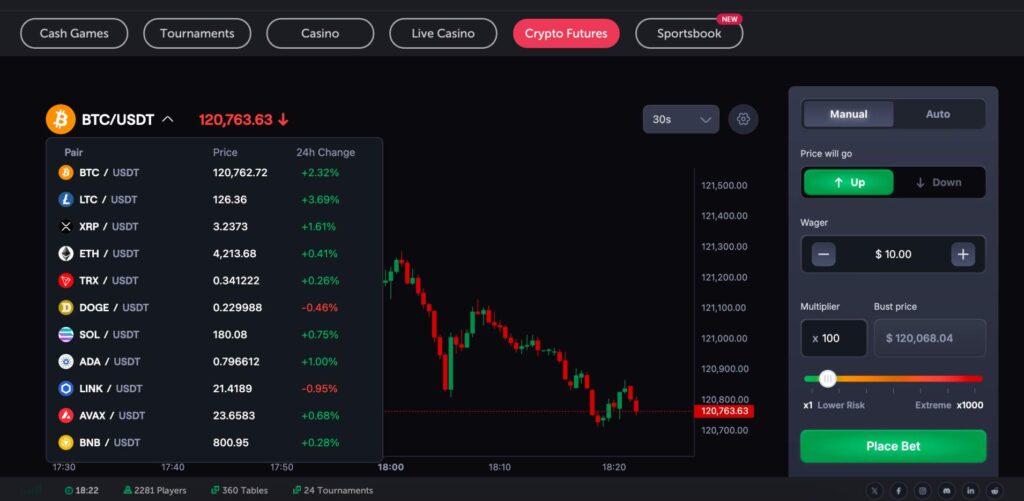
Remember that lower-cap cryptocurrencies increase volatility rates, making liquidation more probable. In our view, Bitcoin remains the best crypto to buy and sell via leveraged derivatives, especially for beginners with low risk tolerances.
Step 4: Enter Direction, Wager, and Leverage Multiple
If you’re trading cryptocurrencies for the first time, the CoinFutures dashboard provides a beginner-friendly experience.
First, choose between a long (“Up”) and short (“Down”) prediction. Your decision depends on whether you believe prices will increase or decrease after placing the trade.
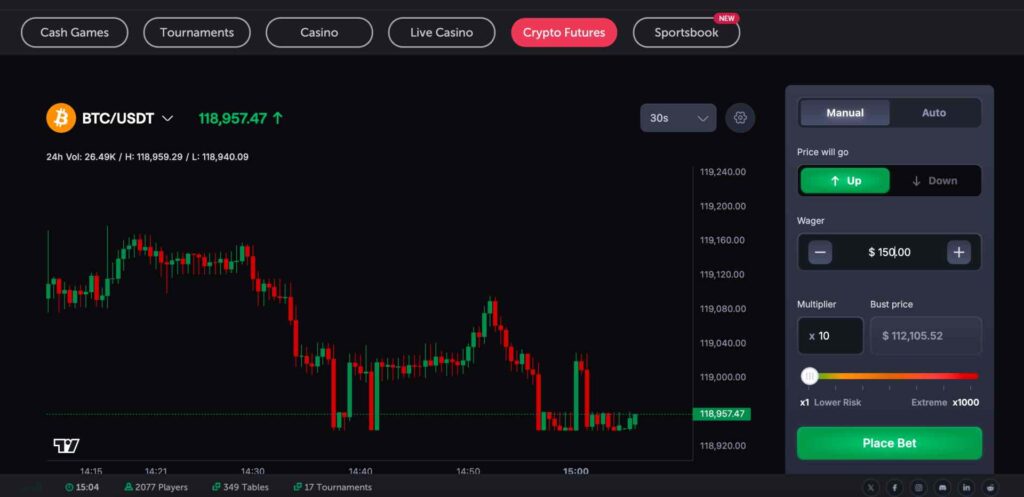
In the “Wager” field, type in the amount to risk in USD. The wager is effectively your upfront margin, which you lose if the futures trade hits the liquidation price. Enter any amount from $1 to $1,000.
Type in the required leverage amount, or use the dashboard slider. As a risk warning, extremely high leverage vastly increases liquidation risks. Consider starting with low multiples as a beginner.
Step 5: Set Risk Management Levels and Place the Futures Trade
CoinFutures lets traders enter positions with risk management tools. We strongly recommend using these tools to reduce risk. Click the “Auto” button and set the stop-loss level—type in an exit price or maximum USD loss.
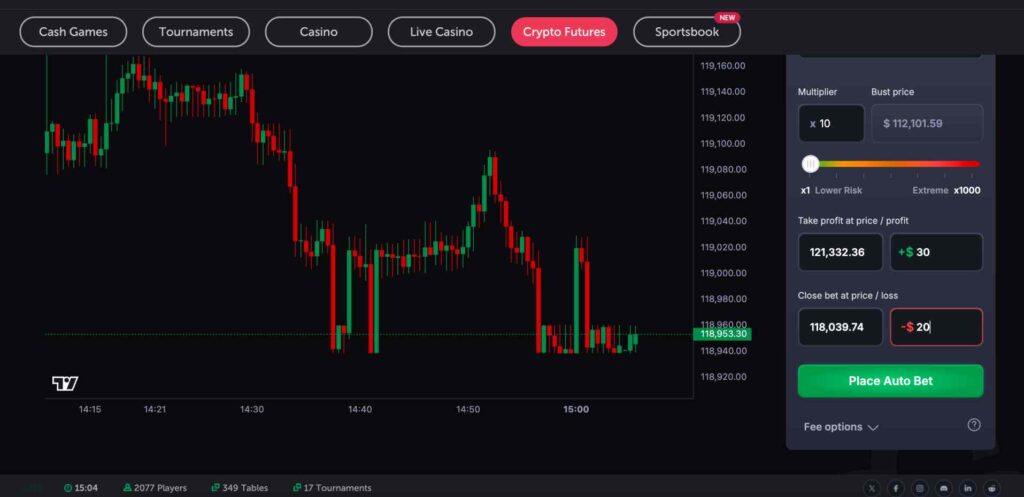
Then set the take-profit level to automatically close the trade if that profit target triggers.
After reviewing the trade parameters, click “Place Bet” to confirm the futures trade.
To conclude, leverage trading crypto platforms provide significant market opportunities, with inconsequential balances often amplified by 100x or more. Traders should explore the various derivative products that support leverage, as well as risk management tools like stop-losses.
We reviewed the top crypto leverage exchanges and found that CoinFutures offers the most beginner-friendly experience. CoinFutures has a $1 trade minimum and supports top altcoins like Ethereum, Dogecoin, and BNB. Other benefits include instant payments, no-KYC accounts, and a maximum leverage of 1000x.
What is 20x leverage on $100?
What is the best leverage for crypto trading?
How much can I lose with a 10x leverage?
What happens if you lose a leverage trade?
Which cryptocurrencies are most commonly traded with leverage?
Can I lose more than my initial investment?
Which exchange gives 1000x leverage?
How do I calculate my leverage?
References
- Law & regulation (Commodity Futures Trading Commission)
- How to hedge your portfolio using derivatives (J.P. Morgan)
- Evaluating market risk from leveraged derivative exposures (European Central Bank)
- Key strategies to avoid liquidations in perpetual futures (Coinbase)
