


Elizabeth Warren Challenges Meta Over New Stablecoin Plans
We may earn commissions from affiliate links or include sponsored content, clearly labeled as such. These partnerships do not influence our editorial independence or the accuracy of our reporting. By continuing to use the site you agree to our terms and conditions and privacy policy.

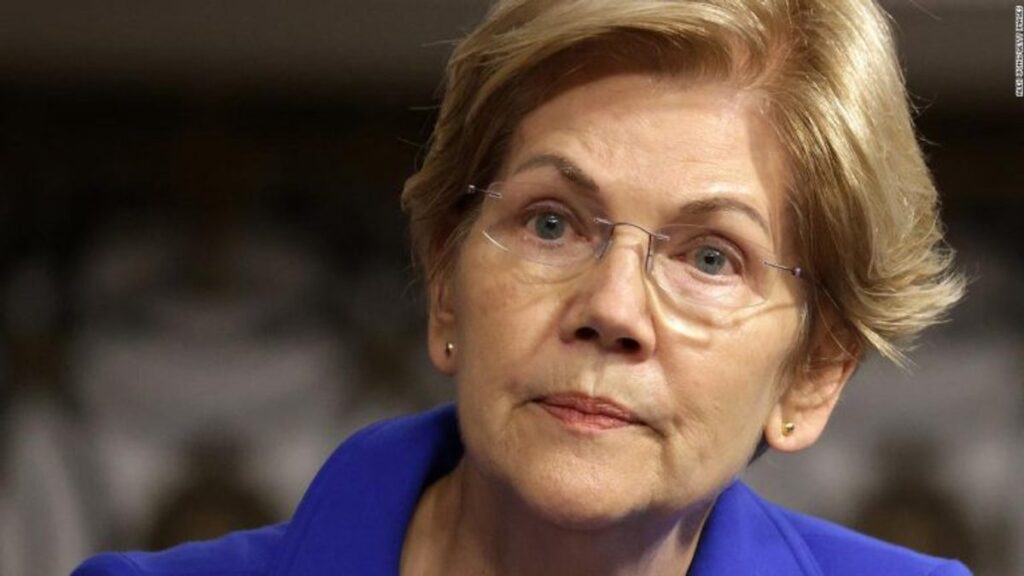
Senator Elizabeth Warren demands answers from Meta regarding its stablecoin payment strategy for Facebook, Instagram, and WhatsApp by 2026.
The letter arrives as Meta prepares a massive push into crypto payments via Facebook, Instagram, and WhatsApp—a strategy that sources suggest could reach over 160 countries as early as the second half of 2026.
In her address to Mark Zuckerberg sent on May 7, Senator Elizabeth Warren demanded that the company disclose details regarding current pilot programs and potential plans to integrate stablecoins directly into MetaPay. The Senator set a May 20 deadline for an official response, warning that Meta could become a “de facto private central bank” if it leverages its massive user base to impose its own payment ecosystem.
Meta Under Scrutiny Once Again
This marks the latest chapter in the long-standing conflict between Meta and U.S. regulators concerning cryptocurrencies. The company previously abandoned its Libra project—later rebranded as Diem—following intense political and regulatory pressure throughout 2019 and 2020.
Now, however, Meta appears to be taking a much more cautious approach. Instead of creating its own digital asset, the company is working with external partners and utilizing existing stablecoins, primarily USD Coin (USDC). Warren argues that this represents a potential regulatory “gray zone,” allowing Meta to re-enter the crypto sector without the direct oversight imposed after the failure of Libra.
The Senator expressed concerns that the mass adoption of stablecoins within an ecosystem of billions of users could pose serious risks to financial stability. In her letter, she recalled the 2023 USDC crisis, when the token temporarily lost its dollar peg following the collapse of Silicon Valley Bank.
According to Warren, a similar scenario on a much larger scale could trigger panic and mass withdrawals if Meta’s digital payments become widely adopted.
Testing in Latin America and Asia
While the company has not officially announced a new crypto project, recent reports indicate that Meta is already conducting limited tests in Colombia and the Philippines. These programs target content creators and digital businesses, who receive payments via USDC.
Sources indicate that transactions are processed through the Solana and Polygon blockchain networks. At this stage, users must connect external crypto wallets. This is where much of the political pressure is focused—whether the next step will involve direct storage of stablecoins within Meta’s applications.
Such a move would transform Facebook, Instagram, and WhatsApp into some of the world’s largest digital payment platforms almost instantly, thanks to a user base exceeding 3.5 billion people.
Stripe Emerges as a Key Partner
Market speculation increasingly links Stripe to Meta’s future crypto strategy. Investors have noted that Stripe CEO Patrick Collison joined Meta’s board in 2025, while Stripe recently acquired the stablecoin platform Bridge.
According to sources, Meta has already sent inquiries to external firms regarding the infrastructure for future payments—a model that differs sharply from the centralized concept of Libra.
For now, Meta denies developing its own stablecoin. A company spokesperson stated that “Meta does not have a stablecoin,” emphasizing that the goal is solely to provide more payment options through existing digital assets.
Nevertheless, the reaction in Washington suggests that any new move by Meta into the crypto sector will likely face much stricter oversight than that applied to other technology companies.


 Commentaries







Fill in necessary fields and publish