


CME Group to Launch Compute Futures for AI Economy
We may earn commissions from affiliate links or include sponsored content, clearly labeled as such. These partnerships do not influence our editorial independence or the accuracy of our reporting. By continuing to use the site you agree to our terms and conditions and privacy policy.

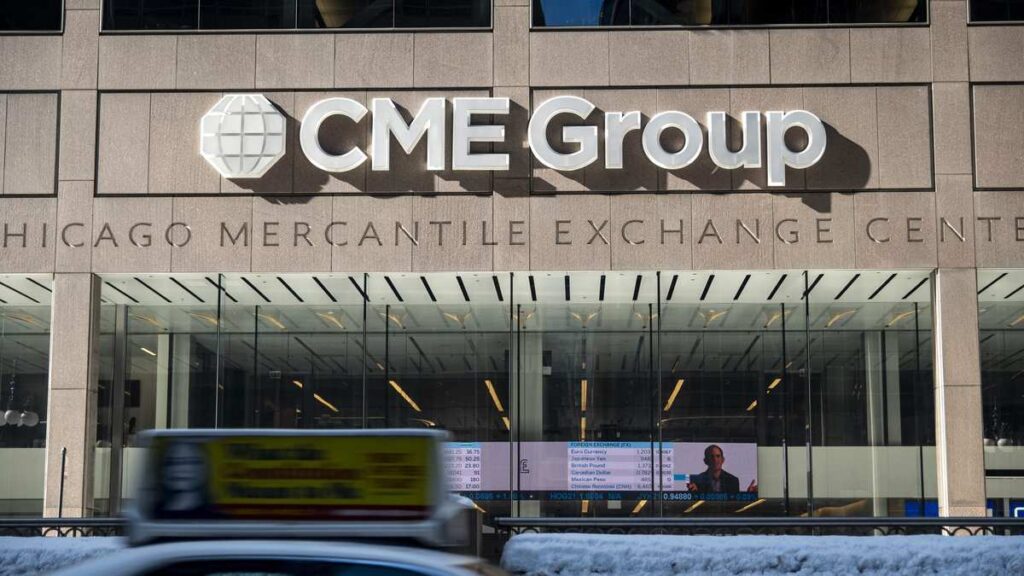
CME Group partners with Silicon Data to launch compute futures, turning GPU capacity into a tradable asset like oil to hedge AI infrastructure costs.
The deal marks an ambitious attempt to transform compute futures into a tradable asset—much like oil, natural gas, or metals—at a time when the AI boom is placing unprecedented pressure on global data infrastructure.
These new products will enable AI companies, cloud operators, and investors to hedge the cost of GPU resources, which are rapidly becoming one of the most expensive commodities in the technology sector.
GPU Capacity Becomes the New “Oil” of the AI Economy
The new contracts will not involve the trade of physical hardware. Instead, they will track daily market prices for renting GPU resources—a segment that has remained highly fragmented and opaque until now.
The futures will be based on Silicon Data indexes, which monitor real-time prices for GPU infrastructure across various cloud networks and regions. The objective is to establish a global benchmark for computing power costs, a critical metric currently missing from the AI market.
CME CEO Terry Duffy has already begun comparing infrastructure to oil during the Industrial Revolution. He suggests that the AI economy is driven not by barrels, but by computer speed, measured in FLOPS (floating point operations per second).
While the market for AI computing power is already valued in the trillions of dollars, pricing remains drastically inconsistent between major providers like AWS and Azure and smaller GPU cloud operators.
DRW and Wall Street Prepare a New Market for AI Risk
The involvement of DRW, one of the world’s most influential trading firms, is drawing significant attention. As a primary investor behind Silicon Data, analysts believe DRW’s presence increases the likelihood that this new market will quickly attract institutional liquidity and high trading activity.
DRW CEO Don Wilson stated that the absence of an effective hedging tool has been a major obstacle for massive capital expenditures in the data center industry.
Currently, AI companies are forced to operate in an environment of extremely volatile GPU prices, as demand for Nvidia and AMD infrastructure continues to outpace supply. This makes the new futures a potentially vital tool for risk management, similar to how airlines utilize oil futures to stabilize fuel costs.
CME Accelerates Expansion into Digital Markets
The announcement of compute futures comes as CME aggressively expands its footprint in 24/7 digital markets. On May 29, the exchange officially moves to round-the-clock trading for its crypto futures products, following the launch of Avalanche and Sui futures earlier this month.
The company is also preparing to launch Bitcoin Volatility Futures on June 1—a product designed to allow trading on Bitcoin’s volatility rather than the price of the asset itself.
These moves indicate that CME is positioning itself as the primary infrastructure for the next generation of digital assets, ranging from cryptocurrencies to AI resources.
The new compute futures market is still awaiting regulatory approval from the CFTC. The regulator is expected to subject the index methodology to rigorous scrutiny to mitigate the risk of manipulation. If approved, AI startups could be managing their “compute burn” costs by the end of 2026 in the same way energy companies manage raw material price risks—marking a fundamental shift for the entire AI industry.


 Commentaries







Fill in necessary fields and publish