


BIS Warns Stablecoins Risk Fragmenting Global Finance
We may earn commissions from affiliate links or include sponsored content, clearly labeled as such. These partnerships do not influence our editorial independence or the accuracy of our reporting. By continuing to use the site you agree to our terms and conditions and privacy policy.

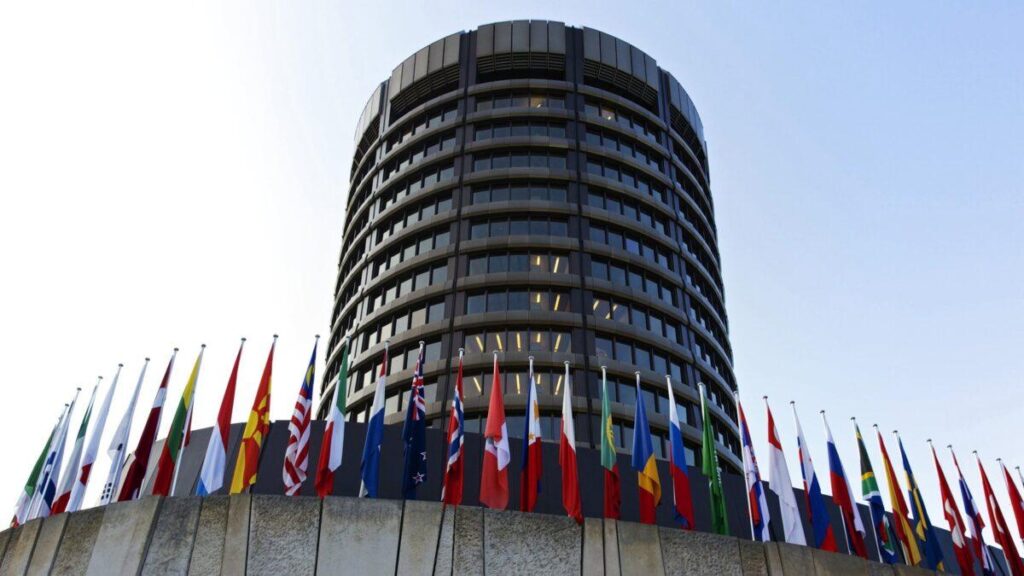
The BIS 2026 Annual Economic Report warns that stablecoins could fragment the global financial system and disrupt emerging market monetary policies.
In its 2026 Annual Economic Report, the Bank for International Settlements (BIS) indicates that the rapid proliferation of private digital currencies could trigger new systemic risks. According to the BIS, the issue extends beyond the crypto assets themselves; the real threat lies in their potential to splinter the global financial system into multiple isolated ecosystems that struggle to communicate.
Why the BIS Sees Significant Risk
The report suggests that most stablecoins operate on various public blockchains that are frequently incompatible with one another. This creates closed, separate environments instead of a unified financial infrastructure.
The BIS identifies this as a threat to the “singleness of money.” In traditional finance, a dollar maintains the same value whether it is held in a bank, as physical cash, or as a central bank reserve. Stablecoins do not always offer such a guarantee, as market stress can cause their prices to temporarily deviate from their fixed pegs.
Furthermore, the report warns of potential fallout from mass stablecoin redemptions. In such a scenario, issuers might be forced to rapidly liquidate the assets backing their tokens, such as US Treasury bonds. This fire sale could transmit stress directly into traditional financial markets.
Impact on Emerging Economies
The BIS pays specific attention to developing nations, where most leading stablecoins are pegged to the US dollar. This makes them highly attractive to citizens in countries struggling with high inflation or volatile national currencies.
The institution argues this trend could gradually erode the effectiveness of local monetary policy. As more people adopt digital dollars over national currencies, central banks lose control over the money supply, interest rates, and overall financial stability.
The BIS warns that such “dollarization” could shift international capital flows and intensify pressure on exchange rates across various emerging economies.
Project Agorá as a Centralized Alternative
Rather than relying on private stablecoins, the BIS proposes its own model: “Project Agorá.” This initiative brings together eight central banks and more than 40 regulated financial institutions.
The project aims to build a unified platform connecting tokenized bank deposits with tokenized central bank reserves. This approach seeks to leverage blockchain technology’s benefits without dismantling the existing two-tier banking system.
According to the BIS, this infrastructure would facilitate faster cross-border payments and 24/7 settlements with higher efficiency, all while maintaining the central bank’s role as the ultimate guarantor of trust in the financial system.
The institution also calls for tighter international coordination regarding stablecoin regulation, noting that divergent national rules could further fragment global markets.
The report underscores that the debate has shifted from whether tokenization will transform finance to who will lead that transformation. The BIS clearly advocates for a model where innovation occurs under central bank oversight rather than through independent, private crypto networks.


 Commentaries







Fill in necessary fields and publish