


Russia to Launch Strict Crypto Regulations by July 2026
We may earn commissions from affiliate links or include sponsored content, clearly labeled as such. These partnerships do not influence our editorial independence or the accuracy of our reporting. By continuing to use the site you agree to our terms and conditions and privacy policy.

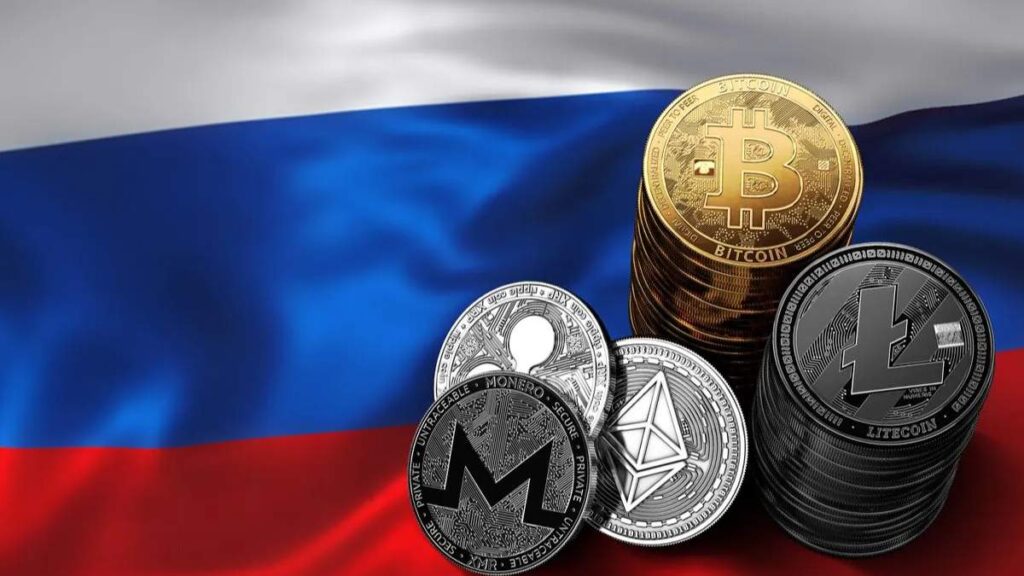
Russia's new crypto plan mandates local servers by 2026 and sets trading limits for retail investors while preparing for a digital ruble rollout.
Under a plan set for completion by July 1, 2026, all crypto exchanges wishing to operate in the Russian market must obtain special state authorization and store user data on local servers.
Access to foreign platforms may be restricted as early as the summer of 2026. Authorities are also planning strict sanctions for unlicensed crypto activities, which are scheduled to take effect in July 2027—approximately one year after the new regime begins.
The stakes are high. According to government estimates, Russians trade digital assets worth approximately 50 billion rubles daily (around $550 million). Each year, local investors pay roughly $15 billion in fees to foreign exchanges—funds that Moscow wants to keep within the national financial system.
Financial Institutions Are Already Preparing
The country’s major financial institutions are already building the infrastructure for regulated crypto trading.
Among them are the St. Petersburg and Moscow exchanges. Large banks such as Sberbank and Sovcombank are also preparing new financial products, including loans and mortgages secured by crypto assets.
Parallel to this reform, Russia is preparing the launch of its central bank digital currency—the digital ruble—which is expected to be introduced for mass use on September 1, 2026.
Two-Tier System for Investors
The new regulatory framework will divide market participants into two distinct categories.
Retail Investors
- Annual purchase limit: 300,000 rubles (approximately $3,300 – $4,000).
- Access: Limited to major crypto assets such as Bitcoin, Ethereum, Solana, and Toncoin.
- Requirement: Mandatory financial risk testing.
Qualified Investors
- Trading volume: No limits on volume.
- Restrictions: A ban on using highly anonymous cryptocurrencies such as Monero, Zcash, and Dash.
Control Over Financial Flows
Analysts suggest that Moscow’s strategy is not aimed at a total ban on cryptocurrencies, but rather at creating a highly regulated ecosystem.
The goal is for the state to have full visibility into financial flows while simultaneously using crypto infrastructure as a potential tool to bypass international sanctions.
Risk of a “Grey” Crypto Economy
Experts warn that excessively strict restrictions could lead to the opposite of the intended effect.
Users may turn toward:
- Peer-to-peer (P2P) trading
- Decentralized exchanges (DEX)
- Using VPNs to access foreign platforms
Russia plans to utilize technologies such as DNS blocking and Deep Packet Inspection (DPI) to limit access to international exchanges, though these methods can often be bypassed.
What Comes Next
Approximately 20 million Russians already own or trade cryptocurrencies. The primary question now is whether the new system will succeed in bringing the market under state control without pushing a large portion of activity into the illegal economy.
The coming months will reveal if Russia can establish a model of “controlled legalization” that successfully integrates the crypto market with state financial policy.


 Commentaries






Fill in necessary fields and publish