


Inside the Strategy Paradox: Tech Firm or Bitcoin vault?
We may earn commissions from affiliate links or include sponsored content, clearly labeled as such. These partnerships do not influence our editorial independence or the accuracy of our reporting. By continuing to use the site you agree to our terms and conditions and privacy policy.


Strategy Inc. (NASDAQ: MSTR), formerly known as MicroStrategy, is unlike any other company in today’s market.
On one hand, it continues to sell enterprise analytics software powered by artificial intelligence, helping organizations solve the puzzle of siloed and fragmented data. On the other, it has built a reputation as the most aggressive corporate accumulator of Bitcoin in the world. This dual identity – part technology provider, part crypto vault – has become the defining paradox of Strategy stock, shaping both how investors value the company and how Wall Street views the future of corporate treasuries.
Its unusual blend of software and digital assets has made Strategy a lightning rod in debates over whether corporations can successfully turn balance sheets into long-term crypto bets. That conversation is also spilling over into other corners of the equity market, where newer entrants are testing similar models. HYLQ Strategy Corp, for instance, has drawn rising attention by aligning itself with HyperLiquid, a fast-growing decentralized exchange. While still small compared to MSTR, HYLQ’s focus on DeFi exposure is increasingly being discussed in the same breath as other top cryptocurrency stocks, signaling how investor interest is widening beyond Bitcoin-centered strategies.
A business rooted in technology
Before its Bitcoin pivot, Strategy was widely known for its data analytics software. The firm carved out a niche by helping enterprises transform raw information into actionable insights, delivering solutions for organizations overwhelmed by the sheer volume of data stored across incompatible systems. That core business remains, and it still matters in earnings reports.
The demand for modern analytics platforms continues to grow. In fact, during the last quarter, data analytics peers collectively beat analyst expectations, highlighting strong secular trends. Strategy itself reported year-on-year revenue growth, showing that its technology division is far from obsolete. For traditional investors, this software foundation provides an anchor of stability, proving that Strategy is not just a speculative Bitcoin vehicle.
A balance sheet built on Bitcoin
Yet no conversation about Strategy stock can ignore its Bitcoin treasury. Over the past several years, the company has relentlessly expanded its holdings, using a mix of ATM equity programs, IPOs, and credit instruments to fund purchases. Today, its Bitcoin reserves account for the majority of its market capitalization, making Strategy the most recognized corporate Bitcoin proxy.
Executives openly embrace this strategy, publishing detailed capital markets frameworks and measuring progress not just through revenue or profit, but through unique metrics like “Bitcoin per Share.” By linking shareholder value directly to crypto accumulation, Strategy has blurred the line between operating company and digital asset fund.
For some investors, this positioning is precisely the attraction. For others, it raises serious concerns about sustainability and long-term balance sheet risk.
The rejection that sparked debate
The paradox came into sharper focus when S&P Dow Jones Indices declined to include Strategy in the S&P 500 index, despite the company meeting size and liquidity requirements. The reasoning, while not explicitly stated, was clear to analysts: Strategy’s heavy reliance on Bitcoin holdings made it look more like an investment fund than a traditional operating business.
This decision carried symbolic weight. It signaled that financial gatekeepers are wary of treating Bitcoin-heavy treasuries as standard corporate players. Analysts at JPMorgan went further, warning that other index providers might reconsider their approach to similar companies. For investors in Strategy stock, the exclusion reinforced the reality that regulatory and institutional acceptance is still a work in progress.
The imitators and their struggles
Strategy’s model has inspired a wave of imitators, from Metaplanet in Japan to smaller firms in North America and Asia. These companies sought to replicate the success by making bold Bitcoin acquisitions, often generating headline-grabbing spikes in share prices.
But the results have been mixed. Many of these stocks later slid below the value of their Bitcoin holdings, exposing cracks in their business models. Some saw insider selling or funding issues, while others lacked a strong core business to support the treasury strategy. By contrast, Strategy’s longevity shows that combining an established technology platform with disciplined capital management is critical to survival.
How investors view the paradox
Investor sentiment around Strategy stock reflects its unusual nature. Major asset managers and pension funds have accumulated shares, drawn by the chance to gain regulated Bitcoin exposure without directly holding crypto. Insider buying has reinforced confidence, suggesting that executives believe the long-term strategy will pay off.
Yet analysts remain divided. For every bullish thesis highlighting Strategy as the ultimate Bitcoin proxy, there are cautionary notes warning about volatility, governance risks, and the dangers of tying corporate value so tightly to a speculative asset. This tension is the essence of the Strategy paradox: admired for its boldness, questioned for its sustainability.
That same debate over risk and sustainability is now shaping interest in other equity-linked approaches. HYLQ Strategy Corp (CSE: HYLQ) has positioned itself as a novel bridge for Wall Street, a way to participate in DeFi’s growth without navigating wallets, bridges, or on-chain execution. Instead of Bitcoin, HYLQ anchors its treasury in HyperLiquid’s HYPE token, a top-15 digital asset by market capitalization and a growing force in decentralized derivatives.
HyperLiquid’s exchange has already surpassed $2.5 trillion in lifetime derivatives volume, with daily trading often in the billions, rivaling the activity seen on Coinbase.
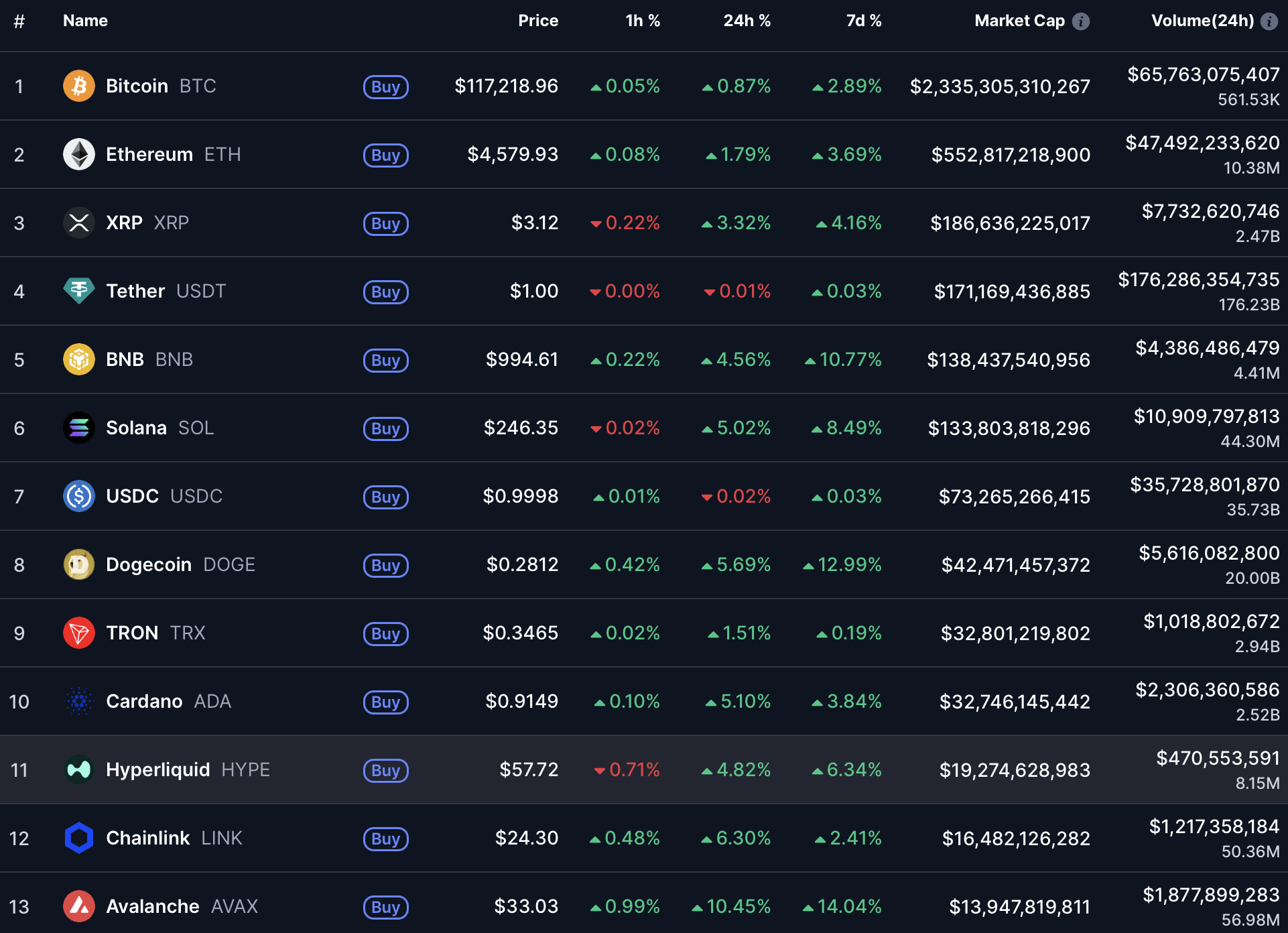
By holding nearly 29,000 HYPE tokens acquired at $37–$39 and now trading above $57, with the token ranked 11th on CoinMarketCap, HYLQ has built a treasury position that closely mirrors HyperLiquid’s rapid growth.
What makes the model compelling is its mix of equity-market safeguards, quarterly reporting, audited oversight, and accessible trading via mainstream brokers, combined with exposure to HyperLiquid’s sustainable tokenomics. Transaction fees at 0.025% generate millions monthly, while innovations such as its cross-margin system help stabilize trading conditions.
Conclusion: the future of MSTR
The story of Strategy stock is not just about quarterly earnings or Bitcoin price swings. It is about what happens when a company straddles two identities, technology provider and crypto treasury, and forces Wall Street to rethink how it values such hybrids.
If Bitcoin continues to climb, Strategy may be celebrated as a visionary pioneer that rewrote the rules of corporate finance. If volatility or regulatory hurdles dominate, critics will see it as a cautionary tale of overexposure. For now, Strategy remains both: a functioning tech firm and the world’s most prominent corporate Bitcoin vault. The paradox is not a weakness but the very feature that keeps MSTR in the spotlight, a stock that investors cannot ignore as the future of corporate treasuries unfolds.


 Commentaries










Fill in necessary fields and publish