


Euro Stablecoins Surge as MiCA and Payment Giants Drive Growth
We may earn commissions from affiliate links or include sponsored content, clearly labeled as such. These partnerships do not influence our editorial independence or the accuracy of our reporting. By continuing to use the site you agree to our terms and conditions and privacy policy.

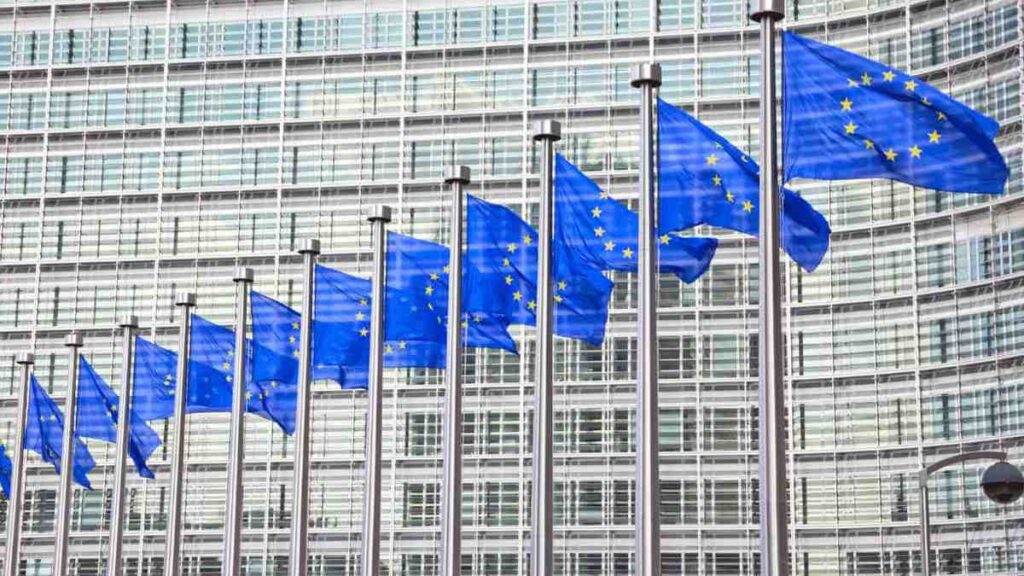
Euro stablecoins now account for 85% of non-dollar transfer volume, reaching $10 billion monthly as MiCA regulation provides a clear framework for growth.
Data shared by Cointelegraph reveals that the euro stablecoin segment is evolving rapidly, even as it remains small compared to the dollar-dominated global market.
EURC is playing a leading role, establishing itself as the primary token in the ecosystem by concentrating the majority of activity and liquidity.
Payments Driving Growth
Euro stablecoins now generate approximately 85% of the transfer volume in the non-dollar segment. Their use is expanding primarily in:
- International payments
- Remittances
- Corporate settlements and treasury operations
Monthly transaction volume has reached approximately $10 billion, reflecting a significant increase from previous years and signaling a gradual move into the real economy.
Visa and Mastercard Accelerate Integration
Traditional payment giants are beginning to integrate euro stablecoins into their networks. Companies like Visa and Mastercard are already expanding support for settlement with EURC, making it easier to use within existing financial infrastructure.
This represents a key step toward mass adoption, as it connects blockchain assets with traditional payment systems.
MiCA Provides Regulatory Clarity
The primary driver behind growth in Europe is the MiCA (Markets in Crypto-Assets) regulatory framework, which provides clarity and predictability for businesses.
Companies operating in euros are increasingly turning to stablecoins specifically because of:
- Lower regulatory risk
- Clearly defined rules
- Opportunities for scalable solutions
The regulation creates an environment where institutional players can experiment and implement new payment models.
EURC Gains Trust Through Circle
Circle has successfully capitalized on the success of USDC by positioning EURC as a reliable tool for euro payments. The total supply of the token already exceeds $500 million, highlighting growing demand.
Additionally, infrastructures like StableFX allow for 24/7 exchange between the euro and the dollar—a service that traditional banking systems cannot offer.
Limited Scale Compared to the Dollar
Despite this growth, euro stablecoins remain a small fraction of the global market, which totals over $300 billion. The dollar continues to dominate digital payments as well as global reserves.
This indicates that the sector is in an early stage of development with significant potential for expansion.
Infrastructure is the Key to Mass Adoption
The next stage of development will depend on building suitable infrastructure for institutional users. The focus is shifting toward solutions that allow for:
- Real-time settlements
- Minimal regulatory risk
- Integration with licensed financial institutions
Companies that succeed in offering such solutions will define the future of euro stablecoins.
Euro stablecoins are gradually establishing themselves as an alternative in international settlements, backed by regulation, infrastructure, and institutional interest.
While they lag significantly behind dollar equivalents, the combination of MiCA, corporate demand, and integration with traditional payment systems is setting the stage for the digital euro to take a larger role in the global financial system.


 Commentaries







Fill in necessary fields and publish