
Best Crypto to Buy in September 2026: 8 Coins to Invest in Right Now
We may earn commissions from affiliate links or include sponsored content, clearly labeled as such. These partnerships do not influence our editorial independence or the accuracy of our reporting. By continuing to use the site you agree to our terms and conditions and privacy policy.


The crypto market is heating up again, and smart investors are already loading up on coins with serious upside. From high-yield staking tokens to real-world utility projects, the best crypto to buy now spans meme-fueled moonshots to Layer 2 innovations that could reshape the blockchain landscape.
Whether you’re hunting for early-stage presales or building a blue-chip portfolio, here are the best crypto coins to buy now.
Best Crypto To Buy in September 2026

May 2025




November 2025


July 2025

April 2025

When buying cryptocurrencies from this list, consider strategies like analyzing trading volume, transaction fees, and market trends to optimize your entry timing.
- Bitcoin Hyper ($HYPER) – BTC Layer 2 with 37% APY
- LiquidChain ($LIQUID) – L3 token built to unify liquidity across major blockchains
- Maxi Doge ($MAXI) – High-risk, high-reward meme coin targeting leverage trading culture
- BMIC ($BMIC) – Decentralized quantum computing for AI and post-quantum security
- SUBBD ($SUBBD) – AI content creation and fan monetization platform
- Solana ($SOL) – High-speed Ethereum rival with 10k%+ growth since launch
- Ripple ($XRP) – Bank-backed cross-border payments token trading at a deep discount
- Bitcoin ($BTC) – Institutional favorite post-halving, ETF demand skyrocketing
Reviewing The Best Crypto To Buy Now (September 2026)
It doesn’t matter if you’re chasing the next 1000x crypto unicorn or proven crypto assets that have been here for quite a while.
Getting in when the time is right is key, and here are the best cryptos to invest in right now.
1. Bitcoin Hyper ($HYPER) – Strong Early-Stage Demand Reinforces Its BTC Layer 2 Narrative
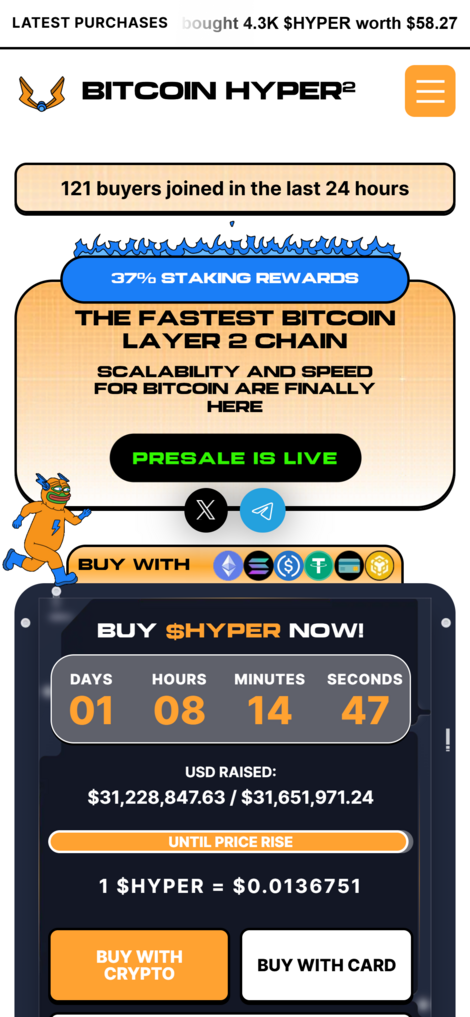
Bitcoin Hyper ($HYPER) is an ambitious new Layer 2 project that aims to scale Bitcoin by integrating DeFi utility. Built using an SVM-based relay and a Canonical Bridge, Bitcoin Hyper enables smart contracts and fast BTC transactions — without compromising decentralization.
Users can stake $HYPER right now via presale and earn up to 37% APY, while also gaining voting rights and access to network rewards.
The project has already raised $31.2M and is showing strong traction among early DeFi adopters. If Bitcoin moves toward $150k–$200k in 2026 as forecasted, Bitcoin Hyper could be the go-to hub for unlocking BTC liquidity.
To find out more about the project, see its whitepaper and follow Bitcoin Hyper on X.
| Current Price (updated Feb 4, 2026, 11:00 AM EST) |
$0.0136751 |
| Total Funds Raised (presale) |
$31,228,847 |
| Tokenomics | 21B supply; deflationary; vesting over 36 months; presale price $0.013335 |
| Token Sign | $HYPER |
| Supported Chains | Solana, Ethereum, BNB Chain, Ethereum network |
2. LiquidChain ($LIQUID) – Layer 3 Vision Gains Momentum as Cross-Chain Access Remains a Key Trend
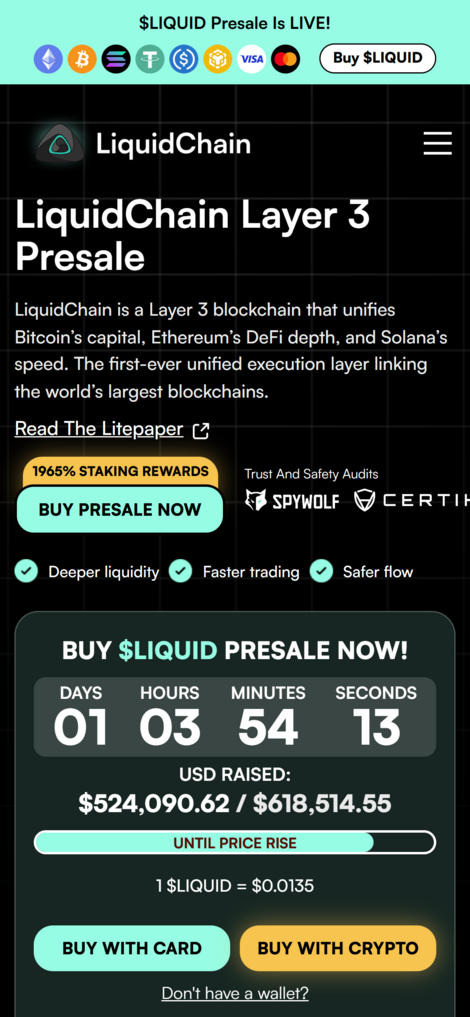
LiquidChain has already gained early traction with a promising cross-chain solution, raising over $7.5 million in seed funding by November 2025. The LiquidChain crypto project positions itself as a Layer 3 network and focuses on use cases, namely simplifying how users and developers interact across major blockchains.
Its core idea is to enable liquidity for Bitcoin, Ethereum, and Solana to operate in a single shared environment. No bridges, wrapped tokens, or multi-step swaps. This means users could move value or execute DeFi actions across chains through a single process.
Beyond that, LiquidChain introduces unified liquidity pools and a high-performance virtual machine designed for fast multi-chain execution. LIQUID tokens can also be staked to generate an annual yield of up to 2,720%.
While still in its early stages, LiquidChain’s focus on real utility makes it a project many investors are keeping an eye on. To learn more, go through the LiquidChain whitepaper and join the Telegram channel.
| Current Price (updated Feb 4, 2026, 11:07 AM EST) |
$0.0135 |
| Total Funds Raised (presale) |
$524,090 |
| Tokenomics | Over 11.8 billion supply; 30% for development |
| Token Sign | $LIQUID |
| Supported Chains | Ethereum, Bitcoin, Solana |
3. Maxi Doge ($MAXI) – Meme Traders Keep Driving High-Volume Interest in This Early Presale
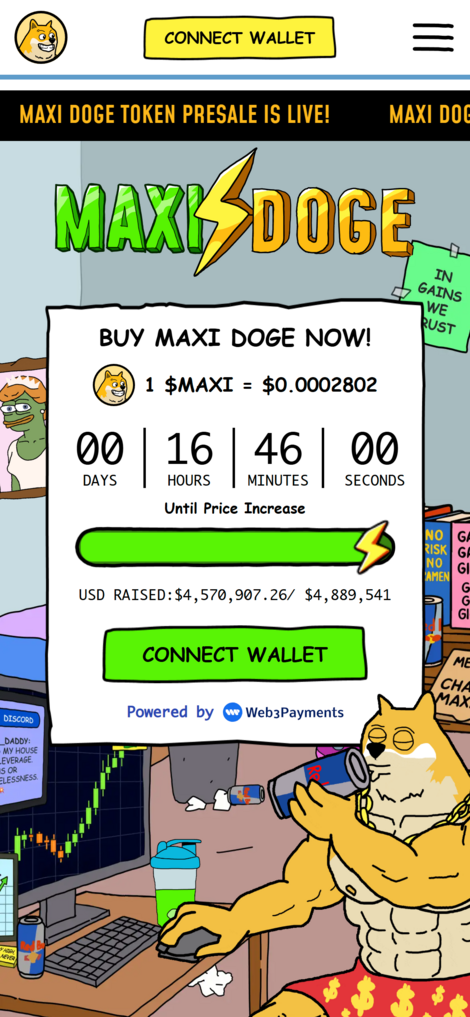
Maxi Doge represents everything serious investors hate – until they check the fundamentals. This leverage-obsessed meme coin doesn’t hide what it is: pure speculation targeting crypto’s riskiest traders, with a ripped canine mascot, powered by Red Bull and 1000x margin dreams.
What makes this worth considering is authentic cultural positioning. Instead of generic dog themes, $MAXI specifically targets the leverage-trading community, which understands both massive gains and total losses. The community embraces the chaos rather than pretending this is a safe investment.
The 150 billion token supply enables widespread distribution while staking mechanics create natural scarcity through locked tokens. Early participants benefit from both high APY rewards and potential explosive upside if viral momentum continues building across social platforms.
If you think it could be your next investment, follow Maxi Doge on X and read its whitepaper before buying the token.
| Current Price (updated Feb 4, 2026, 11:02 AM EST) |
$0.0002802 |
| Total Funds Raised (presale) |
$4,570,907 |
| Tokenomics | 150B supply, 40% marketing, 25% MAXI Fund |
| Token Sign | $MAXI |
| Supported Chains | Ethereum |
4. BMIC ($BMIC) – Decentralized Quantum Compute via AI-Blockchain Token
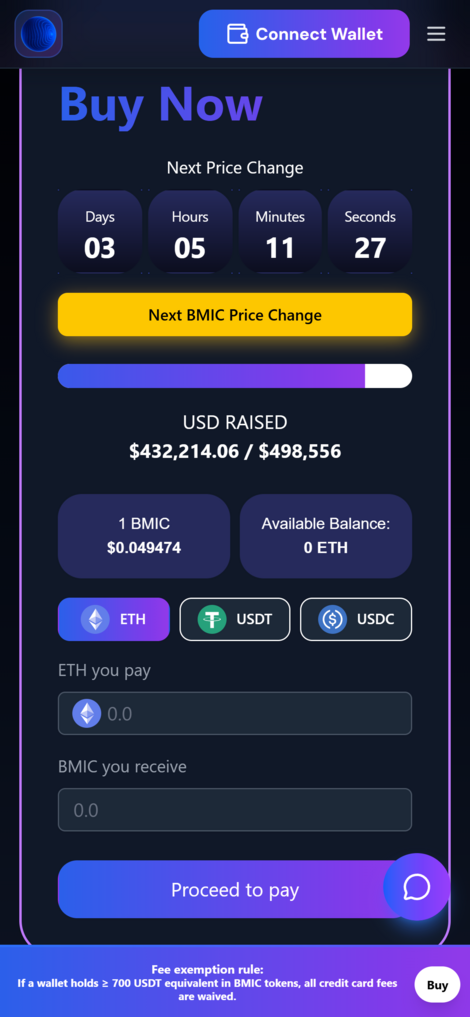
BMIC stands out by pioneering the world’s first decentralized quantum computing network, blending quantum hardware, AI orchestration, and blockchain security to democratize access beyond tech giants. Its native ERC-20 token, BMIC (1.5 billion fixed supply), is currently in presale (50% allocation) on Ethereum, enabling payments for quantum cloud services, staking rewards, governance, premium access, and NFT priority scheduling.
The project addresses real challenges like quantum threats to crypto security and AI’s classical compute limits, using IBM Qiskit integration and post-quantum cryptography.
Audited by CertiK with a clear roadmap (alpha testnet Q1 2025, mainnet Q1 2026), BMIC merits attention for its innovative tokenization of emerging quantum tech in the AI-crypto era – if you’re interested and believe BMIC stands a chance to become one of the best cryptos to buy this season, find the time to explore its whitepaper and follow the project on X.
| Current Price | $0.049474 |
| Total Funds Raised (presale) |
$432,214 |
| Tokenomics | 1.5 billion supply; 50% in presale |
| Token Sign | $BMIC |
| Supported Chains | Ethereum |
5. SUBBD ($SUBBD) – Investor Attention Builds Around Its Expanding AI Creator Ecosystem
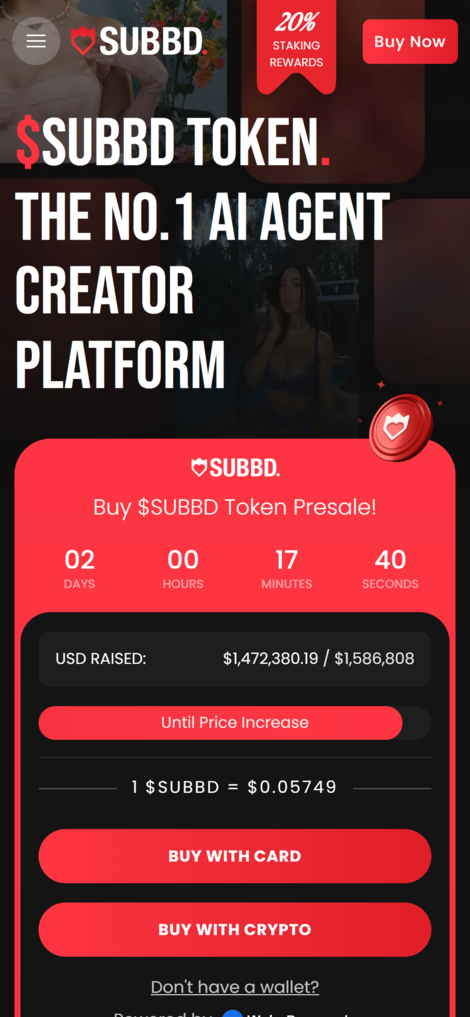
SUBBD is flipping the script on fan platforms by giving both influencers and followers the tools to create — powered by AI. This creator economy token enables fans to generate content using influencer IP, while token holders unlock exclusive posts, content tools, and discounted subs.
With over 250M combined fan reach, SUBBD has the distribution that most projects can only dream of. Early backers include top-tier influencers, and $SUBBD is the currency driving subscriptions, staking, and AI-gen content features.
Some examples of how SUBBD is used include exclusive NFT drops for fans, creator-led subscription platforms, and AI-powered content marketplaces. Already raising $1.472M, this token is poised to disrupt Patreon-style models with Web3 power.
If you’re interested in AI-related projects and can see the potential in this one, follow Subbd on X or Telegram, and have a closer look at the whitepaper.
| Current Price (updated Feb 4, 2026, 11:10 AM EST) |
$0.05749 |
| Total Funds Raised (presale) |
$1,472,380 |
| Tokenomics | 1B supply; 35% presale; 20% creator rewards; 15% staking; 10% ecosystem |
| Token Sign | $SUBBD |
| Supported Chains | Ethereum (ERC-20), BNB Chain (BEP-20) |
6. Solana ($SOL) – Consistent Network Activity Helps SOL Maintain Its Strong Market Position
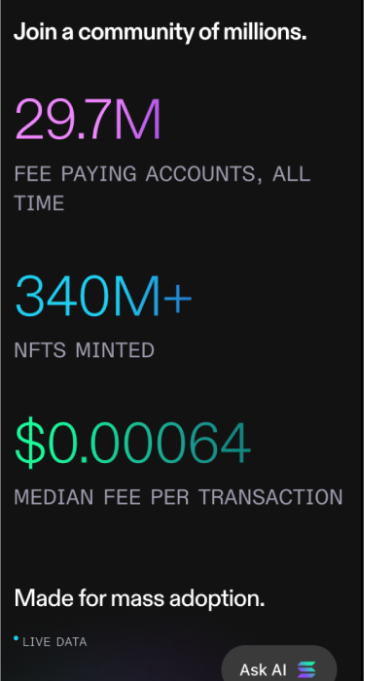
Solana continues to dominate as the go-to Ethereum alternative. With over 3,150 transactions per second, < 400ms block times, and average fees of about $0.0029, it’s no wonder developers are flocking to this chain.
SOL fuels everything from NFTs to DEXs and play-to-earn games. Solana’s blockchain unlocks a wide range of potential applications, enabling innovative use cases and future possibilities for decentralized technology. Solana has already passed 460 billion transactions, and its use case is more popular among developers.
Solana is still 67% below its ATH of $295, and it’s clearly having a hard time pushing back to $100, let alone the magic $200. The market cap has dropped to over $55B, so you can say that Solana is in for a demanding February.
All in all, the current price drop might be a good signal for buying the dip if Solana is something you’ve been waiting to acquire.
| Current Price (updated Feb 4, 2026, 11:15 AM EST) |
$97.06 |
| 24h Change | -5.9% |
| 7d Change | -23.7% |
| 24h Volume | $6,610,220,193 |
7. Ripple ($XRP) – Investors Monitor XRP as Utility and Regulatory Themes Continue to Evolve
Ripple ($XRP) enables real-time, low-cost cross-border payments – and now that it’s beaten the SEC in court, institutional interest is ramping up. Over 100 financial institutions, including Bank of America, use the Ripple network.
The legal victory and growing adoption make XRP increasingly attractive to the investor seeking exposure to innovative financial technology. And as we speak, the first XRP ETF launched on November 24, hitting almost $14M on its first day.
The kicker? As of today, XRP has dropped by 37% over the last year, but volatility is high and mighty on this one. Overall, the one‑year picture is a round trip: strong rallies driven by ETF and legal headlines followed by corrections, leaving XRP slightly lower year‑on‑year but still far above its pre‑2024 levels.
With $97B in market cap, it’s a sleeping giant that could reawaken during the next wave of TradFi adoption. XRP is the “on-chain SWIFT” meme – but with actual backing from the finance world.
As of today, the XRP news flow is dominated by macro risk‑off sentiment, the impact of newly launched spot XRP ETFs, and headlines such as Nasdaq‑listed VivoPower’s plan to source a large Ripple equity stake that could translate into significant indirect XRP exposure, all while analysts debate whether current support in the mid‑$1.80s can hold.
| Current Price (updated Feb 4, 2026, 11:20 AM EST) |
$1.60 |
| 24h Change | -0.3% |
| 7d Change | -17% |
| 24h Volume | $4,072,892,580 |
8. Bitcoin ($BTC) – BTC Holds Key Levels as ETF Activity and Market Volatility Shape Sentiment
Bitcoin has seen major rallies in recent years, supported by rising institutional interest and the growing adoption of Bitcoin exchange-traded funds. After periods of heightened market volatility, BTC has repeatedly demonstrated strong recovery potential, with long-term momentum often reinforced by broader demand from both retail and institutional investors.
Over the years, Bitcoin’s price has experienced remarkable growth, cementing its status as the most valuable and widely recognized cryptocurrency.
In addition to ETFs, crypto futures offer investors regulated access to Bitcoin exposure through futures contracts traded on traditional exchanges like the CME. BlackRock’s IBIT is already a top 5 ETF by inflows, and the “digital gold” narrative is stronger than ever.
With a $1.5T market cap, Bitcoin remains the safest bet in the cryptocurrency market. The oldest crypto has a way of pulling the entire market whichever way it sways. No need to say, the whole crypto community is waiting to see how Bitcoin rebounds after the shutdown and how high it can rise.
| Current Price (updated Feb 4, 2026, 11:00 AM EST) |
$76,012 |
| 24h Change | -3% |
| 7d Change | -14.8% |
| 24h Volume | $474,053,099,248 |
How to Research and Evaluate Cryptocurrencies
Let’s be honest – getting into crypto research can feel overwhelming at first. But once you break it down into manageable steps, it becomes much clearer.
Understand the Basics
Before you invest a single dollar, you need to understand what you’re buying. Ask yourself: What problem does this cryptocurrency solve? Is it trying to be digital money like Bitcoin, or does it power smart contracts like Ethereum?
It doesn’t matter if you’re checking Ripple or Mantle, your research should always be targeted.
Take time to read the project’s whitepaper – yes, it might be technical, but it’s worth pushing through. Especially when you’re approaching crypto presales, it may be a make-or-break factor. But don’t stop there: explore the social media and find the time to examine expert price predictions.
👉Explore the Ethereum price prediction
Analyze the Whitepaper and Project Roadmap
A rigorous read starts with the problem-solution fit: verify the whitepaper clearly defines a real problem, the architecture that solves it, and tokenomics that align incentives without reflexive ponzinomics, then cross-check claims against repositories, audits, and testnets for falsifiability.
Next, interrogate the roadmap for specificity, feasibility, and sequencing – milestones should include deliverables, timelines, and dependencies, with evidence of past milestone completion and contingency plans for delays. Evaluate resourcing and governance around each phase (team capacity, funding runway, treasury unlocks, and community decision rights) to gauge execution risk and dilution pressure at key releases.
This disciplined approach filters marketing noise, helps anticipate catalysts and risks, and improves position sizing and timing around unlocks, mainnet upgrades, and go-to-market inflection points.
Evaluate the Team and Community
Have a closer look at the team: verify real identities, past shipping history, and domain expertise, then map the roles to roadmap milestones to see if skills and headcount match what’s promised. Check transparency signals: public repos with recent meaningful commits, audit disclosures, investor updates, and direct, timely responses in AMAs or forums.
For the community, favor organic engagement over botted metrics – look for thoughtful discourse, developer participation, third‑party builders, and user support that persists outside hype cycles. Strong teams with credible execution and communities that contribute code, feedback, and integrations tend to weather volatility and convert milestones into sustained adoption.
Review Tokenomics and Market Data
Looking for asymmetric upside? Start by sizing the dilution risk: compare the circulating market cap to the fully diluted valuation, then map the unlock schedule (team, investors, treasury) to catalysts where supply may overwhelm demand. Assess utility-driven demand and value capture: fees, burns, staking, or revenue share that ties token accrual to real usage, not just speculation.
Cross-check on-chain and market data – holder concentration, exchange liquidity, depth, and realized volatility – to judge exit risk and slippage at position size. Finally, align position sizing with liquidity and unlock timelines so you’re paid for bearing supply shocks rather than blindsided by them.
Assess Risk, Security, and Transparency
Scrutinize verifiable behavior under stress: review past incident post‑mortems, bug bounty activity, and how quickly critical findings were patched, then match this against current audit coverage (firms, scope, date) and whether changes since were re‑audited.
Favor teams that publish on‑chain multisig signers, treasury addresses, and upgrade permissions, provide timely, plain‑English disclosures for material events, and maintain open repos and dashboards so investors can continuously monitor key risks rather than relying on one‑off claims. If you opt for cheap cryptos, take your time to verify the project’s credentials, so you can invest a little and watch the next crypto hit $1.
Compare Competitors and Real-World Adoption
Once you have a basic understanding of the project, compare it to its direct competitors—especially those operating in the same market segment, such as L1, L2, DeFi, AI, or gaming. Verify whether the project genuinely offers a technological or economic advantage, or whether it merely replicates existing solutions under a different guise.
Also, evaluate actual adoption metrics, including user numbers, partnerships, integrations, developer activity, and real-world applications, rather than mere speculation. Projects with clear product-market fit and growing adoption tend to outlast those that rely solely on marketing or presales.
Risks and Rewards of Crypto Investing
Cryptocurrency investing presents a unique landscape where fortunes can be made or lost in hours. Understanding both sides of this equation is essential before committing your hard-earned money to Bitcoin or top altcoins.
The Reality of Volatility
If you can’t handle seeing your portfolio drop 20% in a day, crypto might not be for you – and that’s okay. This market moves fast. We’ve seen investors panic-sell during dips, only to watch prices recover days later.
The volatility works both ways, though. Those same wild swings have created life-changing wealth for patient investors who understood what they owned – especially for meme coin millionaires.
The modern portfolio theory now has a lot of followers – and maybe there are some good reasons for it.
Common Risks
Every crypto investor faces significant challenges that can impact their portfolio, whether going for Ethereum or Pepe.
Here are the major risks you need to understand before diving in:
- Security breaches and hacking incidents – exchange hacks, phishing scams, and lost private keys have cost investors billions. Always use hardware wallets for significant holdings and enable two-factor authentication everywhere.
- Regulatory uncertainty and government crackdowns – a single government announcement can tank prices overnight. Remember China’s government regulations? Each caused significant market disruption, affecting global markets.
- Technical failures and smart contract bugs – even well-funded projects can fail due to coding errors or network issues. The Terra Luna collapse and various DeFi protocol exploits demonstrate how technical risks can wipe out investments.
- Market manipulation and pump-and-dump schemes – low-market-cap coins are particularly vulnerable to coordinated manipulation by whale investors or organized groups looking to exploit retail investors.
- Extreme price volatility and liquidity issues – some cryptocurrencies can lose 50% or more of their value in days, and during market stress, you might not be able to sell when you want to.
The Reward Potential
Despite the risks, crypto offers unique opportunities that traditional investments simply can’t match. The potential for passive income through staking has become increasingly accessible, with platforms offering steady returns while supporting network security.
Read more: What is the next crypto to explode?
DeFi yields can significantly outpace traditional finance, though with added risk. Yield farming and liquidity provision offer returns unimaginable in traditional markets, sometimes reaching double- or triple-digit annual returns.
Early adoption advantages still exist. We’re still early in blockchain adoption, and positioning yourself now could pay off as institutional adoption grows and new use cases emerge.
The Best Place to Buy Crypto: Where to Invest
When you’ve made up your mind as to the tokens you want to buy, it’s time to head out and search for platforms where you can make the investment and, preferably, track and manage it as you go. Here are some options and go-to places for beginner and advanced traders.
Crypto Wallets and Apps
Crypto wallets and apps are tools that let you buy, store, and manage crypto by controlling your private keys or delegating custody to a provider. They generate addresses on blockchains and sign transactions so funds move securely. Many now include fiat on-ramps, swaps, and dApp access for seamless buying inside the app. Before you decide on one, feel free to consult our comprehensive guide to wallets.
Pros: Convenient purchases, self-custody control, DeFi access.
Cons: Security depends on your setup; fees/limits vary; new wallets lack track records.
Best Wallet stands out for a clean UX, integrated swaps, and DeFi/NFT support—great for mobile-first buyers. It’s a strong pick if you want in-app buying with self-custody and broad network coverage.
Centralized Exchanges (CEX) and Trading Platforms
Centralized exchanges (CEXs) are custodial platforms run by companies that match buyers and sellers via an order book and matching engine; users deposit fiat or crypto, complete KYC, place market/limit orders, and the exchange executes trades and safekeeps assets. They offer fiat on‑ramps, deep liquidity, advanced products (margin, futures), and customer support, but require trust in the operator and introduce custodial and regulatory risks.
Pros: High liquidity and tight spreads; fiat deposits/withdrawals; advanced tools and support.
Cons: Custody risk; KYC and jurisdiction limits; potential withdrawal halts/fees.
If you feel inclined to use centralized platforms, explore the best exchanges and pick one that suits your needs.
Decentralized Exchanges (DEX) and DeFi Applications
Decentralized exchanges (DEXs) and DeFi apps are non‑custodial protocols that run on smart contracts, letting you trade, lend/borrow, and earn yield directly from your wallet without intermediaries. They typically use automated market makers (AMMs) and liquidity pools instead of order books, executing swaps and interest logic transparently on-chain.
Pros: Self‑custody control; global, permissionless access; composability and transparency.
Cons: Smart‑contract and oracle risks; variable liquidity and slippage; UX complexity and gas/bridge frictions.
To find out which of these options to choose, first consult our guide to decentralized exchanges.
Methodology: How We Chose the Best Crypto to Buy Now
Before we wind it up, we’ll take you through our screening process to showcase what steps we follow to pick the best crypto to invest in:
Fundamental Project Strength
We stress‑test fundamentals by replicating claims: reading the whitepaper, validating repos and testnets, and aligning the architecture and token design with the stated problem and target users. Then we pressure‑test execution by mapping roadmap milestones to resourcing, reviewing audits, unlocking schedules, and assessing on‑chain traction to determine whether delivery velocity and adoption justify the valuation.
Market Performance and Growth Potential
We follow a few simple steps to pick out the best crypto to buy: first, we look at liquidity and stability – we check market cap vs. fully diluted value, average daily volume, and slippage at realistic order sizes across major venues to ensure entries/exits are practical. Then we map trend and momentum: we review multi-timeframe price action, realized volatility, and funding/OI to see whether strength is broad and sustainable or purely speculative.
The analysis also includes validating real usage, tracking active addresses, fees/revenue, TVL (for DeFi), developer commits, and partnerships to confirm demand beyond headlines.
Since our screening includes not only listed tokens but also new cryptocurrencies that are still in presale, we may sometimes model post‑TGE circulating supply, unlock schedules, and market‑making/liquidity plans.
Utility, Adoption, and Real-World Demand
Since we’ve already mentioned use cases and real-world utility, it’s no surprise that they’re key criteria for choosing which cryptos to invest in.
We look for proof that people use it, not promises: track active users, transactions, fees, or revenue, retention, and integrations that show the product solves a recurring problem. Then check off-chain demand signals: partnerships, enterprise pilots, payment acceptance, and developer traction, and ensure token demand is tied to that usage (not just incentives), so adoption translates into lasting value.
Risk Level and Diversification
Here’s how the process works, step by step – and why it helps. First, check “can we get in and out?” by looking at liquidity (volume, spreads, slippage) and basic trend health across a few timeframes. Next, confirm “are people actually using it?” by scanning simple usage signals like active users, transactions/fees or TVL, and a couple of visible partnerships or integrations.
Then, sanity‑check supply pressure: compare market cap to fully diluted value and note upcoming unlocks that could add sell pressure. Finally, translate findings into action: favor assets with steady liquidity and real usage, size smaller where unlocks or volatility are high, and spread bets across different sectors and stages (large caps, mid caps, and a few credible presales), so one misstep doesn’t sink the plan.
Conclusion: Best Crypto to Buy Now
The crypto market in 2026 offers more opportunities than ever, but also requires more sophistication if you want to boost your future results. Institutional adoption through ETFs and corporate treasuries has added legitimacy, while DeFi innovations continue pushing boundaries.
Take your time, do your homework, and remember – in a market this volatile, patience and education are your best tools for long-term success.
FAQs: Best Crypto to Buy
What is the best crypto to buy right now?
Can current cryptocurrency prices affect the market potential?
Does trading volume boost investment activities?
Is it risky to buy a presale crypto?
References
- https://www.certik.com/
- https://www.sec.gov/newsroom/speeches-statements/crenshaw-statement-ripple-050825
- https://www.investopedia.com/terms/m/modernportfoliotheory.asp
- https://arbitrum.io/
- https://solscan.io/analytics