
Best Crypto Exchanges for Beginners & Altcoin Hunters in August 2026
We may earn commissions from affiliate links or include sponsored content, clearly labeled as such. These partnerships do not influence our editorial independence or the accuracy of our reporting. By continuing to use the site you agree to our terms and conditions and privacy policy.


When crypto is booming and crypto traders chase the next Bitcoin or Solana, you need to first start with the basics: where will you access the crypto markets?
The best crypto exchanges are what you should be looking at, especially if you want to avoid the noise – after all, there are many crypto exchanges on the market, so picking the right one doesn’t come easy.
Let’s stay until the end of the review and check the top platforms where you can buy and sell Bitcoin, as well as some useful information that can come in handy!
Top Crypto Exchanges in 2026 Shortlisted







The Best Cryptocurrency Exchange Platforms in 2026: Reviewed
Obviously, there are many prominent exchanges on the market, so we’ll cover the best places where you can buy and store crypto.
1. Best Wallet
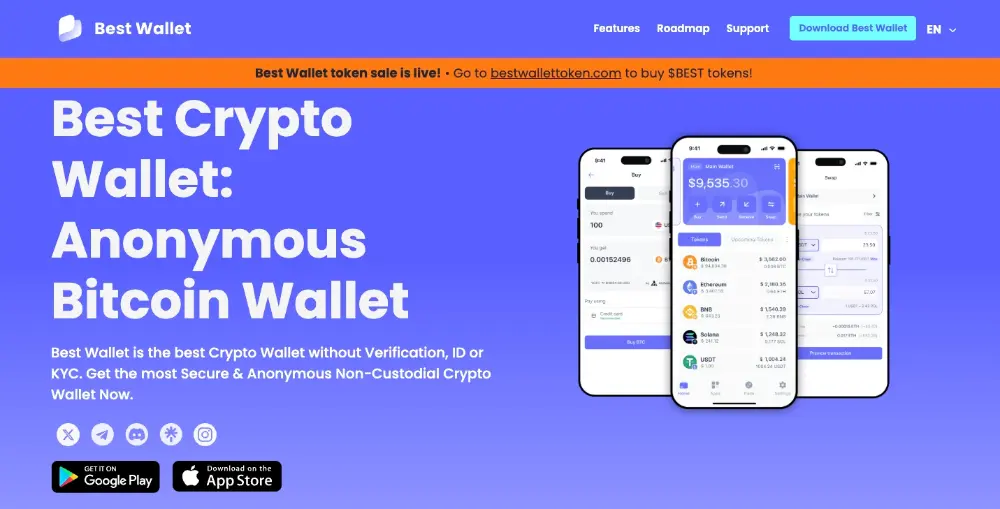
Best Wallet stands out as a true game-changer among the best crypto exchanges, offering a unique blend of security, accessibility, and DeFi integration. Unlike many crypto exchanges that hold your funds, Best Wallet is a non-custodial platform, meaning you alone control your crypto assets. Supporting over 60 available cryptocurrencies across 50+ blockchains, it’s a powerful gateway for anyone looking to store crypto or trade digital assets directly from their wallet.
The platform’s major focus is on user empowerment and seamless access. Best Wallet’s integration with DEXs and cross-chain bridges means you can trade crypto and swap tokens across different blockchains with minimal friction and no KYC requirements.
It’s one of the best exchanges to buy Bitcoin anonymously. Features like biometric authentication and a cloud-based backup (that eliminates the need for seed phrases) help lower the barrier for beginners and seasoned investors alike.
Trading fees are competitive, especially for holders of the BEST token, which unlocks reduced fees and even gas-free transactions. With built-in fiat onramps (supporting Apple Pay and Google Pay), even first-time crypto traders can buy bitcoin or meme coins in just a few taps. While it doesn’t offer traditional futures trading or margin trading yet, its ongoing roadmap promises more advanced features soon.
If you value self-custody and want to invest in digital assets while enjoying the flexibility of decentralized finance, Best Wallet is a top choice in crypto trading.
2. CoinFutures
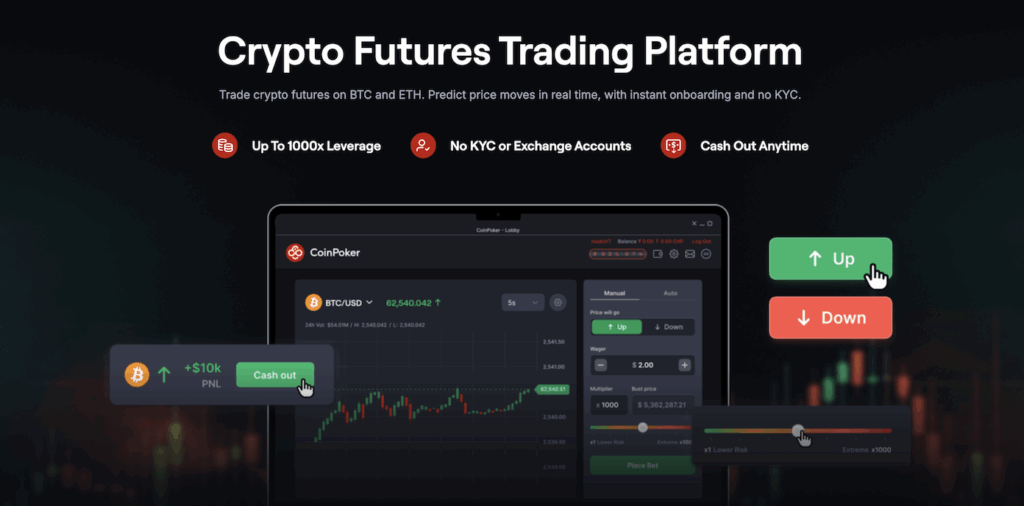
If you’re looking for a crypto trading experience that’s equal parts entertainment and strategy, CoinFutures is a platform worth checking out. Rather than acting as a traditional cryptocurrency exchange, CoinFutures operates as a gamified price prediction marketplace, allowing users to bet on the price movements of major cryptocurrencies like bitcoin, ethereum, and solana.
It’s a fun way to practice crypto trading strategies – without actually buying or selling digital assets.
👉 Check out our CoinFutures review.
What sets CoinFutures apart is its unique fee structure: you only pay on profits, and there’s no KYC required to start. With up to 1,000x leverage available, the stakes can get intense, making it a popular playground for traders looking to test their skills in a highly volatile market.
For those who love the thrill of futures trading but aren’t ready to risk their portfolio, this platform provides a safe, low-commitment way to get a feel for market movements and learn risk management.
Still, it’s important to remember that CoinFutures is more of a betting game than a true investment service. You can’t build a long-term portfolio or store crypto here, and it’s not meant for serious investors.
But as a tool for learning, entertainment, or sharpening your instincts in a fast-paced environment, CoinFutures is a standout among many crypto exchanges.
3. MEXC
For crypto traders with a taste for discovery, MEXC is the best cryptocurrency exchange to explore new and trending assets. Known as the “Altcoin Discovery Engine,” MEXC offers more than 3,000 available cryptocurrencies, far more than most prominent exchanges, and boasts a daily trading volume around $5 billion.
If you’re chasing the next big meme coin or want to diversify your portfolio beyond bitcoin and ethereum, MEXC is a must-visit marketplace.
MEXC’s fee structure is a major draw for active traders. The exchange features 0% maker fees and low taker fees (0.05% for spot, as little as 0.01% for futures), making it one of the best crypto exchanges for those who value low fees and deep liquidity.
Security is no afterthought: the platform operates a $526 million insurance fund, has bi-monthly proof of reserves, and uses AI-powered risk controls to safeguard user funds.
While MEXC is open to users worldwide, some regions, like the US, China, and Singapore, face restrictions, so always check local compliance before investing.
If you value the best crypto exchanges based on assets, MEXC is top-notch.
4. Margex
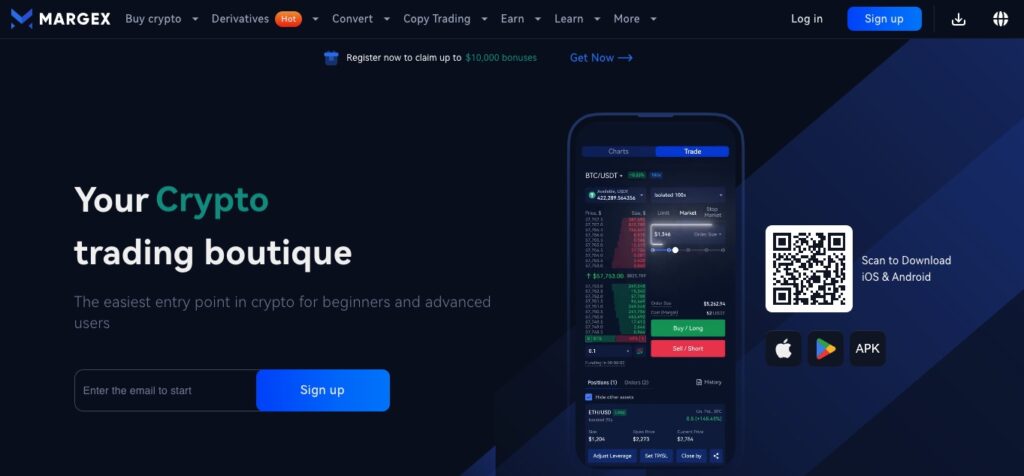
Margex is a specialist in derivatives trading, offering crypto traders a streamlined and secure environment to engage in perpetual futures contracts. With over 45 available trading pairs and leverage up to 100x, Margex is built for those who want to speculate on Bitcoin and other major cryptocurrencies without owning the underlying assets.
The clear, intuitive interface makes it an ideal choice for both beginners and professionals seeking focused exposure to crypto derivatives.
Security is a major focus for Margex, and the platform’s use of multi-signature cold wallets and an anti-manipulation system (MP Shield) helps protect user funds and ensure fair pricing. The fee structure is competitive – even by industry standards – with maker fees at just 0.019% and other fees like taker fees at 0.06%.
There are no deposit fees, and you can use BTC, ETH, or USDT as collateral, adding to its flexibility for traders with diverse portfolios.
Because Margex operates without direct regulatory oversight, it allows for no-KYC accounts (as long as you fund with crypto), but this also means restricted access for users in the US, Canada, and some other regions. For those comfortable with these trade-offs, Margex is a solid platform for trading derivatives and managing risk in a highly volatile market.
5. KCEX
KCEX has quickly become a favorite among privacy-minded crypto traders, thanks to its zero-fee spot trading, low futures trading fees, and generous no-KYC withdrawal limits (up to 30 BTC daily). With support for over 1,000 cryptocurrencies and a daily trading volume approaching $3 billion, KCEX is a formidable player in the world of digital asset exchanges.
The platform’s security is impressive, with a clean track record since its 2021 launch. KCEX holds a US Money Services Business license, employs advanced passkey verification, and features robust anti-phishing technology – all of which help to protect user accounts and funds. Its futures trading offers up to 100x leverage, and the platform supports both isolated and cross-margin options, catering to different trading styles and risk appetites.
KCEX’s major focus on privacy and low fees makes it especially attractive for retail traders and investors seeking to maximize returns on top altcoins. The lack of mandatory KYC, paired with strong security, sets it apart from many exchanges. However, as with any platform offering high leverage and privacy, responsible risk management and thorough research are essential for success.
For more information, read our full review of the KCEX exchange.
6. Binance

When it comes to sheer scale and global influence, Binance is the best cryptocurrency exchange for many traders – processing over $217 billion in daily trading volume and servicing more than 250 million users. Its enormous liquidity, extensive selection of trading pairs (over 1,500 for spot, 590+ for futures), and advanced platform features make it a go-to for both beginners and institutional clients looking to trade crypto at any level.
Binance’s suite of services goes far beyond trading. The platform offers margin trading, staking, copy trading, NFT marketplaces, and even educational resources for users. Its fee structure is highly competitive, with discounts for BNB token holders, and it’s backed by a $1 billion SAFU insurance fund and regular proof of reserves. Security is a top priority, with 2FA, multi-signature cold storage, and continuous monitoring.
Regulatory compliance is a moving target for Binance, but the firm has secured over 20 global licenses and settled with US authorities. However, users in some regions may encounter restrictions or increased KYC requirements.
For those with access, Binance remains one of the top crypto exchanges for liquidity, innovation, and trading opportunities – but keeping up with evolving regulations is essential for all users.
7. BloFin
BloFin is a rising star among the best crypto exchanges, particularly for professional traders and institutions seeking robust security and advanced futures trading.
With a history of peaking at $48 billion in single-day futures volume and supporting over 530 futures pairs, BloFin is built for those who demand high leverage (up to 150x) and a broad variety of digital assets.
Security is the cornerstone of BloFin’s platform. By leveraging Fireblocks’ institutional-grade custody, Chainalysis transaction monitoring, and ISO 27001 certification, BloFin offers one of the safest environments to store crypto and trade derivatives.
The platform maintains a transparent 1:1 proof of reserves and offers insurance coverage for added peace of mind.
BloFin’s fee structure is competitive (with spot fees at 0.10% and futures at 0.06% for takers), and it enables no-KYC withdrawals up to $20,000 daily. With additional features like copy trading, staking services, and advanced trading bots, BloFin is a powerful all-in-one platform for active traders and investors who prioritize both security and flexibility.
8. WEEX
WEEX has grown into one of the most talked-about exchanges in 2026, blending high-leverage futures trading with tools that even beginners can use.
Supporting 1,000+ coins and over 1,700 trading pairs, WEEX lets you trade spot and derivatives with up to 400x leverage, which is massive compared to most competitors. The platform also offers copy trading, where you can mirror top traders’ strategies automatically – ideal for users still learning how to read charts and manage risk.
Trading fees remain low, starting at 0.1% on spot and around 0.02%–0.08% for futures, and KYC is optional in many regions, which makes it a strong pick for privacy-focused traders. Security features include multi-signature cold storage and real-time risk monitoring, though WEEX isn’t yet regulated by major financial authorities.
In our opinion, WEEX offers serious upside for active traders, but it’s still best used with disciplined position sizing and quick profit-taking in mind.
9. ByBit
ByBit is one of the top crypto exchanges for derivatives trading, consistently ranking second globally by trading volume. With over 60 million registered users and a broad selection of 650+ cryptocurrencies, ByBit is a favorite among serious traders and those looking to access sophisticated trading tools, including options, perpetual contracts, and structured financial products.
The exchange’s fee structure is competitive, with perks for high-volume clients and a robust set of features for both retail and institutional investors. However, ByBit made headlines in 2025 when it suffered a $1.5 billion hack – the largest in crypto exchange history. The company’s immediate promise to fully compensate users and subsequent beefing up of security measures helped restore confidence, but the incident is a stark reminder of the risks inherent in highly volatile crypto markets.
ByBit holds licenses in major jurisdictions and continuously updates its compliance and security protocols. Its deep liquidity, advanced trading features, and responsive customer support make it a leading choice for derivatives traders, but users should always exercise caution and use strong risk management practices when trading in such a dynamic environment.
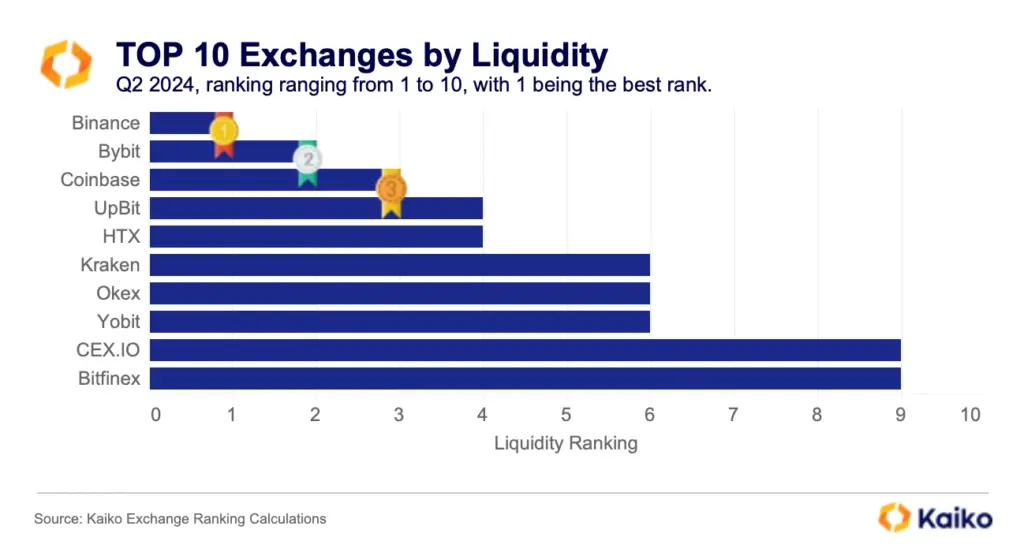
We found ByBit to be the second best exchange when it comes to liquidity.
10. OKX
OKX has earned its reputation as one of the most secure and innovative crypto exchanges in the industry. With over $3.5 billion in daily trading volume and more than 20 million users, OKX offers a powerful platform for trading spot, futures, and options—all while maintaining an unblemished security record. Its $28.9 billion in exchange reserves is testament to its financial strength and user trust.
The platform’s major focus on Web3 and DeFi integration makes it especially appealing for traders who want access to both centralized and decentralized finance. OKX’s DEX aggregator, integrated Web3 wallet, and support for hundreds of cryptocurrencies mean you can manage assets, invest, and interact with DeFi protocols—all within a single platform. Fees are competitive, and the platform is proactive about compliance, with MiCA pre-authorization in Europe and a $500 million settlement in the US.
OKX’s blend of security, innovation, and regulatory foresight positions it as a best-in-class choice for both retail and institutional clients. Whether you’re a beginner looking for educational resources and support or an advanced trader seeking deep liquidity and futures trading, OKX delivers a complete crypto trading experience.
11. BingX

BingX has quickly become the go-to platform for social and copy trading, making it a standout among many crypto exchanges for both beginners and experienced investors. With over 10 million users and support for 700+ cryptocurrencies, BingX offers industry-leading features like copy trading (where you can mirror the strategies of top traders), grid trading bots, and even a virtual trading mode for practice.
The platform is notable for its multi-asset support, letting you trade not just crypto, but also forex, commodities, and indices – all from a single account. Trading fees are highly competitive, and BingX allows no-KYC withdrawals up to $50,000 per day, giving privacy-conscious traders more flexibility. Its responsive support and educational resources help newcomers learn the ropes in a fast-moving market.
In 2024, BingX faced a significant security challenge with a $52 million hack, but its transparent handling of user compensation and rapid implementation of security upgrades restored confidence among clients. For anyone interested in social trading or looking to diversify across a wide range of digital assets, BingX is a dynamic, reliable marketplace with a strong focus on community and innovation.
How We Picked The Best Crypto Exchanges?
Our large evaluation process analyzed multiple critical factors to identify the top crypto exchanges. The key criteria are detailed below.
- Security: Our analysis prioritized exchanges with strong security track records and comprehensive measures, including cold storage and proof of reserves. We heavily weighted recent security incidents and the platform’s response, such as user compensation, to gauge their commitment to protecting user funds.
- Ease of Use: We factored platform usability, the responsiveness of customer support, and the availability of educational resources into our rankings. A platform should be intuitive and supportive, catering to both new and experienced traders.
- Available Assets: A key criterion was a diverse selection of cryptocurrencies. [Text] We favored exchanges that support both major assets and a wide variety of emerging altcoins, providing traders with extensive investment and trading opportunities.
- Access To New Opportunities: We evaluated unique features that distinguish platforms in a competitive market. [Text] This included analyzing access to derivatives, copy trading, staking services, and DeFi integrations that offer users innovative ways to engage with the crypto space.
- Mobile-Friendliness: The quality of an exchange’s mobile app was a specific factor in our evaluation. A reliable and user-friendly mobile application is crucial for traders who need to manage their portfolios and execute trades on the go.
Top Crypto Exchanges 2026: Feature Comparison
| Exchange | Supported Coins | Fees (Standard) | KYC | Top Features |
|---|---|---|---|---|
| Best Wallet | 60+ | Swap fees vary, reduced for BEST token holders | No KYC required | Non-custodial wallet, Cross-chain swaps via DEXs |
| CoinFutures | 11 | PnL fees on profits only | No KYC required | Gamified price predictions, Up to 1,000x leverage |
| MEXC | 3,000+ | Spot: 0% maker / 0.05% taker. Futures: 0% maker / 0.01-0.02% taker | Optional, but service restrictions in US, China | Unmatched altcoin selection, Zero maker fees |
| Margex | 45+ (Derivatives) | Futures: 0.019% maker / 0.060% taker | No KYC for crypto deposits | Pure derivatives focus, Multi-collateral wallets |
| KCEX | 1,000+ | Spot: 0%. Futures: 0.01% taker | No KYC up to 30 BTC daily withdrawal | Zero-fee spot trading, Privacy-focused with high no-KYC limits |
| Binance | 1,500+ | Spot: 0.1%. Futures: 0.02% maker / 0.05% taker | Mandatory | Unmatched global liquidity, Comprehensive ecosystem with Pay, NFT, and Launchpad |
| BloFin | 400+ Spot, 530+ Futures | Spot: 0.10%. Futures: 0.06% taker | No KYC up to $20,000 daily withdrawal | Institutional-grade custody (Fireblocks), Up to 150x leverage |
| CoinEx | 1,300+ | Spot: 0.2%. Futures: 0.03% maker / 0.05% taker | Optional, but service restrictions in US, Canada | Extensive cryptocurrency selection, Integrated ecosystem with native chain |
| ByBit | 650+ | Spot: 0.1%. Futures: 0.02% maker / 0.055% taker | Mandatory | Top-tier derivatives platform, Deep liquidity and advanced options |
| OKX | 350+ | Spot: 0.08% maker / 0.10% taker | Mandatory | Excellent security track record, Leading Web3 & DeFi integration |
| BingX | 700+ | Spot: 0.1%. Futures: 0.02% maker / 0.05% taker | No KYC up to $50,000 daily withdrawal | Industry-leading copy trading, Multi-asset trading (crypto, forex, indices) |
What are Cryptocurrency Exchanges?
Cryptocurrency exchanges are digital marketplaces where you can buy, sell, and trade cryptocurrencies for other digital assets or traditional fiat currencies. These platforms function similarly to stock exchanges but operate 24/7 and handle volatile digital assets instead of traditional securities.
Modern exchanges process millions of transactions daily through sophisticated matching engines that pair buy and sell orders automatically. They maintain order books showing current bid and ask prices, execute trades in milliseconds, and provide real-time market data feeds to traders worldwide.
Centralized exchanges (CEX) like Binance and OKX control user funds through custodial wallets and provide familiar trading interfaces similar to traditional brokerages.
On the other hand, Decentralized exchanges (DEX) like Uniswap operate through smart contracts, allowing you to trade directly from your wallet without surrendering custody.
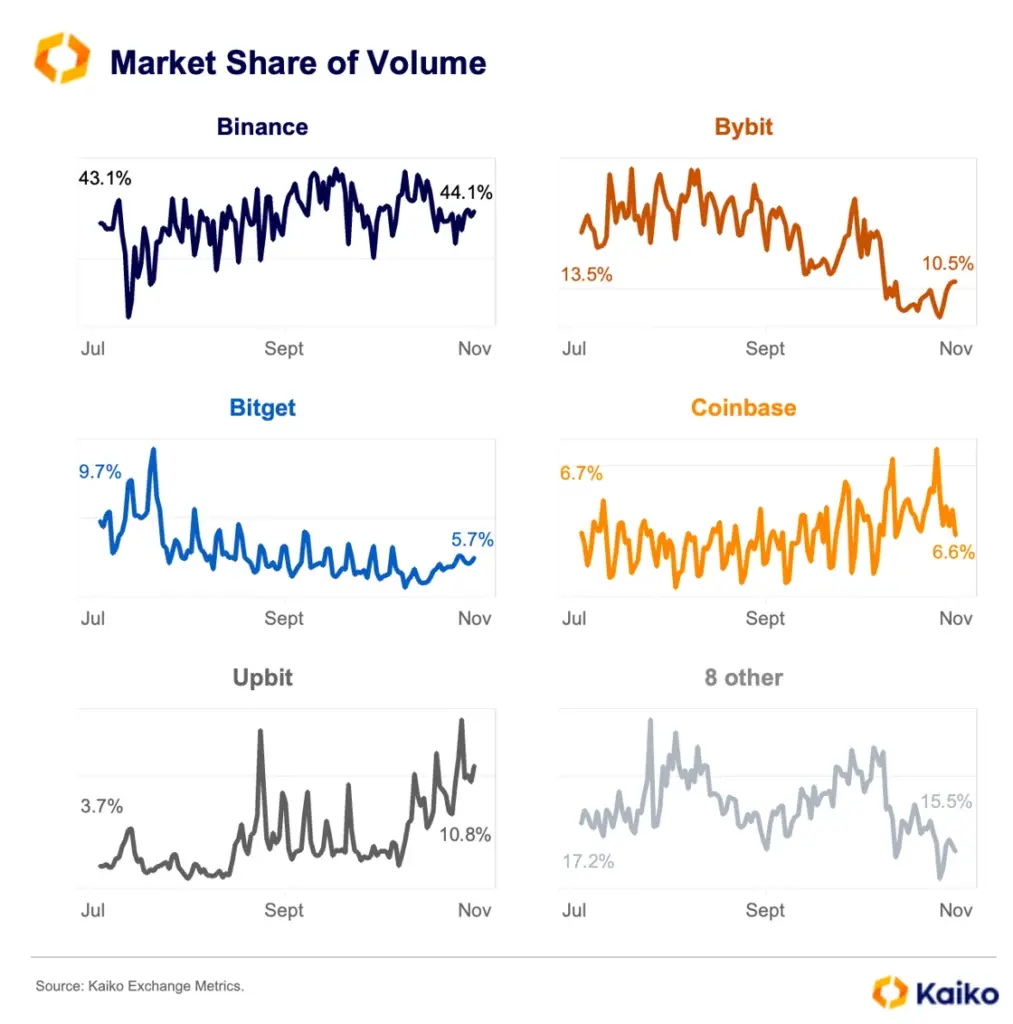
The 2026 market shows dramatic shifts with DEX volumes surging 25% while CEX volumes dropped 28% in Q2.
Despite this trend, centralized exchanges still dominate with 87.4% market share due to superior liquidity, advanced order types, and institutional-grade features that professional traders demand.
Types of Crypto Exchanges and Trading Platforms
The cryptocurrency market offers several exchange models, each designed to serve different trading needs and risk profiles. Before you make a final decision, you need to know what you’re looking for.
Spot Exchanges
Spot exchanges facilitate immediate cryptocurrency trades at current market prices, where you purchase actual digital assets that transfer to your wallet upon transaction completion. These platforms dominate the crypto trading market with 62.6% market share according to Coherent Market Insights, serving as the primary gateway for both beginners and experienced investors looking to store crypto long-term.
Major prominent exchanges like Coinbase, Kraken, and regional platforms worldwide offer extensive selections of available cryptocurrencies, competitive trading fees, and robust security measures.
Spot trading remains the preferred choice for those seeking to build actual cryptocurrency portfolios rather than speculate on price movements.
Derivatives Exchanges
Derivatives exchanges offer futures trading, options, and perpetual contracts without requiring actual cryptocurrency ownership, enabling traders to profit from price movements through leveraged positions.
These platforms allow up to 150x leverage on some exchanges, making them attractive for highly volatile crypto assets speculation. Hyperliquid leads perpetual DEX trading with 73% market share and $653 billion trading volume, while traditional crypto exchanges integrate derivatives alongside spot offerings.
Trading derivatives requires sophisticated risk management and research, as positions can be liquidated rapidly during volatile periods, making these platforms more suitable for experienced traders rather than beginners.
Hybrid Platforms
Hybrid platforms are the evolution of crypto exchanges, combining centralized order book efficiency with decentralized settlement mechanisms to address traditional exchange limitations. These emerging models provide deep liquidity and advanced trading features while maintaining user custody control and reducing counterparty risks.
Many exchanges are exploring hybrid architectures to offer institutional-grade security and compliance alongside DeFi innovations. These platforms bridge centralized and decentralized finance, appealing to users who want professional trading tools without sacrificing asset control, though the technology remains in early development stages across the industry.
Margin Trading Platforms
Margin trading platforms extend purchasing power through borrowed funds, enabling larger positions than account balances alone permit for amplified crypto trading exposure. Most major crypto exchanges now offer 3-10x spot margin alongside futures products, allowing traders to leverage their assets for potentially higher returns.
However, margin calls during highly volatile periods can liquidate entire positions rapidly, requiring careful risk management and sufficient money reserves.
These platforms typically charge additional fees for borrowing, making them suitable for experienced traders who understand leverage risks and market dynamics rather than beginners starting their investment journey.
Copy Trading Platforms
Copy trading platforms are the fastest-growing segment, where users can automatically replicate successful traders’ strategies through social trading features and detailed analytics. BingX leads this category with comprehensive trader analysis and community features, while traditional exchanges like ByBit and Binance integrate copy trading into their offerings.
These platforms democratize access to professional trading strategies, making them particularly appealing to beginners who lack research capabilities or experience. Copy trading allows investors to participate in crypto markets while learning from successful traders, though users should still understand basic risk management and choose traders carefully based on historical performance data.
Non-KYC Exchanges
Non-KYC exchanges allow users to trade cryptocurrencies without submitting identity documents or undergoing verification. These platforms are attractive to privacy-focused traders and those in regions with strict regulatory limitations, offering a direct way to access crypto markets without revealing personal information.
Unlike fully regulated centralized exchanges, non-KYC crypto exchanges usually permit deposits and withdrawals in crypto only, with fiat access and higher withdrawal limits often restricted to verified accounts. Many leading exchanges, such as MEXC, KCEX, and certain DEXs, offer limited or optional KYC, letting users maintain greater anonymity for smaller trades.
How to Effectively Use Crypto Exchanges?
To get the most out of crypto exchanges, it’s important to follow smart steps for account setup, funding, order execution, and security. Here’s how to navigate trading platforms and protect your digital assets effectively:
- Account setup: Most exchanges require identity verification, though some platforms allow trading without KYC. Complete all verification steps to unlock higher trading limits and full account features
- Funding your account: Deposit funds via bank transfer, fiat onramps, or cryptocurrency transfers. Be mindful of network fees and choose lower-fee options when possible.
- Order types: Learn to use market orders for instant execution, limit orders for specific price targets, and stop-loss orders to protect against sudden losses during volatile markets.
- Risk management: When trading highly volatile crypto assets, never invest more than you can afford to lose. Use stop-losses, diversify your assets, and avoid emotional decisions.
- Security practices: Enable two-factor authentication, use hardware security keys for large accounts, and withdraw funds to personal wallets for long-term storage. Many exchanges offer extra protections like withdrawal whitelisting and cool-off periods for added access security.
How to Protect Your Crypto Assets?
Protecting your crypto assets requires a proactive approach, blending smart tech habits with secure storage solutions. Follow these essential steps to reduce risks and keep your digital holdings safe from threats:
- Use hardware wallets: Store your cryptocurrencies offline in reputable hardware wallets to minimize exposure to hacks and online breaches targeting exchanges or software wallets.
- Enable two-factor authentication: Add an extra layer of security by activating 2FA on all your exchange accounts and wallets, making unauthorized access much more difficult for attackers.
- Beware of phishing scams: Always verify website URLs, avoid clicking suspicious links, and never share your private keys or recovery phrases with anyone – legitimate platforms will never ask for them.
- Keep software updated: Regularly update your wallet apps, trading platforms, and antivirus software to patch vulnerabilities and reduce the risk of malware or security exploits targeting your devices.
- Withdraw to personal wallets: For long-term storage, transfer funds from exchanges to personal wallets. Use withdrawal whitelists and cool-off periods where available to safeguard against unauthorized access.
Trading Fees and Cost Optimization Strategies
Understanding exchange fees is vital for maximizing your returns – especially for active traders. Here’s what you need to know:
Common Crypto Exchange Fees
| Fee Type | Description | What to Expect |
|---|---|---|
| Trading Fees (Maker/Taker) | Charged per trade. “Maker” adds liquidity (limit order), “Taker” removes liquidity (market order). | Maker: 0.0%-0.4%. Taker: 0.05%-0.6%. Makers often pay less, sometimes receive rebates. |
| Deposit Fees | Cost to fund your account (crypto or fiat). | Crypto deposits are usually free; fiat (ACH/SEPA) often free, wire transfers may be $10-25. |
| Withdrawal Fees | Moving assets off-exchange to your wallet. | Flat fee per coin – can be high on congested networks (e.g., ETH $20-50), lower on L2/alt L1. |
| Futures & Margin Fees | Fees for leveraged products, including funding rates (futures) and interest (margin borrowing). | Trading fees apply; funding/interest rates vary by platform and market conditions. |
Strategies for Reducing Trading Costs
- Choose Low-Fee Exchanges & Use Limit Orders
Compare platforms – some mid-sized exchanges offer lower or even zero maker fees. Placing limit orders instead of market orders often makes you a “maker,” qualifying for lower fees or rebates. Over time, this can make a significant difference. - Withdraw via Layer-2 or Cheaper Networks
When transferring assets off-exchange, select layer-2 solutions (like Arbitrum, Polygon) or alternative chains (like Solana, BNB Smart Chain) to minimize withdrawal fees. ETH mainnet is expensive during congestion; alternatives can be a fraction of the cost. - Leverage Exchange Tokens & VIP Tiers
Holding or paying fees with an exchange’s native token (like BNB, KCS) can grant 10-25%+ discounts on trading fees. High-volume traders should check VIP programs, which further reduce costs as your 30-day trading volume increases. - Monitor Funding & Margin Interest Rates
For futures or margin trading, watch ongoing funding and interest rates. These can quickly accumulate, especially in volatile markets. Choose exchanges with competitive rates and transparent disclosure. - Avoid Frequent Small Withdrawals
Batch your withdrawals when possible to minimize cumulative network fees, especially when moving assets from ETH or other high-fee networks.
Advanced Trading Features and Derivatives
Advanced trading platforms offer a suite of powerful features and derivatives to help users manage risk, maximize returns, and automate strategies.
Understanding these capabilities is key for both active traders and investors seeking to diversify their crypto approach.
Leverage Trading
Leverage trading boosts both gains and losses by letting you borrow funds against your capital. Spot margin typically offers 3–10x leverage, while crypto futures can reach up to 150x on some platforms. Cross-margin shares collateral across all positions, while isolated margin restricts risk to single trades. Binance provides both modes, with liquidation risks if collateral drops too low. Use leverage judiciously, as volatile periods can quickly wipe out your account balance if positions move against you.
Options Trading
Options trading allows for advanced risk management using calls, puts, spreads, and synthetic positions. Platforms like OKX and ByBit offer broad options markets with various strikes and expiries, enabling strategies such as covered calls and protective puts for portfolio hedging. These tools help experienced traders navigate volatile conditions and tailor strategies to market outlooks, but options require a solid understanding of pricing, volatility, and risk to use effectively.
Copy Trading
Copy trading automates the process of replicating top traders’ strategies. Platforms like BingX and ByBit provide detailed trader analytics – showing win rates, maximum drawdowns, and historical returns – so users can choose who to follow. Most copy trading platforms charge additional fees or share profits with signal providers. The social trading approach is ideal for beginners aiming to benefit from expert moves while learning about risk management and portfolio construction.
Grid Trading Bots
Grid trading bots capitalize on sideways market movement by placing buy orders below and sell orders above the current price. These automated bots generate steady returns in ranging markets but may underperform during strong trends. BingX and other platforms offer intuitive grid trading interfaces, allowing users to set parameters easily. While effective in stable markets, it’s important to monitor performance and adjust the grid as volatility or trends change.
Algorithmic Trading
Algorithmic trading utilizes APIs for automated, high-frequency, or arbitrage strategies, catering to advanced traders and institutions. Most major exchanges, including Binance and Kraken, offer REST and WebSocket APIs supporting real-time market data and order management. Rate limits typically allow thousands of requests per minute. These tools enable complex order execution, portfolio rebalancing, and backtesting, but require programming knowledge and robust risk controls to avoid costly errors.
Final Words
The best crypto exchanges are here for a reason – they provide liquidity, low trading fees, and features that make them viable for both novices and experienced traders.
But as with every type of investing, the smarter you are with your coins, the bigger your chances to become the next crypto millionaire.
Frequently Asked Questions
Which crypto exchange is safest in 2026?
Which are the best crypto exchanges for beginners?
How do crypto exchanges work?
How do crypto exchanges make money?
Are crypto exchanges regulated?
Which exchanges work best for altcoin trading?
What crypto exchanges are available in the US?
Resources: