


Zcash Plummets 50% Following Critical Security Vulnerability
We may earn commissions from affiliate links or include sponsored content, clearly labeled as such. These partnerships do not influence our editorial independence or the accuracy of our reporting. By continuing to use the site you agree to our terms and conditions and privacy policy.


Zcash (ZEC) price crashed over 50% after a long-standing vulnerability in the Orchard circuit was revealed, sparking $100M in market liquidations.
In just twenty-four hours, the price of Zcash plummeted by more than 50%, crashing from approximately $624 to $258 as investors scrambled to assess the severity of the risk. At the time of writing, the token has recovered some ground and is trading at $336.
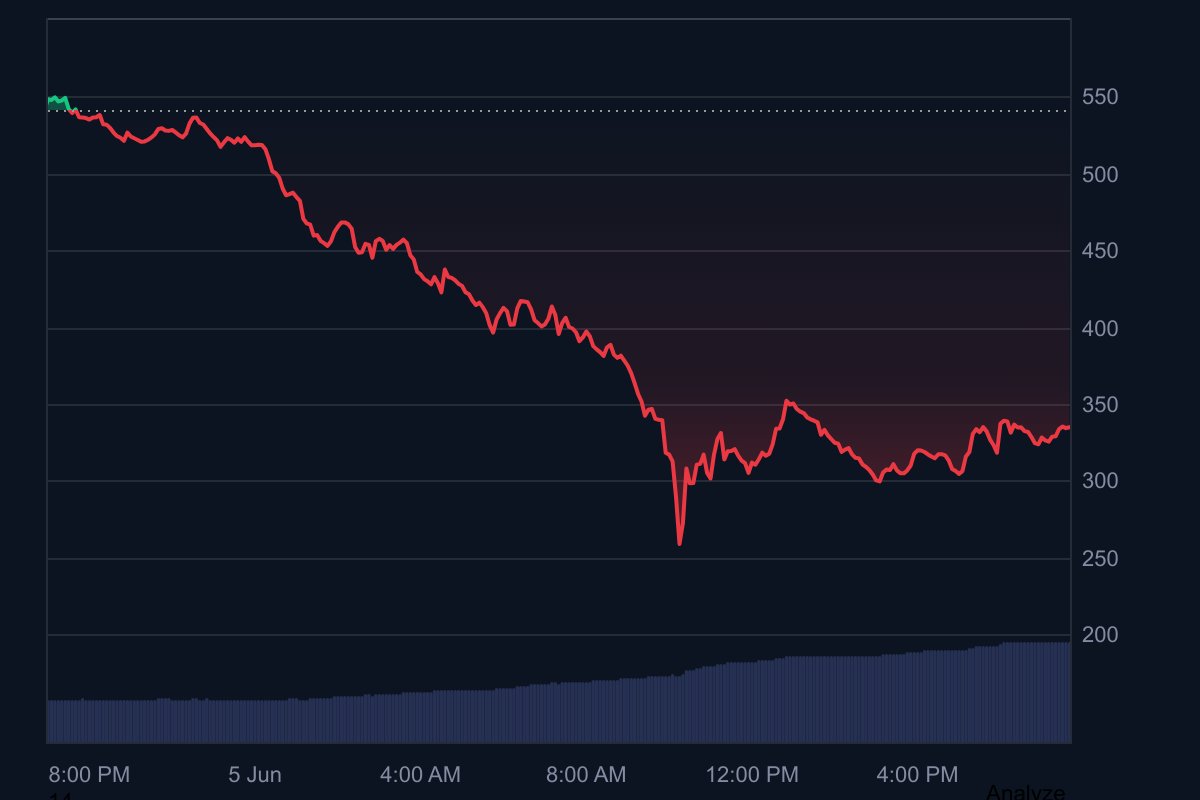
This aggressive sell-off follows a period where Zcash was among the market’s top performers. The altcoin had been riding a wave of renewed interest in privacy-centric cryptocurrencies and positive regulatory updates. However, the sudden shift in sentiment highlights how quickly confidence can vanish when blockchain protocol security is called into question.
A Vulnerability Hidden for Over Four Years
The issue was identified on May 29 by security researcher Taylor Hornby during a protocol audit. According to the disclosure, the defect resided in the “Orchard circuit”—the core component of Zcash’s latest shielded pool, which enables anonymous transactions.
— zooko🛡🦓🦓🦓 ⓩ (@zooko) June 4, 2026
Network developers took emergency action just days later. On June 2, an emergency soft fork was deployed to temporarily disable all Orchard transactions and prevent potential exploitation. A day later, the NU6.2 hard fork was activated, permanently fixing the vulnerability and restoring normal network operations.
Despite the team’s rapid response, the market remains deeply unsettled by the fact that the flaw had existed since May 2022. This means it was theoretically possible for the bug to have been exploited for more than four years before being discovered.
Market Fear of the Unknown
For investors, the primary concern is not the vulnerability itself, but the inability to prove whether it was ever exploited. Because of the private nature of the Orchard pool, there is no cryptographic method to definitively confirm or deny if unauthorized ZEC tokens were minted before the patch was applied.
This uncertainty triggered a massive wave of selling. Data shows that market liquidations exceeded $100 million within 24 hours, with over $76 million wiped out from long positions alone.
Sentiment was further dampened by public statements from prominent industry figures. BitMEX co-founder Arthur Hayes announced he had liquidated his Zcash holdings, arguing that for assets whose value is tied to privacy and cryptographic certainty, investors demand “perfect security” rather than just a high probability of protection.
The Zcash Foundation maintains there is currently no evidence the vulnerability was exploited and that total supply control mechanisms remain intact. Nevertheless, the market continues to weigh the potential consequences, with the price of ZEC testing the critical psychological support level near $300.
The incident serves as a stark reminder that in the crypto industry, trust is the most valuable asset. Even after a technical fix is implemented, rebuilding investor confidence often proves much more difficult than repairing the code itself.


 Commentaries







Fill in necessary fields and publish