






Term Vaults Hit by $8.5M DeFi Governance Exploit
We may earn commissions from affiliate links or include sponsored content, clearly labeled as such. These partnerships do not influence our editorial independence or the accuracy of our reporting. By continuing to use the site you agree to our terms and conditions and privacy policy.


Term Vaults suffers an $8.5 million exploit targeting protocol governance. Security firm PeckShield reports 2,843 ETH and 1.68M USDC were drained.
The recent security incident at Term Vaults stems from the protocol’s governance mechanism rather than compromised user wallets. This distinction highlights the critical importance of administrative rights used to modify parameters within DeFi vaults.
Attacker Controls Approximately 2,843 ETH
#PeckShieldAlert @term_labs was exploited for ~$8.5M due to a governance exploit impacting Term vaults.
— PeckShieldAlert (@PeckShieldAlert) August 23, 2026
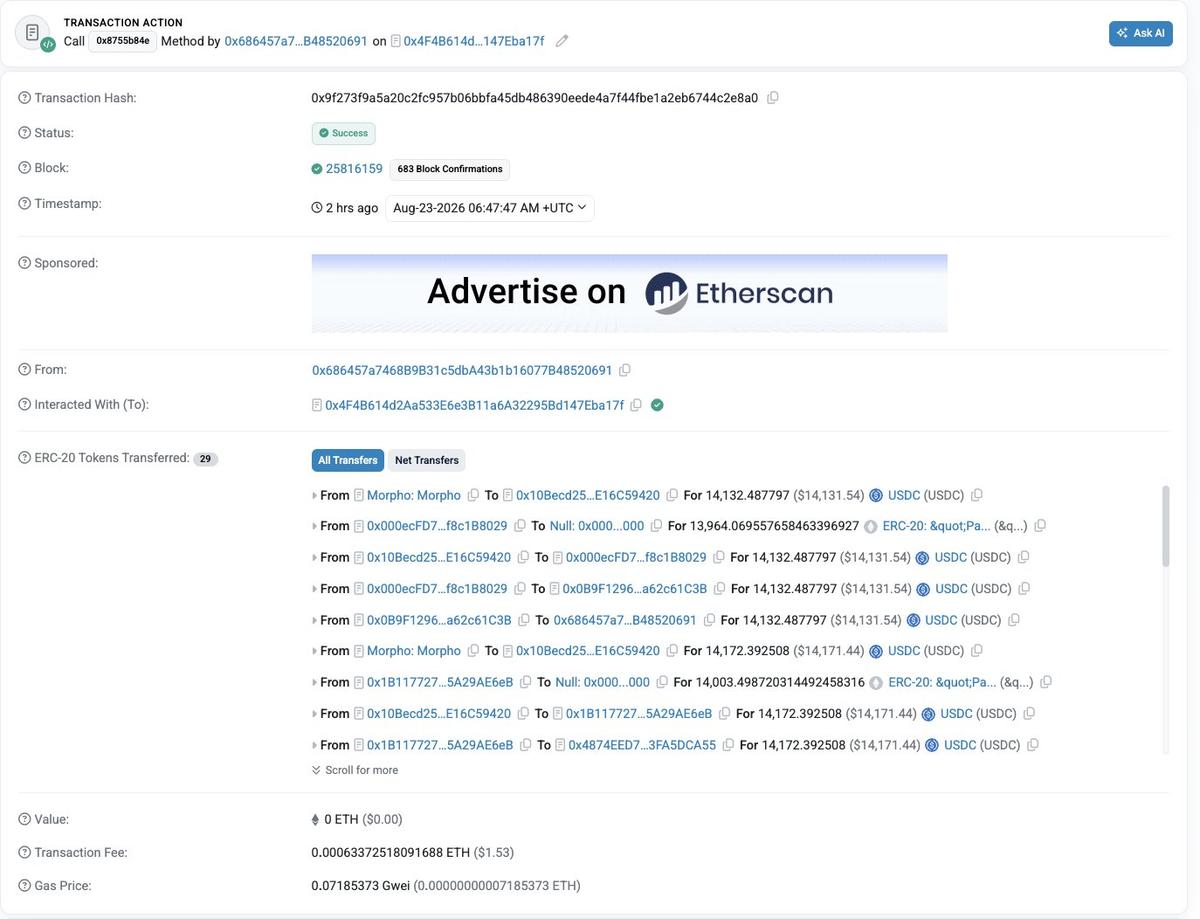
The exploiter has drained ~2,843 $ETH ($6.87M) & 1.68M USDC ($1.68M) – which has already been swapped for ~1.68M $DAI
The exploiter originally funded with 2 ETH from… pic.twitter.com/6ZRoDD9QK7
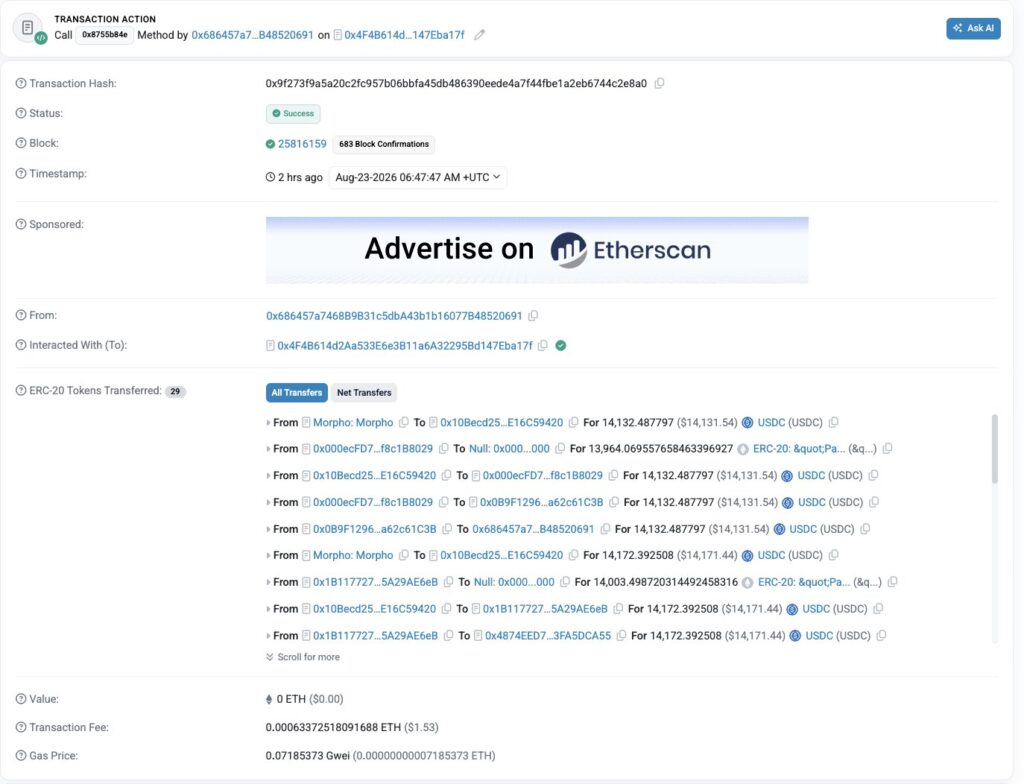
The stolen stablecoins were subsequently swapped for approximately 1.68 million DAI. Based on market prices at the time of the attack, the total value of the affected assets reached approximately $8.5 million.
On-chain tracking adds another layer to the investigation. The wallet linked to the exploit was initially funded with 2 ETH sourced from Tornado Cash. While the use of a mixer does not identify the perpetrator, it significantly complicates the process of tracing the original source of funds.
Term Labs stated they are actively investigating the incident and will release further information. Currently, there are not enough public technical details to establish the exact sequence of operations that enabled the drain.
Why This Exploit is Different
Classifying this as a “governance exploit” is vital. In a classic smart contract exploit, an attacker typically targets a bug directly within the code execution. In a governance attack, the weakness lies in how the protocol grants administrative rights, changes parameters, or authorizes operations on vaults.
This means a smart contract can execute its programmed instructions exactly as intended, yet funds remain at risk if an attacker improperly gains the necessary permissions. In a DeFi protocol, such a vulnerability is particularly sensitive because the infrastructure manages deposited assets and sets the conditions for how capital is utilized.
Can the Losses Be Mitigated?
While the scale of the exploit is established, the final financial impact depends on the movement of the stolen assets. ETH remains easily traceable on the public blockchain, though moving funds through additional addresses, bridges, or other protocols would complicate recovery efforts.
For Term Labs, the most critical next step involves a deep technical analysis. This review must identify which governance permissions were exploited, determine if other parts of the protocol are affected, and outline the changes required before the impacted vaults can resume normal operations.


 Commentaries









Fill in necessary fields and publish