


OKX Unveils Exchange OS to Decentralize Trading on X Layer
We may earn commissions from affiliate links or include sponsored content, clearly labeled as such. These partnerships do not influence our editorial independence or the accuracy of our reporting. By continuing to use the site you agree to our terms and conditions and privacy policy.

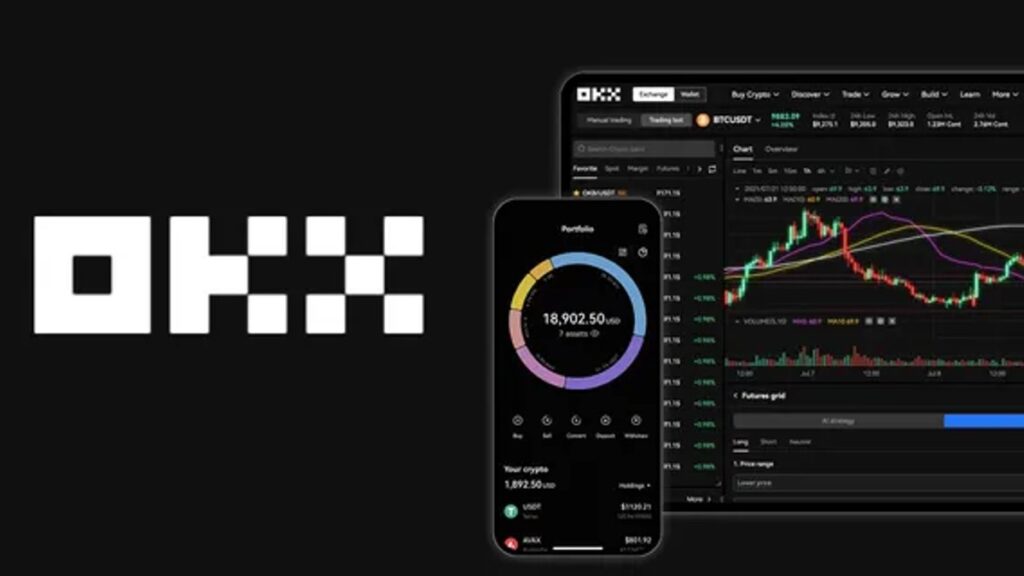
OKX launches Exchange OS on X Layer, allowing institutions and Web3 teams to build custom markets with OKB staking and unified account features.
A new protocol aims to migrate core centralized exchange functions directly to the blockchain layer, enabling developers, institutions, and Web3 teams to build their own markets without requiring approval from a centralized platform.
According to the Exchange OS whitepaper, the system supports spot markets, perpetual futures, and prediction markets, utilizing shared infrastructure built on X Layer.
OKX Brings the Exchange Model Directly to DeFi
Exchange OS is engineered to merge OKX’s professional exchange infrastructure with a decentralized custody and settlement model. User funds will be held directly in smart contracts, ensuring that neither OKX nor the market creator can unilaterally freeze or control assets.
A standout feature is the “unified account” system. This allows traders to use the same capital across multiple markets and products simultaneously—a model previously reserved almost exclusively for major centralized exchanges.
OKX noted that both the company’s internal markets and external ones will operate under identical protocol rules. The platform asserts that this approach will ensure transparency and a level playing field for all participants.
Institutions and Web3 Projects Can Build Custom Markets
The protocol is designed to support both open Web3 markets and fully regulated institutional environments. Financial institutions can implement KYC and access controls directly within their own markets, while crypto teams can launch entirely open decentralized platforms using the same underlying infrastructure.
Exchange OS also offers customization for oracle systems, fee models, asset listings, and governance mechanisms. This flexibility effectively turns X Layer into an “operating system” for on-chain trading.
OKB Gains a New Role in the Ecosystem
The protocol introduces a staking mechanism that positions OKB as a fundamental piece of the infrastructure. Any operator wishing to establish their own market through Exchange OS must stake OKB tokens into a specific contract on X Layer.
This development expands the utility of the OKB token, which is already used for transaction fees within the Layer 2 ecosystem.
First Test Trial: 2026 World Cup Predictions
OKX will not release the infrastructure for mass use immediately. The initial live test for Exchange OS will be a prediction market tied to the 2026 FIFA World Cup, serving as a real-world stress test for the market infrastructure.
The company plans to use this pilot to monitor liquidity behavior, settlement mechanisms, and market interaction before a full public global rollout. This move comes as more crypto firms attempt to shift traditional exchange functions onto the blockchain, blending DeFi models with institutional-grade trading tools.
Analysts suggest that if these systems successfully provide enough liquidity and stability, they could eventually compete with the core functions of traditional centralized exchanges.


 Commentaries







Fill in necessary fields and publish