


Crypto Market Cap Slumps to $2.46T as Bitcoin Drops Below $72K
We may earn commissions from affiliate links or include sponsored content, clearly labeled as such. These partnerships do not influence our editorial independence or the accuracy of our reporting. By continuing to use the site you agree to our terms and conditions and privacy policy.


The total crypto market cap fell 2.5% to $2.46 trillion following a $316M liquidation event. Bitcoin and Ethereum lead the decline amid rising inflation fears.
The total cryptocurrency market capitalization has retreated to approximately $2.46 trillion, marking a decline of nearly 2.5% over the past day. Data indicates a synchronized movement with traditional markets, where risk appetite is also softening.
Bitcoin fell by more than 3% within 24 hours, trading around $71,600, while Ethereum recorded a sharper decline of over 5%, reaching the $2,200 level. The broader altcoin segment remains under pressure as well, with assets like Solana and XRP registering daily losses between 3% and 5%.
Liquidations Accelerate the Downturn
The market slide was fueled by significant liquidations in the derivatives markets. According to data from CoinGlass, positions worth over $316 million were liquidated in the last 24 hours, with the vast majority—over $240 million—consisting of long positions.
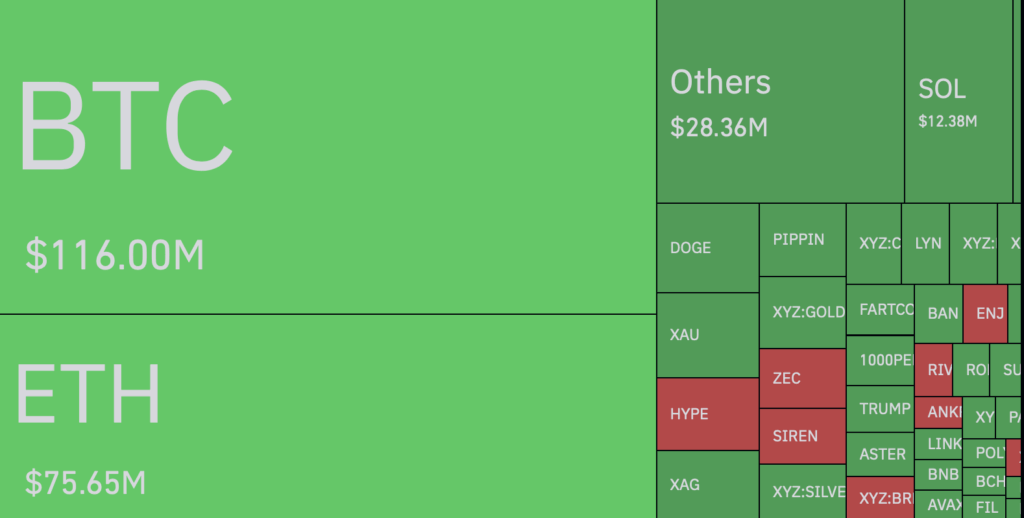
This reveals a classic “long squeeze” scenario, where excessive investor optimism turns abruptly, forcing the market to rebalance through forced sell-offs.
Sentiment Sours as Fear Returns
The Crypto Fear and Greed Index dropped to 36 points, entering “Fear” territory, signaling growing caution among investors. Simultaneously, technical indicators like the RSI are cooling off, reflecting weakening momentum following the recent upward cycle.
Despite this, the “altcoin season” indicator remains at neutral levels, suggesting a lack of a clear dominant trend between Bitcoin and altcoins.
Macroeconomic Pressure Hits Crypto
The weakness in crypto markets is not an isolated event. Earlier in the day, US PPI data recorded a 0.7% monthly increase—significantly higher than expectations.
This has intensified concerns that inflationary pressures remain persistent, reducing the likelihood of a near-term interest rate cut by the Federal Reserve. In such an environment, risk assets, including cryptocurrencies, traditionally underperform.
An additional factor is the sharp rise in oil prices, which is also weighing on global liquidity and inflation expectations. Higher energy costs could lead to tighter financial conditions—a negative signal for the crypto sector.
Potential Stabilization or Continued Decline
In the short term, the market remains heavily dependent on macroeconomic signals and investor positioning. If liquidation pressure eases and new demand emerges, a brief stabilization is possible.
At the same time, the combination of high interest rates, geopolitical risk, and diminishing risk appetite creates conditions for sustained volatility.
For institutional participants, this translates to a more cautious approach to exposure, while for short-term traders, the market offers opportunities but at a significantly higher level of risk.
In a broader context, the current movement highlights the growing correlation between cryptocurrencies and traditional financial markets—a trend that has continued to strengthen in recent years.
For those seeking greater anonymity and control over their funds, choosing the right platform is essential. You can explore the analysis of the best no-KYC crypto exchanges in 2026 to find available options in the market.


 Commentaries







Fill in necessary fields and publish