


Keel Revenues Plunge 50.8% Amid Pivot from Bitcoin to AI
We may earn commissions from affiliate links or include sponsored content, clearly labeled as such. These partnerships do not influence our editorial independence or the accuracy of our reporting. By continuing to use the site you agree to our terms and conditions and privacy policy.

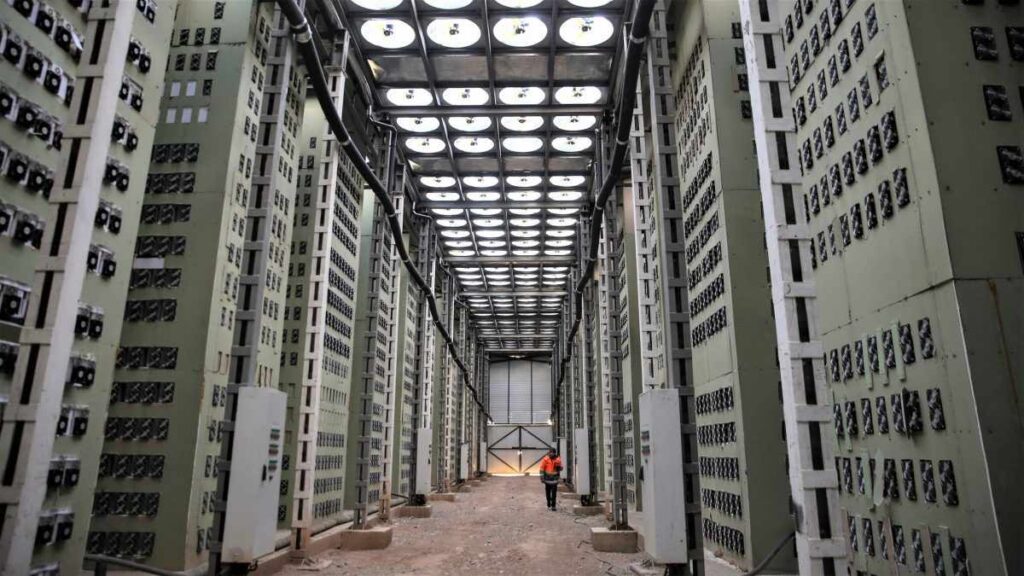
Keel reports a 50.8% revenue drop in Q2 2026, reaching $30.43M as the firm liquidates its Bitcoin reserves and shifts focus toward AI data centers.
Second-quarter revenues for 2026 fell by 50.8% year-over-year to $30.43 million, down from approximately $61 million during the same period last year. These results missed market expectations, driven by lower average Bitcoin prices and the phased shutdown of legacy mining operations.
The quarter highlights the cost of transformation. Keel is effectively dismantling the business model originally built by Bitfarms, attempting to repurpose its existing energy portfolio into infrastructure for the significantly more capital-intensive AI data center market.
Exiting Bitcoin Mining Deepens Losses
Keel reported a net loss of approximately $65 million for the second quarter, representing $0.11 per share. Operating losses reached roughly $141 million.
A significant portion of this downturn is tied to accounting effects from accelerated equipment decommissioning. The company recognized roughly $63 million in depreciation related to shutting down mining rigs at sites like Panther Creek and Scrubgrass.
This indicates that much of the hit to operating results does not represent an immediate cash expense. Instead, it reflects Keel’s decision to retire equipment earlier than its originally projected functional lifespan.
By the end of June, the company had concluded all its BTC mining operations in the United States. The Moses Lake facility in Washington was decommissioned as early as April.
AI Infrastructure Replaces BTC Mining
Keel is not abandoning its energy assets. Instead, the company is working to leverage its infrastructure in Washington, Pennsylvania, and Quebec for data centers serving AI and high-performance computing (HPC).
Access to electricity serves as the bridge between the old and new business models. While both Bitcoin miners and AI centers have massive energy requirements, the economics differ. Under this new strategy, Keel is betting that available energy capacity can generate higher value through long-term contracts with hyperscale operators and AI cloud service providers.
The Panther Creek and Sharon projects are already undergoing local permitting processes and negotiations with potential tenants. Securing long-term contracts will be a primary indicator of whether the company can successfully turn its former mining infrastructure into a sustainable revenue stream.
However, this strategy carries a different set of risks. AI and HPC centers require substantial upfront investment, and timelines depend on permits, grid access, construction, and securing clients.
Keel Gradually Liquidates Bitcoin Reserves
The shift also extends to the company’s balance sheet. Between April 1 and August 7, Keel sold 1,085 BTC for approximately $75 million.
As of August 7, the company still holds 1,861 BTC, valued at approximately $121 million.
Management plans to sell the remaining reserves by the end of 2026. If executed, this will effectively sever ties with the previous Bitfarms business model, turning crypto assets from a core operation into a funding source for the new strategy.
Keel maintains a significant financial buffer. A $458 million convertible bond issue completed in June helped total liquidity reach approximately $819 million, of which $698 million is unrestricted cash.
The Next Test for Keel Moves Beyond Bitcoin Prices
For investors, the key question is shifting. Rather than focusing on mining efficiency and the amount of BTC produced, the focus is turning toward Keel’s ability to monetize energy capacity, the development pace of new sites, and the signing of contracts with major AI clients.
The balance sheet provides the company time to execute this transformation, but Q2 results reveal the primary risk: revenue from the legacy business is declining before the new business has begun to replace it.
Consequently, Keel’s valuation will depend less and less on Bitcoin. Following the final sale of crypto reserves and the end of mining, the market will judge the company by a different standard—whether former mining infrastructure can become a valuable enough energy asset for the rapidly expanding AI sector.


 Commentaries



Fill in necessary fields and publish