


Crypto Market Cap Slips to $2.54 Trillion as Bitcoin Weakens
We may earn commissions from affiliate links or include sponsored content, clearly labeled as such. These partnerships do not influence our editorial independence or the accuracy of our reporting. By continuing to use the site you agree to our terms and conditions and privacy policy.


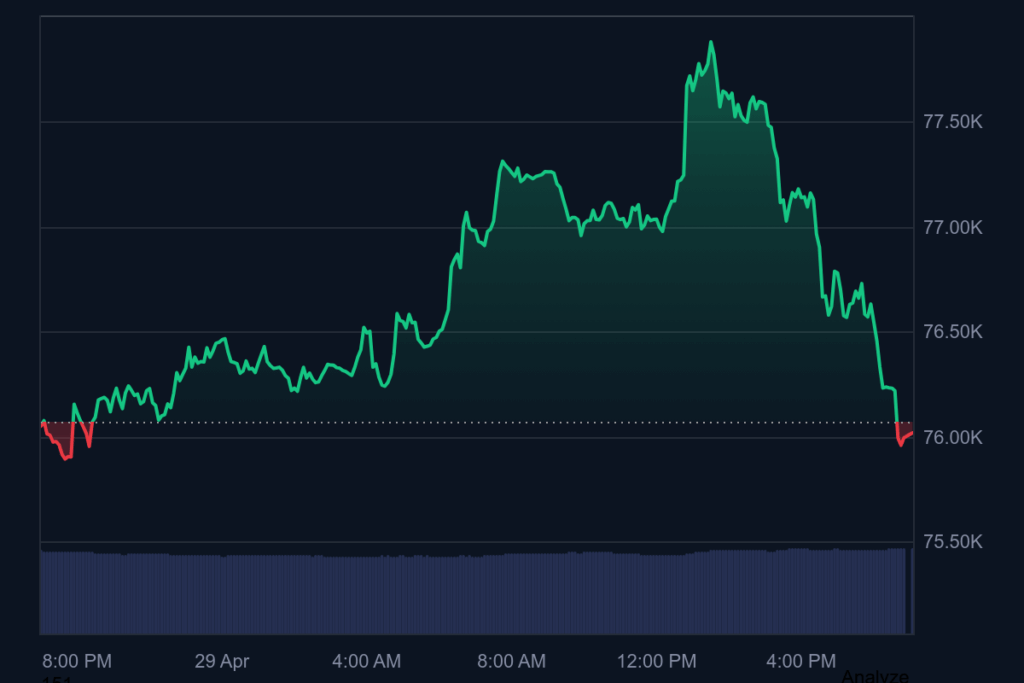
Total crypto market cap falls to $2.54 trillion. Bitcoin trades at $75,800 while Ethereum and altcoins face selling pressure amid macro uncertainty.
The total cryptocurrency market capitalization has retreated to approximately $2.54 trillion as leading tokens post weak performance across the board.
Major Cryptocurrencies Under Pressure
At the time of writing, Bitcoin (BTC) is trading at $75,800, marking a decline on both daily and weekly timeframes. This broader market pressure is also evident in Ethereum (ETH), which has lost nearly 6% over the last seven days, highlighting waning interest in the riskier segments of the crypto ecosystem.
Other major tokens such as XRP and BNB are also reporting negative results. Similarly, Solana (SOL) remains under pressure despite earlier attempts at a recovery.
Certain altcoins like Dogecoin (DOGE) serve as exceptions, registering short-term gains. However, these movements remain isolated and have yet to shift the overall downward trend characterizing the market.
Sentiment Declines Without Triggering Panic
The Fear and Greed Index currently sits at neutral levels (40 points). This suggests that the market is not in a state of outright panic, but rather in a stage of cautious retreat.
Parallel to this, the altcoin season indicator also stands at 40 points, demonstrating a market dominated by Bitcoin. Investors appear to be limiting their exposure rather than seeking higher returns in the market’s periphery.
The average RSI for the crypto market is also trending lower, signaling weakening momentum and the potential for further short-term consolidation.
Macro Factors Reclaim Dominance
Growing attention toward Federal Reserve decisions and global liquidity is exerting a stronger influence on crypto assets. Expectations that interest rates will remain high for an extended period are dampening risk appetite, redirecting capital toward “safe-haven” assets.
Geopolitical factors add further strain, including instability in energy markets that has increased volatility across the broader financial sector. This environment increasingly forces cryptocurrencies to behave like traditional risk assets rather than an alternative class isolated from macroeconomic cycles.
Consolidation Before the Next Move
Current price action suggests the market is entering a consolidation phase following a modest rise earlier this month. The absence of a clear catalyst—whether regulatory, institutional, or macroeconomic—is limiting the potential for a new rally in the near term.
For investors, the focus remains on liquidity and signals from central banks. A return to an upward trend will likely require a stabilized macro environment paired with renewed institutional interest.
Until then, crypto markets are expected to remain range-bound, characterized by heightened volatility and sensitivity to external factors.
In this context of uncertainty, choosing a secure crypto wallet is becoming increasingly vital for investors. For a more detailed analysis of asset protection, see the article Best Crypto Wallets for 2026, which explores various options based on security, convenience, and functionality.


 Commentaries







Fill in necessary fields and publish