


Crypto Markets Slide as Trump Signals Hormuz Strait Escalation
We may earn commissions from affiliate links or include sponsored content, clearly labeled as such. These partnerships do not influence our editorial independence or the accuracy of our reporting. By continuing to use the site you agree to our terms and conditions and privacy policy.

Bitcoin falls to $70,900 and Ethereum drops below $2,200 as Donald Trump signals potential naval action in the Hormuz Strait, sparking a market-wide sell-off.
Investors are reacting to the growing likelihood of an escalation in the Strait of Hormuz after Donald Trump signaled potential for more aggressive naval actions.
The total cryptocurrency market capitalization has recorded a decline of nearly 2%, reflecting a synchronized move among leading digital assets. Sentiment remains neutral but faces distinct downward pressure.
Risk-Off Sentiment: Bitcoin and Ethereum Under Pressure
Bitcoin is trading around $70,900, marking a daily decline of over 2%, while Ethereum has slipped below $2,200. Although these moves appear moderate, they occur against a backdrop of sharply deteriorating macroeconomic and geopolitical conditions.
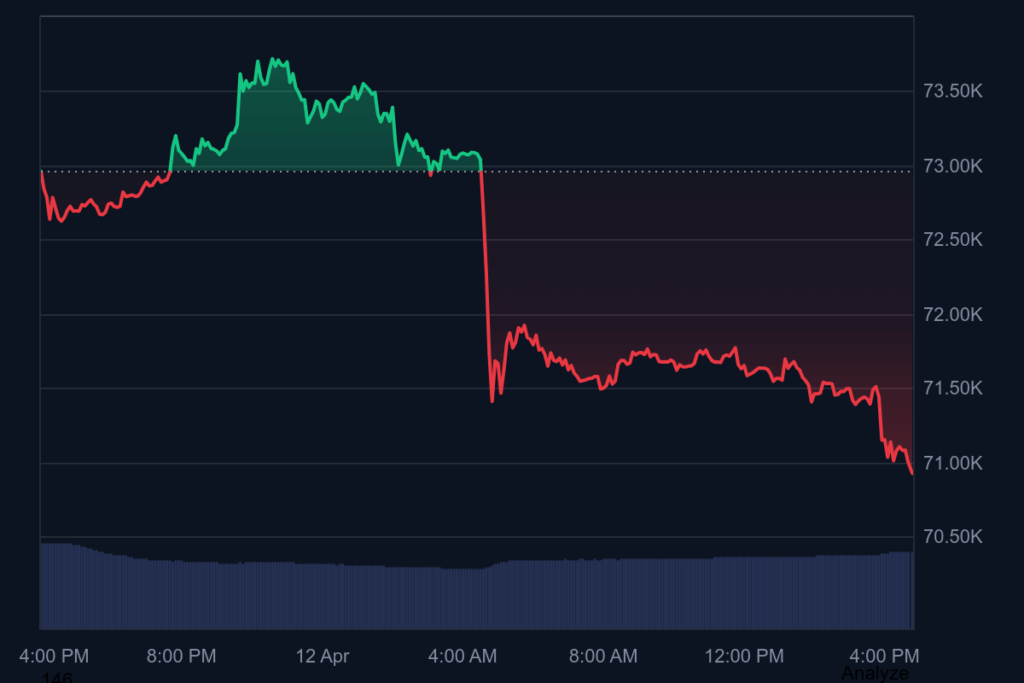
The broader market is also in the red, with altcoins recording losses as well. Assets such as Solana and BNB have erased the gains from recent sessions, suggesting a reduced risk appetite among investors.
Geopolitics Push Crypto to the Sidelines
The failure of diplomatic efforts between Washington and Tehran has shifted global market attention toward traditional risks—energy supplies, inflation, and military escalation. A potential blockade of the Strait of Hormuz could lead to a further spike in oil prices, which in turn exerts pressure on liquidity and the appetite for risk assets, including cryptocurrencies.
The crypto sector, often perceived as an alternative to the traditional financial system, behaves more like a high-risk asset in such moments, showing a strong correlation with global sentiment.
What Lies Ahead for the Markets
Analysts expect volatility to remain high in the short term. If Trump’s threats materialize, crypto markets could see a deepening correction.
At the same time, any signals of de-escalation or the reopening of diplomatic channels could quickly restore risk appetite.
The bottom line: Cryptocurrencies remain sensitive to the global macro and geopolitical environment. As tensions between the US and Iran escalate, investors will likely continue to reduce exposure to risk assets—at least until a clearer direction for the conflict emerges.


 Commentaries






Fill in necessary fields and publish