


India’s Crypto Ecosystem Enters Its Most Diverse Phase Yet
We may earn commissions from affiliate links or include sponsored content, clearly labeled as such. These partnerships do not influence our editorial independence or the accuracy of our reporting. By continuing to use the site you agree to our terms and conditions and privacy policy.

India’s digital-asset market is entering a new phase, one defined by broader token exposure, faster user growth, and a noticeable rise in institutional engagement.
A recent nationwide survey points to a community that is no longer fixated on Bitcoin alone, but instead is developing multi-asset habits and more sophisticated investment behavior.
A Broader Investor Profile Takes Shape
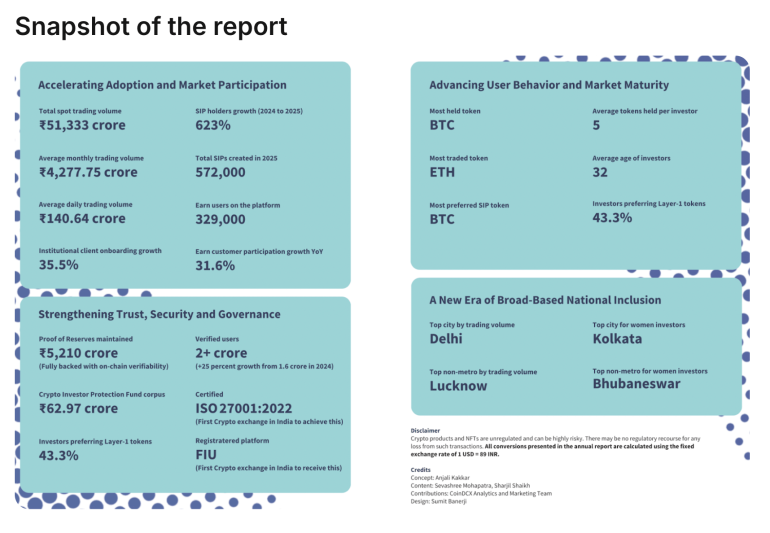
The typical Indian crypto user is now young, diversified, and more active than ever. Investors hold around five different tokens on average, with Ethereum emerging as the most heavily traded asset despite Bitcoin remaining the top long-term accumulation choice. Interest in Layer-1 networks is especially strong, capturing more than 40% of investor preference – an early sign that users are exploring ecosystems beyond the usual market leaders.
Trading and Investment Activity Accelerate
Behind these behavioral shifts is a surge in platform activity. Spot markets recorded over ₹51,000 crore in volume, supported by vibrant daily trading and a sharp increase in recurring investment plans. SIP enrollment grew more than sixfold in a year, while yield-earning features attracted hundreds of thousands of users. Institutions, meanwhile, increased their onboarding by more than a third, marking their most significant movement into the sector to date.
Governance, Verification, and Compliance Strengthen the Market
Market confidence is being reinforced by improved oversight. Exchanges now publish proof-of-reserves worth several thousand crore, verification rates have crossed 2 crore users, and more platforms are adopting recognized security and compliance standards. These advancements are helping the industry move closer to regulatory alignment while protecting retail participants.
Participation Spreads Across the Country
Crypto adoption is no longer dominated by metros. Delhi leads in overall trading volume, but regional centers like Lucknow and Bhubaneswar are emerging as key contributors – particularly among women investors. The geographic expansion suggests that digital assets are reaching communities traditionally underserved by financial markets.


 Commentaries






Fill in necessary fields and publish