


Best Crypto Credit Cards & Debit Cards in 2026
We may earn commissions from affiliate links or include sponsored content, clearly labeled as such. These partnerships do not influence our editorial independence or the accuracy of our reporting. By continuing to use the site you agree to our terms and conditions and privacy policy.



Crypto credit cards bridge the gap between real-world spending and digital asset ownership. Some issuers offer traditional credit cards that require background checks and establish credit limits, and cardholders earn cryptocurrency rewards on eligible purchases.
Others function like prepaid debit cards, which enable users to spend crypto balances online, in-store, and at ATMs.
This guide reveals the best crypto credit cards in 2026 for eligibility, introductory bonuses, rewards, fees, and limits. Learn how crypto-centric cards work, their benefits and drawbacks, and how to get started with a top provider.
What Are the Best Crypto Cards in 2026? Full Comparison
Ranked below are the best crypto cards, according to our research:
| Provider | Best For | Available In | Fees | Rewards | Supported Coins |
| Nexo | Our overall top pick for 2026 | European Economic Area (EEA) and the UK | 0.2% – 2.5% FX fees depending on the day and location. 2% ATM fee after monthly withdrawal limit (by loyalty tier), Interest rates from 2.9% on crypto credit lines | 2% crypto cashback, up to 14% interest on unspent balances |
100+, including BTC, ETH, USDT
|
| Gemini | Crypto back with no annual fee | US | No crypto conversion fees. No FX fees. 3% ATM fee. | 4% crypto cashback on gas purchases, 3% on dining, 2% on groceries, 1% on everything else |
50+ including BTC, ETH, USDT
|
| Binance | Brazilian residents | Brazil | 1% crypto conversion fees. 1% – 2% FX fees. $1.50 ATM fee after two free monthly withdrawals | 2% crypto cashback on all purchases |
USDT, USDC, FDUSD, BNB, BTC, ETH, SOL, ADA, LINK, XRP
|
| Bybit | Cashback rewards | Most Bybit-supported countries | 0.9% crypto conversion fees. 1% FX fees. 2% ATM fee for withdrawals over $100 each month | Up to 10% on eligible purchases, 8% interest on unspent balances |
BTC, ETH, XRP, TON, USDT, USDC, MNT, BNB
|
| Crypto.com | Cardholder perks | U.S. | Monthly fees apply depending on the card tier | Cashback of up to 6% on eligible purchases, Netflix and Spotify rebates, sporting experiences |
Purchases in USD, rewards paid as CRO rewards only
|
| MEXC | Fee-free purchases in EUR | Most European Economic Area countries | 1% top-up fee, 1 EUR monthly fee, 2% transaction fee outside of the EEA | None |
Fiat only, but users may sell BTC and major altcoin holdings to local currency
|
Best Crypto Credit Cards & Debit Cards Reviewed
The research team reviewed terms and conditions for each card issuer. For credit cards, we evaluated eligibility requirements, such as creditworthiness, available credit limit, and annual percentage rates (APRs). Regarding debit cards, the team assessed supported coins and tokens, spending limits, and whether cardholders earn interest on unspent balances.
We reviewed the reward structure, available countries, payment fees, and other key metrics across both card types.
The following card reviews reveal our research findings. Read on to explore the best crypto cards for everyday use.
Nexo Card
Nexo Card is our overall top pick. It functions as a crypto credit card and a debit card under the same account. The credit card provides applicants with a line of credit against their digital asset holdings. The debit card suits investors who want to spend their crypto balances in the real world.

MasterCard issues both card types, allowing users to make purchases online and in-store, as well as cash withdrawals from ATMs. Nexo Card is available in the UK and Europe only, and it requires applicants to undergo traditional credit checks.
Nexo Card Features & Rewards
Nexo credit card offers cashback of up to 2% on eligible purchases, yet the exact rate depends on the user’s account tier. Users receive cashback in Nexo (NEXO) or Bitcoin (BTC), which also influences the rewards rate. Cardholders enjoy flexible repayments without conventional monthly schedules.
The debit card supports over 100 coins and tokens, including the best cryptocurrencies like Ethereum (ETH), Solana (SOL), and Tether (USDT). Users choose their default payment asset and earn interest of up to 14% on their unspent balances.
Nexo Card Fees
Nexo Card foreign exchange (FX) fees range from 0.2% to 2.5%, depending on the merchant’s location and whether the transaction occurs during the week or the weekend.
Each account tier offers free ATM withdrawals with monthly limits; after this, users incur a 2% fee. Credit card holders pay interest on borrowed funds, and APRs start from 2.9%.
Nexo Card does not charge application, annual, or inactivity fees.
Pros
- The overall best crypto card in 2026
- The hybrid structure offers a credit and debit card under the same account
- Credit card holders borrow funds against their existing crypto holdings
- The debit card lets holders earn interest of up to 14%
- Nexo is established, licensed, and reputable
Cons
- Available in Europe and the UK only
- Purchase reward rates are lower than those of many other issuers
Gemini Card
Gemini Card is our favorite card for crypto users who want to earn cashback with no fees. The card charges no annual fee, no crypto conversion fees, and no foreign exchange fees, all while offering impressive crypto cashback rewards up to 4% on everyday purchases. The card is issued by MasterCard and is only available in the US.
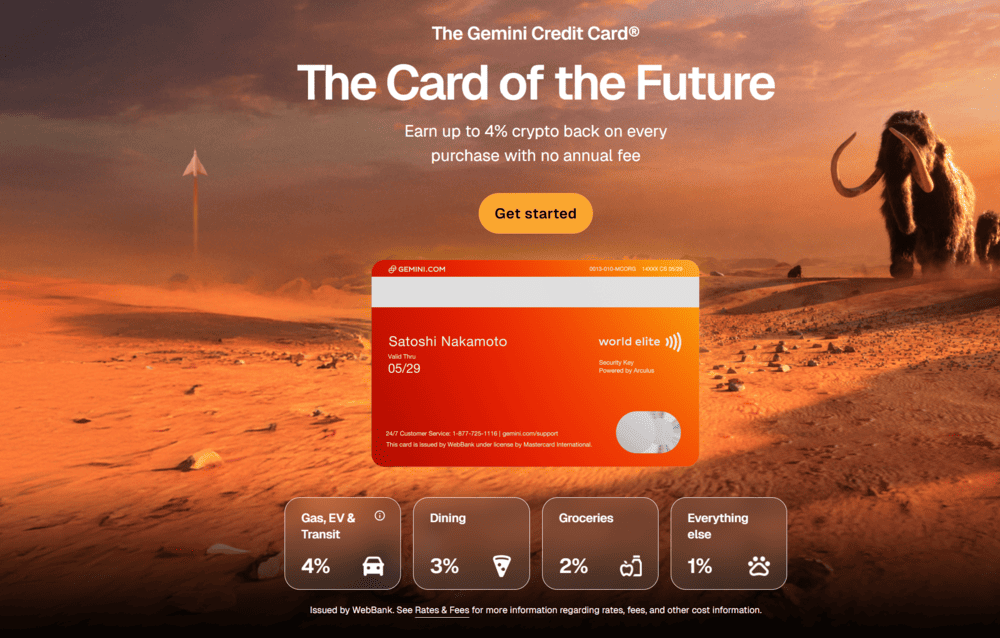
New cardholders can earn a $200 welcome bonus when you spend $3,000 in the first 3 months after receiving the card. In addition, Gemini offers $50 in crypto for every referral you make to the card. You’ll get an extra $250 bonus each time you make 5 referrals. You can earn up to $5,000 per year.
Gemini Card Features & Rewards
The Gemini credit card offers crypto cashback of 4% on gas purchases, 3% on dining, 2% on groceries, and 1% on everything else. Rotating offers give you a chance to earn up to 10% back on popular internet-native brands.
You can choose from more than 50 major cryptocurrencies when earning cashback. You can change your crypto token for cashback as many times as you want, giving you the flexibility to adapt to changing market conditions.
Gemini Card Fees
Gemini charges no foreign exchange (FX) fee and no crypto conversion fees.
ATM withdrawals cost $10 or 3% of your withdrawal, whichever is greater. APRs for borrowed cash range from 16.99% to 34.99%.
Gemini does not charge application, annual, or inactivity fees.
Pros
- No annual, FX, or crypto conversion fees
- Earn up to 4% on gas, 3% on dining, and 2% on groceries
- Choose 50+ tokens for crypto cashback
- $200 welcome bonus and $5,000 in annual referral bonuses
Cons
- Available in the US only
- Relatively high ATM withdrawal fees
Binance Card
Binance Card is a crypto debit card that connects to the user’s Binance exchange account. Available in Brazil only, the card is denominated in BRL and allows holders to spend USDT, BTC, ETH, SOL, USDC (USDC), BNB (BNB), and other top altcoins.
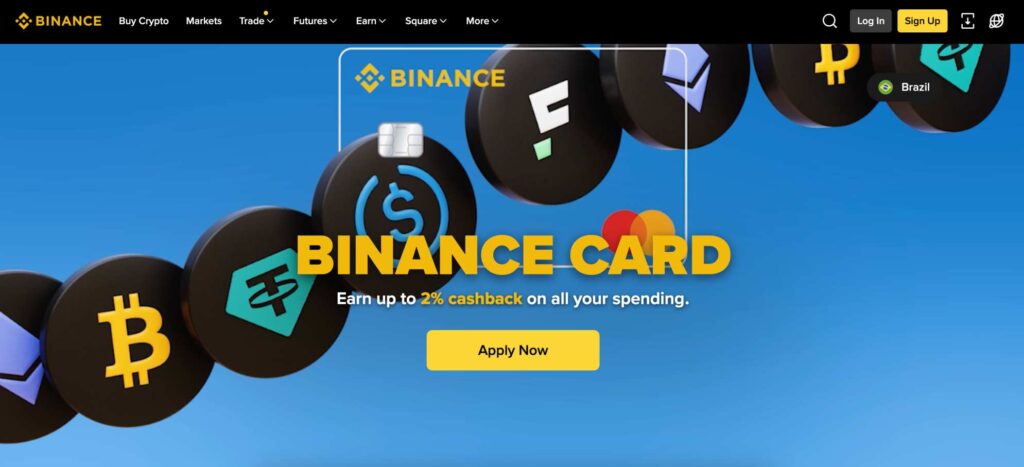
As Binance Card is a virtual card, users connect it to their Google Pay or Apple Pay account and make purchases online and in-store.
Binance Card Features & Rewards
Binance Card offers 2% cashback rewards on all purchases. While users select their preferred payout currency, the card caps monthly rewards to just 120 BRL.
Daily and monthly spending limits are 25,000 BRL and 50,000 BRL, respectively. Users may make three ATM withdrawals daily and 30 per month.
Binance Card Fees
No application or annual fees apply. Cardholders pay 1% on crypto conversions and 1-2% in FX fees. Users receive two fee-free monthly ATM withdrawals and pay $1.50 (approximately 8 BRL) each time thereafter.
Pros
- Earn 2% crypto cashback on all purchases
- Get two fee-free ATM withdrawals per month
- Supports multiple stablecoins and cryptocurrencies
- No application or annual fees
Cons
- The card limits monthly cashback to just 120 BRL
- Available in Brazil only
- Total transaction fees of up to 3%
Bybit Card
Bybit, one of the largest cryptocurrency exchanges in terms of daily trading volume, offers one of the best crypto debit cards for rewards. Users earn up to 10% on eligible purchases, paid in USDT. The card is available in most countries, and supported fiat currencies include USD, EUR, MXN, BRL, and ARS.
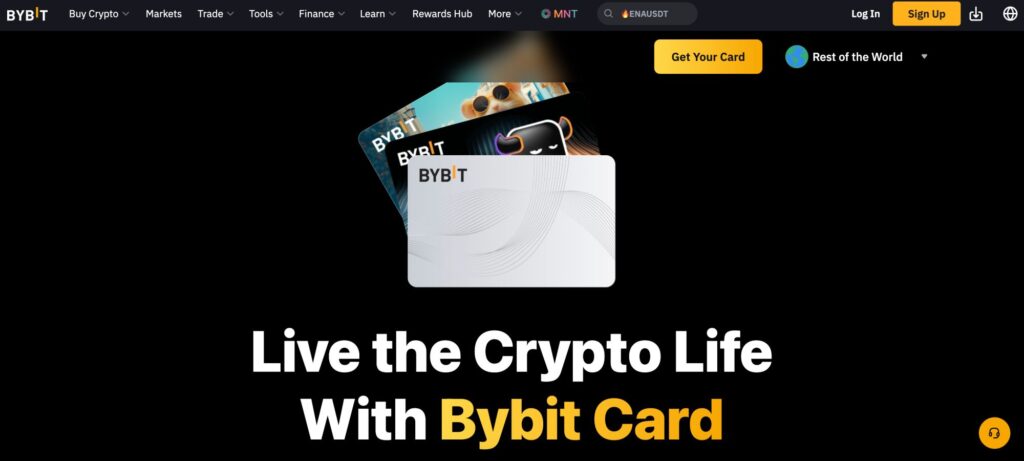
The Mastercard-issued debit card allows users to spend their Bybit account balances worldwide. Users receive a physical card, which also connects with Google, Apple, and Samsung Pay.
Bybit Card Features & Rewards
Cashback reward rates vary based on the holder’s monthly spending. The lowest rate is 2%, and those who spend at least $3,500 increase payouts to 4%. The highest cashback rate is 10%, and it requires a minimum monthly spend of $25,000.
Most account tiers offer a 100% rebate on popular subscription services like Netflix, Prime, and Spotify. Bybit also offers 8% interest rates on idle card balances via the auto-earn feature.
Bybit Card Fees
Cardholders avoid application and annual fees. Bybit charges 0.9% on crypto conversions at the point of payment, and a 1% FX fee when users make transactions in different account currencies.
The card allows $100 in free monthly ATM withdrawals, with a 2% fee thereafter.
Pros
- Receive up to 10% cashback on most purchase categories
- Available in multiple currencies, including USD, EUR, and MXN
- Earn 8% interest on idle card balances
- Users get $100 in free ATM withdrawals monthly
Cons
- Does not offer cards in GBP
- Only VIP account holders get free DHL deliveries
- The maximum cashback rate requires $25,000 in monthly purchases
Crypto.com Card
Crypto.com offers a Visa credit card for U.S. residents. The card has various tiers based on monthly subscription fees or Cronos (CRO) holdings, which determine perks and bonuses.
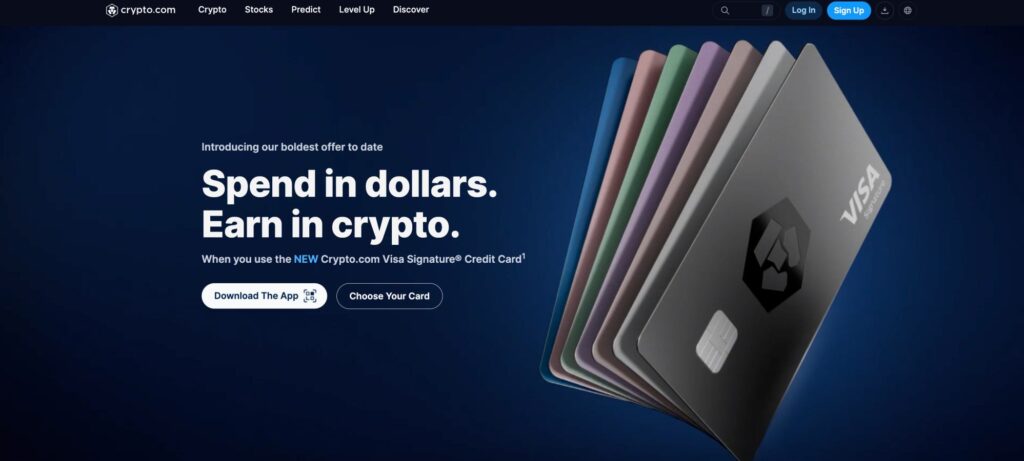
Credit limits and APRs depend on the applicant’s credit score, and the exchange conducts a soft inquiry to assess eligibility.
Crypto.com Card Features & Rewards
The basic credit card tier offers 1.5% cashback on purchases. The rate rises to 3.5% when holders pay $4.99 per month, or 4.5% for $29.99 per month for the Pro level. Members eliminate the monthly payment when they hold $500 or $5,000 in CRO. The highest VIP tier, “Obsidian”, offers 6% cashback.
First-time applicants receive a welcome bonus of $100 to $2,500, depending on the tier. The bonus requires varying minimum spending amounts within the first 90 days. Other perks include Netflix and Spotify rebates, as well as exclusive sporting experiences.
Crypto.com Card Fees
Cardholders pay APRs of 18.24%, 26.24%, or 32.24%, depending on their creditworthiness. No charges apply to USD purchases, yet other currencies incur a 3% FX fee. Bear in mind that ATM withdrawal fees are in the form of cash advance fees with an APR of 33.24%.
Pros
- Visa credit card available for U.S. applicants
- Eligible purchases earn crypto rewards of up to 6%
- No transaction fees on USD payments
Cons
- Non-USD purchases incur a 3% FX fee
- Users must receive credit card rewards in CRO
- High APRs on uncleared monthly statements
MEXC Card
Research shows that MEXC remains a top choice for European users. Its prepaid debit card offers free transactions within EEA countries, and users convert crypto account balances into their preferred fiat currency. The crypto-to-fiat tool supports BTC, ETH, USDT, DOGE, USDC, SOL, Toncoin (TON), and Tron (TRX).
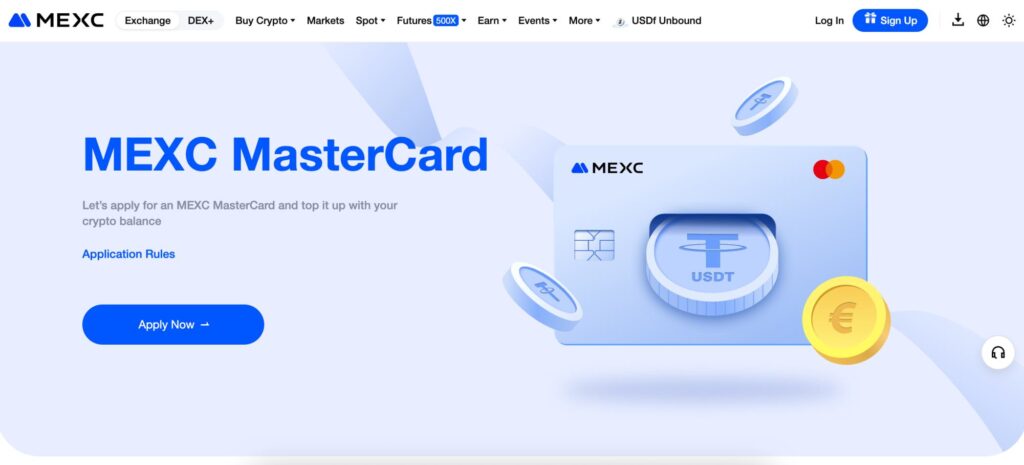
The card works with online merchants that accept MasterCard only, so users cannot withdraw cash or make in-store purchases.
MEXC Card Features & Rewards
MEXC offers a basic prepaid card without welcome bonuses or cashback rewards. The card suits users who want to make everyday transactions at competitive fees.
MEXC Card Fees
Cardholders pay a 1% fee to top up their MEXC fiat account. Making EEA-based purchases offers a fee-free experience, yet all other transactions incur a 2% charge. Users pay a small monthly fee of 2 EUR.
Pros
- Simple application process without credit checks
- Users pay monthly fees of just 2 EUR
- Avoid transaction charges within the EEA
Cons
- 2% fee when cardholders make non-EEA transactions
- The card does not offer rewards or bonuses
- Available in select European countries only
Our Crypto Card Review Methodology
We sourced the best crypto credit cards and evaluated each provider by the following research criteria:
- Eligibility: We feature crypto cards for users in various global locations, since regulatory restrictions limit available countries.
- Card Type: Our research team reviewed various types of crypto cards to suit different requirements. Popular categories include traditional credit cards with cryptocurrency rewards and debit/prepaid cards that allow users to spend their digital asset holdings.
- Fees and Interest Rates: Analyzing the card’s terms and conditions allowed us to outline the general fees associated with purchases, foreign exchange transactions, and ATM withdrawals. For crypto credit cards, we evaluated APYs and APRs for different credit profiles.
- Rewards and Bonuses: The methodology explored cardholder rewards, such as the percentage rate, available cryptocurrencies, eligible purchases, and other account perks. We also ranked providers based on their welcome bonuses and minimum spend requirements.
- Application Process: Applicants prefer a hassle-free and straightforward card application process. While most issuers require know-your-customer (KYC) processes, the best crypto debit cards approve customer documents in minutes.
- Limits: Crypto cards offer varying daily and monthly limits for online purchases and ATM withdrawals. The top providers offer high transaction limits.
What Are Crypto Cards?
Issued by Visa or MasterCard, crypto cards offer credit and debit card services across two core use cases.
Some cards connect to wallet or exchange balances, allowing holders to make real-world purchases. The issuer converts digital assets to the merchant’s local currency in real-time, usually at a conversion fee. The merchant receives the funds like any other online or in-store purchase.
The other card type functions like traditional credit cards. Users complete online applications, and the issuer assesses eligibility through standard creditworthiness checks. If approved, the card provider sets credit limits, interest rates, and repayment terms. Credit cards typically offer cashback rewards in popular digital assets, such as BTC and USDT.
How Do Crypto Cards Work?
Crypto cards operate differently depending on the card category. Read on to learn how crypto debit and credit cards work.
Crypto Debit Cards
Debit cards (also known as prepaid cards) enable online and in-store payments with cryptocurrencies. The best crypto exchanges, such as Binance, Bybit, and MEXC, allow account holders to connect their platform balances to a debit card and make purchases accordingly. Since the best crypto debit cards rely on the Visa or MasterCard networks, holders may use their cards at millions of global locations.
When users make a payment, the debit card issuer converts an equivalent amount of digital assets at the current spot price. The online or physical business gets funds from the card provider in their domestic currency. If the card does not support that specific currency, the issuer makes a cross-currency transfer with FX fees.
Crypto Credit Cards
Credit cards provide holders with a line of credit, and users make transactions in local currency. This structure means cardholders do not spend digital assets, unlike debit cards. Instead, users typically earn cryptocurrencies via cashback rewards.

One example is Nexo, which offers 2% cashback rewards in significant assets like BTC and ETH. Most transactions are eligible for rewards, although some exceptions, like ATM withdrawals, apply.
Due to banking regulations, the best crypto credit cards are generally available in select countries or regions. Users apply for financing in the traditional sense, which means hard credit checks, variable interest rates, and repayment schedules.
Why Use a Crypto Credit Card or Debit Card?
This section examines the primary benefits of using a cryptocurrency credit or debit card.
Spend Crypto Balances
Crypto cards remain a popular method to spend coins and tokens in the real world. The process streamlines crypto purchases, as users avoid manual conversions and withdrawing funds to a personal bank account, which can take several business days.
When consumers complete payments, card issuers immediately convert the default digital asset to the merchant’s local currency, ensuring near-instant settlement.
Receive Crypto Rewards and Other Perks
The best crypto debit cards offer generous reward structures, allowing holders to earn free digital assets without requiring additional capital investment. A Nexo Card holder earns up to $20 for every $1,000 in purchases, and they avoid interest when clearing the statement balance in full. Users can choose from over 100 cryptocurrencies as their rewards currency.
Some card issuers offer other perks. Bybit and Crypto.com users receive a 100% rebate on subscription services, such as Netflix.
Introductory Bonuses
Similar to traditional credit cards, first-time applicants often receive an introductory bonus based on minimum spend requirements.
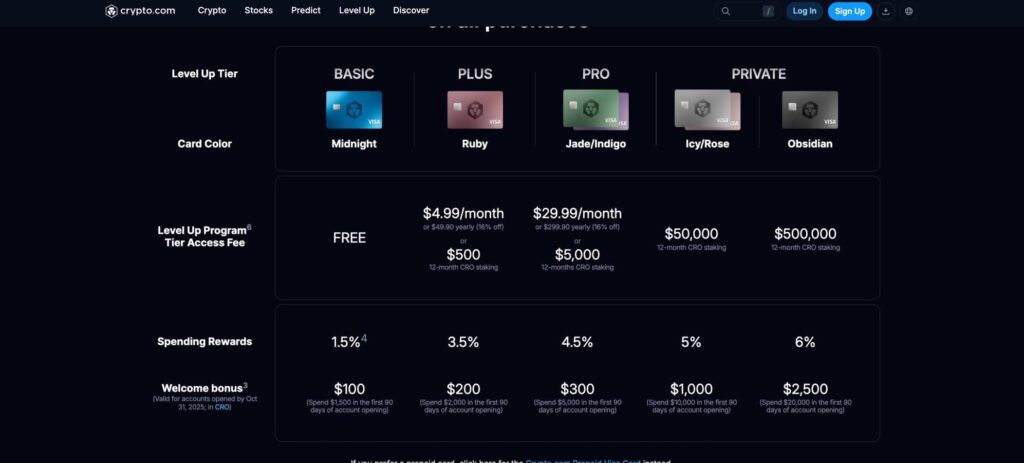
The Crypto.com card offers a $100 bonus when users spend $1,500 in the first 90 days. Higher bonuses are available on premium plans. The Obsidian card, which requires $500,000 in CRO holdings, offers a $2,500 bonus when users spend $20,000.
Earn Interest on Idle Card Balances
Crypto cards sometimes offer interest payments on idle balances, which resemble conventional checking accounts with a connected Visa or MasterCard.
Our research shows that Nexo Card is the best option for earning crypto interest, as the provider offers APYs of up to 14%. Once users spend those assets, they also earn cashback rewards of up to 2%.
Crypto Credit Cards vs Crypto Debit Cards
Crypto credit cards offer lines of credit with monthly statements, interest rates, and strict repayment terms. They also provide cardholders with crypto rewards on eligible purchases. Debit cards let investors spend digital assets with online and physical merchants, withdraw cash from ATMs, and earn interest on unspent balances.
The table below highlights the key differences between crypto credit and debit cards.
| Crypto Credit Card | Crypto Debit Cards | |
| Transaction Type | Standard fiat purchases within the permitted credit limit | Cardholders use crypto balances for payment, which the issuer converts to local currency |
| Interest Paid on Purchases? | Yes, but users avoid interest when they clear the statement balance | No |
| Fees | Usually, FX fees only | Crypto conversion and FX fees |
| Earn Interest on Idle Balances? | No | Yes |
| Rewards | Crypto cashback on eligible purchases | Usually no cashback, but holders may receive perks like free Netflix subscriptions |
| Application Process | Standard credit card application with hard inquiries | KYC required, but without credit checks |
| Physical or Virtual? | Typically physical | Often physical and virtual |
Note: The above data shows typical card features and requirements, but they may vary by provider.
Things to Consider Before Getting a Crypto Card
Consider the following factors before you apply for a crypto card:
Taxes
When you make purchases with existing crypto balances, the card provider sells the equivalent amount of digital assets from your portfolio.
Most tax authorities, including the IRS, view the process as an asset disposal, which means the card purchase could trigger capital gains. Taxes may be due if the price of the asset exceeds its original cost basis, so cardholders should maintain adequate records.
To minimize potential tax obligations, consider using assets with zero or low capital gains when setting the default payment crypto.
Interest Payments
Even the best crypto credit cards charge monthly interest payments based on the statement balance.
Cardholders avoid paying interest when they clear the balance in full. This strategy allows users to earn crypto cashback rewards without incurring interest.
Hard Credit Inquiries
Credit card providers typically conduct hard credit inquiries to determine eligibility and creditworthiness. The process also influences the applicant’s credit limit and APR.
Remember that hard inquiries can temporarily harm credit scores, since applications signal that users require financing and plan to take on new debt obligations.
Fees vs Rewards
While cardholders avoid interest when clearing statement balances, purchases, and ATM withdrawals may incur transaction and foreign exchange fees. If those fees exceed cashback reward rates, the crypto card yields a negative benefit.
Best Crypto Credit & Debit Cards: Conclusion
While crypto cards offer a range of benefits, selecting the right issuer is crucial. Choose between a debit or credit card and explore key factors such as interest rates, rewards, and fees. If you have come this far, you may also be interested in earning interest on stablecoins.
Nexo, which offers a hybrid debit/credit card, is the overall best option. Research confirms that Nexo offers cashback rewards of up to 2% and interest rates of up to 14% on unspent balances. The MasterCard-issued card works at millions of online and in-store locations, and offers fee-free ATM withdrawals with varying monthly limits.
FAQs
Are there crypto credit cards?
Are crypto cards secure and safe to use?
Where can I use a crypto debit card?
How do crypto debit cards work?
Can I get a no-KYC crypto card?
Can I use a crypto debit card instead of my normal debit card?
Are crypto credit cards worth it?
Which merchants accept crypto cards in 2026?
Can I withdraw money using a crypto debit card?
References
- Taxpayers need to report crypto, other digital asset transactions on their tax return (Internal Revenue Service)
- What Is a Hard Inquiry and How Does It Affect Credit? (Experian)
- What is Cash Back on a Credit Card? (Toronto-Dominion Bank)
