


How to Earn Interest on Stablecoins: Beginner’s Guide
We may earn commissions from affiliate links or include sponsored content, clearly labeled as such. These partnerships do not influence our editorial independence or the accuracy of our reporting. By continuing to use the site you agree to our terms and conditions and privacy policy.



Traditional banks pay about 0.4% annual interest on your deposits. At the same time, inflation runs at roughly 2.9% per year. Your money basically loses around 2.5% of its buying power annually while banks use your funds to generate profits elsewhere.
Is that really necessary, and can you reverse the process? Not exactly. However, there are other choices available, and they pay more.
One of those choices is the stablecoin market, which consists of cryptocurrencies such as USDT, USDC, and DAI. These assets are pegged to the value of fiat currencies, typically the U.S. dollar, and are designed to maintain a stable value. They are widely used for trading, payments, and earning interest.
This market has grown to around $310 billion. Some platforms work like crypto banks, while others use decentralized finance (DeFi), a system where smart contracts replace bankers, and your stablecoins earn interest through peer-to-peer lending protocols instead of going through a company.
In this guide, we’ll teach you how to earn interest on stablecoins, from setting up accounts to understanding the real risks behind crypto interest rates.
Earn Interest on Stablecoins: Easy Steps
Getting started takes less time than setting up online banking at your local branch, and for this walkthrough, we’ll use Nexo, a digital asset platform that’s been operating since 2018 and has built a solid track record.
Step 1. Create Your Nexo Account
To earn interest on stablecoins, you’ll have to start by creating a password and completing KYC (Know Your Customer) checks by providing a copy of your ID. Once that is done, verification can take anywhere from minutes to 24 hours. Note: you must keep at least $5,000 in digital assets to earn any interest, and above that minimum, the Nexo Loyalty Program boosts your rate.
Step 2. Deposit Funds Into Your Account
Next, decide how you want to earn passive income on stablecoins. You can choose between buying them on Nexo with a card or bank transfer, or transferring from another wallet or exchange. The most widely used and trusted stablecoins are USDT, USDC, and DAI.
Step 3. Opt In and Choose Your Terms
Navigate to your account settings and enable interest earnings. Then, go ahead and head to the Nexo Savings hub, click Earn Daily Interest, and finally, tap Start Earning. You’ll get to choose between flexible savings for anytime withdrawal or fixed-term options that lock funds for 1, 3, or 12 months at higher rates. Flexible works best for beginners. Keep at least 10% of your portfolio in NEXO tokens to unlock platinum-tier rates.
Step 4. Watch Your Interest Accrue Daily
Interest begins within 24 hours of your deposit. Nexo pays daily, and the interest compounds automatically, so your balance grows without any action on your part. The dashboard shows live balances, accrued interest, and APY that updates in real time. If you choose to receive payouts in NEXO tokens instead of your deposited stablecoin, you gain an extra 2% bonus on the base rate.
Step 5. Withdraw When You’re Ready
If you are on flexible savings, you can start a withdrawal through your dashboard, and funds typically arrive within minutes to a few hours, depending on network congestion. Fixed-term accounts are locked until the term expires, though early withdrawal is sometimes possible (with penalties). Once your term ends, withdraw both principal and interest or enable auto-renewal to keep earning without interruption.
Different Ways of Earning Stablecoin Interest
Before you start earning interest on stablecoins, it’s worth knowing that the process comes in different flavors, each with its own risk-reward profile. Some methods need nothing more than a few clicks, but others demand active management or a stomach for complexity.
Here’s how the main approaches stack up:
Crypto Savings Accounts
Think of these as bank accounts built on blockchain. You deposit stablecoins, platforms lend them out to borrowers, and you earn passive income on stablecoins daily or weekly. Nexo, Binance, and Crypto.com usually run these programs with rates around 4-10%, which sometimes climb higher during promotions.
No complicated contracts to manage, no special fees cutting into what you earn. Most platforms let you pull money out whenever you need it, though you can usually lock funds for a few months to get better rates.
Nexo automatically grows your balance each day by adding interest. Crypto.com adjusts your rate based on how much of their CRO token you hold. Binance puts everything under one roof so you can trade and earn without switching apps. The catch comes down to trust. You hand over your stablecoins to a company that promises to keep them safe and pay you back with interest.
Banks have the FDIC (Federal Deposit Insurance Corporation) that protects up to $250,000 per depositor at each FDIC-insured bank, with separate limits for different ownership categories. However, these platforms usually don’t offer such protection.
If the company runs into trouble or makes bad decisions with your funds, you might lose everything. Security practices differ between platforms, and some freeze withdrawals when markets go sideways.
- Easy setup with customer support
- Withdraw flexibly with simple interfaces
- Daily payouts with no technical skills needed
- No government insurance on deposits
- Rates change based on company decisions
Staking Platforms
You can stake stablecoins through programs where you lock your funds up to earn higher rates, though this is pretty different from traditional crypto staking. True staking involves validators securing proof-of-stake blockchains like Ethereum by locking tokens to verify transactions. With stablecoins, what you are actually doing is lending them through fixed-term programs – no validating transactions involved.
These programs are a little like certificates of deposit in fiat banking. You commit stablecoins for one to 12 months in exchange for specified rates, although rates can vary based on factors like liquidity and demand. Binance and Kraken offer these fixed-term options, where longer lock-up periods mean higher returns. Break your commitment early, and you forfeit earned interest – sometimes all of it.
Some DeFi protocols let you lock algorithmic stablecoins (self-balancing digital money) like DAI for governance rights, meaning you can vote on protocol decisions while earning. These opportunities exist but are not as common as simple fixed-term lending programs.
This approach works when you know you won’t need the money for the stated lockup period. Rates justify the lock-up if you can wait patiently. The tricky part is that market conditions can shift faster than your unlock date. You’re betting that higher returns beat whatever else you might do with accessible funds.
Pros
- Typically higher rates than flexible accounts
- Predictable returns you can calculate upfront
- Some platforms offer auto-renewal
Cons
- Lock-up periods trap your funds
- Early withdrawal forfeits earned interest
- Opportunity cost if better options emerge
Yield Farming & Liquidity Pools
Yield farming pushes into DeFi territory, where your returns come from multiple sources like trading fees, token incentives, and protocol rewards. In general terms, you deposit your stablecoins into liquidity pools on platforms such as Curve, Aave, or Uniswap, and these services use your funds to facilitate trading or lending (no middleman involved). In return, you earn a share of fees plus bonus tokens.
Curve specializes in stablecoin-to-stablecoin pools, minimizing impermanent loss since paired assets move together. Both track fiat currencies, so price divergence stays minimal. Current rates for yield-bearing stablecoins hover around 4-8% for conservative pools, though riskier strategies on newer protocols can spike to 15-30% when token rewards factor in. Pendle Finance lets you trade future yield (buy or sell interest you’ll earn later), adding complexity for potentially higher returns.
The learning curve steepens quickly. You manage gas fees on Ethereum or switch to cheaper alternatives like Polygon. Pool compositions need monitoring, and intimidating concepts become daily vocabulary.
Unlike savings accounts, where you deposit and forget, this works best for users who treat DeFi like a part-time job with enough capital to justify the time investment.
Pros
- Potentially the highest returns in the market
- Transparent on-chain activity you can verify
- You maintain full custody of funds, keeping control and security in your hands
Cons
- Gas fees can eat into profits on smaller amounts
- Smart contract risk from bugs or hacks
Lending Platforms
Lending splits into two camps: centralized fixed-term products and decentralized algorithmic protocols. Fixed-term CeFi (centralized finance) lending through Nexo or Binance locks up stablecoins for predetermined periods with guaranteed rates, like a crypto certificate of deposit.
Algorithmic DeFi lending through Aave or Compound adjusts rates in real-time based on supply and demand. Aave leads with roughly $41-44 billion locked across multiple chains as of late September 2025. Deposit USDC and you earn around 4% APY that shifts as borrowing demand changes.
Compound offers competitive rates with a simple interface. Both require borrowers to deposit 150-200% of what they borrow as collateral, which protects lenders if prices crash. Interest compounds automatically, and withdrawals can occur at any time, though rates fluctuate.
Smart contract bugs present a real danger despite audits, and billions have been drained from DeFi protocols over the years. Market crashes trigger mass liquidations that can overwhelm systems. CeFi platforms carry different baggage, like mismanagement or insolvency, which destroyed Celsius and BlockFi in 2022.
CeFi fixed-term lending delivers certainty if you hold to maturity. DeFi lending offers flexibility and on-chain transparency at the cost of borrowing rates. Neither requires pairing assets, making both simpler than yield farming.
Pros
- Clear terms with CeFi, transparent rates with DeFi
- Lower complexity than farming
- Over-collateralization protects lenders
Cons
- Rates fluctuate with DeFi
- Liquidity locked with fixed CeFi
Which Stablecoin Interest Platforms Are the Best?
Now that you have a full understanding of how to earn interest on stablecoins, let’s move on to the best platforms you can use.
Nexo: Digital Assets Wealth Platform
Nexo is a wealth platform that launched in 2018 and returned to the U.S. market in 2024 after resolving some regulatory issues. At the moment, it manages over $11 billion in assets and has around 7 million users across the world. What makes it stand out is that you don’t have to pick between flexibility and decent returns: Nexo offers savings products that fit different strategies.
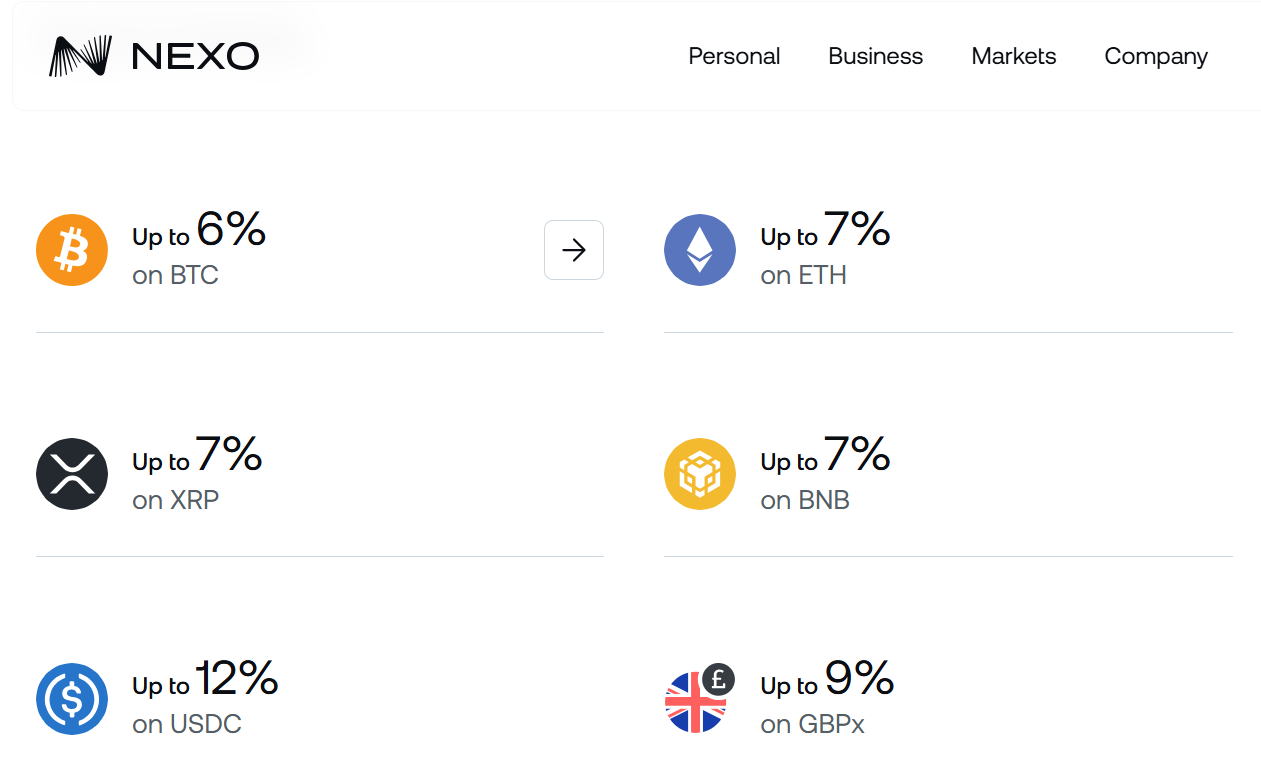
You can pull your funds out of staking whenever you need them with flexible accounts, or keep them locked up in fixed schemes for better rates that can hit 16% APY on stablecoins.
The simplicity separates Nexo from Binance’s overwhelming product lineup and Crypto.com’s rigid tier structure. Your interest pays out daily and compounds on its own, and you get to choose whether earnings come in your deposited stablecoin, or you can grab an extra 2% by taking payments in NEXO tokens.
The catch is a $5,000 minimum balance to start earning, which filters out casual users but rewards serious investors with top-tier perks. Third-party audits from CertiK, Coinsult, and SolidProof back up the security setup.
Pros
- Daily interest payouts with automatic compounding
- Flexible withdrawal with no mandatory lock-ups
- Multi-product ecosystem for borrowing and spending
Cons
- $5,000 minimum balance to start earning
- Centralized custody
- U.S. restrictions on earned products
Best Wallet: Self-Custodial Stablecoin Staking
Best Wallet is a non-custodial mobile app that lets you explore stablecoin staking while keeping full control of your funds. Instead of handing over your assets to an exchange, you connect directly to staking pools with USDT, USDC, or DAI. Your coins never leave your wallet, which removes the risk of relying on a third party and gives you the security of holding your own keys.
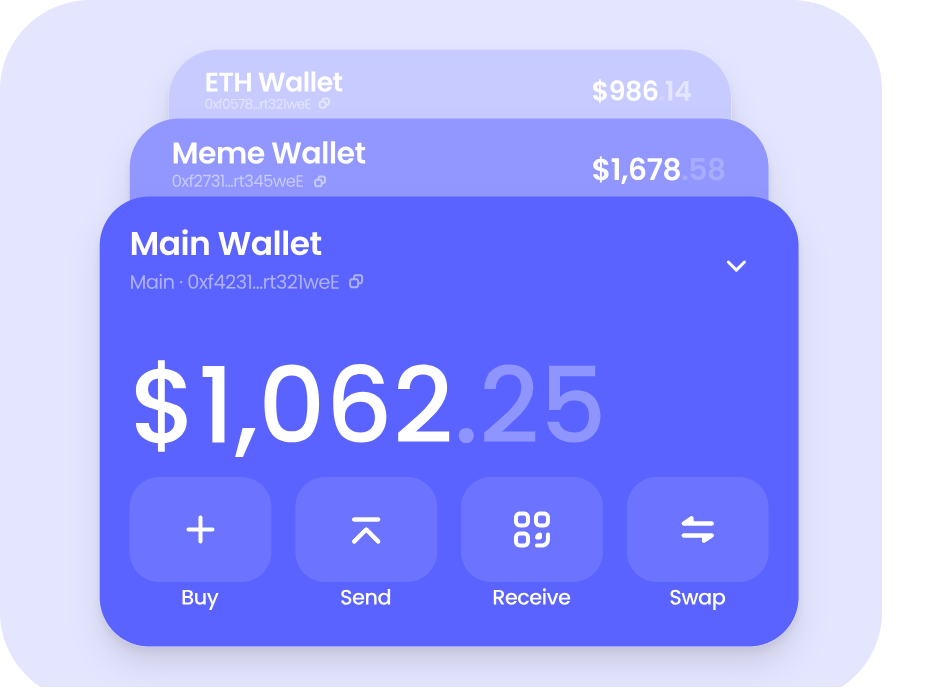
The wallet aggregates opportunities across multiple blockchains, so you can compare real-time APYs and cherry-pick the best rates without hopping between platforms. A built-in DEX aggregator handles quick stablecoin swaps at competitive rates. The mobile-first design keeps everything accessible on iOS or Android.
No KYC bureaucracy slows things down, and you’ll be ready for staking in minutes. Moreover, no one needs to see your profile. Early access to crypto presales sweetens the deal, and staking platform’s native $BEST token alongside your stablecoins unlocks boosted rates.
Your private keys never leave your device, which means counterparty risk is greatly reduced. This makes Best Wallet one of the most secure options for earning interest on stablecoins.
Pros:
- You maintain full control of private keys and funds
- Aggregates the best APYs across multiple chains in one interface
- No KYC requirements for instant access
Cons:
- Responsibility for security falls entirely on you
- Mobile-focused design limits desktop functionality
- Requires blockchain knowledge to navigate safely
Binance: Largest Exchange With Diverse Earn Products
Binance is the world’s largest centralized crypto exchange, serving over 290 million users who can benefit from earning yield on stablecoins.
The platform offers crypto savings accounts, staking, and yield farming options, with USDT rates spanning 0.4% to 10.4% APY in savings accounts. Yield farming pushes higher at 0.4% to 98% APY for BTC and USDT pairs, though these carry more risk.

Flexible savings hover around 3-6% APY on stablecoins like USDT and USDC. Locked options bump yields higher when you commit funds for 30, 60, or 90-day stretches, though stablecoin fixed terms cap at 30 days, unlike other assets.
Multiple earning methods coexist under one roof. Simple earn, staking, liquidity farming, and dual-asset products let sophisticated users bet on price movements while collecting yield. Support extends to 350+ cryptocurrencies beyond stablecoins.
Transaction fees stay low at 0.1%, and everything integrates with the broader trading infrastructure. You also have auto-invest features that enable dollar-cost averaging while automatically reinvesting interest for compound growth.
The range of options can overwhelm newcomers; therefore, Binance is better suited for experienced users who understand different yield strategies and their risks.
Pros
- Massive selection with 350+ supported assets
- Seamless integration with exchange trading features
Cons
- No locked staking options for stablecoins specifically
- Platform complexity can overwhelm beginners
Crypto.com: Card Integration With Tiered Rewards
This platform ties interest in stablecoins directly into its Visa card program, so you earn rewards while you spend. Rates on flexible, one-month, and three-month terms can reach up to 12% APY, depending on how much CRO (the native token) you hold. The higher your tier, the better the rates, which turns loyalty into a clear advantage instead of a penalty.
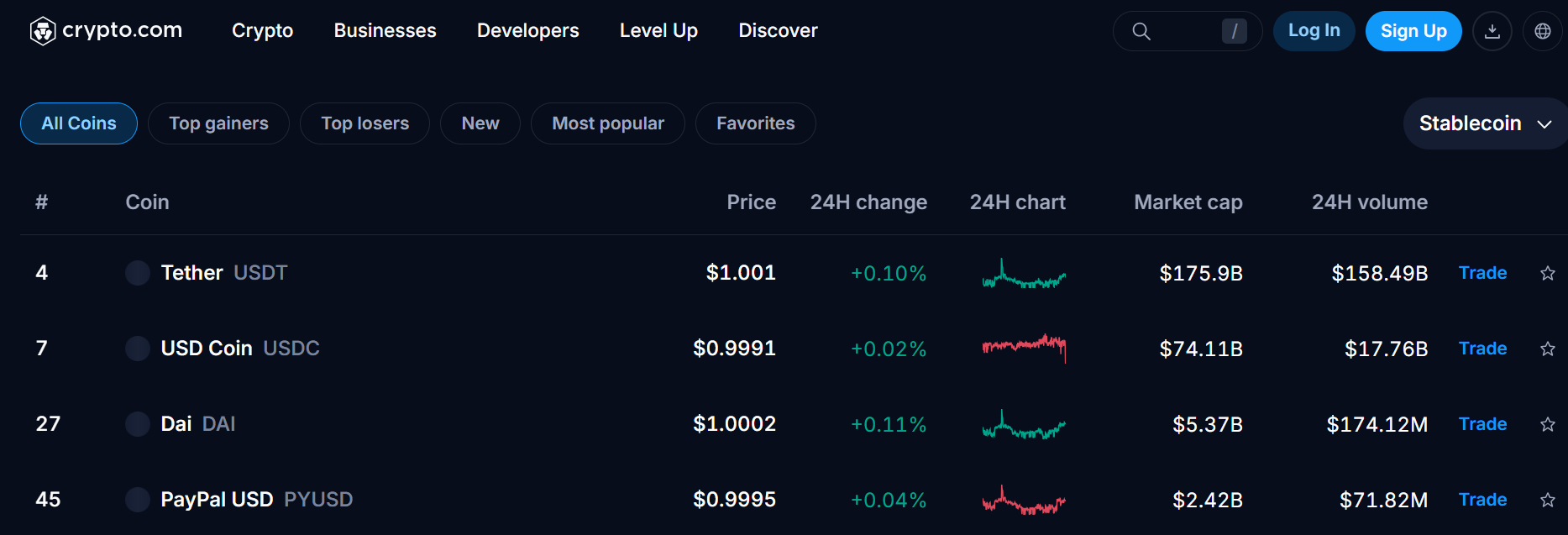
The Visa card lets you spend stablecoins anywhere and still earn up to 5% cashback on purchases. Your balance continues to collect interest right up until you swipe the card.
Moreover, there’s a mobile app that keeps things simple, with clear displays and straightforward navigation that anyone can follow. Frankly, smaller accounts do see lower returns under the tiered system, but the setup rewards those who commit more to the platform.
Security covers multiple layers, including encryption and biometric access, and a DeFi wallet option is available for anyone who prefers non-custodial control. The company has operated since 2016 and holds licenses in several jurisdictions, which adds a track record of stability and oversight.
Pros
- Card integration lets you earn interest while spending
- Up to 12% APY on stablecoins with proper CRO staking
- Strong security with biometric authentication
Cons
- Best rates require significant CRO token holdings
- Smaller accounts see much lower returns
- Tiered system creates complexity for new users
Understanding How Earning Interest on Stablecoins Works
To earn yield on stablecoins, you have to look to DeFi services. You deposit stablecoins, platforms put them to work, and you collect a share of the profits. Of course, the process differs between centralized and decentralized options, but the core stays the same.
Centralized platforms work like digital banks. You deposit USDT or USDC, and the platform lends your funds to people who need them. Margin traders borrow stablecoins to increase their trading positions. Institutional players borrow for business needs.
These borrowers pay interest, and the platform shares that revenue with you while keeping a portion for itself. Nexo and Binance pool user deposits into larger lending pools. More borrowing demand means higher rates for you.
Decentralized protocols skip the middleman. For instance, Aave and Compound use smart contracts that match lenders with borrowers automatically. You deposit stablecoins, borrowers lock up more crypto than they borrow as safety collateral, and interest rates move up/down based on how many people want to borrow.
When demand spikes, your rate climbs. Interest accumulates continuously, updating roughly every 12-15 seconds on Ethereum.
Where does your yield actually come from? Three main sources. Traders borrow stablecoins to leverage their positions. Companies borrow for arbitrage opportunities. Some platforms add their own token rewards to attract deposits.
A few specialized stablecoins like sDAI automatically tap into DeFi lending, while others like YLDS hold Treasury securities and pass the interest along.
Most platforms put your earnings straight back into your balance, so the money you make starts earning its own interest. At a 10% rate with daily compounding, you end up with closer to 10.5% after a year.
The catch comes down to trust and technology. Centralized platforms take on risk when they lend your money. Decentralized protocols depend on code working correctly. It comes to this: both generate yields from actual lending activity, but neither offers the insurance protection that traditional banking systems carry.
Stablecoins vs Banking: Which is Best For Earning the Most Interest?
Theoretically, stablecoins provide higher earning possibilities, but the question is: earn yield on stablecoins or enjoy safety with banks? Let’s see how they directly compare.
At the moment of writing, traditional banks pay around 0.4-5% APY, and high-yield accounts reach the upper end of this range. On the flipside, stablecoin platforms average 4-12%. The difference in number is clear.
However, banks provide FDIC insurance up to $250,000, regulatory oversight, and don’t forget consumer protection laws built over decades. Stablecoin platforms offer higher returns but operate in newer regulatory territory, with minimal insurance coverage for your deposits. We have previously compared stablecoin vs credit cards if you’d like to explore another angle to this.
What you can do is leverage both systems strategically. Hypothetically, you can keep emergency funds and short-term money in FDIC-insured accounts for safety and instant access.
At the same time, it makes sense to set aside the money you don’t need right away into stablecoins, since they usually pay better rates. It’s a bit of a middle-ground strategy: part safety, part chasing higher returns.
In the end, stablecoins often beat what you’d get from a bank account, sometimes by a wide margin. You do give up the comfort of government insurance, but if it’s money you’re willing to keep in a slightly riskier spot, that extra yield from stablecoin staking can be worth it.
Stablecoin Interest Rates Compared
Rates can look different depending on the platform, your account tier, and even market shifts. When you earn interest on stablecoins like USDT, USDC, or DAI, platforms such as Nexo, Binance, and Crypto.com show returns as APR, which is the base yearly rate. Since most of them also compound daily or weekly, your actual earnings – the APY – end up a bit higher than the number you see on paper.
| Stablecoin | Nexo | Binance | Crypto.com |
| USDT | Flexible up to 13%, fixed up to 16% | About 10.4% flexible | Flexible 1%, fixed around 4.2% |
| USDC | Flexible up to 12%, fixed up to 14% | Around 7.75% flexible | Flexible 1%, fixed near 4.2% |
| DAI | Flexible up to 12%, fixed up to 14% | About 2.1% flexible | Fixed about 5%, flexible just 0.25% |
Stablecoin Interest vs Crypto Interest
Platforms usually split interest products into two camps: stablecoins and mainstream crypto (like Bitcoin or Ethereum).
The distinction looks subtle but has a big impact once you measure results. Stablecoins remain pegged (tied) to the dollar or other fiat currencies, so your interest shows up as a clear, dollar-based return with relative price stability. With Bitcoin or Ethereum, the payout shifts in value because the coin’s price moves, and your holdings follow.
Stablecoins often earn between 4% and 12% because traders constantly borrow them to boost positions without touching fiat. That steady demand keeps payouts higher, and lenders view them as less risky since the value doesn’t swing wildly overnight.
By contrast, Bitcoin and Ethereum usually earn closer to 1%–8%. Some blockchains also let you stake native coins like ETH or SOL for potentially better yields, but those only pay off if the token price holds up.
For investors, the difference comes down to certainty. Earning 6% on USDC means you pocket 6% in real dollars. Earning 6% on ETH sounds similar until the coin drops 15%, which wipes out your gain and more. Stablecoins keep the math simple and predictable, and many platforms add flexible terms so you can stay liquid while still collecting yield.
Potential Risks of Stablecoin Interest
Learning how to earn interest on stablecoins feels less risky than betting on price swings, but don’t mistake “stable” for risk-free.
That said, the first thing people worry about is the platform itself. If a lender mishandles funds or shuts down, such as Celsius or BlockFi in 2022, your money can get trapped. There is no FDIC safety net, so once you hand over custody, you trust that platform completely.
Then comes the coin risk. We all know that big names like USDT and USDC have held up through messy markets, but in theory, they can lose the peg. Losing the peg means the stablecoin’s value drops below its intended $1 mark, turning your “stable” asset into something that behaves more like regular volatile crypto. TerraUSD showed how fast a “stable” coin can unravel.
DeFi carries its own headaches too, with smart-contract bugs draining millions in minutes. Fixed-term accounts lock your cash away, meaning you can’t access your funds when you actually need them, whether for an emergency, a better opportunity elsewhere, or just covering unexpected expenses.
And above all that, rules keep changing. Regulators may cut off features overnight, and tax offices usually count your interest as plain old income. The only real defense is common sense: start small, spread your funds, and never tie up money you cannot go without for a few months.
Which Stablecoins Are Best for Yield Earning?
- USDT (Tether): The go-to stablecoin. It operates on countless networks and has such high liquidity that you can move it almost anywhere without hassle.
- USDC (USD Coin): Backed one-to-one with real dollars and known for tighter oversight. It shows up everywhere from big exchanges to DeFi apps, so people trust it.
- DAI: A true on-chain stablecoin. MakerDAO issues it against crypto collateral, which makes it popular with users who care about decentralization and transparency.
- BUSD (and others like TUSD): Binance’s old stablecoin has mostly faded, but alternatives like TrueUSD still circulate. Handy for traders, though not as widely used as USDT or USDC.
Conclusion: Putting Stablecoins to Work
Stablecoins open a door that banks simply don’t. They let you earn more on money that would otherwise sit still, while having less volatility than regular cryptocurrencies. Platforms like Nexo, Binance, Crypto.com, and Best Wallet give you plenty of ways to put USDT, USDC, or DAI to work, whether through flexible accounts, fixed terms, or even DeFi routes. We recommend Nexo for beginners.
The upside is higher returns, the trade-off is extra risk and less protection. Approach it with common sense… start small, spread funds, and know the rules, and then stablecoins can turn into a steady side income without the wild swings of other crypto assets.
FAQs
Can you earn interest on stablecoins?
What is the best platform to earn interest on stablecoins?
Can I earn yield on USDC?
Where can you earn interest on USDT?
References