






Stablecoins Enter Multichain Era as Usage Hits Record Highs
We may earn commissions from affiliate links or include sponsored content, clearly labeled as such. These partnerships do not influence our editorial independence or the accuracy of our reporting. By continuing to use the site you agree to our terms and conditions and privacy policy.

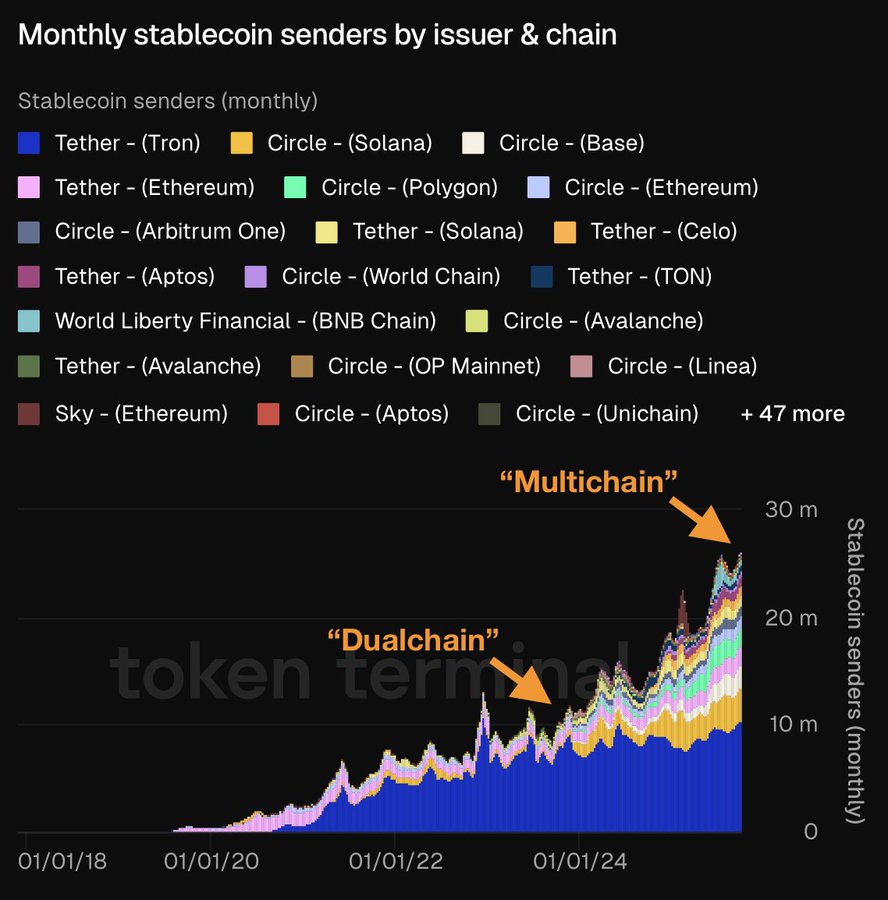
For years, stablecoin activity was concentrated across just two networks, Ethereum and Tron.
This “dualchain” dominance created a simple but limited dynamic, where most on-chain transactions flowed through those ecosystems.
That picture has now changed. Data from Token Terminal shows stablecoin usage entering a “multichain era”, with significant transaction volumes spreading across dozens of blockchains. Monthly sender activity now exceeds 30 million addresses, with meaningful growth on Solana, Polygon, Arbitrum, Avalanche, Base, and even emerging players like Aptos and TON.
What’s Driving the Expansion?
The shift is being powered by several forces:
- User demand for cheaper fees and faster transactions, pulling activity toward networks like Solana and Arbitrum.
- Issuer strategy, with Tether and Circle deliberately expanding USDT and USDC across multiple chains to increase liquidity and adoption.
- New primitives for DeFi and payments, such as Layer 2 rollups and cross-chain stablecoin swaps, which make stablecoins more portable than ever before.

Why It Matters
Stablecoins are becoming the connective tissue between traditional finance and crypto markets. A multichain distribution means traders, institutions, and retail users are less dependent on any single chain’s performance or costs. It also suggests that the next wave of adoption may not belong to one dominant network, but to an ecosystem of interoperable platforms competing for transaction flow.
With usage at all-time highs, the stablecoin sector looks set to remain one of the strongest pillars of digital assets in 2025 and beyond.


 Commentaries










Fill in necessary fields and publish