


US Government Shutdown is Official: How It Can Affect Bitcoin
We may earn commissions from affiliate links or include sponsored content, clearly labeled as such. These partnerships do not influence our editorial independence or the accuracy of our reporting. By continuing to use the site you agree to our terms and conditions and privacy policy.


For the first time in seven years, the U.S. government has entered a shutdown after lawmakers failed to agree on a spending plan.
The closure began just after midnight on Wednesday, leaving federal workers uncertain about paychecks and many public services paused.
Politics Behind The Standoff
The deadlock came after two budget proposals collapsed in quick succession. Democrats sought to extend healthcare subsidies and restore Medicaid funding, while Republicans supported a temporary extension that excluded those measures. Neither bill received enough backing, forcing agencies to suspend normal operations.
President Donald Trump hosted discussions with congressional leaders earlier this week, but talks ended without progress. Party leaders swiftly blamed each other: Democrats said Republicans refused to compromise, while Republicans accused Democrats of digging in on healthcare protections.
Workers Face Financial Strain
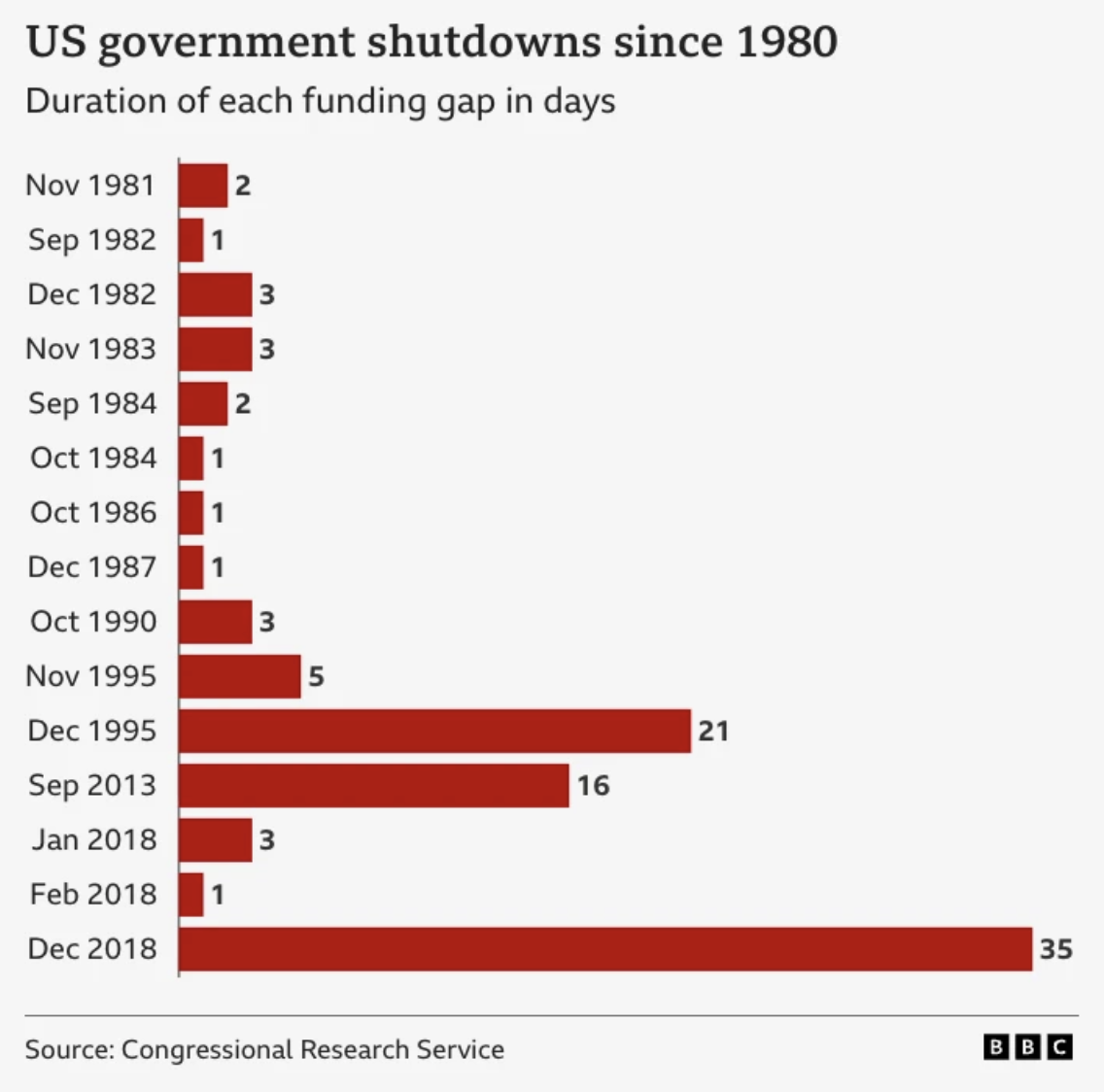
An estimated 750,000 federal employees are expected to be affected daily, either furloughed without pay or required to work with pay delayed until funding returns. Essential staff, including military personnel, remain on duty. Labor unions warn that workers could quickly feel financial stress, recalling the hardships during the record 35-day shutdown of 2018–2019.
Market Response So Far
Investors have not yet panicked. U.S. markets ended Tuesday on a positive note, though futures pointed to a weaker open. Overseas, Japan’s Nikkei dipped while India’s markets held steady thanks to its central bank’s policies.
Meanwhile, safe-haven trades are rising. Gold prices hit a record above $3,870 an ounce, and the dollar slipped against major peers. Analysts caution that a short shutdown may be shrugged off by markets, but if the standoff stretches for weeks, it could undermine confidence and slow growth.
A Long History Of Shutdowns
Since 1980, more than 20 shutdowns have hit Washington. Most lasted just a few days, but some dragged on—21 days under Bill Clinton, 16 under Barack Obama, and the record-breaking 35 days under Trump. Each highlighted how quickly a political dispute can ripple through the economy.
What It Means For Bitcoin
The shutdown adds a new layer of uncertainty to an already volatile macro backdrop. Regulatory bodies such as the SEC could operate with reduced staff, potentially delaying approvals for Bitcoin ETFs or other crypto-related filings. That uncertainty may stall institutional inflows that many traders have been watching closely.
At the same time, Bitcoin could benefit from safe-haven demand. With gold surging and the dollar softening, some investors may turn to Bitcoin as a digital hedge against political dysfunction. The asset has increasingly been compared to gold for its scarcity-driven value, and moments of fiscal stress in the U.S. often reignite that narrative. If the shutdown drags on, Bitcoin could see heightened volatility but also renewed interest as a store of value outside government control.
Looking Ahead
Lawmakers are preparing to put the same failed proposals back on the Senate floor, but divisions remain sharp. For now, markets view the closure as temporary. If it extends into weeks, however, the costs will accumulate—impacting households, business confidence, and potentially the trajectory of Bitcoin adoption and investment.


 Commentaries










Fill in necessary fields and publish