






Strategy’s $60 Billion Bitcoin Portfolio Faces Mounting Risks, CryptoQuant Warns
We may earn commissions from affiliate links or include sponsored content, clearly labeled as such. These partnerships do not influence our editorial independence or the accuracy of our reporting. By continuing to use the site you agree to our terms and conditions and privacy policy.


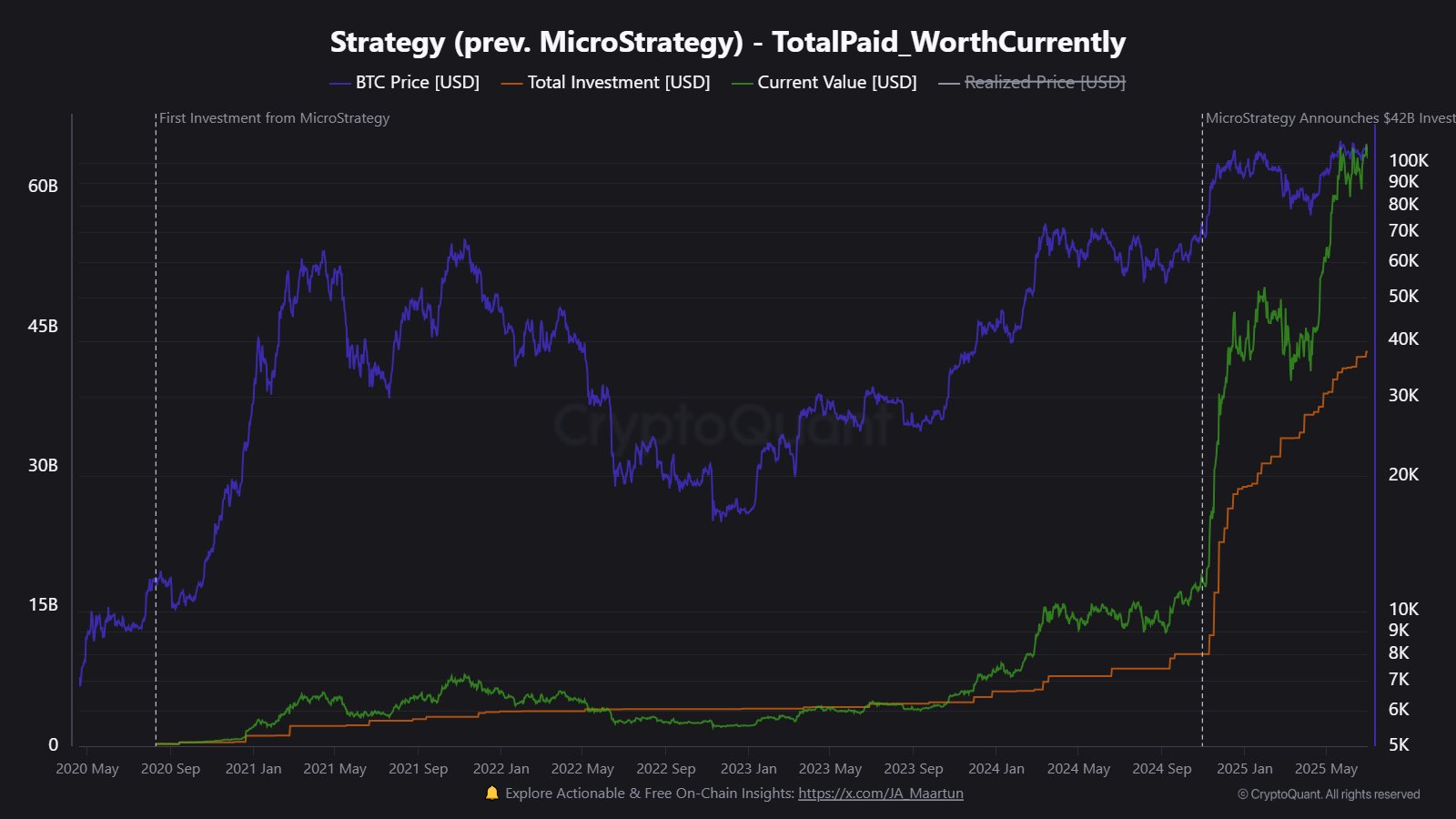
As of June 30, 2025, Strategy (formerly MicroStrategy) holds 597,000 BTC purchased for $42.4 billion — now worth approximately $64.4 billion.
But beneath this massive gain lies a complex web of financial risks, as revealed in Strategy’s July 2025 SEC Form 8-K filing, broken down by CryptoQuant in a detailed Twitter thread.
New accounting rules could lead to real tax bills on paper gains
A key risk stems from new U.S. accounting rules (ASU 2023-08), which require companies to report digital assets like Bitcoin at fair market value, even if the assets haven’t been sold. This means Strategy may face taxes on unrealized gains.
CryptoQuant notes that this could expose the company to a 15% Corporate Alternative Minimum Tax (CAMT) starting in 2026 — triggering potential cash tax obligations on paper profits. In their own words, Strategy warns they might owe taxes despite not liquidating any Bitcoin.
Read More:
Bitcoin custody is not risk-free
Strategy also flags risks around Bitcoin custody. In their SEC filing, they acknowledge that if a custodian holding their Bitcoin were to enter bankruptcy, Strategy could be treated as a general unsecured creditor. In short, if the custodian fails, Strategy might lose access to its BTC — exposing the company to counterparty risk.
Tax burdens may force asset liquidation
The company openly admits it may need to liquidate Bitcoin holdings to satisfy tax obligations. In their filing, they state: “We may need to liquidate some of our bitcoin holdings… to raise cash sufficient to satisfy our tax obligations.” CryptoQuant emphasizes this means that tax events — even without a sale — could lead to BTC being sold.
Cash flow shortfall adds pressure
Another issue: Strategy’s core software business isn’t generating enough cash to cover debt and dividends. As of June 2025, the company holds $8.2 billion in convertible debt and $3.4 billion in preferred stock, with annual payments totaling over $350 million ($36.5M in interest, $315.9M in preferred dividends).
Because operational cash flow is insufficient, the company relies on external funding or potential Bitcoin sales to meet its financial obligations. CryptoQuant warns this leaves Strategy exposed to market volatility — especially if BTC drops or capital markets tighten.
Read More:
Sensitivity to macroeconomic shocks
Strategy’s leverage to Bitcoin also magnifies exposure to macroeconomic variables. The company itself lists BTC price swings, interest rates, regulatory shifts, and liquidity conditions as material risks. CryptoQuant concludes this makes Strategy highly dependent not only on BTC’s price but also on the broader financial environment.
Preferred stock dividends pose ongoing risks
CryptoQuant also highlights the structure of Strategy’s preferred shares. STRK dividends (8%) can be paid in cash or stock, STRF (10%) must be paid in cash and compounds if missed, while STRD (10%) is non-cumulative but still requires regular payouts. Missed dividend payments could lead to dilution, penalties, or even loss of board control.
A forced BTC sale could hit markets
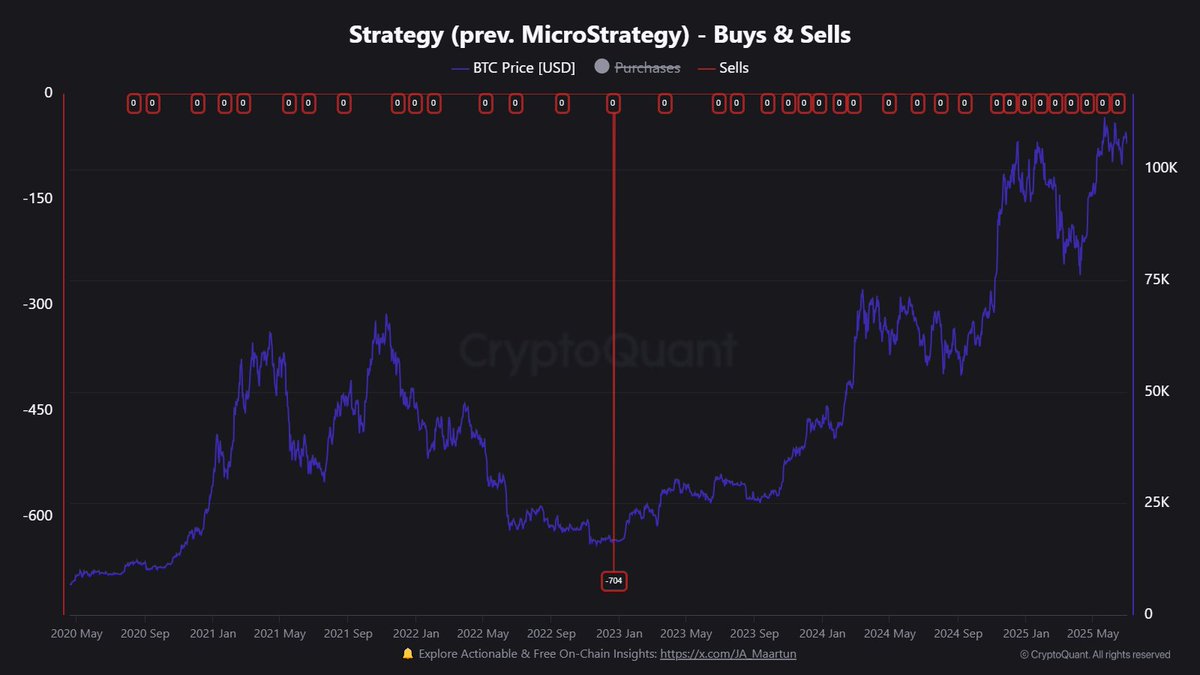
Finally, if Strategy is unable to raise capital via equity or debt markets, they explicitly state they may be forced to sell Bitcoin. CryptoQuant warns this could have serious market implications — driving price volatility and realizing losses under unfavorable conditions.
CryptoQuant emphasized that their analysis is not intended to FUD Strategy or Bitcoin. The thread only summarizes Strategy’s own statements from their official SEC Form 8-K filing (July 7, 2025). Always do your own research.


 Commentaries










Fill in necessary fields and publish