


Pi Network Pushes Developer Utility While Token Trades Near Lows
We may earn commissions from affiliate links or include sponsored content, clearly labeled as such. These partnerships do not influence our editorial independence or the accuracy of our reporting. By continuing to use the site you agree to our terms and conditions and privacy policy.

Pi Network has kicked off 2026 with a technical update aimed squarely at one of its longest-running challenges: making it easier for developers to actually use Pi as a payment method inside real applications.
The latest release introduces a consolidated developer toolkit designed to drastically reduce the time needed to integrate Pi payments. According to the core team, developers can now add payment functionality in minutes rather than hours, shifting attention away from infrastructure hurdles and back toward product development.
A Push to Lower the Barrier for Builders
At the center of the update is a redesigned software development kit that combines Pi’s backend APIs and libraries into a single, streamlined setup. Previously, developers had to juggle multiple components to get payments working. The new approach aims to simplify that process into a one-step integration.
The toolkit supports widely used development environments, broadening accessibility. Frontend integration works with JavaScript and React, while backend support includes frameworks such as Next.js and Ruby on Rails. For React-based apps, Pi now offers built-in hooks that manage authentication, user connection status, and purchase flows, allowing developers to enable payments only when users are fully connected and verified.
For teams that prefer more control, a lower-level JavaScript SDK is also available, exposing raw protocol data like user objects and payment details. Pi has additionally published a dedicated Next.js guide, helping developers plug payments and authentication into modern projects with minimal setup.
Shifting the Conversation Beyond Promises
Pi Network’s technical progress arrives against a backdrop of ongoing skepticism. Since its mobile-first launch, the project has faced criticism over delayed milestones, unclear economic dynamics, and limited real-world usage. By focusing on developer tooling, the team appears to be addressing a core criticism: that building on Pi has historically been more complicated than advertised.
Whether smoother integrations translate into a richer app ecosystem remains to be seen, but the update signals a renewed effort to move Pi from concept to practical utility.
Market Pressure Still Looms
On the market side, sentiment remains mixed. PI previously surged to highs near $3 before entering a prolonged decline that pushed prices well below $1. Recent trading activity has shown brief signs of life, with volumes picking up at the start of January, but overall liquidity remains far below last year’s peaks.
On-chain data suggests exchange balances have declined modestly, yet broader interest has faded. Social engagement around Pi has dropped sharply, reflecting reduced visibility among retail traders. At the same time, scheduled token unlocks continue throughout the year, adding a steady stream of potential supply that could weigh on price action.
With most of the maximum supply already in circulation, upcoming unlocks may not be explosive – but they could still act as persistent headwinds if demand fails to recover.
A Technical Step Forward, With Open Questions
Pi Network’s first update of 2026 marks tangible progress on the development side, especially for builders who want faster, cleaner payment integration. Still, improved tooling alone may not be enough to change broader perceptions.
The next test will be whether developers actually adopt the new tools – and whether that adoption leads to apps people use, transact with, and value. Until then, Pi’s technical momentum and its market performance remain on separate tracks, with one trying to catch up to the other.
PI Market Snapshot
At the time of writing, PI was trading around $0.21, posting modest gains across short-term timeframes.
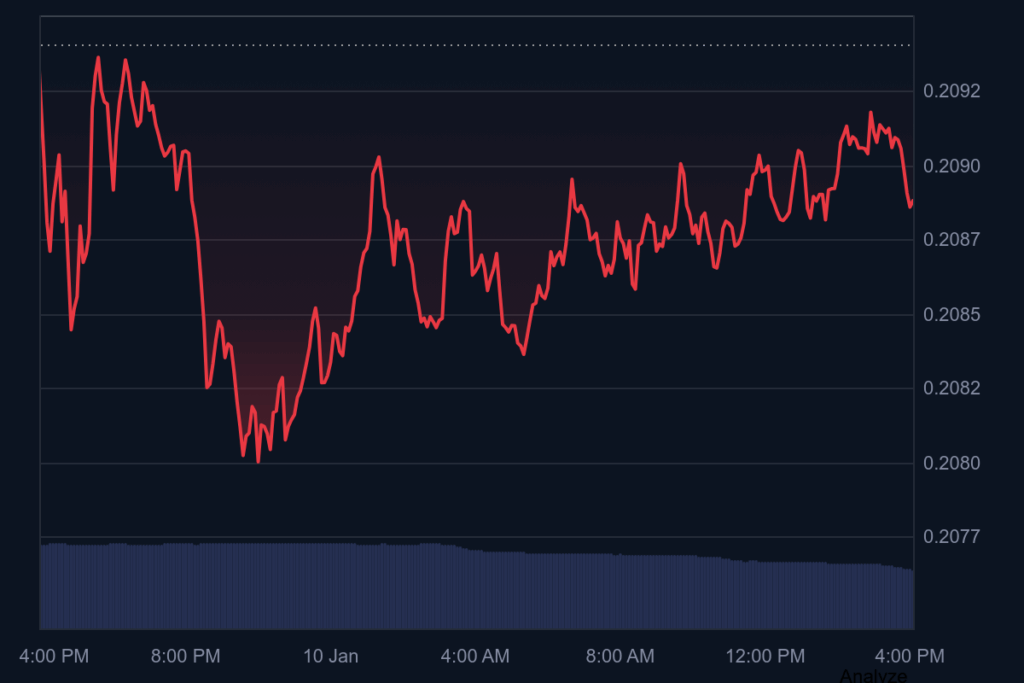
PI’s market capitalization stood near $1.75 billion, supported by daily trading volume of approximately $5.3 million, while the circulating supply hovered around 8.38 billion tokens. The muted price movement reflects cautious market sentiment, as traders balance improved developer progress against ongoing token unlocks and subdued retail demand.
Looking for more ideas? Read our full guide to the best meme coins to invest in this year.


 Commentaries









Fill in necessary fields and publish