


From Reserves to Payments: How States Are Re-Evaluating Bitcoin
We may earn commissions from affiliate links or include sponsored content, clearly labeled as such. These partnerships do not influence our editorial independence or the accuracy of our reporting. By continuing to use the site you agree to our terms and conditions and privacy policy.

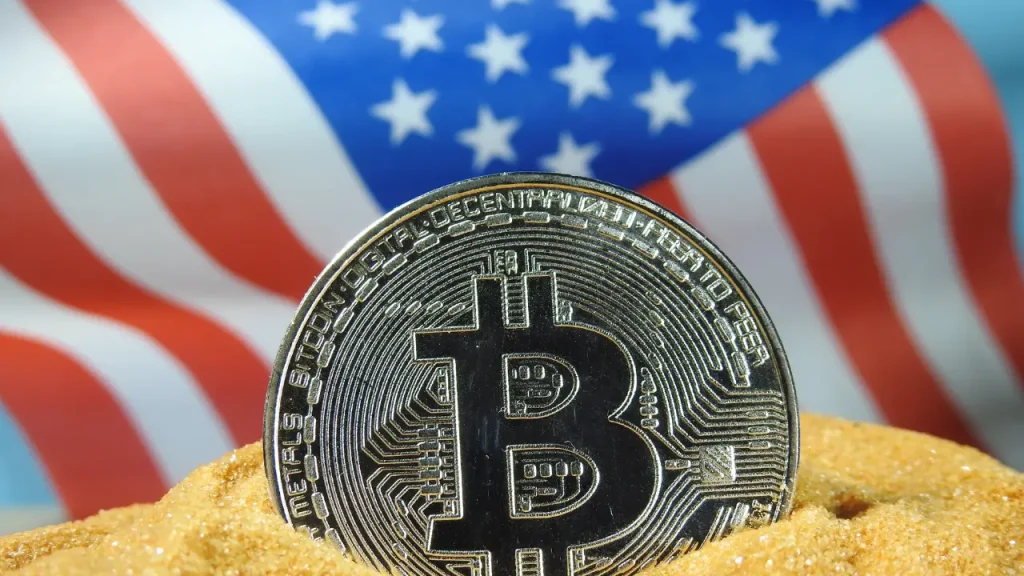
In a growing number of US state capitols, it is starting to appear in a very different context: budgets, reserves, and public payment systems.
Recent developments in West Virginia and Arizona highlight how this shift is unfolding – cautiously, selectively, and with strict guardrails.
JUST IN: 🇺🇸 West Virginia introduces a bill to allow allocating 10% of state funds to #Bitcoin
BULLISH 🚀 pic.twitter.com/KE9i4fpY9i
— Bitcoin Magazine (@BitcoinMagazine) January 16, 2026
Rather than sweeping endorsements, lawmakers are testing limited frameworks that allow them to explore Bitcoin’s usefulness without exposing public finances to uncontrolled risk. The result is not a unified strategy, but a set of sharply contrasting experiments.
A defensive mindset in West Virginia
West Virginia’s approach is rooted in concern over inflation and the long-term erosion of purchasing power. A newly proposed bill would allow the state treasury to place a small share of its funds into assets considered resistant to monetary debasement.
Bitcoin is included in this category, but not as a growth vehicle. Instead, it is grouped alongside traditional hedges such as physical gold. The proposal places a firm ceiling on exposure – no more than ten percent – and adds an unusually high eligibility bar. Only digital assets with a market capitalization above $750 billion would qualify, which, at present, effectively limits participation to Bitcoin alone.
The framing is deliberate. Bitcoin is not presented as an innovation bet or a technology play, but as a conservative store-of-value option meant to complement existing reserves. Even if the bill never advances beyond committee review, its design reveals how some policymakers are beginning to reinterpret Bitcoin’s role: less disruption, more insurance.
Arizona focuses on function, not ideology
Arizona is exploring Bitcoin from an entirely different angle. Instead of starting with reserves, lawmakers there are concentrating on how the asset might fit into everyday government operations.
One proposal would allow residents to pay taxes, fees, and fines using Bitcoin. To neutralize price volatility, any Bitcoin received would be immediately converted into US dollars, ensuring the state does not carry market risk. In this model, Bitcoin functions purely as a payment rail – an alternative way to move value, not something the state intends to hold.
At the same time, Arizona is considering a separate, more strategic option. A companion bill would permit certain public funds to allocate up to ten percent of their assets to a Bitcoin reserve. Unlike the payments bill, this measure explicitly allows Bitcoin to remain on the balance sheet, though still within tight limits.
Together, these proposals form a two-track system: operational use without exposure, and optional reserve allocation with clear caps. It is one of the most comprehensive state-level frameworks for Bitcoin seen so far, even though both measures are still working their way through the legislative process.
A fragmented national landscape
These initiatives do not exist in isolation. Across the country, states are moving at very different speeds. Some, like Texas and New Hampshire, have already taken concrete steps toward holding Bitcoin in public funds. Others have attempted similar legislation only to see it stall amid political resistance or warnings from fiscal oversight bodies.
The result is a patchwork of policies rather than a coordinated national trend. Still, the direction of travel is becoming harder to ignore.
Why this shift matters
The most important change is not how much Bitcoin states are willing to buy or accept. It is the tone of the conversation. Bitcoin is no longer being dismissed outright as too volatile or too fringe for public finance. Instead, it is being analyzed within the same frameworks used for other financial instruments: risk limits, eligibility criteria, diversification, and operational safeguards.
This signals a broader evolution. Bitcoin is moving from the margins of political debate into the mechanics of governance. State lawmakers are no longer asking whether it should exist, but whether – and how – it can fit into existing financial systems.
The outcomes remain uncertain, and many of these experiments may never mature into lasting policy. But the fact that they are happening at all marks a meaningful shift. In places like West Virginia and Arizona, Bitcoin is no longer just a market phenomenon – it is becoming a practical question of public finance.
Looking for more ideas? Read our full guide to the best meme coins to invest in this year.


 Commentaries










Fill in necessary fields and publish