


BIS General Manager Prefers Tokenized Deposits Over Stablecoins
We may earn commissions from affiliate links or include sponsored content, clearly labeled as such. These partnerships do not influence our editorial independence or the accuracy of our reporting. By continuing to use the site you agree to our terms and conditions and privacy policy.

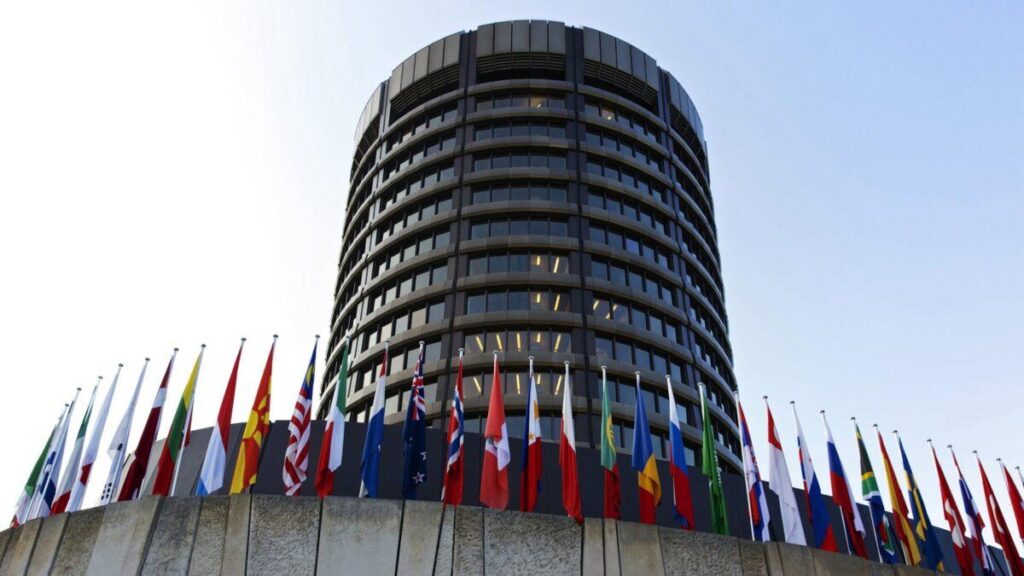
BIS General Manager Pablo Hernández de Cos argues tokenized bank deposits are a more reliable path for digital money than private stablecoins.
General Manager Pablo Hernández de Cos stated in Jackson Hole that a more reliable path toward digital money lies through tokenized bank deposits.
Why the BIS Does Not Accept Stablecoins as a Full Substitute
The BIS’s critique is not directed at blockchain technology itself. Instead, the central question is whether private digital tokens can maintain the characteristics that allow traditional money to function reliably at scale.
One major issue is the so-called singleness of money. A dollar in a bank account should hold the same value as a dollar in another bank or a physical dollar bill. With stablecoins, this parity is not always guaranteed, as individual tokens can trade above or below their face value.
The BIS also highlights limited interoperability between different blockchains. Assets cannot move freely across all networks, creating fragmentation and a heavy reliance on additional infrastructure.
An additional challenge involves anti-money laundering (AML) controls. Transfers to self-custodial wallets make it difficult to apply the same identification and monitoring mechanisms that exist within the traditional banking system.
Stablecoins May Help the US, but at a Cost
Hernández de Cos acknowledges that the growth of dollar-pegged stablecoins could have a positive effect for the U.S. government.
Issuers hold a significant portion of their reserves in U.S. Treasury securities. As demand for these tokens grows, so does the demand for government bonds. This potentially reduces financing costs for U.S. national debt.
On this point, the BIS position diverges from that of the U.S. government. Treasury Secretary Scott Bessent views stablecoins as a tool that can simultaneously strengthen the dollar’s international role and generate additional demand for American debt.
The Risk to Banks: Deposit Outflows
If households and companies begin holding a larger share of their funds in stablecoins, capital could migrate away from traditional bank deposits.
This shift is critical because deposits are a relatively inexpensive source of funding for banks. If they decline, lenders might be forced to seek funds from financial markets at a higher cost.
This creates a paradox: while stablecoins might lower financing costs for the U.S. government, they could simultaneously make financing more expensive for commercial banks. Part of this cost could eventually be passed down to households and businesses through more expensive loans.
Dollar Tokens Create Different Problems Outside the US
For central banks outside the United States, the concerns are even greater.
The widespread use of USDT, USDC, and other dollar tokens could lead to a form of digital dollarization. Users might prefer a dollar-denominated asset over their local currency for savings and payments, particularly in countries facing high inflation or unstable financial systems.
As more of an economy shifts toward dollar-based instruments, it becomes harder for the local central bank to influence financial conditions through its own interest rates and currency. This is precisely why the BIS views the rapid international spread of stablecoins as a matter of monetary sovereignty.
BIS Prefers Banks to Tokenize Deposits
The alternative, according to Hernández de Cos, is to leverage the advantages of blockchain technology without creating a parallel monetary system.
With tokenized deposits, funds remain a claim against a regulated bank but can be transferred via programmable infrastructure. This allows the financial system to achieve faster settlement and automation without money ever leaving the traditional banking framework.
However, this is not a turnkey solution. The BIS admits that tokenized deposits still need to address issues regarding platform interoperability, governance, and legal frameworks.
The debate is shifting from whether finance will be tokenized to who will control tokenized money. The BIS maintains that while technology may change radically, bank deposits and central bank money must remain at the core of the system.
This approach places the institution at odds with the American strategy, where private dollar stablecoins are seen as a means to expand global dollar influence. The clash between these two models will likely define the next stage of digital payment evolution.


 Commentaries






Fill in necessary fields and publish