


Aave Dominates Ethereum Lending With 70% Market Share
We may earn commissions from affiliate links or include sponsored content, clearly labeled as such. These partnerships do not influence our editorial independence or the accuracy of our reporting. By continuing to use the site you agree to our terms and conditions and privacy policy.


Ethereum’s decentralized finance (DeFi) ecosystem continues to show a clear market leader in the lending sector.
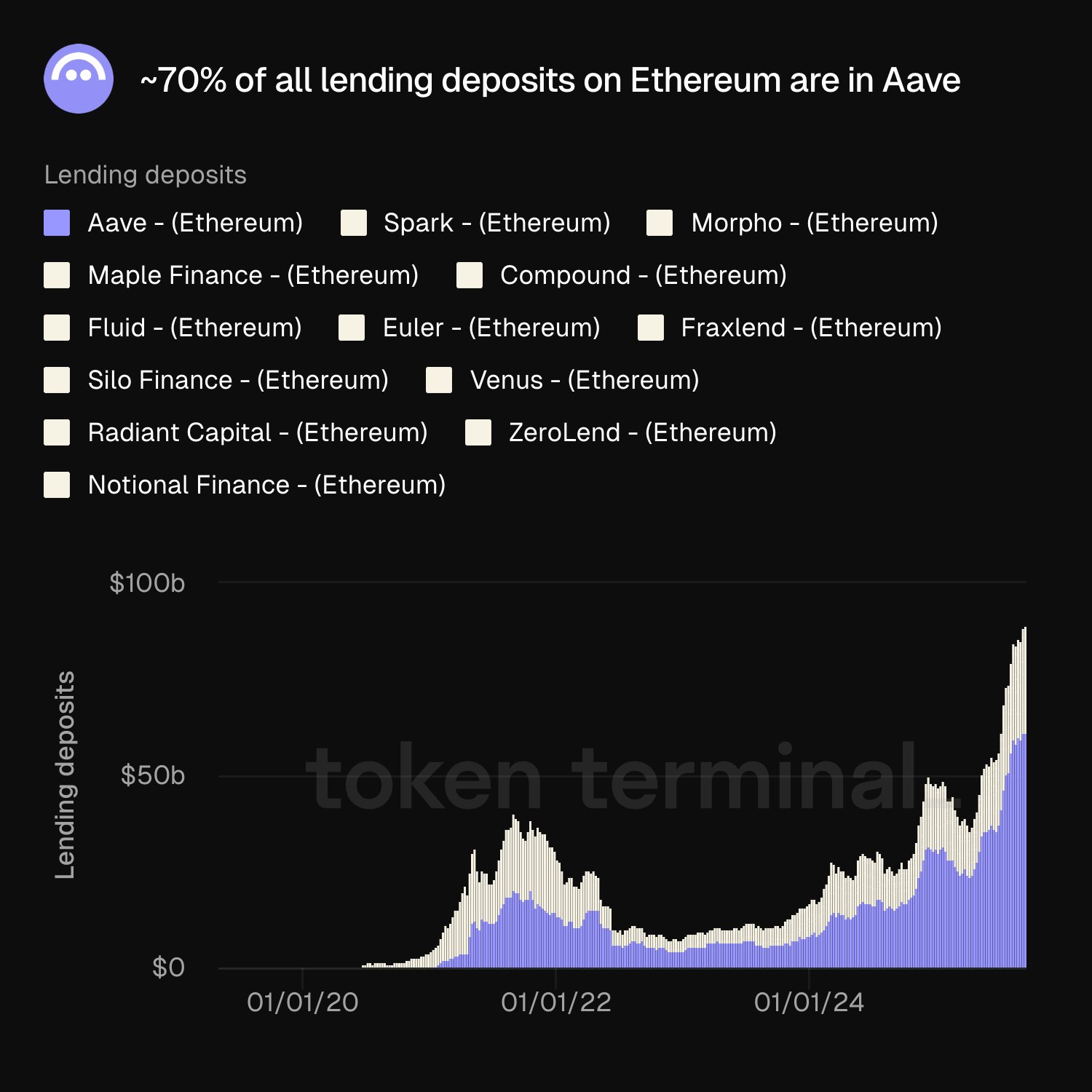
According to new data from Token Terminal, Aave now accounts for nearly 70% of all lending deposits on Ethereum, cementing its position as the dominant protocol in one of crypto’s most competitive verticals.
Aave’s unmatched scale
The chart shows that Aave’s deposits have grown in tandem with the broader lending market, consistently holding the largest share compared to competitors like Compound, Morpho, Spark, and Fraxlend. As of September 2025, total lending deposits across Ethereum have surged past $100 billion, with Aave capturing the majority of this liquidity.
Aave’s dominance is not just about scale, but also about user trust. The protocol has built a reputation over several market cycles, surviving both bull and bear phases while continuously upgrading its risk management framework. Its multi-chain expansion and steady rollout of institutional products have also strengthened its appeal.
Why the concentration matters
Having a single protocol control such a significant portion of Ethereum’s lending activity highlights both opportunity and risk. On one hand, it shows that DeFi participants prefer tried-and-tested platforms. On the other, it raises questions about systemic concentration: if Aave were to experience a major security or liquidity event, the ripple effects would be felt across the entire ecosystem.
Competitive landscape
While Compound once rivaled Aave, its share has steadily declined. New entrants like Spark and Morpho are innovating around efficiency and governance models, but so far none have managed to meaningfully challenge Aave’s dominance. Still, the rise of specialized protocols for stablecoin or synthetic asset lending suggests the market could fragment further over time.
Ethereum’s lending sector reflects the broader maturity of DeFi. With deposits climbing back to record highs, institutional and retail users alike are turning to lending protocols as a source of yield and liquidity. Aave’s outsized role shows where most of that confidence currently lies.


 Commentaries









Fill in necessary fields and publish