


Senate Democrats’ Crypto Proposal Sparks Industry Backlas
We may earn commissions from affiliate links or include sponsored content, clearly labeled as such. These partnerships do not influence our editorial independence or the accuracy of our reporting. By continuing to use the site you agree to our terms and conditions and privacy policy.


Progress on a major U.S. crypto framework bill has hit a roadblock as Senate Democrats submitted a counterproposal that has raised concerns across the blockchain industry.
The move comes amid ongoing partisan disputes over the Responsible Financial Innovation Act (RFIA), which aims to provide legal clarity for cryptocurrency and decentralized finance (DeFi) protocols.
Though the full details of the Democratic amendments have not been released publicly, reports suggest they include a “restricted list” of DeFi platforms deemed too risky, effectively imposing strict oversight via the U.S. Treasury. Industry advocates warn that such measures could stifle innovation, drive development offshore, and undermine the decentralized nature of blockchain applications.
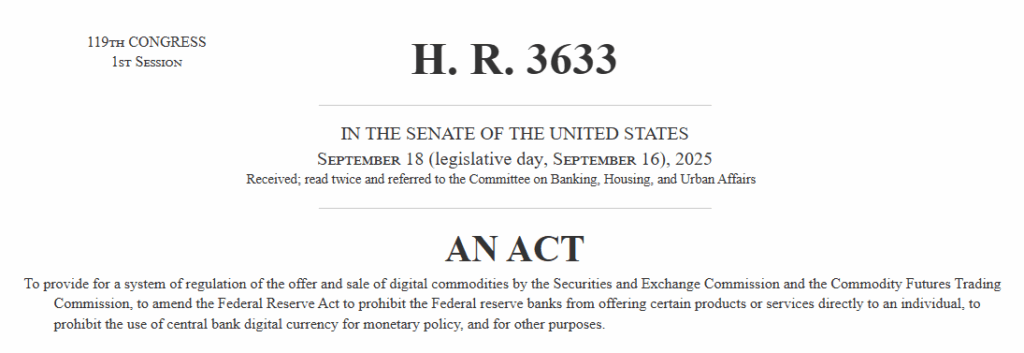
Digital Chamber VP Zunera Mazhar criticized the proposal for granting “sweeping authority” while narrowly defining decentralization, treating front-end developers like financial intermediaries. Blockchain Association CEO Summer Mersinger called the plan “effectively a ban” on DeFi and decentralized apps in the U.S. Similarly, Variant’s Jake Chervinsky described the counterproposal as “less a regulatory framework and more an unprecedented government takeover of an entire industry.”
Read More:
The legislative stalemate has paused RFIA negotiations, with committee members unable to agree on a markup session. Senate Banking Committee Chair Tim Scott had hoped to pass the bill by the end of September, but partisan disputes have delayed proceedings. Democrats and Republicans continue to trade accusations over leaks and negotiation tactics, further slowing the process.
Meanwhile, the Senate Agriculture Committee is reportedly still reviewing aspects of the bill related to commodities, led by bipartisan talks between Senators Cory Booker and John Boozman. Despite these parallel discussions, the crypto industry remains unsettled, fearing that overly restrictive rules could block innovation and push U.S. developers to foreign markets.
As divisions persist, the future of the RFIA – and its potential to provide legal clarity for the rapidly evolving blockchain sector — remains uncertain.


 Commentaries









Fill in necessary fields and publish