





Best Non-KYC Crypto Exchanges: Top Platforms Without KYC in 2026
We may earn commissions from affiliate links or include sponsored content, clearly labeled as such. These partnerships do not influence our editorial independence or the accuracy of our reporting. By continuing to use the site you agree to our terms and conditions and privacy policy.


If a crypto trader says they enjoy being monitored at every step and handing over personal data everywhere they trade, they’re lying.
In this piece, we’ll cover the best No-KYC crypto exchanges and see if the promised anonymous trading is REALLY anonymous, and whether these exchanges are worth it in 2026.
Best Anonymous Crypto Exchanges in June 2026







Top 10 Non-KYC Crypto Exchanges To Buy Crypto From in 2026
Ready to trade without the paperwork nightmare? These platforms let you jump straight into the action with minimal friction while maintaining solid security standards.
- GhostSwap – A fully anonymous swap platform with 1,500+ supported cryptocurrencies, no accounts, and instant non-custodial trades secured by end-to-end encryption.
- SwapRocket – A a non-custodial, no-KYC crypto aggregator pulling rates from 20+ exchanges. Swap 2,000+ coins anonymously with zero fees and no registration.
- Best Wallet – Multi-chain mobile wallet with built-in DEX swaps and Fireblocks security, perfect for users wanting true non-custodial control.
- CoinFutures – New leverage platform with simple mobile UX, up to 1,000× leverage, and fast onboarding without intrusive checks.
- BloFin – Futures-first venue with 400+ assets, copy trading bots, and a Unified Trading Account for streamlined strategies.
- Margex – Futures-focused platform with 100× leverage, demo accounts, and no mandatory verification, ideal for privacy-minded margin traders.
- KCEX – Seychelles-based exchange with 1,000+ pairs and high non-KYC withdrawal limits, balancing anonymity and advanced trading tools.
- WEEX – Global exchange since 2018, offering 1,700+ pairs, up to 400× leverage, and strong fund protection policies.
- BingX – Popular social trading platform with 10M+ users, offering 700–1,000+ coins and futures up to 125× leverage.
- MEXC – A leading exchange supporting nearly 3,000 assets and deep liquidity, known for early listings and frequent 0% fee promotions.
- Changelly – Established instant swap service with 1,000+ assets and easy crypto-to-crypto conversions, no registration needed.
- ChangeNOW – Non-custodial swap exchange with 900+ coins and 150,000+ pairs, fast settlements, and no mandatory sign-ups.
Best Anonymous Crypto Exchanges: Reviewed
If you want to know how to buy Bitcoin without KYC and trade other tokens without lengthy checks, these no KYC crypto exchanges give you speed, privacy, and plenty of trading pairs – all reviewed in detail below.
1. GhostSwap
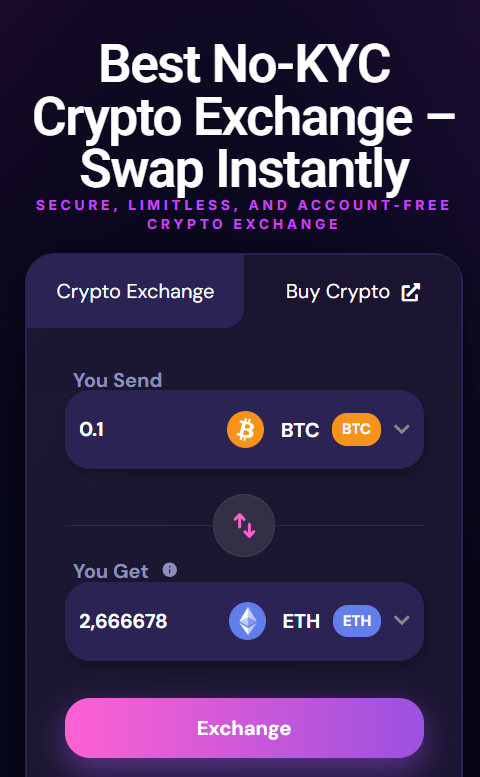
GhostSwap is an instant, no-KYC swap service that supports over 1,500 cryptocurrencies across multiple blockchains. Unlike centralized exchanges, it doesn’t require accounts or personal data. Just choose your pair, enter your wallet address, and send your coins — GhostSwap handles the conversion seamlessly.
Launched in 2024, it quickly became popular with privacy-focused traders who want fast swaps and no sign-ups. Transactions are encrypted end-to-end, and the platform issues unique deposit addresses for every swap.
If something fails (rare), GhostSwap refunds your funds, making it more trustworthy than many smaller swap sites.
While spreads can vary depending on liquidity, GhostSwap remains a solid choice for anonymous trading, especially if you’re rotating between majors like BTC, ETH, or privacy coins such as Monero.
Key Features
- 1,500+ supported cryptocurrencies
- No accounts or registration required
- End-to-end encryption with refund protection
Pros & Cons
| Pros | Cons |
|---|---|
| No-KYC onboarding | No advanced trading tools |
| No sign-up required | Occasional AML flags possible |
| Supports privacy coins (e.g., Monero) | |
| Fast, beginner-friendly swaps |
2. SwapRocket
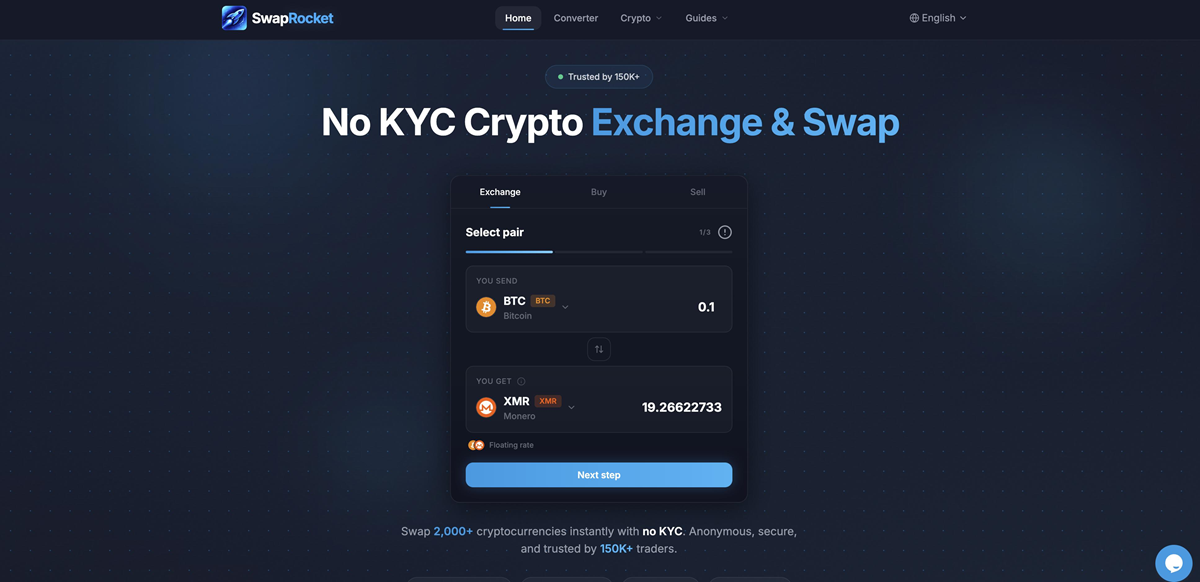
Out of all the platforms we put to the test, SwapRocket takes the lead as the fastest no-KYC exchange. It’s built for people who actually value privacy: no accounts, no email sign-ups, and definitely no handing over your ID. You just pick your coins, drop in your wallet address, and you’re good to go.
What makes SwapRocket a bit of a “cheat code” compared to other anonymous exchanges is how it handles pricing. It doesn’t just give you one rate; it acts as an aggregator, pulling live data from over 20 major platforms like Binance and Kraken at once. This ensures you’re getting the best possible deal, which is a huge deal if you’re moving larger amounts where a 1% difference in price actually hurts.
Safety-wise, it’s fully non-custodial. The platform never actually touches your money: funds move straight from the deposit to your personal wallet. Since they don’t hold your assets, they can’t freeze your account or lose your crypto in a hack. If you’re swapping into privacy coins like Monero or Zcash, this setup is pretty much the gold standard.
Key Features
- Assets: 2,000+ coins on all major chains.
- Fees: Everything is baked into the rate you see—no “surprise” charges at the end.
- Limits: None. There are no daily withdrawal caps.
- Vibe: Very clean, no-nonsense interface. You can finish a swap in under a minute.
- Support: Surprisingly, they have 24/7 live help, which is almost unheard of in the no-KYC world.
Pros & Cons
| Pros | Cons |
|---|---|
| Truly zero KYC or account requirements | You have to use your mobile browser (no dedicated iOS/Android app yet) |
| Scans 20+ exchanges to find you the best rate automatically | If you’re trying to buy crypto with a credit card, the options are still pretty slim |
| You keep control of your keys and your coins at all times | |
| Supports a huge range of tokens across different blockchains |
3. Best Wallet
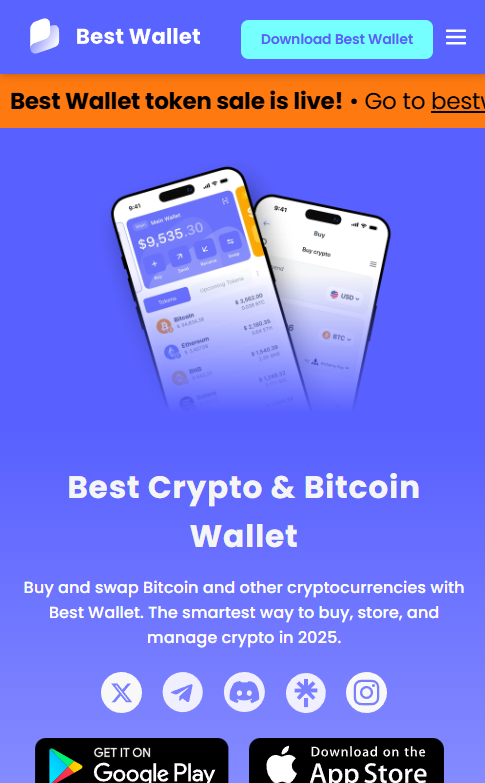
Best Wallet is a 2024-born mobile-first app combining a non-custodial wallet with an integrated decentralized exchange (DEX). It supports 60+ cryptocurrencies and 50+ blockchains, giving users a simple way to store and swap coins. Its Fireblocks MPC security and biometric login make it stronger than most first-gen wallets.
👉 Check out the best crypto wallets for crypto trading.
Unlike centralized platforms, Best Wallet requires no sign-up or KYC. All keys remain user-controlled, making it attractive to those wary of data breaches. Its roadmap also includes NFT galleries, staking aggregators, and a Web3 dApp hub.
Best Wallet is still a relatively new anonymous Bitcoin exchange, but its rapid adoption in 2025 shows how much traders want seamless, private tools.
Key Features
- Built-in decentralized exchange for instant swaps
- Fireblocks MPC-CMP tech for advanced security
- Multi-wallet, multi-chain support with non-custodial design
Pros & Cons
| Pros | Cons |
|---|---|
| No KYC, self-custody wallet | Relatively new |
| Fireblocks MPC and biometrics | Smaller ecosystem than big CEXs |
| Mobile-first UX, smooth interface | |
| Multi-chain support (50+ blockchains) |
4. CoinFutures
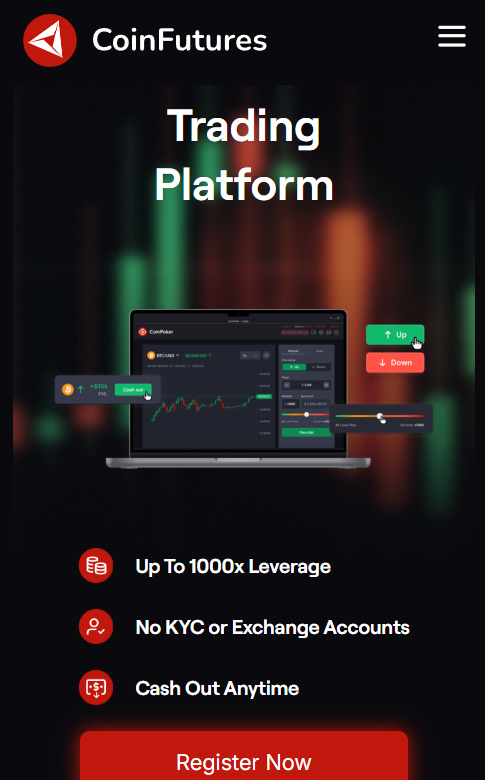
CoinFutures is one of the newest leverage platforms, debuting in 2025 with a mobile-first trading experience. It targets beginners with simple “Up/Down” trade mechanics while offering advanced traders leverage up to 1,000x.
Account creation is instant, requiring no KYC, which makes onboarding seamless. Despite being young, the platform already supports major coins like BTC, ETH, and SOL, alongside multiple fiat and crypto payment options.
👉 You can check our full CoinFutures review.
Its transparency is limited compared to more established venues, and extreme leverage carries heightened risks. Still, if you’re looking for decentralized exchanges without KYC, CoinFutures may be the best option now.
Key Features
- Leverage up to 1,000x
- Mobile-first design with simple UX
- Instant account creation without KYC
Pros & Cons
| Pros | Cons |
|---|---|
| No-KYC onboarding | The newest platform among all listed |
| Beginner-friendly interface | Extreme leverage risk (1,000×) |
| Supports fiat and crypto payments | |
| Low trade minimums |
5. BloFin
BloFin, active since 2023, has grown into a futures-first venue with 400+ assets and 350+ perpetual contracts. Its strength lies in automation: copy trading, bots, and a Unified Trading Account (UTA) that consolidates balances across markets.
Unverified users can withdraw up to 20,000 USDT daily, keeping it accessible to privacy-oriented traders. Security includes cold storage and real-time monitoring.
While younger than giants like MEXC, BloFin is praised for low fees, responsive UI, and strong toolset, making it a rising competitor in the no-KYC category.
Key Features
- 400+ spot assets and 350+ perpetuals
- Copy trading and bots with UTA system
- Daily withdrawal limit for non-KYC users
Pros & Cons
| Pros | Cons |
|---|---|
| No-KYC withdrawals allowed | Newer platform, shorter track record |
| Large futures catalog | Figures vary by source (spot vs perps) |
| Automation tools (copy/bots) | |
| Low fees and strong performance |
6. Margex
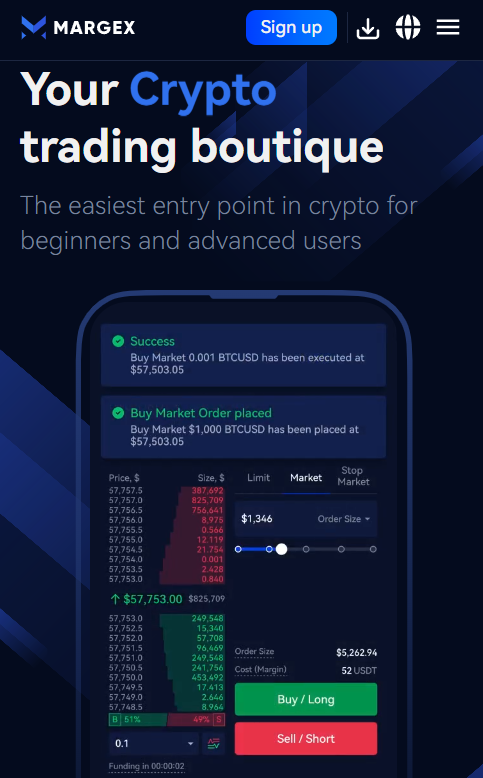
Margex, launched in 2019, positions itself as a futures-first exchange with leverage up to 100×. Unlike many competitors, it promotes security with its MP Shield system, designed to protect traders against price manipulation.
It supports a relatively small set of assets – around 45+ pairs – but its strength lies in copy trading, demo accounts, and a clean user interface. Privacy is key: no mandatory KYC is needed for deposits or withdrawals.
While it lacks fiat gateways, Margex appeals to margin traders seeking speed and anonymity without regulatory hurdles.
Key Features
- Futures up to 100× leverage
- Copy trading and demo trading modes
- MP Shield system for anti-manipulation
Pros & Cons
| Pros | Cons |
|---|---|
| No mandatory KYC | Limited number of supported coins |
| Demo accounts for practice | Unregulated in some regions |
| Copy trading options | |
| Strong security protections |
7. KCEX
Founded in 2021 in Seychelles, KCEX has quickly gained traction as a no-KYC alternative with 1,000+ trading pairs. Users can withdraw up to 30 BTC per day without verification, one of the most generous non-KYC limits.
KCEX provides spot and perpetual futures with leverage up to 125×. Its mobile apps mirror the full web experience, and security measures like cold storage and device whitelisting are emphasized – more on that you can learn in our KCEX exchange review.
It does not offer fiat deposits, but as a crypto-first venue, it’s ideal for experienced traders who want advanced tools without oversight.
Key Features
- 30 BTC/day withdrawals without KYC
- 1,000+ spot and futures markets
- Cold storage and advanced security options
Pros & Cons
| Pros | Cons |
|---|---|
| No mandatory KYC | Limited number of supported coins |
| Demo accounts for practice | Unregulated in some regions |
| Copy trading options | |
| Strong security protections |
8. WEEX

Founded in 2018, WEEX has built a global reputation with 1,700+ trading pairs and leverage up to 400×. It balances advanced trading with privacy by allowing unverified withdrawals (limits around 10,000 USDT/day per its documentation).
The platform emphasizes security, offering a 1,000 BTC protection fund and cold-wallet storage. Features include demo accounts, copy trading, and grid bots.
Its fiat off-ramp options are limited, but for crypto-to-crypto traders seeking anonymity and broad market access, WEEX is one of the most trusted names.
Read our in-depth review of WEEX for more information.
Key Features
- 1,700+ trading pairs, 700+ coins
- Up to 400× leverage and copy trading
- 1,000 BTC user protection fund
Pros & Cons
| Pros | Cons |
|---|---|
| Broad market coverage | Fiat off-ramps limited |
| No-KYC with clear limits | Numbers vary (pairs, caps) |
| Security via fund and cold wallets | |
| Rich feature set (copy, bots, demo) |
9. BingX
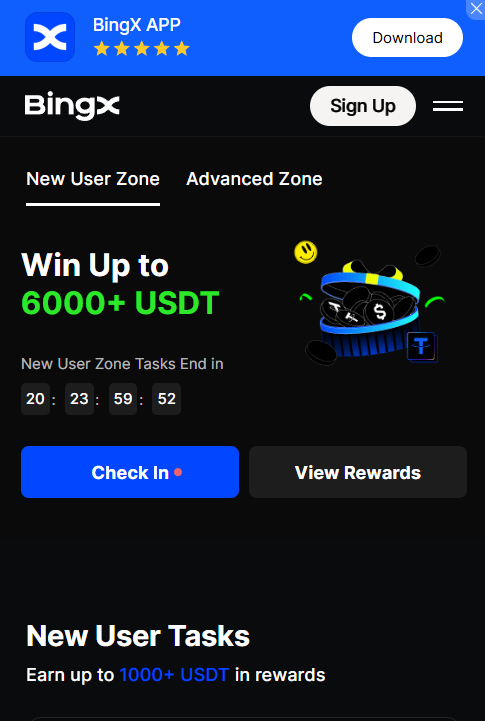
BingX, launched in 2018, combines spot, futures, and social trading. With over 10M users, it has become one of the largest semi-anonymous venues, supporting between 700–1,000+ coins.
Its main draw is copy trading, letting beginners mirror expert strategies. Futures trading reaches up to 125× leverage, and BingX regularly integrates Proof-of-Reserves audits to reassure users.
KYC may be required for higher withdrawal limits or fiat services, but base crypto-to-crypto trading without verification remains accessible.
Key Features
- 700–1,000+ supported assets
- Copy trading and social tools
- Proof-of-Reserves audits for transparency
Pros & Cons
| Pros | Cons |
|---|---|
| Huge asset coverage | KYC needed for full features |
| Social/copy trading at scale | Some delistings/market changes |
| Proof-of-Reserves security | |
| 10M+ user base |
10. MEXC
Founded in 2018, MEXC has become one of the largest global exchanges, listing nearly 3,000 assets across spot and futures markets. Known for early listings of memecoins and altcoins, it’s a favorite among high-volume traders who want access before competitors.
The platform offers zero-maker fee promotions, competitive futures leverage, and liquidity deep enough for institutional users. Despite being a CEX, MEXC lets unverified users trade and withdraw with minimal restrictions, making it one of the best-known no-KYC options still in 2025.
Its global presence is huge (36M+ users), but it remains restricted in regulated markets like the U.S. and U.K.
Key Features
- 2,800–3,000+ supported assets
- Spot and perpetual futures with low fees
- Frequent zero-fee promotions for market makers
Pros & Cons
| Pros | Cons |
|---|---|
| Huge crypto coverage (3,000 assets) | Restricted in some countries (US, UK) |
| Deep liquidity and early listings | Due diligence needed on memecoin listings |
| Low or zero trading fees | |
| Global adoption with 36M+ users |
11. Changelly
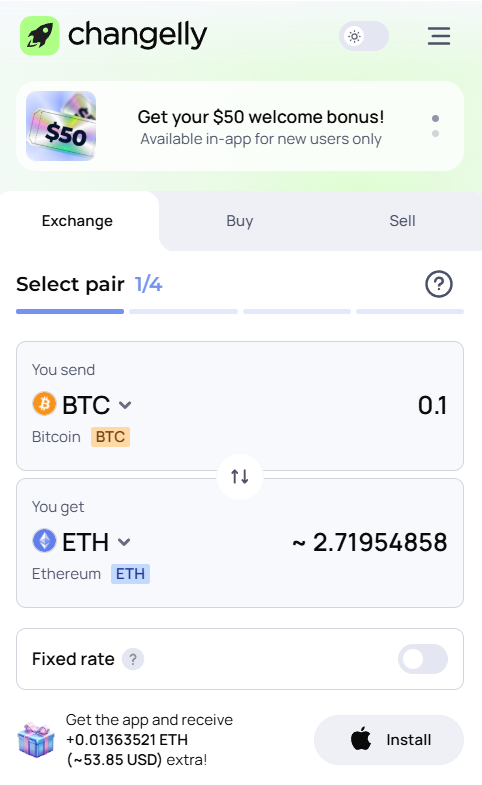
Operating since 2015, Changelly is one of the oldest instant-swap services. It supports 1,000+ assets across 185 chains, allowing users to exchange crypto without accounts or KYC.
The platform acts as an aggregator, sourcing liquidity from multiple exchanges for the best rates. Fiat on-ramps are available through partners like Simplex, though those may require KYC.
Its longevity and partner integrations (wallets, exchanges, apps) make it a trusted brand for fast swaps, but spreads can vary depending on market conditions.
Key Features
- 1,000+ assets across 185 chains
- No registration for crypto-to-crypto swaps
- Partner integrations with major wallets/exchanges
Pros & Cons
| Pros | Cons |
|---|---|
| No mandatory KYC for swaps | Fiat purchases may trigger KYC |
| Wide coin coverage | Spreads depend on liquidity |
| Established brand since 2015 | |
| Fast routing across providers |
12. ChangeNOW
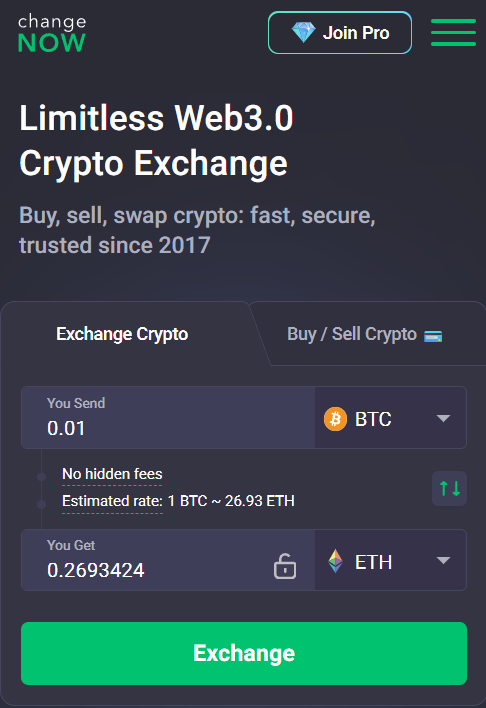
Founded in 2017, ChangeNOW provides non-custodial, accountless swaps across 900+ coins and 150,000+ trading pairs. Like Changelly, it operates as an aggregator, prioritizing speed and convenience.
The platform requires no sign-up, though AML-related checks can occur if a transaction is flagged. Its merchant integrations also make it popular for B2B partners needing quick settlement rails.
Rates and slippage depend on provider liquidity, but ChangeNOW’s simple UX and longevity make it a reliable option for fast, anonymous swaps.
Key Features
- 900+ assets and 150,000+ pairs
- Non-custodial, no registration model
- Merchant/partner integrations for B2B use
Pros & Cons
| Pros | Cons |
|---|---|
| No sign-up needed | Occasional AML/KYC checks |
| Massive pair coverage | Rates tied to external liquidity |
| Simple and fast UX | |
| Established since 2017 |
Why Choose an Exchange Without KYC?
Trading on a no-KYC crypto exchange means higher speed, way more privacy, and control. You skip the red tape, avoid handing over sensitive documents, and jump straight into buying or swapping coins. For many, it’s about reducing the risk of identity theft – data leaks at centralized exchanges have exposed millions of users in the past.
Sure, you trade off some perks like fiat on-ramps, but for privacy-focused traders, the upside of staying pseudonymous outweighs the paperwork headache.
How to Choose the Right No KYC Exchanges: Our Ranking Criteria
Before you start trading crypto on a no-KYC platform, it’s important to understand what separates trustworthy exchanges from risky ones. Our team reviewed multiple platforms to see how each exchange runs, protects funds, and complies with AML regulations while still respecting user privacy.
1. Security and Storage
Security is the top factor when choosing between KYC crypto exchanges and non-KYC crypto exchanges. Look for platforms that use cold storage for most digital assets, plus added safeguards like 2FA, wallet address whitelisting, and Proof-of-Reserves.
A non-custodial, no-KYC crypto wallet like Best Wallet lets you fully control your keys, while centralized exchanges (CEXs) store funds on your behalf. Experienced traders usually prefer exchanges that show clear security audits, because they know risks like money laundering cases can affect reputation and stability.
2. Asset Availability and Liquidity
If you want to buy Bitcoin, sell Bitcoin, or explore top altcoins and tokens, liquidity matters. A no-KYC exchange with broad trading pairs gives active traders more flexibility to exchange cryptocurrencies without delay.
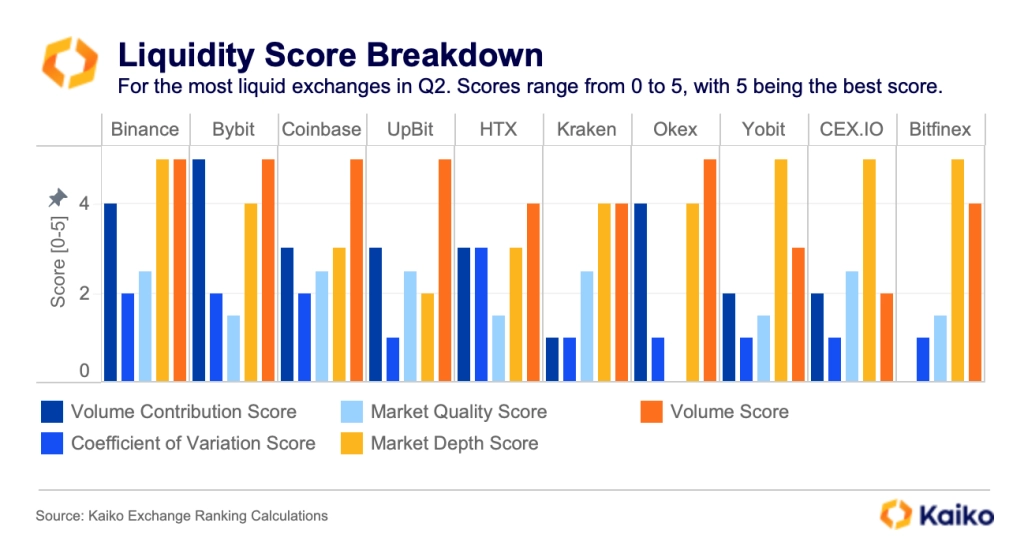
Platforms like MEXC or BingX support thousands of coins, while others such as Margex specialize in futures but have fewer pairs. Always check if the platform supports fiat access through Apple Pay, Google Pay, or cards, because in certain countries those methods may still require KYC verification.
3. Fees and Trading Experience
Low fees are critical for traders making frequent transactions. Many non KYC exchanges promote low fees to attract users who want to start trading quickly without completing a registration or identity checks.
Still, review each crypto exchange carefully: some charge higher spreads on small amounts or instant swaps. A smooth mobile app, advanced charting, and good API support matter if you’re scaling your strategy. For new users, intuitive design makes it easier to store funds, check assets, and withdraw crypto when needed.
4. Compliance and Access
Even if a platform says it does not require KYC, you must consider local laws. Some countries block non-compliant platforms, and VPN use can carry risks. The best non KYC exchanges find a balance: they allow users to trade digital assets freely, but still implement anti-money laundering safeguards to remain viable long term.
Always read the fine print on AML compliance and withdrawal limits – many platforms let you move small amounts freely but require verification for larger transfers. This ensures the exchange runs within realistic boundaries without exposing users to sudden restrictions.
What Are Non-KYC Crypto Exchanges?
Trading at crypto exchanges without KYC means using an exchange or non custodial wallet without having to submit ID documents, selfies, or proof of address. On the best non KYC exchange platforms, you can start trading crypto with only an email or sometimes just a wallet address. This approach is popular among users who value privacy, want to avoid registration delays, or live in countries where KYC exchanges are restricted.
The first big cautionary tale in crypto was Mt. Gox, a centralized exchange collapse in 2014 that lost hundreds of thousands of Bitcoin. Since then, platforms have improved security, adding cold storage, audits, and AML compliance features, while still letting people trade without handing over sensitive personal data.
Today, decentralized exchanges (DEXs) and hybrid no-KYC platforms provide active traders with fast access to digital assets, while users keep control over their crypto wallets. This makes it easier to buy Bitcoin, swap tokens, and withdraw crypto without exposing your identity.
Everyone wants to tap into the $3.88B crypto market, yet we need to know the differences when it comes to your crypto.
KYC vs Non-KYC Crypto Exchanges: Differences
When comparing KYC crypto exchanges to no KYC crypto exchanges, the real differences come down to verification, compliance, and access to services. Below is a quick look at how these two types of crypto exchanges differ, with a special focus on the benefits of decentralized exchanges.
| Factor | KYC Exchanges | Non-KYC Exchanges / DEXs |
|---|---|---|
| Verification | Users must complete KYC with ID, address, and sometimes video checks. | No identity needed; just create an account or connect a crypto wallet. |
| Access | Some countries block unverified users; fiat payments may require KYC. | Global access; users can start trading crypto with only a wallet address. |
| Compliance | Strong AML compliance, aligned with local laws and regulators. | Often limited AML; withdrawals allowed up to certain caps without registration. |
| Funds & Storage | Centralized; exchange stores funds, increasing risks if hacked. | Non custodial wallets and cold storage let traders keep direct control of funds. |
| Services | More fiat gateways (Apple Pay, Google Pay, cards), lending, staking. | Focused on exchange cryptocurrencies, trading pairs, and withdraw crypto fast. |
| Risks | Lower scam risk but more restrictions and data exposure. | Higher user responsibility, need to understand VPN, risks, and security basics. |
Final Words
No-KYC exchanges offer a great alternative for traders prioritizing privacy and immediate market access.
While you sacrifice some conveniences like fiat on-ramps and customer support, the benefits of anonymous trading continue attracting users worldwide.
Remember that responsibility shifts to you – secure your private keys, verify smart contract addresses, and never invest more than you can afford to lose.
Non-KYC Crypto Exchanges: FAQs
Are non-KYC exchanges legal?
What are the risks of using no-KYC crypto exchanges?
Can I buy Bitcoin on a no-KYC exchange?
Do no-KYC exchanges support fiat payments?
Which are the best no-KYC crypto exchanges?
Which is the biggest advantage of using no-KYC exchanges?
Are no-KYC exchanges safe to use?
Do non-KYC crypto exchanges limit withdrawals?
How do I fund accounts privately without triggering KYC?
Q6]Can you trade crypto anonymously?[/Q6]
Sources:
