


Polkadot DAO Caps DOT Supply at 2.1 Billion, Shifting Toward Scarcity
We may earn commissions from affiliate links or include sponsored content, clearly labeled as such. These partnerships do not influence our editorial independence or the accuracy of our reporting. By continuing to use the site you agree to our terms and conditions and privacy policy.


Polkadot has taken a decisive step toward long-term sustainability after its community voted to cap the total supply of DOT tokens at 2.1 billion.
The measure, passed through Referendum 1710 with 81% approval, marks a fundamental shift away from the network’s previous unlimited issuance model.
What Changes Under the New Model
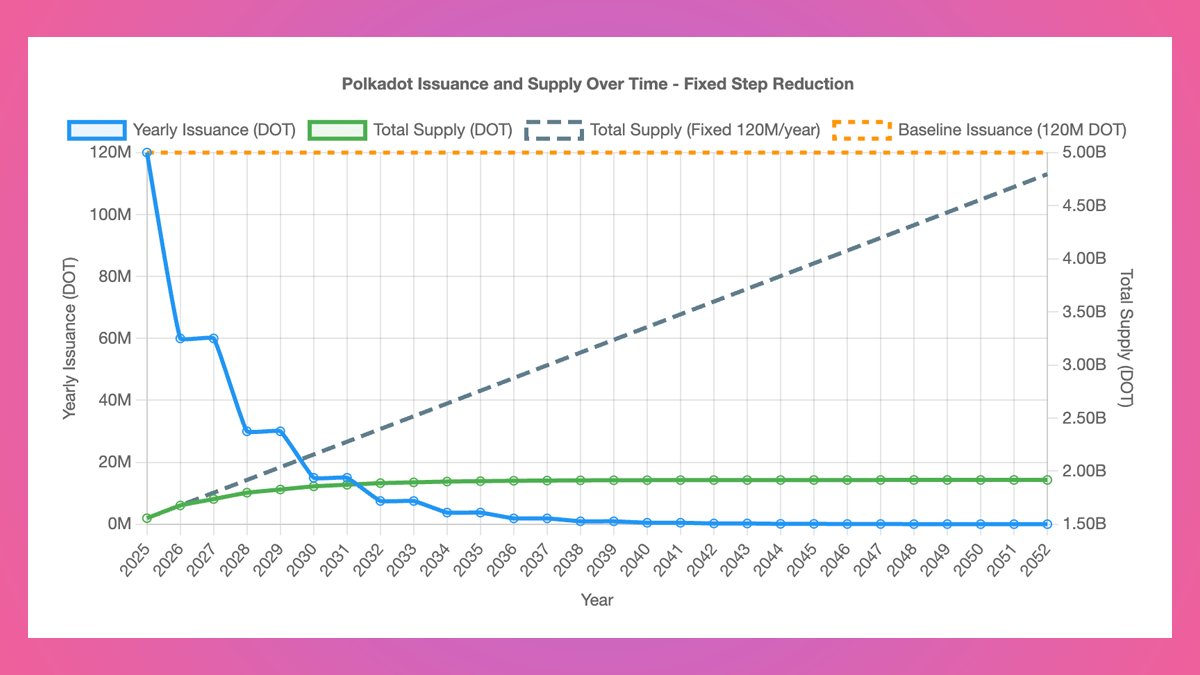
Until now, Polkadot minted 120 million DOT annually, with no supply ceiling in place. Under Referendum 1710, issuance will step down every two years starting March 14 (Pi Day), gradually slowing token inflation.
Currently, around 1.6 billion DOT are in circulation. Under the revised model, supply is projected to reach approximately 1.91 billion by 2040, far lower than the ~3.4 billion that would have been minted under the old structure.
Why It Matters
By setting a hard cap, Polkadot aligns itself more closely with deflationary models like Bitcoin, where scarcity has historically played a key role in price appreciation. The new approach is expected to:
- Reduce emissions over time
- Enhance predictability for investors
- Strengthen long-term alignment across the ecosystem
- Community Reaction
Polkadot DAO described the change as a win for “scarcity, predictability, and long-term alignment.” Analysts note that the move could improve DOT’s positioning in the market, as capped supply often reinforces narratives of digital scarcity, a concept increasingly valued in the crypto sector.

Still, the transition introduces new dynamics. While capped issuance is seen as bullish for long-term holders, it may also put pressure on staking rewards and validator incentives as annual emissions decline.
The Bigger Picture
The update reflects a broader industry trend of projects recalibrating tokenomics to ensure sustainability. With Ethereum, Solana, and other layer-1 blockchains experimenting with fee burns and deflationary mechanics, Polkadot’s capped supply signals a competitive pivot designed to attract investors prioritizing scarcity.


 Commentaries










Fill in necessary fields and publish