






Litecoin Network Hit by Exploit Forcing Rare Reorg
We may earn commissions from affiliate links or include sponsored content, clearly labeled as such. These partnerships do not influence our editorial independence or the accuracy of our reporting. By continuing to use the site you agree to our terms and conditions and privacy policy.


Litecoin executes a 13-block reorganization after a MimbleWimble vulnerability allowed invalid transactions. Network hashrate and block times impacted.
A hacker attack against Litecoin has exposed a vulnerability in its privacy layer, forcing the network to perform a rare blockchain reorganization and temporarily shaking confidence in the protocol’s security.
The incident, detected on April 25, is linked to a flaw in the MimbleWimble Extension Block (MWEB)—a feature designed for more discreet transactions. Attackers discovered a bug that allowed them to inject invalid transactions into nodes that had not been updated to the latest version.
Litecoin update:
— Litecoin (@litecoin) April 25, 2026
• A zero-day bug caused a DoS attack that disrupted major mining pools.
• Non-updated mining nodes allowed an invalid MWEB transaction allowing them to peg out coins to third party DEX’s
• A 13-block reorg reversed those invalid transactions — they will not…
These outdated nodes validated malicious transactions as legitimate, enabling unauthorized withdrawals to external decentralized platforms. The strike primarily targeted cross-chain infrastructure, where the risk of double-spending is highest.
Simultaneously, major mining pools faced similar attacks, which significantly lowered the hashrate and hampered the network’s consensus mechanism. As a result, block generation times spiked from the standard 2.5 minutes to an average of 13.5 minutes—a clear signal of severe strain and coordination issues.
13 Blocks Back: How the Network Limited Damage
To neutralize the attack, the Litecoin network performed a 13-block reorganization—a rarely used mechanism where a portion of the blockchain history is “rolled back.” This effectively erased approximately three hours of transactions to restore the state of the ledger before the exploit occurred.
According to the Litecoin Foundation, all legitimate transactions were preserved, while invalid MWEB operations were successfully purged from the network. Nevertheless, such an intervention highlights the limitations of Proof-of-Work systems under extreme conditions and raises questions regarding the finality of transaction settlement.
The financial fallout appears limited for now. Platforms like NEAR Intents initially estimated their exposure at around $600,000, while total losses across the ecosystem are still being recalculated following the completion of the reorganization.
Market reaction remained relatively subdued. Litecoin’s price dipped slightly to around $55—a decline that signals short-term concern but not systemic panic among investors.
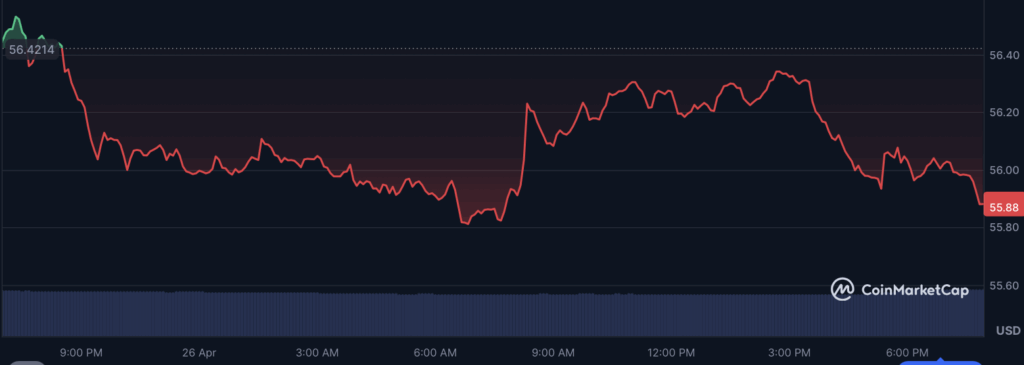
However, the incident carries broader implications. Coming after a series of breaches such as those involving Drift Protocol and Kelp, this marks the first major exploit of MWEB since its launch and will likely intensify the debate among supporters of the Proof-of-Work (PoW) mechanism.
As of April 26, the network is operating normally after a patch for the vulnerability was released. Developers are urging node operators and miners to update their software immediately—a critical step to prevent future attacks of this nature.


 Commentaries










Fill in necessary fields and publish