


Bitcoin Averages 37% Rebound After Crises, Binance Research Finds
We may earn commissions from affiliate links or include sponsored content, clearly labeled as such. These partnerships do not influence our editorial independence or the accuracy of our reporting. By continuing to use the site you agree to our terms and conditions and privacy policy.


Despite common fears that global crises spell disaster for crypto markets, new data from Binance Research suggests the opposite may be true — at least for Bitcoin.
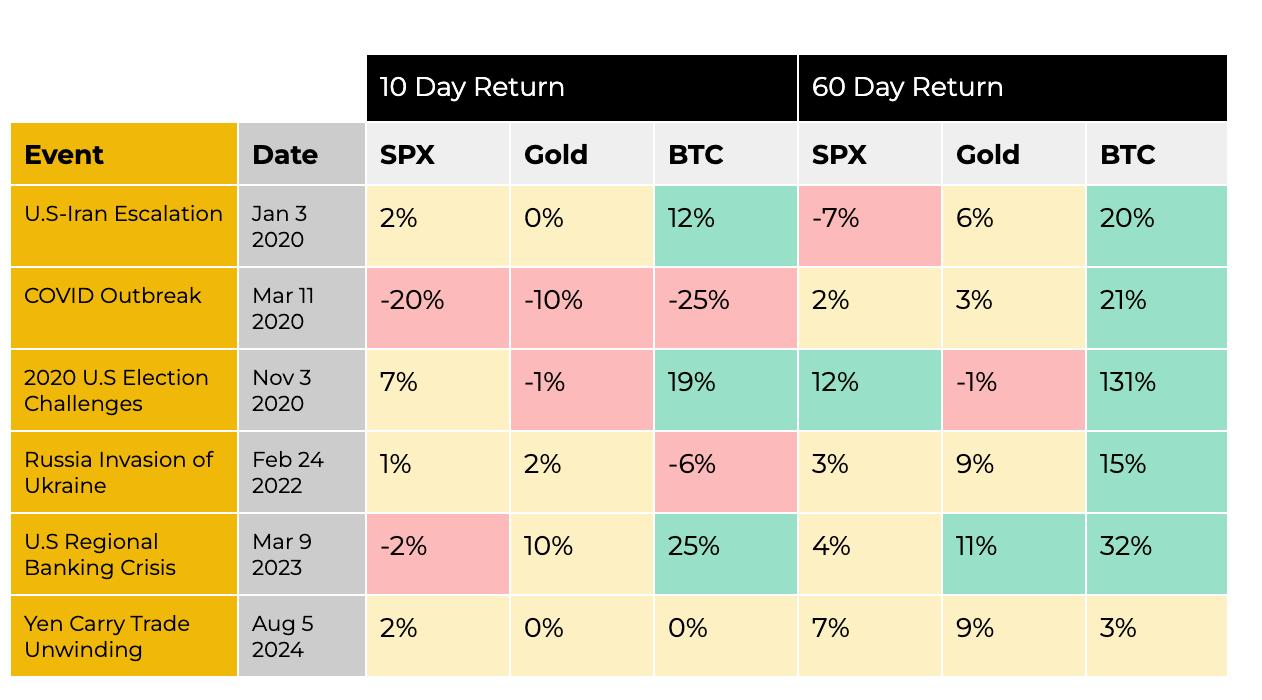
The platform’s latest analysis reveals that BTC has historically delivered strong post-event returns, averaging a 37% gain within 60 days of major geopolitical or financial shocks since 2020.
BTC Outperforms in Crisis Recovery
The data shows that Bitcoin consistently recovers — and even thrives — after periods of intense market stress. For instance:
After the 2020 U.S. election challenges, Bitcoin surged 131% over the following 60 days.
In the aftermath of the U.S. regional banking crisis in March 2023, BTC rallied 32%.
Even after the COVID-19 outbreak caused a sharp 25% drop in 10 days, Bitcoin bounced back with a 21% return two months later.
Other examples include:
- A 20% rise after the U.S.-Iran escalation in January 2020
- A 15% rebound following Russia’s invasion of Ukraine in February 2022
The only muted performance came after the Yen carry trade unwinding in August 2024, where BTC posted just a 3% gain over 60 days.
Bitcoin vs. Traditional Assets
Compared to the S&P 500 and gold, Bitcoin’s average returns following crisis events are significantly stronger. While equities (SPX) and gold posted mixed results — ranging from -7% to +12% and -10% to +11% respectively — Bitcoin was the clear outperformer.

For example:
- In the COVID crash, the S&P 500 fell 20% in 10 days and only recovered 2% in 60.
During the banking crisis, gold rose 10% in 10 days, but Bitcoin delivered the highest 60-day return at 32%.
Implications for Investors
The findings suggest Bitcoin’s price may initially react sharply to geopolitical or financial uncertainty — often with double-digit drops in the short term. However, historical patterns show that BTC tends to rebound strongly once fear subsides and speculative inflows return.
Binance Research emphasized that these post-crisis gains could reflect a flight to decentralized assets during times of distrust in traditional financial systems, as well as renewed investor risk appetite once stability returns.


 Commentaries










Fill in necessary fields and publish