






SEC Shifts Strategy: New A-C-T Policy Reshapes DeFi Rules
We may earn commissions from affiliate links or include sponsored content, clearly labeled as such. These partnerships do not influence our editorial independence or the accuracy of our reporting. By continuing to use the site you agree to our terms and conditions and privacy policy.

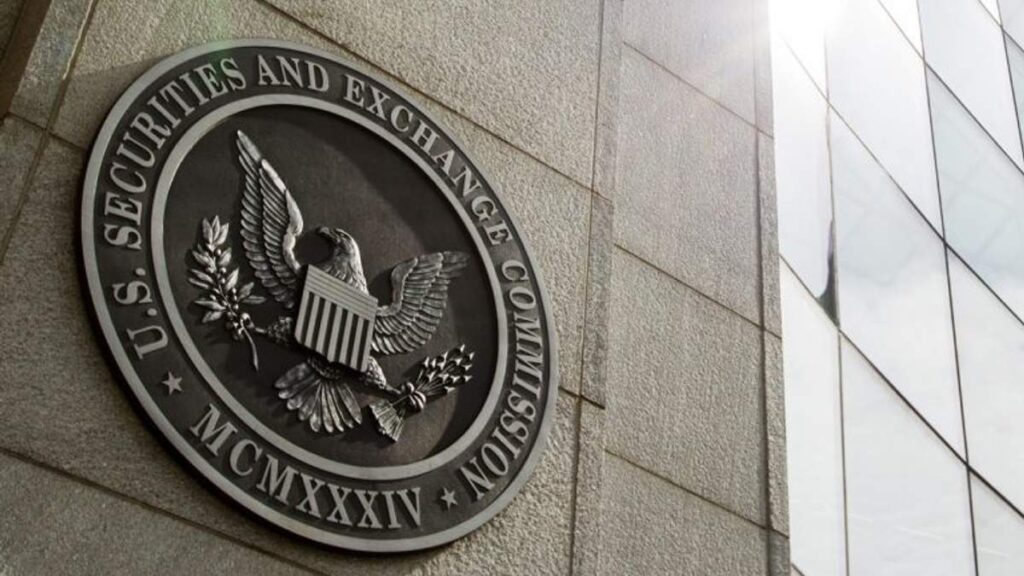
The SEC introduces the A-C-T strategy, moving away from regulation by enforcement to clarify rules for DeFi, software interfaces, and on-chain markets.
In recent weeks, the SEC has introduced a series of initiatives signaling a sharp pivot in agency policy toward decentralized platforms, DeFi infrastructure, and tokenized assets.
The new approach, known as the A-C-T (Advance, Clarify and Transform) strategy, aims to replace the long-standing model of “regulation by enforcement” with formal rules and preliminary industry guidance. Market participants view this as the clearest sign yet that Washington is beginning to accept blockchain infrastructure as a distinct technological layer rather than merely an unregulated financial sector.
SEC Redefines the Term “Broker”
A critical element of this new framework is the SEC’s stance on software interfaces and decentralized applications. The Commission’s Division of Trading and Markets has indicated that “front-end” platforms providing access to DeFi protocols will not automatically be treated as brokers or exchanges.
According to the new guidelines, a platform can avoid registration as a broker-dealer if it operates through pre-set and publicly known parameters, without controlling order routing or transaction outcomes. The SEC also specifies that interfaces should not receive incentives for directing users toward specific liquidity pools or protocols.
In practice, this means the regulator is starting to distinguish between a software interface and an actual financial intermediary—a shift the crypto industry has demanded for years.
Analysts describe this new position with a concise formula: “code is not a broker.”
“Project Crypto” Targets Clear Rules for On-Chain Markets
Parallel to these efforts, the SEC is operating the “Project Crypto” initiative, through which technical experts and blockchain developers participate directly in the regulatory drafting process.
The primary focus is to build a more precise definition of when a blockchain platform is truly centralized and when it represents a purely decentralized software layer. This is a vital issue for the industry, as many DeFi projects previously feared they might fall under traditional exchange and broker rules despite lacking a central operator.
The SEC has also introduced a new five-tier classification for crypto assets, dividing tokens into digital securities, digital commodities, “utility” tokens, NFT collections, and stablecoins.
The most significant effect of this taxonomy is that a substantial portion of tokens may now officially avoid being treated as “securities,” limiting the SEC’s reach and shifting part of the oversight to the CFTC.
SEC and CFTC Move to End Regulatory Chaos
Over the past few months, the two agencies took an unprecedented step toward coordination through a memorandum of cooperation between the SEC and CFTC. The goal is to avoid duplicating registrations and regulatory requirements for hybrid platforms that trade both digital commodities and tokenized securities.
The market views this as a potential foundation for a unified registration regime for on-chain markets—an idea that until recently seemed politically impossible.
The shift in the SEC’s tone is also visible outside the crypto sector. On May 5, Atkins proposed that public companies move to six-month rather than quarterly financial reporting—a move investors see as part of a broader deregulation strategy.
For the crypto industry, however, the most important signal remains clear: the SEC is gradually recognizing that decentralized networks cannot be regulated in the same way as traditional financial intermediaries.


 Commentaries









Fill in necessary fields and publish