






Solana Pulls Back Sharply as Investors Look Beyond the Noise
We may earn commissions from affiliate links or include sponsored content, clearly labeled as such. These partnerships do not influence our editorial independence or the accuracy of our reporting. By continuing to use the site you agree to our terms and conditions and privacy policy.

Solana’s price action has always been extreme, and the latest pullback is no exception.
After reaching a record high earlier this year, the token has retraced sharply, erasing more than half of its value. For many investors, that kind of drawdown raises red flags. For others, it raises a different question: whether the current weakness represents risk – or opportunity.
Despite the recent slump, Solana remains one of the most resilient large-cap cryptocurrencies of the past cycle.
A History of Recovering From Deep Drawdowns
Solana’s current decline looks dramatic in isolation, but it is far from unprecedented. Following the collapse of FTX in 2022, SOL traded in single digits, with many writing the project off entirely. What followed was one of the strongest recoveries in the crypto market, as Solana rebuilt its ecosystem, regained developer activity, and pushed to new all-time highs in subsequent years.
That history matters. Assets that survive near-death moments and later reclaim highs tend to develop a long-term investor base that views deep pullbacks differently. While the present downturn has tested confidence, it has not dismantled Solana’s core infrastructure or ecosystem in the way the 2022 crisis did.
Bitcoin’s Cycle Still Matters
Solana does not trade in a vacuum. Like most major altcoins, its longer-term direction is closely tied to Bitcoin’s cycle. When Bitcoin enters sustained uptrends, capital typically rotates into high-beta assets such as Solana later in the move.
Several large financial institutions believe Bitcoin may be approaching a cyclical inflection point. Research pointing to miner capitulation, combined with long-term supply dynamics, has fueled expectations that Bitcoin could regain momentum over the next year or two. Forecasts calling for new highs later this decade, if realized, would likely lift the broader crypto market with it.
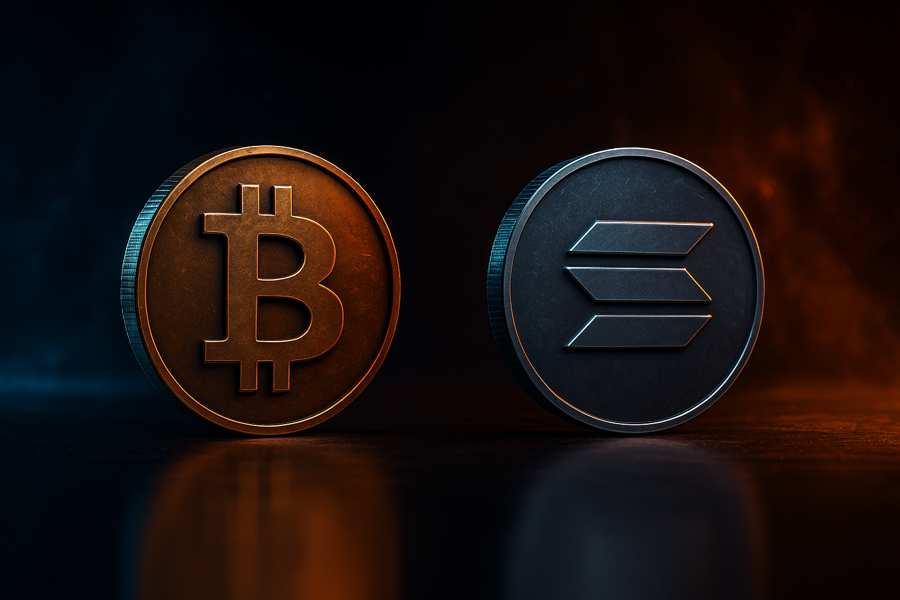
In that scenario, assets like Solana – which historically outperform during expansion phases – could benefit disproportionately once risk appetite returns.
Institutional Exposure Is Slowly Taking Shape
Another factor supporting a longer-term recovery narrative is the gradual expansion of institutional access. Spot exchange-traded products tied to Solana have launched in recent months, offering regulated exposure to a wider pool of investors. So far, inflows have been modest, reflecting a cautious, risk-averse environment rather than outright rejection.
That dynamic can change. Institutional flows tend to lag price stabilization, not lead it. If sentiment improves and broader crypto markets regain traction, those vehicles could become a meaningful source of demand rather than a footnote.
Volatility Cuts Both Ways
None of this eliminates risk. Solana’s volatility remains high, and further downside cannot be ruled out if macro conditions worsen or Bitcoin fails to recover. But volatility is also what has historically rewarded long-term buyers willing to endure uncomfortable periods.
At current levels, Solana is trading far below its recent peak, despite maintaining one of the most active ecosystems in crypto. For investors who believe the broader market has not yet completed its cycle, that disconnect is precisely what makes the asset worth watching.
The Bigger Picture
Solana’s drawdown reflects fear, not collapse. The network continues to function, developers continue to build, and institutional interest is slowly expanding. While short-term price action may remain choppy, history suggests that Solana tends to move hardest when sentiment flips.
For those with a long-term horizon, periods like this have historically marked accumulation phases – not because recovery is guaranteed, but because the risk-reward balance shifts when pessimism peaks.
As always, timing matters less than conviction. And with Solana, conviction has been tested many times before – and so far, it has held.


 Commentaries







Fill in necessary fields and publish