






Bitcoin, Ethereum, and Solana Liquidity Gaps Put LiquidChain ($LIQUID) on the Radar as The Best Altcoin to Buy
We may earn commissions from affiliate links or include sponsored content, clearly labeled as such. These partnerships do not influence our editorial independence or the accuracy of our reporting. By continuing to use the site you agree to our terms and conditions and privacy policy.


When the Crypto market is quiet, liquidity across Bitcoin, Ethereum, and Solana looks solid. Orders fill, transfers clear, and everything appears to function as it should.
The problem only shows up when conditions change. As soon as volatility picks up, capital slows down, routes become inefficient, and movement between chains turns clumsy.
The crypto market did not grow around one network. It expanded in parallel, with each major blockchain building its own lanes, tools, and liquidity pools. Over time, those lanes stopped lining up. What once felt like scale now feels like separation.
That mismatch has shifted attention toward infrastructure built to link ecosystems rather than compete for users. The focus is no longer on which chain wins, but on how value moves when pressure hits.
LiquidChain ($LIQUID) sits directly in that gap. Built as a Layer-3 execution network, LiquidChain focuses on unifying liquidity across Bitcoin, Ethereum, and Solana through a single framework.
For traders evaluating the best altcoin to buy beyond short-term narratives, $LIQUID is increasingly viewed through an infrastructure-first lens.
Why Liquidity Fragmentation Continues to Hold the Crypto Market Back
The crypto market has expanded rapidly, but coordination has lagged behind. Each major chain developed its own liquidity pools, tooling, and applications. While this brought growth, it also introduced friction that becomes most visible during market pullbacks.
Liquidity often remains locked inside individual ecosystems. Moving capital across chains requires additional steps, time, and risk. During periods of stress, these barriers slow execution and reduce capital efficiency, limiting how markets respond.
LiquidChain approaches this problem at the execution layer rather than the application layer. By focusing on how liquidity interacts across networks, $LIQUID targets fragmentation at its source instead of treating its symptoms.
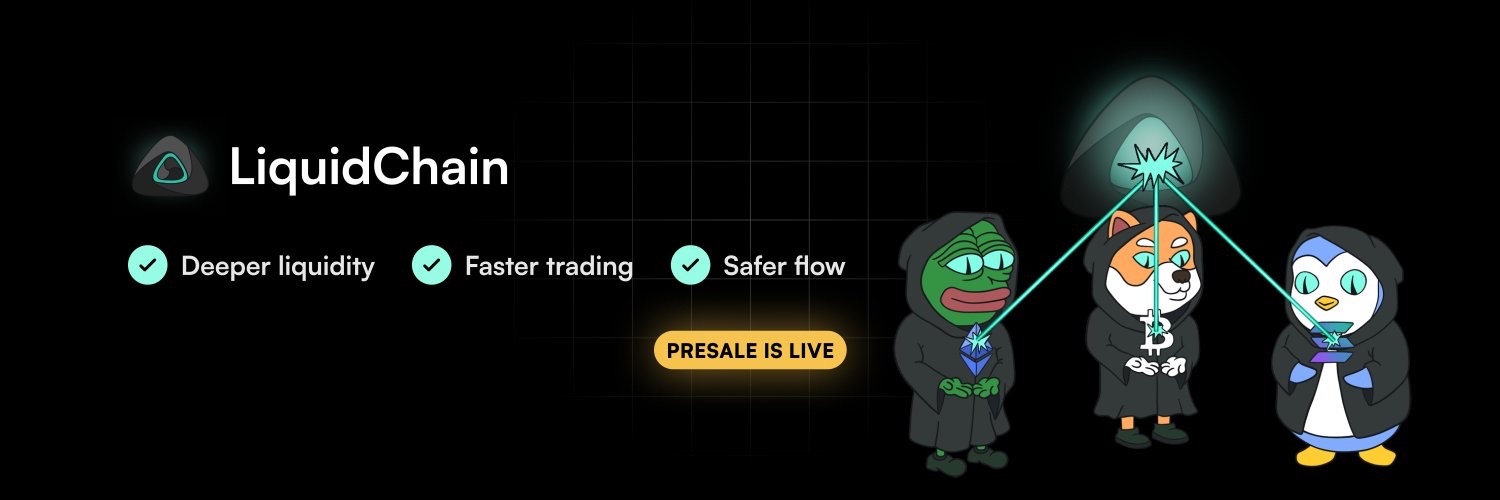
How LiquidChain Layer-3 Architecture Connects Major Blockchains
Built as a Layer-3 execution network, LiquidChain operates above existing blockchains instead of trying to replace them. Bitcoin, Ethereum, and Solana continue to function on their own terms, while $LIQUID provides a shared layer where liquidity can interact without being forced through isolated paths.
Based on the project’s architecture, applications deployed on LiquidChain can access shared liquidity pools without repeated deployments or constant asset transfers. This reduces reliance on traditional bridges, which have historically introduced complexity and risk.
The execution layer is built for speed and scalability. High throughput and low latency allow trading, DeFi, and other applications to operate without congestion.
This combination of performance and connectivity is what differentiates LiquidChain from single-chain scaling solutions and places $LIQUID firmly in the infrastructure category.
Why $LIQUID Is Becoming Popular During Market Uncertainty
Periods of uncertainty tend to shift focus away from hype and toward structure. When momentum fades, projects with clear utility often stand out. LiquidChain fits this profile by addressing a problem that persists regardless of market direction.
Instead of relying on short-term trends, $LIQUID is tied to how liquidity moves across the crypto market as a whole. That positioning makes it relevant whether markets are rising or consolidating. As traders reassess exposure, infrastructure designed to reduce friction becomes harder to overlook.
This dynamic has helped place $LIQUID on the radar as an altcoin to buy for those looking beyond isolated ecosystems.

Crypto Presale Momentum Builds Around LiquidChain
The $LIQUID crypto presale reflects this growing interest in infrastructure-focused projects. Presale pricing progresses by stage rather than reacting to daily market swings, offering a more predictable entry structure during uncertain conditions.
Staking has supported early engagement by locking supply and aligning participants with the network’s long-term development. While early incentives naturally evolve, staking activity has helped establish early momentum around $LIQUID.
Tokenomics are structured to support sustained growth. The total supply of 11,800,000,100 $LIQUID is allocated across development, marketing, rewards, listings, and ecosystem expansion.
Development holds 35%, LiquidLabs manages 32.5% for growth, AquaVault holds 15% for partnerships, rewards account for 10%, and 7.5% is reserved for exchange listings.
This reinforces LiquidChain positioning as a crypto to buy within the infrastructure category rather than a short-term trade.
LiquidChain ($LIQUID) focus on unified execution and cross-chain liquidity continues to set $LIQUID apart as markets search for stronger foundations beneath price action. As long as major blockchains remain fragmented, infrastructure designed to connect them will continue to matter more with each market cycle.
Discover the future of cross-chain infrastructure with LiquidChain:
Website: https://liquidchain.com/
Social: https://x.com/getliquidchain


This publication is sponsored. CryptoDnes does not endorse and is not responsible for the content, accuracy, quality, advertising, products or other materials on this page. Readers should do their own research before taking any action related to cryptocurrencies. CryptoDnes shall not be liable, directly or indirectly, for any damage or loss caused or alleged to be caused by or in connection with use of or reliance on any content, goods or services mentioned.
 Commentaries










Fill in necessary fields and publish