





Best Decentralized Crypto Exchange: A Full Comparison of Crypto Exchanges for 2026
We may earn commissions from affiliate links or include sponsored content, clearly labeled as such. These partnerships do not influence our editorial independence or the accuracy of our reporting. By continuing to use the site you agree to our terms and conditions and privacy policy.

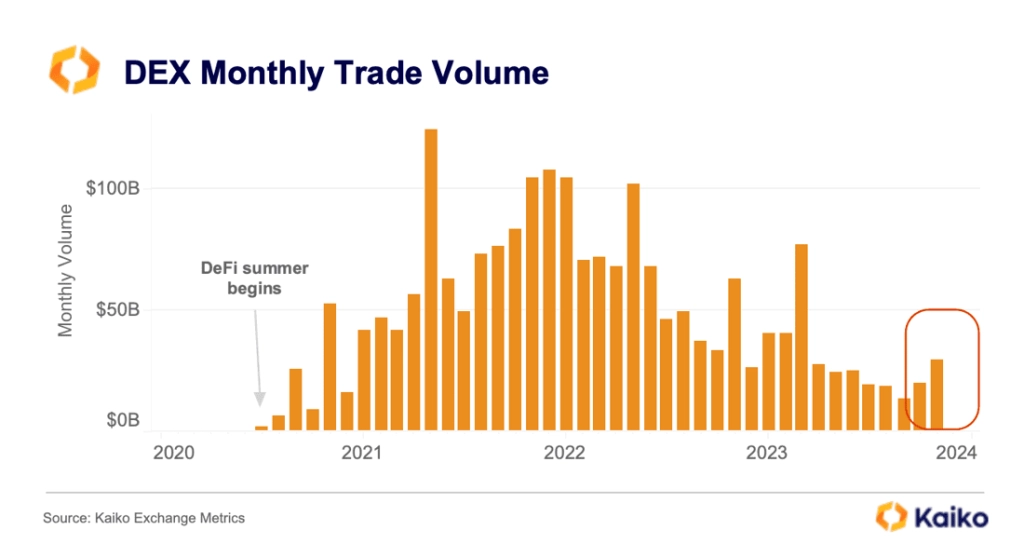
Decentralized crypto exchanges have exploded from handling just 7% of crypto volume in early 2024 to commanding over 20% market share by 2025. These platforms now facilitate a significant share of crypto assets trading, including cryptocurrencies and other digital assets.
It’s a clear indicator of how crypto traders see the future of digital assets. But which are the best decentralized exchanges to buy and sell Bitcoin and altcoins?
Stay until the end of the guide to find out more.
Best Decentralized Exchanges: Top Picks in 2026
The DEX space offers specialized decentralized exchange platforms for every trading style. Each decentralized exchange platform brings unique advantages, enabling users to find the right one for their needs.
- Best Wallet – A non-custodial wallet supporting 60+ blockchains, in-app token swaps, staking, and access to new tokens.
- CoinFutures – A trading platform with a game-like interface for predicting crypto price movements and up to 1,000x leverage.
- MEXC DEX+ – A hybrid trading platform that pulls liquidity from major DEXs, letting you trade over 10,000 assets across Solana, BSC, Tron, and Base.
- OKX – A top-tier cryptocurrency exchange offering spot, futures, and options trading with low fees and advanced trading tools.
- The True Trade – Offers up to 1001x leverage with instant execution speeds, low fees at 0.02%, and no KYC requirements for traders.
- Changelly – An instant cryptocurrency exchange that enables quick swaps of 500+ digital assets without extensive identity verification
- Exodus – A user-friendly, multi-chain crypto wallet supporting over 50 networks, featuring a built-in exchange and staking.
- Uniswap – A leading decentralized exchange platform on Ethereum using automated market makers for token swaps and liquidity provision.
- PancakeSwap – A popular decentralized exchange platform on BNB Chain, offering low-cost token swaps, yield farming, and various DeFi features.
- dYdX – A decentralized exchange platform specializing in perpetual contracts, advanced trading features, and high leverage options. It boasts high trade volume and is optimized for large trades.
- Hyperliquid DEX – A decentralized exchange platform built on its own Layer-1 blockchain, providing high-speed trading akin to centralized platforms.
- Raydium – A decentralized exchange platform on Solana, delivering fast, low-cost token swaps and robust liquidity provision.
List of Decentralized Exchanges: Reviewed
These platforms represent the cream of the DEX ecosystem, each excelling in specific niches while pushing the boundaries of decentralized finance.
1. Best Wallet

Best Wallet positions itself as the best decentralized crypto exchange, as it combines wallet functionality with advanced DEX aggregation across 60+ networks. Users trade directly from their wallets, maintaining full control over their funds and private keys at all times.
To start trading on the platform, simply connect wallet using the ‘Connect Wallet’ button and you can enjoy secure, peer-to-peer transactions without relying on a centralized entity.
The platform connects to hundreds of liquidity pools for optimal pricing while maintaining complete user anonymity through its no-KYC approach.
The wallet’s native $BEST token creates additional value through key features like governance benefits and fee discounts, while the integrated launchpad has already delivered impressive results on some crypto presales. The upcoming Best Card promises 8% crypto cashback with Google Pay integration, creating a bridge between DeFi and traditional payments.
Pros
- Zero KYC and full user anonymity for all in-app trades
- Aggregates liquidity across 60+ blockchains via built-in DEX
- All-in-one crypto suite — DEX, staking, launchpad, and presale access
- Native $BEST token offers governance rights and fee discounts
- Upcoming Best Card with 8% crypto cashback and Google Pay support
Cons
- Newer project with a shorter operational track record
- Primarily optimized for mobile users; limited desktop experience
- Some advanced features still in rollout phase
2. CoinFutures
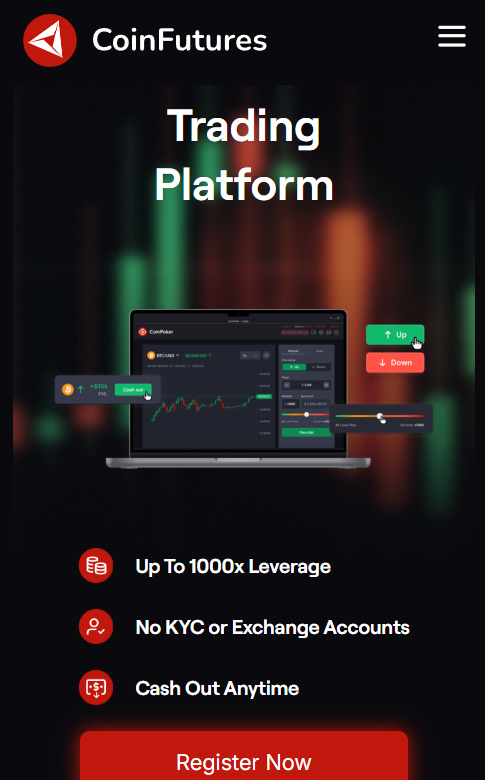
CoinFutures transforms high-leverage trading into an accessible gaming experience, offering up to 1000x multiplier on Bitcoin, Ethereum, and several other major cryptocurrencies. Built by the CoinPoker team, the platform gamifies derivatives trading while providing real USDT payouts through simulated futures markets.
It is important to note that trades and profits on CoinFutures may be considered taxable events and should be reported for tax purposes, as such transactions can trigger taxable events under current regulations.
The platform’s strength lies in democratizing access to extreme leverage trading typically reserved for professional traders. Real-time position monitoring and liquidation protection tools help manage the inherent risks of 1000x leverage, while the 30-second onboarding process eliminates traditional barriers to entry.
Pros
- Offers up to 1000x leverage with just 0.1% margin required
- Fully anonymous trading — no KYC or identity checks
- Gamified interface inspired by prediction markets and poker
- Real-time liquidation protection tools help manage risk
- Quick 30-second onboarding for instant access to trading
Cons
- Supports only five major cryptocurrencies for now
- Extreme leverage increases liquidation risk
- No spot trading or staking options available
3. MEXC DEX+
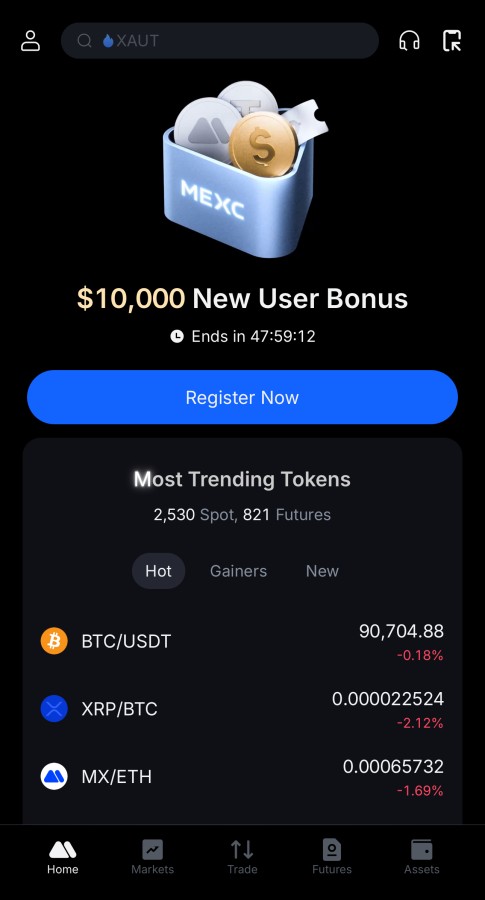
MEXC DEX+ is a powerful hybrid trading platform that sources liquidity from some of the top DEXs like Raydium and Pump.fun, helping you discover and trade at low prices. It currently supports key networks such as Solana, Tron, and Base, with support for more chains underway.
The platform lets you trade more than 10,000 on-chain assets, including niche meme coins as well as DeFi tokens, without having to go through complex wallet setups. A key rationale behind the platform is the team’s vision to unlock easy DeFi trading at the best possible prices for everyone.
It even features a tool that lets you track smart money flows, allowing you to monitor whale moves in real-time. And from a security standpoint, MEXC DEX+ comes equipped with safety indicators that automatically check token contracts for audit and risk issues.
Pros
- Aggregates liquidity across Solana, BSC, Tron, and Base
- No manual gas fee handling required
- Offers a tool for smart money tracking
- Supports instant wallet login with popular Web3 wallets
- Easy switching between CEX spot trading and DEX+ features
Cons
- 1% service fee per trade is higher than raw DEX interactions
- Not available in the US and certain restricted regions
4. OKX DEX
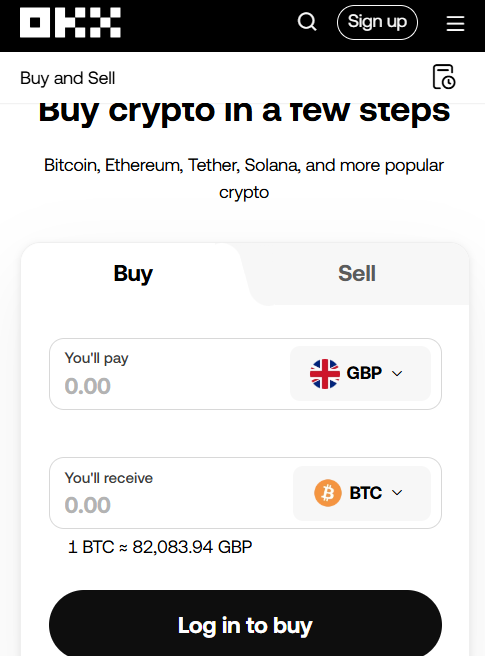
OKX DEX is among the top decentralized exchanges, utilizing advanced X Routing algorithms to source liquidity from 400+ DEXs across 130+ chains. September 2025 marked a historic milestone with $1.043 million in daily fees, demonstrating the platform’s growing market penetration and high trade volume.
The platform is designed for performance, efficiently managing network congestion during peak periods to maintain fast transaction speeds and reliable liquidity.
OKX DEX is focused on enabling users to access advanced trading tools and analytics. The platform excels in providing institutional-grade analytics through AI-powered insights and Smart Money Leaderboards that track top trader performance. MEV protection technology and 40ms execution speeds create a competitive advantage for professional traders seeking optimal execution across fragmented liquidity sources.
Pros
- Aggregates liquidity from 400+ DEXs across 130+ blockchains
- Advanced X Routing algorithm ensures best execution and minimal slippage
- AI-powered analytics and Smart Money Leaderboards for data-driven trading
- MEV protection and ultra-fast 40ms execution speeds
- Institutional-grade dashboard with professional tools and insights
Cons
- Advanced interface can overwhelm beginners
- Some regional restrictions (not fully accessible in the US)
- Complex settings may require manual optimization for best routing
5. The True Trade
Another popular DEX on our list is The True Trade. It is an upcoming perpetual futures exchange that’s actively building a platform to unlock quick trades within a decentralized setup. Many aggressive traders are turning to the platform because of its high leverage of up to 1001x on many of the top crypto pairs.
What’s worth noting is that the True Trade claims to offer instant trades featuring just a five-millisecond execution time. It even has a “gasless” mode, where you can deposit funds on the platform (on a custodial basis) to avoid paying gas fees.
But what truly separates The True Trade from competitors is its competitive fee structure. To put this in perspective, the maker fee is just 0.02%, while the taker fee is 0.04%. And even more importantly, in the spirit of a true DEX, it doesn’t require its users to undergo strict KYC checks.
Pros
- Up to 1001x leverage on major pairs like BTC and ETH
- No ongoing funding fees on margin positions
- Low trading fees starting at 0.02% maker
- Fast execution with millisecond-level latency
- Non-custodial trading with no KYC requirements
Cons
- No native mobile app
- A relatively newer platform
6. Changelly
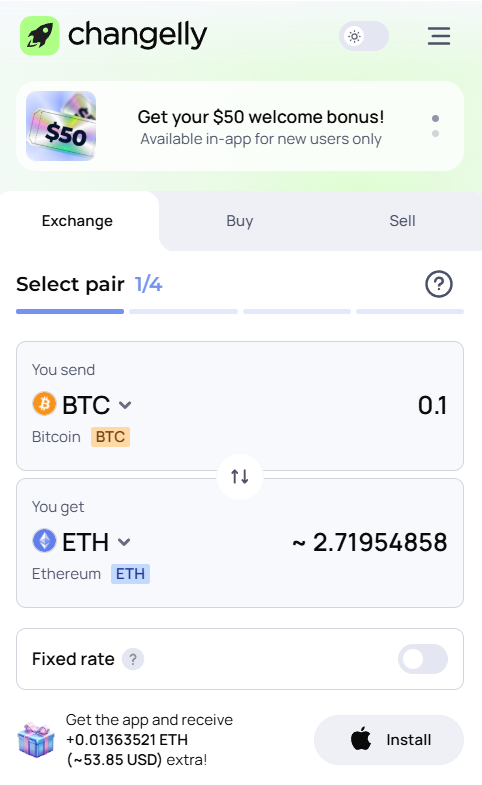
Changelly serves over 10 million users through its beginner-friendly instant exchange platform, supporting 1,000+ cryptocurrencies across 185 blockchains with 330,000+ trading pairs. The platform’s non-custodial model eliminates custody risks while maintaining the simplicity that newcomers require.
Changelly offers lower fees compared to many competitors, making it a cost-effective choice for traders and investors. Additionally, Changelly does not require identity verification for transactions under a certain threshold, allowing for greater privacy and ease of use, meaning it does rank within the best non-KYC crypto exchanges on the market now.
Industry-leading 0.25% exchange fees make Changelly competitive with major CEXs, while integrated fiat on-ramps through MoonPay and Simplex provide seamless crypto acquisition. The platform’s clean security record since 2015 and partnership network of 600+ global services demonstrate reliability that matters when handling significant trading volumes.
Pros
- Ultra-low trading fee of just 0.25% per swap
- Supports 1,000+ cryptocurrencies across 185 blockchains
- No mandatory KYC for transactions under €10,000
- Fast transaction completion — usually within 5–40 minutes
- Integrated fiat on-ramps via MoonPay and Simplex
Cons
- Limited advanced charting and trading tools
- No decentralized liquidity provision – swaps rely on partners
7. Exodus
Exodus bridges the gap between secure self-custody and seamless DEX trading through its comprehensive multi-asset wallet supporting 300+ cryptocurrencies across 50+ blockchain networks. The platform processes billions in swap volume globally while maintaining user-friendly design principles that have earned consistent ease-of-use awards.
Exodus allows users to trade directly from their wallets, giving them full control over their assets and private keys. This approach ensures users maintain ownership and direct management of their funds without relying on centralized entities, enhancing both security and autonomy.
Hardware wallet integration with Trezor and Ledger devices provides institutional-grade security for retail users, while built-in staking capabilities generate passive income across multiple proof-of-stake networks. The platform’s closed-source architecture ensures stability, though some transparency advocates prefer open-source alternatives.
Pros
- Supports over 300 cryptocurrencies across 50+ blockchain networks
- User-friendly interface with award-winning design for beginners
- Hardware wallet integration with Trezor and Ledger devices
- Built-in DEX enables token swaps directly from your wallet
- Staking options available for multiple proof-of-stake coins
Cons
- Closed-source software limits full transparency
- No native 2FA — relies on device security only
- Fees can be higher on low-liquidity swap pairs
8. Uniswap
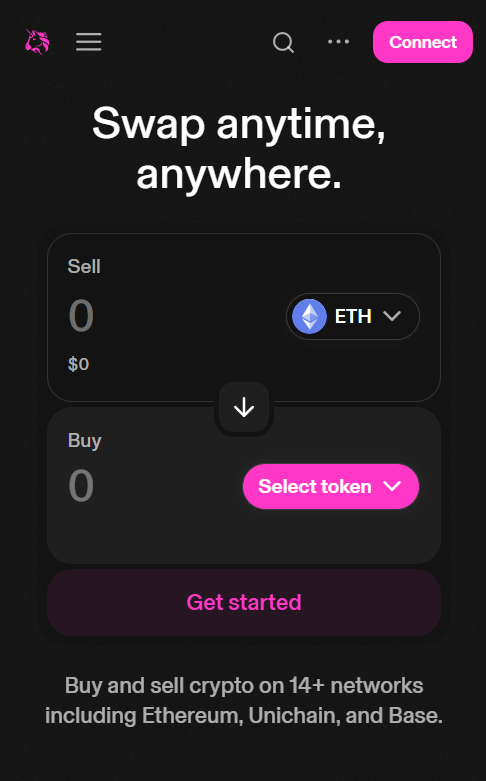
Uniswap maintains its position as the innovation leader through V4’s revolutionary hooks system, which enables unlimited customization of liquidity pools. With $1.03+ billion TVL and 640+ million swaps processed, the platform demonstrates both technical excellence and market validation of its automated market maker model.
Uniswap is optimized for large trades and offers low slippage, making it efficient for high-volume trading and substantial orders. Its native token is used for governance and can provide fee discounts for users.
The platform’s governance strength shows through $165 million in approved funding and active community participation in protocol development. Uniswap’s transition to Unichain, processing 75% of trades, showcases successful Layer 2 adoption while maintaining Ethereum’s security guarantees.
Pros
- Highly customizable liquidity pools through V4 hooks
- Over $1 billion in total value locked with deep liquidity
- Governed by an active DAO and the UNI native token
- Supports multiple Layer 2 networks, including Unichain
- Low slippage on large trades and high trading volumes
Cons
- High Ethereum gas fees during peak activity
- Complex interface may confuse new traders
- Smart contract interaction costs can add up for frequent swaps
9. PancakeSwap
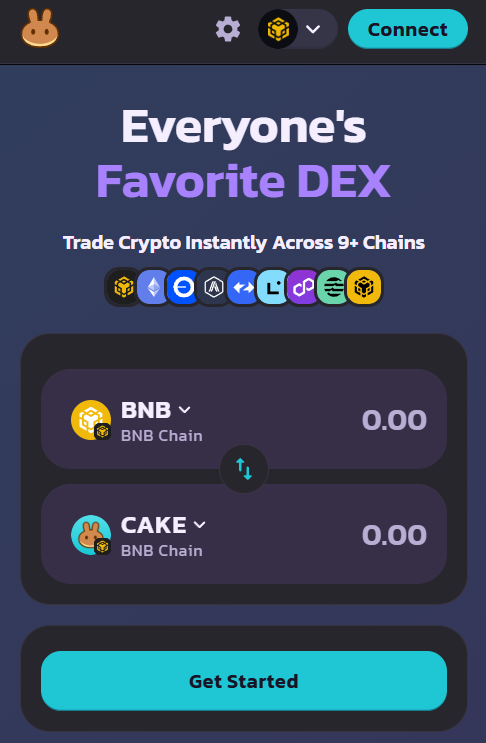
PancakeSwap dominates BNB Chain with $2 billion TVL and processes 425,000+ daily transactions through its cost-efficient infrastructure. The platform’s deflationary CAKE native token powers governance and rewards, with tokenomics that burn more tokens than they mint weekly, creating scarcity that supports long-term value appreciation.
Multi-chain expansion across Ethereum, Polygon, Arbitrum, and Base demonstrates strategic growth beyond BNB Chain dependency. PancakeSwap supports trading a wide range of other assets beyond BNB, enabling users to access various cryptocurrencies and tokens.
The decentralized crypto exchange is focused on enabling users to participate in DeFi activities like yield farming and staking. Its DeFi suite also includes an NFT marketplace, prediction markets, and perpetual futures, creating multiple revenue streams and user engagement opportunities.
Pros
- Extremely low transaction fees on the BNB Chain
- Comprehensive DeFi suite with farming, staking, NFTs, and perpetuals
- Deflationary tokenomics — CAKE burns exceed new issuance
- Expanding ecosystem across Ethereum, Polygon, Arbitrum, and Base
- Strong BNB community support and liquidity depth
Cons
- Dependence on Binance and BNB Chain ecosystem health
- Validator centralization concerns vs. Ethereum-based DEXs
- Yield opportunities can fluctuate with market conditions
10. dYdX
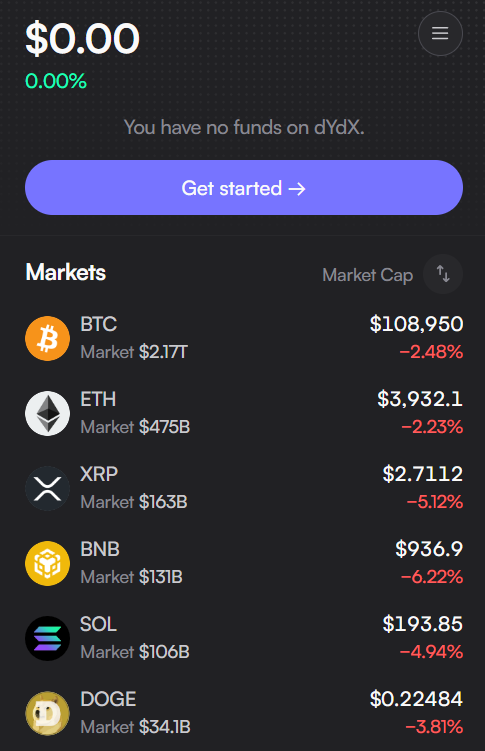
dYdX V4 represents the pinnacle of institutional-grade decentralized derivatives trading with $316 billion in trading volume since launch and support for 220+ perpetual markets. The platform’s custom Layer 1 blockchain delivers 2,000+ TPS throughput while eliminating gas fees that plague Ethereum-based competitors, and helps avoid network congestion even during periods of high activity.
MegaVault’s automated liquidity provision and instant market listing capabilities demonstrate technological sophistication that rivals centralized exchanges. dYdX consistently maintains high trade volume, which is a key metric for efficient trading and liquidity.
The platform’s regulated approach and institutional partnerships provide an extra layer of security and compliance for institutional traders, positioning it as the bridge between traditional finance and decentralized derivatives trading.
Pros
- Purpose-built Layer 1 blockchain with 2,000+ TPS throughput
- Zero gas fees for trading and instant order execution
- Supports 220+ perpetual markets with deep liquidity
- Regulatory-compliant structure appealing to institutional traders
- Proven operational track record and high trading volumes
Cons
- Unavailable to traders in the US and Canada
- Narrow focus on perpetual contracts — limited DeFi options
- Advanced interface may feel complex for casual users
11. Hyperliquid DEX

Hyperliquid is a decentralized crypto exchange that revolutionizes DEX perpetuals through its fully on-chain orderbook, capturing 80% of the DEX perpetuals market with $330 billion monthly volume. The platform’s custom HyperBFT consensus enables 100,000+ operations per second while maintaining complete transparency and user custody.
Hyperliquid ensures users retain control of their assets at all times, providing full control over trading and asset management. Like other decentralized exchanges, Hyperliquid may be subject to decentralized exchanges report requirements, including future IRS mandates for DeFi platforms starting in 2027.
The $500+ million HLP vault democratizes market making through automated strategies that deliver impressive risk-adjusted returns. Community-owned development without VC influence ensures alignment between platform growth and user interests, though recent security incidents highlight the risks of cutting-edge technology.
Pros
- Dominates DEX perpetuals with over 80% market share
- Fully on-chain orderbook offering CEX-level performance
- Community-owned model with no venture capital influence
- HLP vault democratizes market making for retail users
- Custom HyperBFT consensus enables 100,000+ operations per second
Cons
- Recent security incidents raised reliability concerns
- Emergency controls introduce partial centralization risk
- Relatively new platform with limited regulatory clarity
12. Raydium
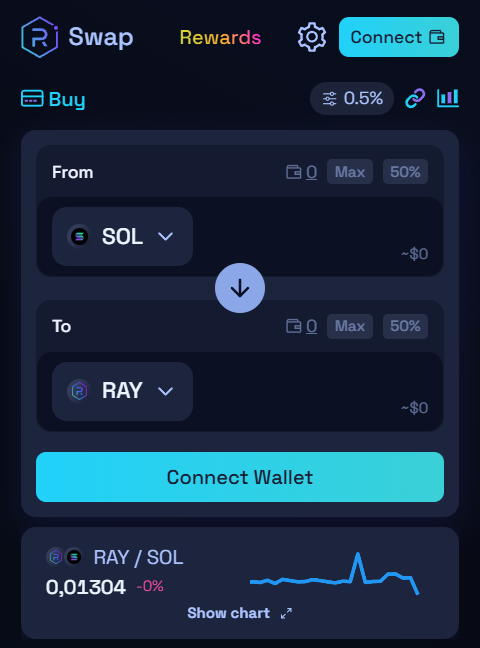
Raydium anchors Solana’s DeFi ecosystem with $32.3 billion monthly volume and deep integration with OpenBook’s central limit orderbook. The platform’s hybrid architecture combining AMM pools with orderbook liquidity creates optimal trading conditions for both retail and professional traders. Raydium supports trading a wide range of other assets on Solana, making it a versatile choice for users seeking exposure to various cryptocurrencies and tokens.
The trading process on Raydium is streamlined and automated, allowing users to connect their wallets, select trading pairs, and confirm transactions efficiently, all while maintaining full control over their funds. Raydium also offers a user-friendly interface, ensuring easy navigation for both beginners and experienced traders.
LaunchLab’s success in facilitating 35,000+ token launches generates $900,000 daily in fees, demonstrating the platform’s role among Solana meme coins. Concentrated liquidity pools and yield farming opportunities provide multiple ways to earn returns while supporting the broader Solana ecosystem.
Pros
- Deep Solana integration enabling lightning-fast swaps
- Hybrid model combining AMM pools with orderbook liquidity
- LaunchLab supports over 35,000 token launches on Solana
- Ultra-low transaction costs — often fractions of a cent
- Active developer team continuously shipping new DeFi features
Cons
- Restricted access in certain jurisdictions
- Intense competition from new Solana DEXs like Pump.fun
- Liquidity can fluctuate during network congestion periods
Top Decentralized Exchanges: Comparison Table
| Platform | Supported Networks | Trading Fees | Key Features | Security Audits |
|---|---|---|---|---|
| Best Wallet | 60+ chains | 0% platform fees | Multi-chain aggregation, $BEST native token, crypto card | Multiple audits, non-custodial |
| CoinFutures | 5 cryptocurrencies | PNL/Flat modes | 1000x leverage, gamified trading, instant access | Fireblocks custody |
| MEXC DEX+ | 4 (more coming) | 1% service fee per trade | Multi-DEX liquidity aggregation, 10,000+ assets, smart money tracking | Clean record, non-custodial |
| OKX DEX | 130+ chains | Tiered structure | 400+ DEX access, AI analytics, MEV protection | CertiK, Hacken, SlowMist |
| The True Trade | 3 blockchains | 0.02% maker / 0.04% taker | Up to 1001x leverage, 5ms execution speed, gasless trading mode | Non-custodial |
| Changelly | 185 blockchains | 0.25% exchange fee | 1,000+ coins, fiat on-ramps, lower fees, no KYC under €10K | Clean record since 2015 |
| Exodus | 50+ networks | Network fees only | 300+ assets, App Store hardware wallet integration, user-friendly interface | Regular audits, clean record |
| Uniswap | 10 networks | 0.01%–1% customizable | V4 hooks, $1B+ TVL, governance & native token | 9 audits, $15.5M bug bounty |
| PancakeSwap | 6 networks | 0.2% standard | BNB Chain leader, yield farming, deflationary CAKE, lower fees | 9+ audits, multi-sig contracts |
| dYdX | Native L1 | 2.5–5 bps taker | 220+ perpetuals, up to 50x leverage, high trade volume, institutional grade | Purpose-built L1 security |
| Hyperliquid | Native L1 | 0.019%–0.035% | 80% perps market share, HLP vault, high trade volume, community-owned | Custom L1, assistance fund |
| Raydium | Solana + bridges | 0.01%–2% CLMM | OpenBook integration, LaunchLab, concentrated liquidity, user-friendly interface | Kudelski, OtterSec audits |
What Are Decentralized Exchanges?
Decentralized exchanges (DEXs) let you trade crypto assets directly from your wallet, cutting out the middleman and operating without a central authority. Unlike their centralized counterparts, which are controlled by a central authority and require you to trust them with your funds, DEXs allow users to maintain full control over their assets and private keys. Trades execute via smart contracts – self-enforcing programs on the blockchain – so you never relinquish ownership of your crypto assets.
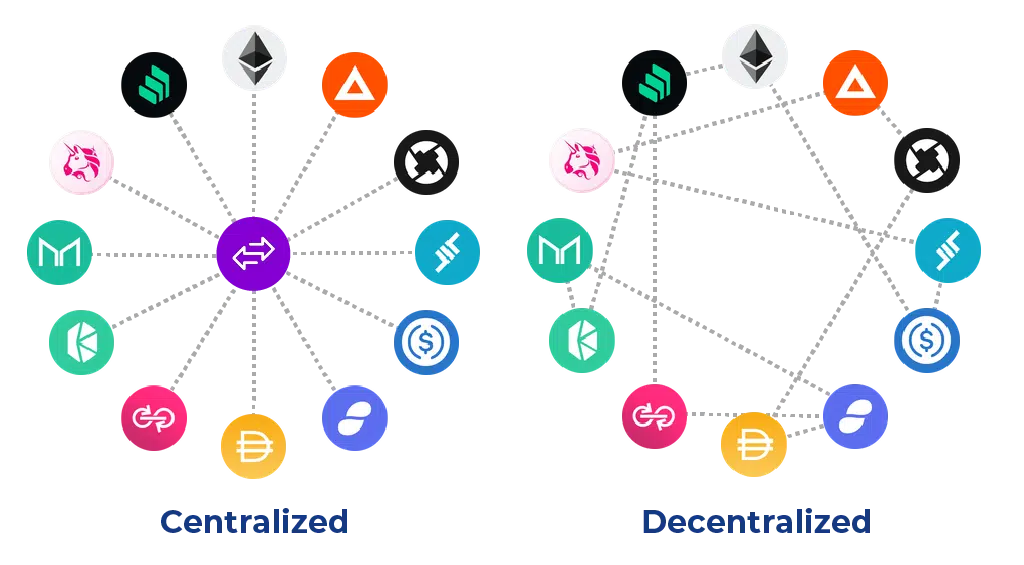
The real breakthrough lies in automated market makers (AMMs). Instead of matching trades peer-to-peer, you interact with liquidity pools funded by other users.
Liquidity providers earn fees, and you get 24/7 trading without needing a counterparty.
DEXs embody crypto’s core principles: user sovereignty, transparency, and censorship resistance. Every transaction is on-chain, verifiable, and permanent. With global accessibility and no KYC barriers, anyone can list tokens or trade instantly, fueling early access to projects often unavailable on centralized exchanges.
By 2025, DEX adoption exploded, with daily volumes crossing $12.3 billion – up from just 2% of total crypto activity in 2020.
How Do Decentralized Cryptocurrency Exchanges Work?
DEXs operate through two primary mechanisms: Automated Market Makers (AMMs) and order book systems, with AMMs dominating due to their ability to provide instant liquidity without requiring counterparties.
The revolutionary AMM model replaces traditional bid-ask matching with mathematical formulas that automatically price assets based on supply and demand within liquidity pools.
The most common AMM implementation uses the constant product formula (x × y = k), where x and y represent quantities of two tokens in a pool, and k remains constant.
When you buy ETH with USDC, you add USDC to the pool and remove ETH, causing ETH’s price to increase and USDC’s price to decrease based on the new ratio.
Users trade directly from their crypto wallets, maintaining full control over their private keys and assets throughout the process. After connecting, you select your desired trading pairs, specify the amount, and confirm the transaction. The entire trading process is managed by smart contracts, ensuring automation and security. A stable internet connection is essential for seamless access and fast execution of trades on decentralized exchanges.
Smart contracts govern every aspect of DEX operations, executing trades automatically when predetermined conditions are met without possibility of human interference or manipulation. These contracts are typically immutable and publicly auditable, meaning their code can be inspected by anyone and cannot be changed without proper governance procedures. This creates strong execution guarantees and eliminates counterparty risk inherent in trusting centralized operators.
DEX vs CEX: Are The Best Decentralized Exchanges Superior?
The DEX versus CEX debate centers on fundamental trade-offs between control and convenience, with each approach serving different user needs and risk tolerances.
Let’s see the main differences between the two types of crypto exchanges.
| Factor | Centralized Exchange (CEX) | Decentralized Exchange (DEX) |
|---|---|---|
| Custody | Exchange holds your funds | You hold your funds |
| Account Setup | KYC & registration required | Wallet connection only |
| Geographic Limits | Often restricted | Global, permissionless |
| Trading Fees | 0.1%–0.5% + withdrawal | 0.25% + gas fees |
| Assets Available | Curated list | Any token listed |
| Liquidity | Institutional depth and high liquidity | Lower liquidity |
| Customer Support | 24/7 teams | Forums, community channels |
| Privacy | Full KYC disclosure | Pseudonymous trading |
| Regulation | Heavily regulated | Light oversight |
With the gap shrinking between CEXs and DEXs, the future is here – the best DEX exchanges will continue their market share increase in 2026 and beyond.
By how much? No one can tell.
Expert Tips for Trading on Decentralized Crypto Exchanges
For those new to decentralized exchanges, or even experienced traders looking to optimize their strategies, a few expert tips can make a big difference. Start by making small trades to familiarize yourself with the platform’s interface and trading process.
Always keep an eye on network fees and transaction costs, as these can fluctuate based on blockchain congestion and trading activity.
Research the available trading pairs and liquidity pools on your chosen decentralized exchange to ensure you’re getting the best rates and sufficient liquidity for your trades. Many decentralized exchanges also offer yield farming and liquidity provision opportunities, which can be a valuable way to earn additional income from your digital assets.
However, be mindful of regulatory restrictions and tax implications, as trading on decentralized exchanges may be considered taxable events in your jurisdiction. By staying informed, managing your risks, and taking advantage of the unique features offered by many decentralized exchanges, you can confidently deal with decentralized crypto trading.
How to Use a Cryptocurrency DEX: Step-by-Step Guide
Decentralized exchanges (DEXs) might look complicated at first, but once you understand the basics, trading is quick and straightforward. In most cases, a swap takes less than two minutes.
For this walkthrough, I’ll use Best Wallet’s built-in DEX as the example. The same steps apply to most other leading DEX platforms.
Step 1: Download Best Wallet
Get the Best Wallet app from the App Store or Google Play. Open it and tap “Get Started” to begin setting up your account.
Step 2: Back Up Your Wallet
This is essential. Write down your recovery phrase and store it somewhere safe. You can also back it up to iCloud or Google Drive for extra peace of mind. Without this phrase, you won’t be able to recover your funds if you lose your device.
Step 3: Fund Your Wallet
Before you can start trading, you need to add crypto:
- On-chain transfer: send crypto from another wallet or exchange to your Best Wallet address.
- Buy with card: purchase directly inside Best Wallet using a credit or debit card.
Always double-check you’re sending to the correct blockchain network to avoid mistakes.
Step 4: Tap “Trade”
From the home screen, tap Trade, then select Swap. This opens the DEX interface.
Step 5: Choose the Token You Want to Buy
Scroll through the token list and pick the cryptocurrency you’d like to purchase. Best Wallet supports dozens of blockchains, giving you plenty of options.
Step 6: Select the Token You Want to Sell
Choose the crypto you’d like to swap from. Best Wallet automatically shows you the exchange rate and network fees so you know the cost of the trade before confirming.
Step 7: Confirm the Swap
Review all the details carefully. Once everything looks good, tap Swap. Within a short time, your new tokens will appear in your wallet.
Final Words
The DEX revolution has matured from experimental DeFi protocols into sophisticated financial infrastructure capable of handling institutional-scale trading volumes while preserving the decentralized principles that started this movement.
Yes, there are still risks and the regulatory restrictions depend on your country, but if you want to avoid centralized control, you can pick a secure platform from our top list.
FAQs
How do DEX fees compare to centralized exchanges?
Can I trade any cryptocurrency on DEXs?
What several advantages do DEXs offer over centralized exchanges?
Do DEXs have a central point of failure?
What are the main risks of using decentralized exchanges?
What happens if a DEX gets “hacked” or shuts down?
Sources:
