


Here’s How Bitcoin Reacted to the Weak U.S. August Jobs Report
We may earn commissions from affiliate links or include sponsored content, clearly labeled as such. These partnerships do not influence our editorial independence or the accuracy of our reporting. By continuing to use the site you agree to our terms and conditions and privacy policy.

The August U.S. non-farm payrolls report came in far weaker than expected, showing 22,000 jobs added versus forecasts of 75,000.
The unemployment rate rose slightly to 4.3%, in line with projections, but the details painted a soft picture of the labor market.
Manufacturing payrolls fell by 12,000, private payrolls rose by only 38,000 (well below the +75,000 estimate), and the average workweek ticked down to 34.2 hours. The participation rate edged higher at 62.3%, but underemployment climbed to 8.1%, underscoring growing slack in the job market.
The disappointing figures follow a string of weak indicators, including downward revisions to previous months that erased more than 250,000 jobs, sluggish ADP payroll numbers, and cooling wage growth. With inflation no longer the sole concern, the Federal Reserve now faces mounting pressure to prioritize employment in its policy decisions. Markets had already priced in a September rate cut, but today’s report strengthens the case for a deeper and potentially faster easing cycle.
Read More:
Bitcoin’s immediate reaction
The jobs data dropped at 12:30 UTC, sparking a sharp move in Bitcoin. Prices jumped quickly from around $112,500 to around $113,400 within minutes, reflecting bullish liquidity expectations tied to rate cuts. However, the rally was short-lived as volatility spiked. Bitcoin retraced back to the $112,700 level within less than half an hour, suggesting traders remain cautious despite the favorable macro backdrop.
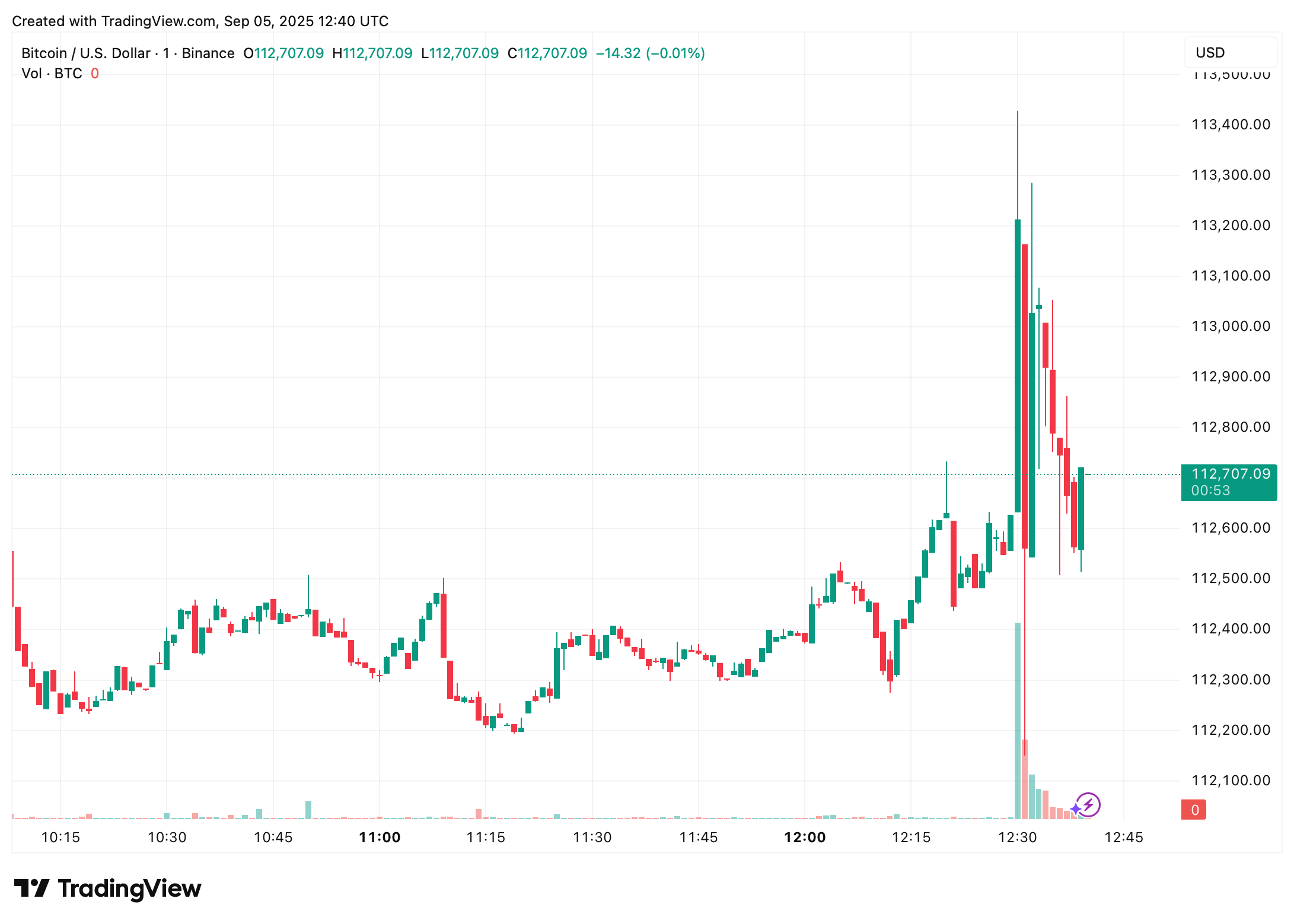
For Bitcoin, the narrative remains clear: weaker labor data increases the likelihood of Fed easing, which historically boosts risk assets. If liquidity flows accelerate in the coming months, Bitcoin could be among the primary beneficiaries – though near-term volatility is likely to persist.


 Commentaries










Fill in necessary fields and publish