




Best Crypto Options Trading Platforms in 2026
We may earn commissions from affiliate links or include sponsored content, clearly labeled as such. These partnerships do not influence our editorial independence or the accuracy of our reporting. By continuing to use the site you agree to our terms and conditions and privacy policy.



Crypto options provide traders with the right, but not the obligation, to buy or sell digital assets at an agreed price. Traders purchase call or put options depending on their predicted market direction, paying only a small premium to enter the trade.
As a low-risk, high-reward instrument, options traders target significant returns without having to deposit large sums.
Read on to learn how crypto options work in more detail, including proven trading strategies and risk management tactics. We also review the best crypto options trading platforms and rank the top providers by supported markets, fees, leverage, and more.
Best Crypto Options Trading Platforms: Ranking & Reviews (August 2026)
Here are the best crypto options trading platforms to consider in 2026:
- CoinFutures – Trade Popular Cryptocurrencies Long and Short With 1000x Leverage
- Binance – Deep Options Chains With Short and Long-Term Durations on Five Crypto Markets
- Bybit – Unified Trading Accounts for Crypto Options, Futures, and Spot Trading
- OKX – Trade Liquid Options Markets on Proprietary Desktop or Mobile Software
- Deribit – Inverse Options Contracts for Bitcoin and Ethereum With Comprehensive Chains
- Delta Exchange – Global Exchange With European-Style Options and USDT-Settled Contracts
- KuCoin – Simplified Options Trading for Beginners With Step-by-Step Guidance
The research team tested each options trading site to assess usability, charting tools, options chain depth, trading commissions, and other core factors. Read on to decide where to trade crypto options.
1. CoinFutures – Enter Long and Short Crypto Trades With a 0.1% Margin Requirement
While CoinFutures does not offer options contracts specifically, its simulated futures provide traders with similar characteristics. Traders go long or short on popular digital asset markets, which ensures profit potential in all trading climates.
Similar to options, platform users control substantial market exposure with a small initial outlay. On CoinFutures, margin requirements begin at 0.1% of the total position size. Converting to 1000x leverage, traders risk just $10 to access $10,000 in trading capital.
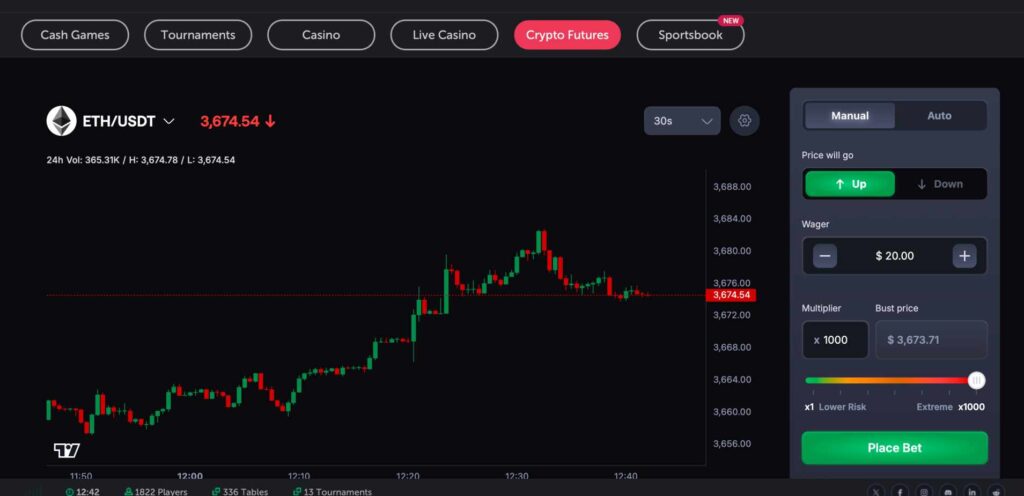
CoinFutures caps the maximum loss potential to the original wager. This creates predictable losses and an overall risk-averse experience. Most CoinFutures users set stop-losses and take-profits, too. These tools promote sensible trading, as the platform closes positions automatically if either price target triggers.
In terms of markets, CoinFutures supports Bitcoin and a wide range of top altcoins like Ethereum, BNB, Chainlink, and Dogecoin. It offers flexible deposit options – users can fund accounts instantly in these cryptocurrencies or via credit cards and digital wallets (Apple/Google Pay)
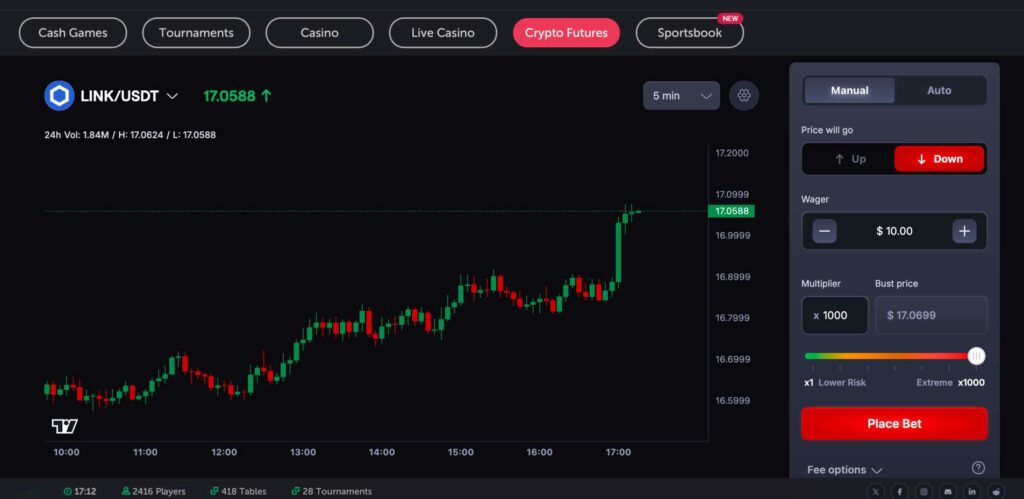
The dashboard makes leveraged trading seamless, as users enter a wager and multiple, and choose between “Up” or “Down” for the market direction. The minimum wager requirement is an affordable $1.
Although CoinFutures offers trading accounts without KYC demands, it implements industry-leading security to keep user balances safe. Fireblocks, the regulated custodian for financial institutions, stores client-owned cryptocurrencies in audited vaults that use MPC technology. As one of the best crypto futures trading platforms, CoinFutures also publishes proof of reserves.
- One of the best 1000x leverage crypto trading platforms
- Enter large futures trading positions with a margin requirement of just 0.1%
- Trade long and short on top altcoins like XRP and Litecoin
- Deposit any amount and trade from just $1
- Privacy-focused accounts without cumbersome KYC verification
- Fireblocks vaults secure client-owned cryptocurrencies
- Maximum trade size of $1,000 may not suit crypto whales
- Does not offer passive investing tools like copy trading or bots
2. Binance – Trade Five Crypto Options Markets at Low Commissions of 0.03%
Binance offers crypto options on five cryptocurrencies: Bitcoin, Ethereum, XRP, Dogecoin, and Solana. Traders pay just 0.03% to enter and exit positions, although, unlike its spot and futures markets. Starting from August 2025 the platform offers discounts for newly listed options.
Options chains vary in extensiveness, and Bitcoin and Ethereum provide the widest trading parameters. The longest contract durations are approximately 12 months, and BTC/USDT strike prices range from $60,000 to $170,000. When trading ETH/USDT, strike prices run from $1,000 to $8,000. Other supported altcoins have shorter-term contract durations and weaker liquidity.
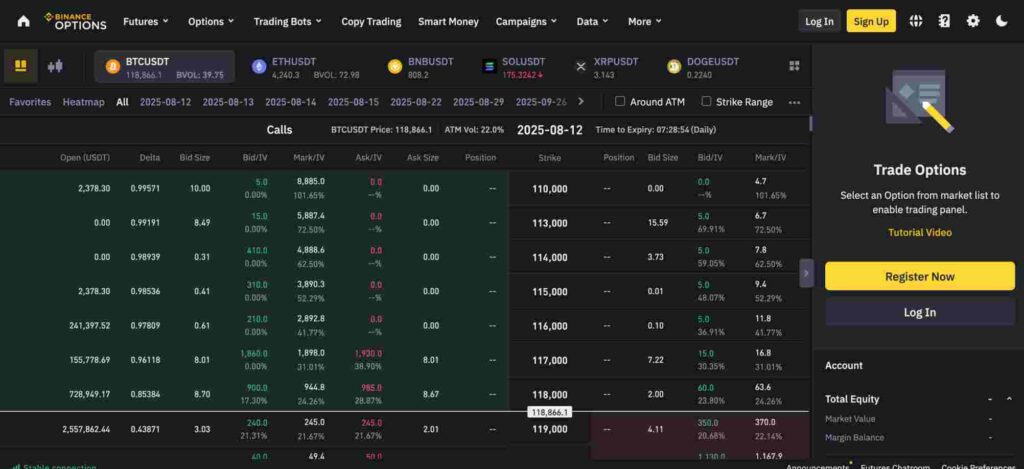
Binance’s feature-rich dashboard provides options traders with advanced research tools. Traders explore suitable contract terms based on gamma, vega, theta, open interest, and other core metrics. Another top feature is the exchange’s heat map, which helps users discover key options trading trends.
Binance’s options platform includes both USDT- and USDC-settled contracts – in practice covering about six pairs (e.g. BTC, ETH, DOGE, XRP, SOL). Note that its derivative products are restricted in some nations, including the UK and the U.S. All platform users must complete KYC, even when they deposit and withdraw crypto.
For a more comprehensive analysis of the platform, take a look at our experts’ complete Binance review.
- Competitive options commissions of 0.03%
- The platform frequently offers reduced promotional rates
- Tier-one options chains for BTC/USDT and ETH/USDT
- Wide selection of strike prices and contract durations
- Very deep liquidity in its crypto options markets, thanks to Binance’s huge user base
- Binance bans options trading in multiple regions
- ID verification is mandatory for all accounts
- Some analysis tools are suitable for experienced options traders only
3. Bybit – Access Multiple Crypto Derivative Products Within the Same Trading Account
Bybit is the world’s second-largest crypto exchange by volume after Binance. It allows users to access thousands of crypto markets in one safe place.
The exchange’s Unified Trading Account (UTA) provides access to options, perpetual futures trading, delivery futures, and traditional margin trading. Unlike many exchanges, this lets users trade different derivative products without needing to transfer funds between sub-accounts.
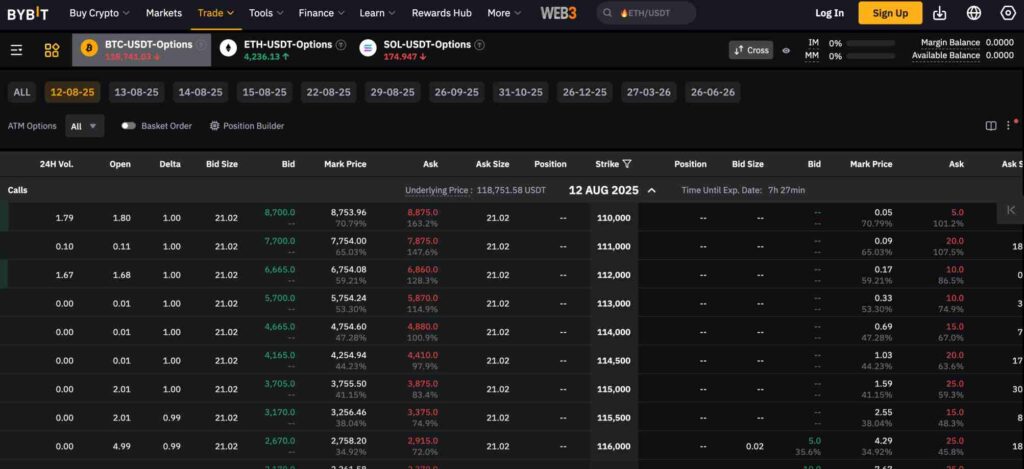
Regarding its options trading crypto service, Bybit supports Bitcoin, Ethereum, and Solana, and contracts settle in USDT. It also offers USDC-settled markets for the two market leaders. Short, medium, and long-term options contracts are available with diverse strike prices and premium ratios.
To streamline the contract selection process, Bybit offers a free position builder tool. Traders enter their options parameters step-by-step, including strategies, market direction, and projected price action. In October 2025, Bybit expanded its derivatives lineup by adding new options for high-demand tokens like XRP, Mantle (MNT), and Dogecoin.
Research shows that Bybit charges highly competitive fees, as entry-level options traders pay just 0.018% on market orders. Limit orders, as well as higher trading volumes, trigger commission discounts.
- Access multiple derivative instruments from the same trading account
- Use the position builder tool to enter bespoke options strategies
- Provides tier-one trading volume and liquidity around the clock
- Expanded options on popular altcoins (XRP, MNT, DOGE)
- USDC-settled contracts are not available for Solana
- IP address geo-restrictions in some jurisdictions
- Most trading products are aimed at experienced traders
4. OKX – Native Desktop Software and Mobile Applications for BTC and ETH Options Trading
OKX offers a first-class options trading experience via proprietary desktop software for Windows and Mac. The software connects a crypto options trading app, ensuring traders have direct market access no matter where they’re located.
Experienced traders rate OKX for its premium trading tools, fast execution speeds, and simulated options dashboard. Traders enter various parameters and strategies to evaluate potential profits and adjust those systems until they achieve the desired win rate.
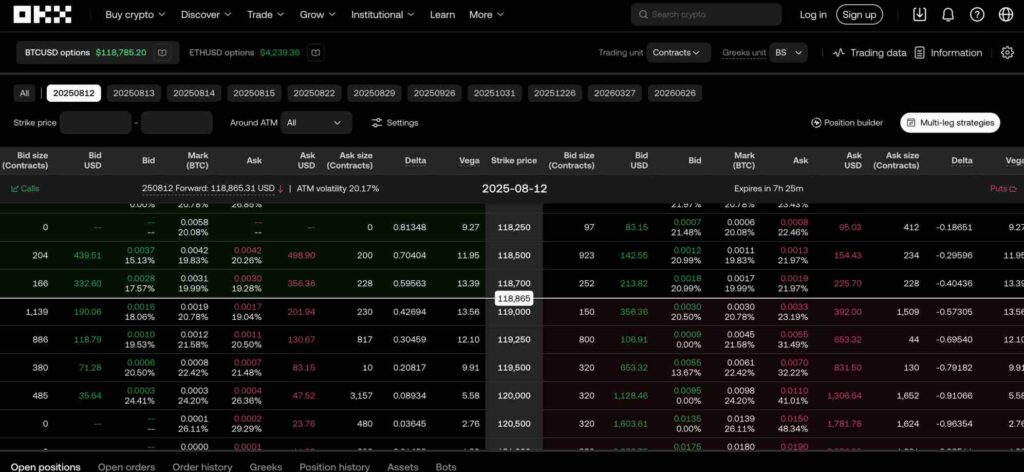
Although crypto options markets are limited to Bitcoin and Ethereum, they’re priced in USD and support short and longer-term durations. Notably, OKX now provides options with a wide range of expiries. These include daily, weekly, monthly and quarterly contracts. Liquidity and trading volumes are substantial, too, so traders buy calls and puts without facing unfavorable spreads.
Research confirms that OKX options chains have diverse strike price ranges. The 12-month contract on BTC/USD, for instance, ranges from $50,000 to $280,000.
Users pay variable trading fees depending on account volume and order type. The maximum commission for regular users placing market orders is 0.03%.
- Deep liquidity for BTC/USD and ETH/USD options
- Users have significant strike price choices when selecting contracts
- Entry-level traders get a fair market taker rate of 0.03%
- Wide range of expiration cycles for BTC/ETH options
- Users cannot trade until they complete KYC procedures
- Not suitable for serious crypto options traders
- Has banned U.S. traders since early 2025
5. Deribit – Top-Rated Options Trading Platform With Short and Long-Term Expiration
Deribit is one of the largest crypto derivative platforms globally. In addition to perpetual and delivery futures, it supports extensive options chains for Bitcoin and Ethereum. Contract expiration dates range from one day to 12 months, and dozens of quoted strike prices ensure market flexibility. Bitcoin and Ethereum options are inverse contracts, increasing the trader’s exposure.
A more risk-averse option is linear options. These are margined and settled in USDC, and supported markets are Solana and XRP. This allows traders to use USD-margin for these altcoin options.
All Deribit markets support advanced charting tools and customizable timeframes. Users access indicators, order books, and bespoke order types, such as take limit, trailing stop, and good-til-cancelled.
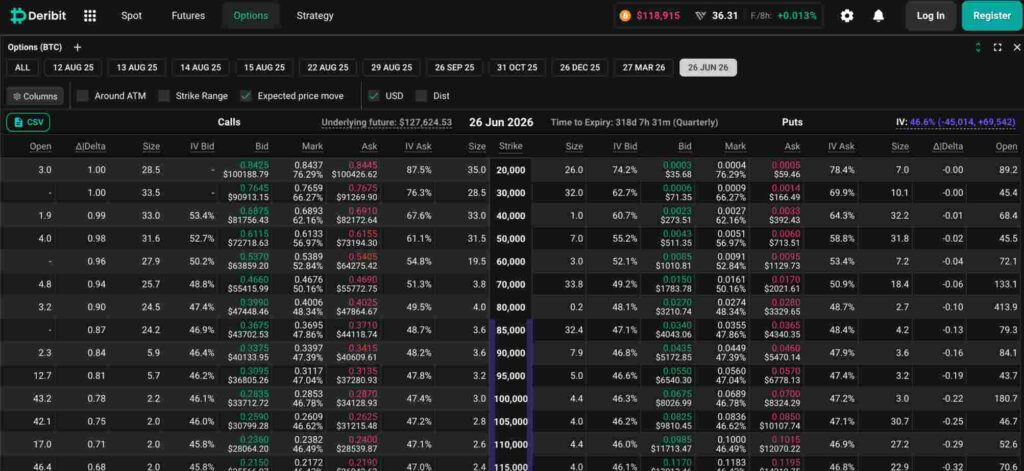
Despite serving seasoned derivative traders, Deribit offers an “Options Wizard” for beginners. Users enter the asset, projected price, and date, and Deribit suggests the best options contracts to buy or sell.
Only verified Deribit users may deposit funds and trade. The process requires KYC documents, including a government-issued ID. The platform accepts payment in three cryptocurrencies only: Bitcoin, Ethereum, and USDC.
- Trade Bitcoin options via inverse contracts
- Linear contracts are available for Solana and XRP
- Massive trading volumes daily
- Available online and a native mobile app
- Account holders cannot deposit fiat money
- Strict KYC procedures for all users
- Complicated fee structure when trading options
6. Delta Exchange – User-Friendly Options Dashboard With a Wide Selection of Charting Tools
While Delta Exchange primarily serves Indian traders, its global platform supports international users from most countries. It offers options chains for Bitcoin and Ethereum, and contract durations include daily and weekly settlement. Delta is fully compliant with Indian regulation and supports INR-margined contracts.
The Delta Exchange chain provides a smooth user experience, and contract specifications appear with strike prices, ask/bid volumes, and required premiums. All options markets are European-style and cash-settled in USDT.
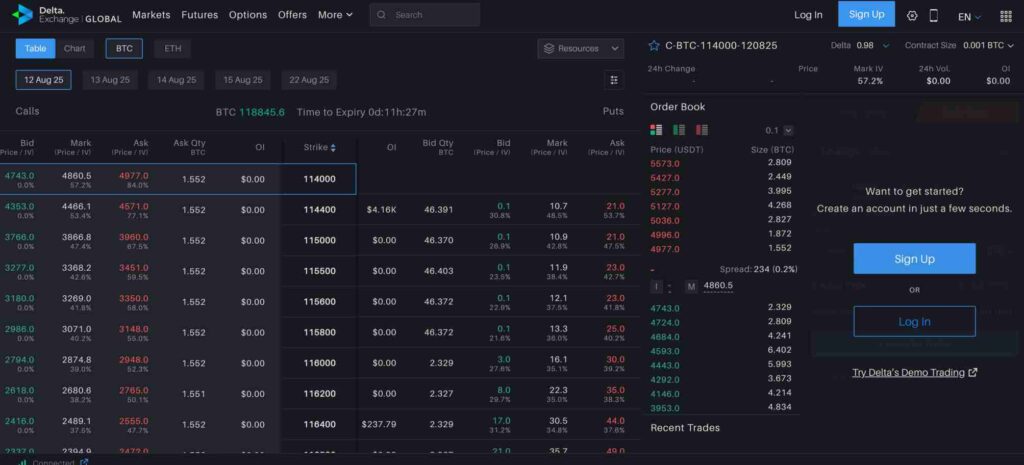
Technical traders like Delta Exchange for its broad analysis tools, which include pattern lines like ABCD, Three Drives, and Cypher. The charting dashboard features a full suite of drawing tools and traditional indicators like Moving Averages and Bollinger Bands.
Trading commissions align with the industry average. Traders pay 0.03% of the contract value to enter the market, and another 0.03% in settlement fees. The exchange supports crypto and fiat payments across deposits and withdrawals.
Other notable features include 24/7 customer service, a free demo account pre-loaded with virtual funds, and built-in staking pools.
- Offers high-level options tools on a user-friendly dashboard
- Large global trading volumes for daily and weekly options
- Account holders get 24/7 live customer support
- Easily deposit and withdraw funds in crypto and fiat
- Options markets are limited to Bitcoin and Ethereum
- Not suitable for options traders seeking longer-term contract durations
- The system may trigger KYC requests at any time
7. KuCoin – One of the Best Crypto Options Trading Platforms for Beginners
KuCoin is an established tier-one exchange with over 40 million platform users. It offers simplified crypto options for inexperienced traders, eliminating complicated chains and call and put contracts.
First, users choose their preferred options markets from Bitcoin, Ethereum, or Solana. After selecting long or short, they enter the stake and predict the closing price, and place the options trade accordingly. The maximum risk is capped at the stake, similar to conventional options premiums.
KuCoin’s options contracts are European-style (exercisable only at expiration) and are cleared in USDT. The platform has a very low minimum contract size (10 USDT), making options trading accessible to beginners.
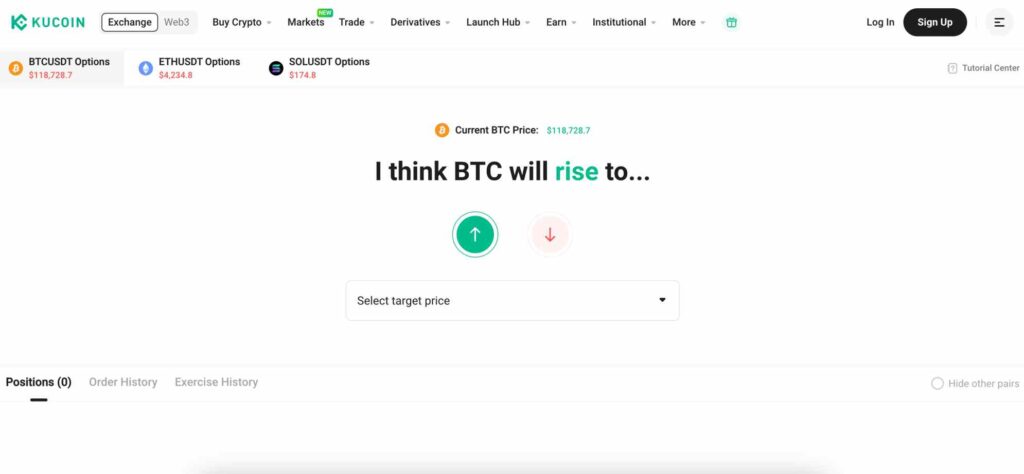
While the seamless trading process is ideal for beginners, KuCoin lacks support for serious options traders.
The exchange has a standard options trading commission of 0.03% and an exercise fee of 0.02%. These fees are based on the total market exposure rather than the original stake.
New KuCoin users must complete ID verification before accessing the options dashboard. Verified accounts deposit funds using crypto or instant payment methods, such as Visa and MasterCard. Peer-to-peer payments in over 30 currencies are supported, too.
- Trade crypto options prices without using traditional chains
- Answer simple questions to find the right options position
- Established exchange with over 40 million clients
- Low minimum trade size for options contracts (10 USDT)
- Users cannot trade until they complete KYC procedures
- Not suitable for serious crypto options traders
- Has banned U.S. traders since early 2025
The table below compares the leading crypto options platforms by key metrics:
| Crypto Options Markets | U.S. Friendly? | KYC? | Options Trading Fees | |
| CoinFutures | BTC, ETH, DOGE, XRP, and other top altcoins (simulated futures) | Yes | No | Traders choose between a variable fee or a profit commission |
| Binance | BTC, ETH, DOGE, XRP, SOL | Yes, but spot trading only | Yes | 0.03% (discounts for newly listed option contracts |
| Bybit | BTC, ETH, SOL | No | Yes | Maximum fee of 0.018% (discounts for makers and higher volumes) |
| OKX | BTC, ETH | Yes, but spot trading only | Yes | Maximum fee of 0.03% (discounts for makers and higher volumes) |
| Deribit | BTC, ETH, XRP, SOL | No | Yes | 0.03% (capped at 12.5% of the options premium) |
| Delta Exchange | BTC, ETH | No | Yes | 0.03% (entry and settlement) |
| KuCoin | BTC, ETH, SOL | No | Yes | 0.03% (entry) and 0.02% (settlement) |
What Are Crypto Options?
Options are derivative contracts that provide the right but not the obligation to buy or sell cryptocurrencies on or before an expiration date. Traders purchase call or put options, depending on whether they predict higher or lower prices. This mechanism allows crypto investors to trade long or short during all market cycles.
In general, crypto options carry limited risk. Traders pay a premium to purchase contracts, which represent the maximum loss potential. If the options expire worthless, traders lose the premium only.
As the premium reflects a small percentage of the overall trade exposure, options provide high leverage multiples. This makes options popular with budget-conscious traders who want to enter large positions with limited financial exposure.
Options have expiration dates, which, depending on the platform, may range from one day to several weeks or months. Rarely do options contracts exceed one year.
For each crypto market and expiration date, traders choose their preferred strike price. The options must trade above or below that price before settlement to secure a profit.
What is the Difference Between Crypto Options and Futures?
Options and futures are the most common derivative products when trading cryptocurrencies. However, each derivative instrument operates differently.
Options suit traders who seek predictable and finite risk exposure. They purchase calls or puts by paying an upfront premium, and if the options expire worthless, they cannot lose additional funds.
Futures traders pay an upfront margin instead of premiums, which determines the available leverage multiple. Paying a 5% margin, for instance, converts to 20x leverage. Unlike options, traditional futures place an obligation, not the right, to buy or sell the underlying assets at expiration. Traders may exit positions before they expire, although returns depend on the existing price.
Another factor is the strike price framework, as options traders effectively set their market odds. Choosing a less likely strike price reduces the cost relative to the total exposure, and selecting more probable outcomes increases costs. Futures execute at a set price based on market forces, so the leverage multiple has a much bigger impact on risk and reward.
The key difference between crypto options and futures is the liquidation risk. When you purchase an options contract, platforms cannot forcibly close your position because of adverse market prices. Futures traders face liquidation when losses exceed their margin, while options buyers can hold until expiration with no financial risk above the original premium.
How Does Crypto Options Trading Work?
Even the best crypto options trading platforms require a learning curve before placing orders. Traders must understand core factors like calls and puts, contract durations, premiums, and strike prices.
Here’s what you need to know about trading crypto options.
Calls and Puts
Calls and puts are similar to buy and sell orders, respectively. Traders purchase call options to speculate long, and put options if they predict falling prices.
While traders may also sell calls or puts, this strategy increases risk. They become the market maker, so profit is capped at the premium, and losses are potentially unlimited.
Options Contract Duration
Options always have an expiration, and in most cases, traders may offload their contracts before that date or hold until they settle.
Choosing the right contract terms depends on the strategy. Swing traders may purchase daily or weekly contracts, while long-term speculators prefer longer timeframes.
Strike Prices
To profit from crypto options, the underlying coins or tokens must settle higher or lower than the strike price, depending on the market direction. Most platforms offer a wide range of options strike prices to suit various risk-reward profiles.
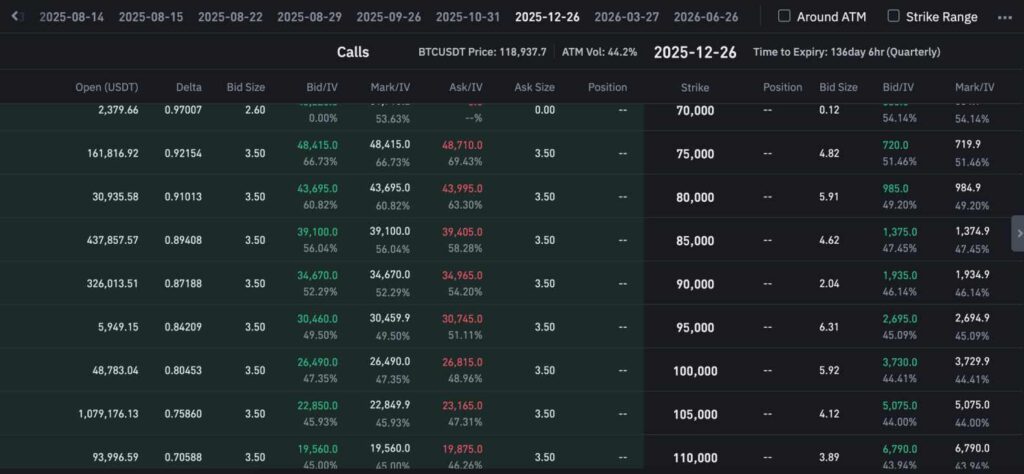
For example, BTC/USDT may trade at $115,000 today, and monthly options contracts offer strike prices from $70,000 to $170,000. You select the strike price that aligns with your market prediction, which invariably influences the premium.
Options Premium
When you purchase calls or puts, the maximum risk is the initial options premium. It’s often a small percentage of the total trade exposure, but it varies widely depending on the existing and strike prices.
The premium increases as the probability of the strike price being triggered grows. As the probability decreases, the cheaper premium provides traders with higher leverage multiples, as it lets them control larger positions with less money.
Crypto Options Trading Example
- A trader is bearish on Ethereum at $4,000, so they explore ETH/USDT put options with a three-month expiration.
- They predict ETH/USDT will drop below $3,000 on the contract settlement date. The trader pays a $400 premium per contract, and each contract is worth 1 ETH. They purchase three contracts in total, taking the total outlay to $1,200.
- The ETH/USDT price is $2,200 when the contracts expire in three months. The gross profit is $800 per contract ($3,000 strike price less $2,200).
- The net profit is $400 per contract after subtracting the $400 premium. The trader held three contracts at expiration, so the total net return is $1,200.
If the ETH/USDT were higher than the $3,000 strike price on expiration, they would have lost the initial premium.
Step-by-Step Guide on How to Trade Crypto Options
This section explains how to trade leveraged cryptocurrencies on the CoinFutures platform.
Although CoinFutures offers simulated futures rather than traditional options, these derivative products provide the same benefits. This includes leverage of up to 1000x and long and short trading. CoinFutures traders cap their risk to the initial wager, too, similar to the options premium.
Read on to get started with CoinFutures in under five minutes.
Register on CoinFutures
Open an account on the CoinFutures website by clicking “Register” and entering an email address, nickname, and password. CoinFutures does not have KYC verification steps, so you won’t need to provide personal information or ID documents.
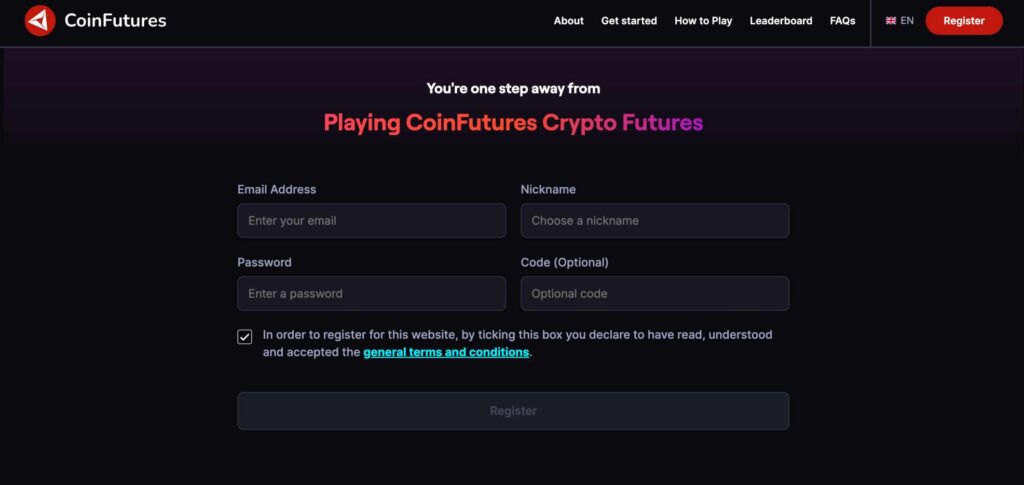
The crypto futures provider operates on the CoinPoker software, as CoinPoker is the parent company. Download the CoinPoker interface via the Android app or Windows/Mac desktop software.
Open the interface and sign in with your CoinFutures login details.
Deposit Crypto or Fiat
The next step is to deposit some funds into the CoinFutures account. On the CoinPoker software, tap the “Wallet” icon and choose a digital asset to deposit.
The platform accepts the best cryptocurrencies to buy, including Bitcoin, USDT, USDC, and Ethereum. Ensure you select the correct network, and copy the wallet address to your clipboard. Alternatively, scan the QR code from a mobile wallet to auto-load the address. Then complete the wallet-to-wallet payment.
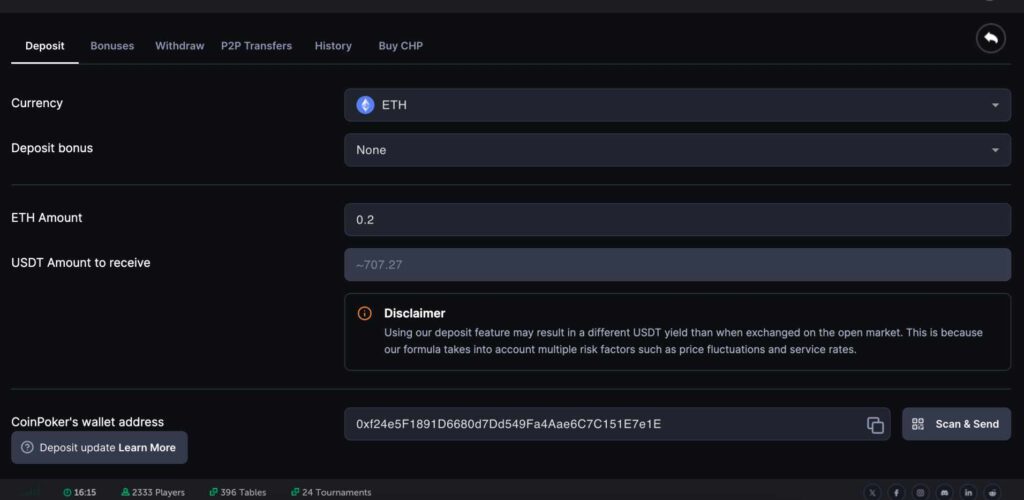
Fiat payment methods, including Visa, MasterCard, Apple/Google Pay, and PIX, are also supported. These deposit types process instantly but may incur additional fees, depending on the currency.
Choose a Leveraged Crypto Market
CoinFutures supports a wide range of digital assets. Click the “Crypto Futures” button to choose a trading market.
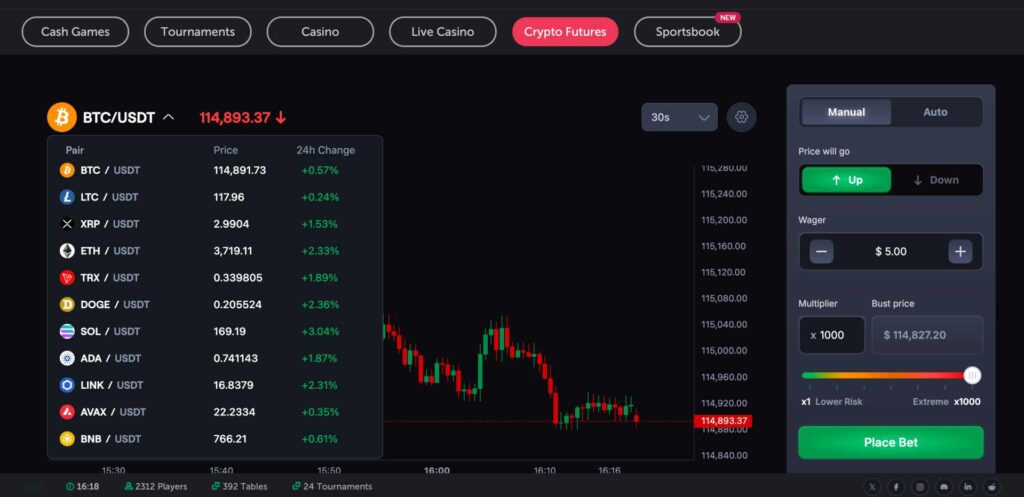
Options include BTC/USDT, DOGE/USDT, ETH/USDT, and XRP/USDT.
Enter Direction, Wager, and Leverage Multiple
The trading dashboard is situated next to the pricing chart. CoinFutures does not have complicated order types or chains, as the dashboard is aimed at crypto beginners.
First, traders must select between a long or short position by selecting “Up” or “Down”. This determines whether you’re bullish or bearish on the selected trading pair.
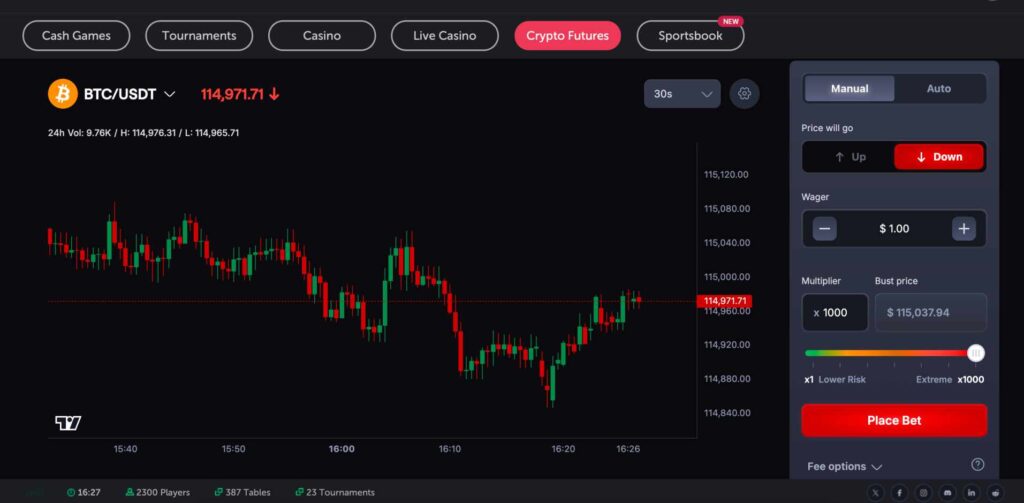
Enter the total trade size via the “Wager” box. The minimum requirement is $1, and just like options premiums, you cannot lose more than the wager amount.
State the required multiple from 1x to 1000x, and ensure you understand the risks of trading with high leverage. Evaluate the liquidation price (“Bust Price”) and consider setting a stop-loss and take-profit (via the “Auto” tab).
Tap the “Place Bet” button to execute the futures position.
Overall, crypto options remain a popular choice to speculate on digital assets with high leverage and limited risk in both market directions. However, beginners may find options chains and contract terms complex, which may lead to costly mistakes.
So our more user-friendly recommendation is to trade simulated futures at CoinFutures. These instruments require a minimum margin requirement of just 0.1%, and the upfront wager reflects the maximum risk (like options premiums). Platform users trade long and short on top cryptocurrencies without completing KYC.
Crypto Options: Pros and Cons
Consider these pros and cons before trading crypto options in 2026:
- The total risk is capped at the premium when buying options contracts
- Options traders get high leverage limits
- Calls and puts support long and short trading
- Some platforms offer options contracts from one day to 12 months
- Various strike prices allow traders to set their risk-reward parameters
- Most options contracts can be cashed out before the expiration date
- Crypto options brokers support a small range of altcoins
- Liquidity is much lower compared to futures markets
- Options chains are highly complex
- A steep learning curve is needed to trade options effectively
- Short-selling options premiums carries unlimited risk
Main Advantages of Crypto Trading Options
Despite their complex nature, options provide several benefits to crypto traders:
- Finite risk: Buying (but not selling) call or put options ensures limited market exposure. If you purchase options premiums for $100 and the contracts expire worthless, you lose $100 only.
- High leverage: Options contracts provide high leverage levels, although specific multiples depend on the premium, market exposure, and expiration. Leverage increases as the trade probability declines, and vice versa.
- Opportunity to trace during any market cycle: Crypto options are suitable for any market conditions. Traders purchase call options during bullish cycles and put options when markets turn bearish.
- Ideal hedging tool: You can use crypto options to mitigate financial risks, particularly during uncertain economic periods or increased market volatility.
Key Considerations of Crypto Options
Here are some important takeaways to grasp before trading crypto options:
- Limited crypto markets: Crypto options markets are far less liquid and limited to major assets like Bitcoin and Ethereum due to fragmented liquidity across multiple strike prices, while platforms like CoinFutures provide broader flexibility through simulated futures covering a wider range of cryptocurrencies.
- Complexity of options chains: Options trading is far more complex than futures, requiring analysis of extensive market data—including implied volatility and the “Greeks”—to price contracts accurately and avoid costly mistakes.
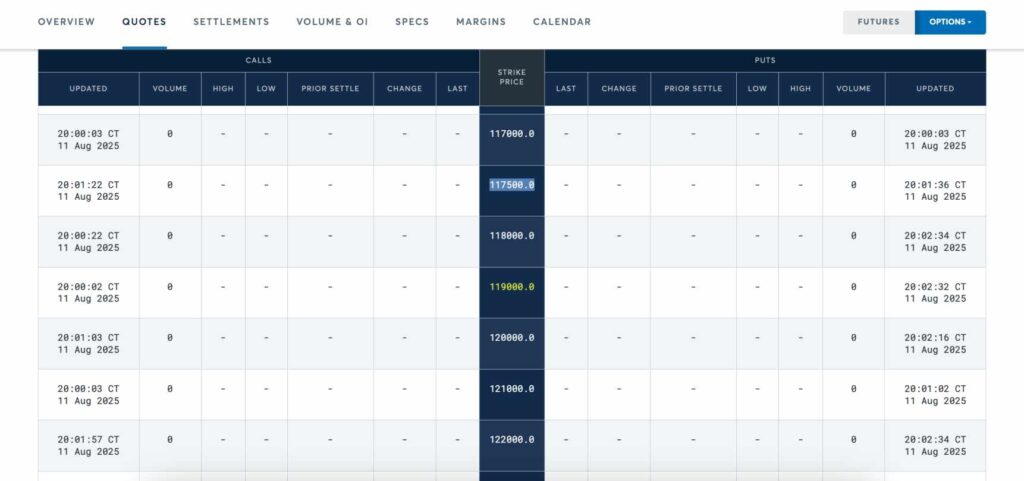
- Need to factor in the premium: Beginners often forget to factor the premium into their options trading calculations. To make a net return, the price must surpass the strike and premium prices.
5 Tips for Beginner Cryptocurrency Option Traders
Starting with cryptocurrency options? Here are key tips for beginners.
1. Understand the Difference Between Call and Put Options
A call option lets you buy a cryptocurrency at a set price if you expect its value to rise. A put option lets you sell at a specific price if you expect the price to decline. Use options to respond to price changes, manage losses, or profit from increases. Remember: calls bet on price rises, puts bet on price falls.
2. Choose a Beginner-friendly Platform
Pick a platform with an intuitive interface and clear instructions. Use exchanges or brokers offering guides and support for beginners. Review trader feedback and educational tools to understand the market and limit your risk early on.
3. Check the Cost of the Option and the Maximum Risk
Check the option’s cost (premium) and maximum loss before buying. Knowing these figures helps you decide if the investment is worth the risk and avoids surprises. Plan trades with these values in mind.
4. Avoid Very Short Expiration Dates
Short expiry dates are tempting but risky, requiring rapid market moves and often resulting in loss. Select longer expiries to give your plan more time. Patience boosts your chances and lowers trading stress.
5. Use a Demo Account or Low Stakes
Start with a demo account or small amounts. If you make mistakes, your losses are low, but you still gain experience. Practice strategies risk-free, then raise stakes as your confidence grows.
Trends and Prospects for Cryptocurrency Options Technology
The cryptocurrency derivatives market is undergoing rapid, tangible growth. In 2025, monthly trading volume reached $8.94 trillion, representing 76% of total crypto market turnover. Building on this momentum, market composition and activity reveal notable patterns.
Bitcoin and Ethereum are the clear market leaders, driving 68% of trading volume. The total crypto market capitalization hit a record $4.0 trillion in Q3 2025, with restored liquidity and daily volume at $155 billion. Against this backdrop of robust market health, advanced financial products are gaining traction.
This surge fuels demand for sophisticated financial instruments. Options contracts deliver high leverage with controlled risk. The popularity of these instruments actively fuels speculation and hedging. This growing appetite for options is evident in real-world applications.
In practice, cryptocurrency options empower investors. Hedge funds deploy Bitcoin options to protect portfolios from drawdowns. DeFi protocols like Ribbon Finance structure yield products using options. Notably, 55% of institutional investors use crypto options strategies. The influence of growing market infrastructure is also apparent in key trading platforms.
Growing liquidity and enhanced data analysis contribute positively to market development. The major platform Deribit, for example, accounts for about 85% of open interest (OI) in BTC/ETH options. At the same time, new exchanges and protocols now deliver options for additional assets, such as ADA and SOL. This diversification supports further expansion of the segment.
In 2025, ETH options average daily volume jumped 65% year over year, underscoring this segment’s expansion. The data is clear: options technology in crypto is now a critical factor for both advanced hedging and speculation, unlocking new market opportunities.
FAQs: Crypto Options Trading Platforms
What are options in crypto?
Why do people trade crypto options?
Are crypto options more risky?
What’s the minimum amount you need to trade crypto options?
What is the best crypto options trading platform?
References
- Why Direct Custody is the Future for Financial Institutions (Fireblocks)
- Hedging Strategies Using Futures and Options (Montana State University)
- What is Exercise Price (Strike)? (CME Group)
- Options on Bitcoin Futures – Quotes (CME Group)