


Bitcoin Long-Term Holders Still Control 53% of Supply—But Warning Signs Emerge
We may earn commissions from affiliate links or include sponsored content, clearly labeled as such. These partnerships do not influence our editorial independence or the accuracy of our reporting. By continuing to use the site you agree to our terms and conditions and privacy policy.


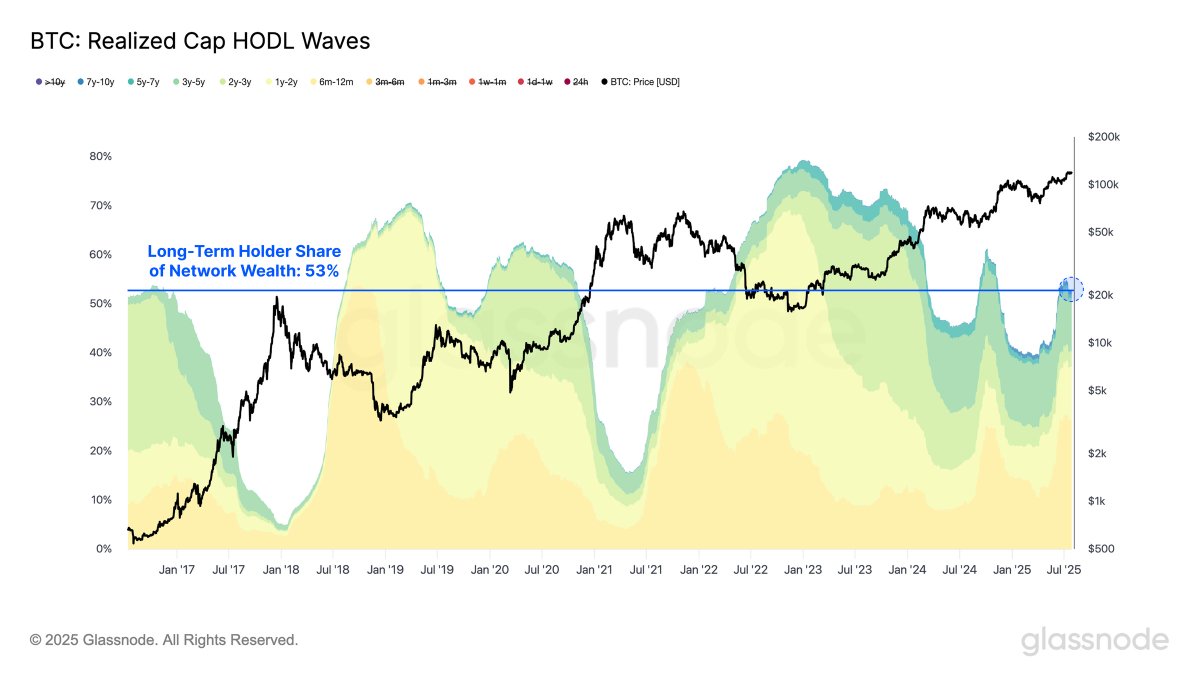
Despite a multi-month rally, long-term holders (LTHs)—those who’ve held Bitcoin for 155 days or more—still command 53% of the total supply, a figure historically associated with strong accumulation phases. However, a simultaneous decline in the LTH/Short-Term Holder (STH) ratio raises red flags about potential near-term market shifts.
The first chart from Glassnode highlights that even with some recent profit-taking, the concentration of BTC among long-term holders remains robust. This group’s control over more than half of the circulating supply suggests a tight grip on sell-side liquidity, which could act as a supply shock catalyst if bullish momentum continues.
However, the second chart paints a more nuanced picture. The LTH/STH Supply Ratio—which tracks how much BTC is held by seasoned investors compared to newer entrants—has dropped 11% in just 30 days.
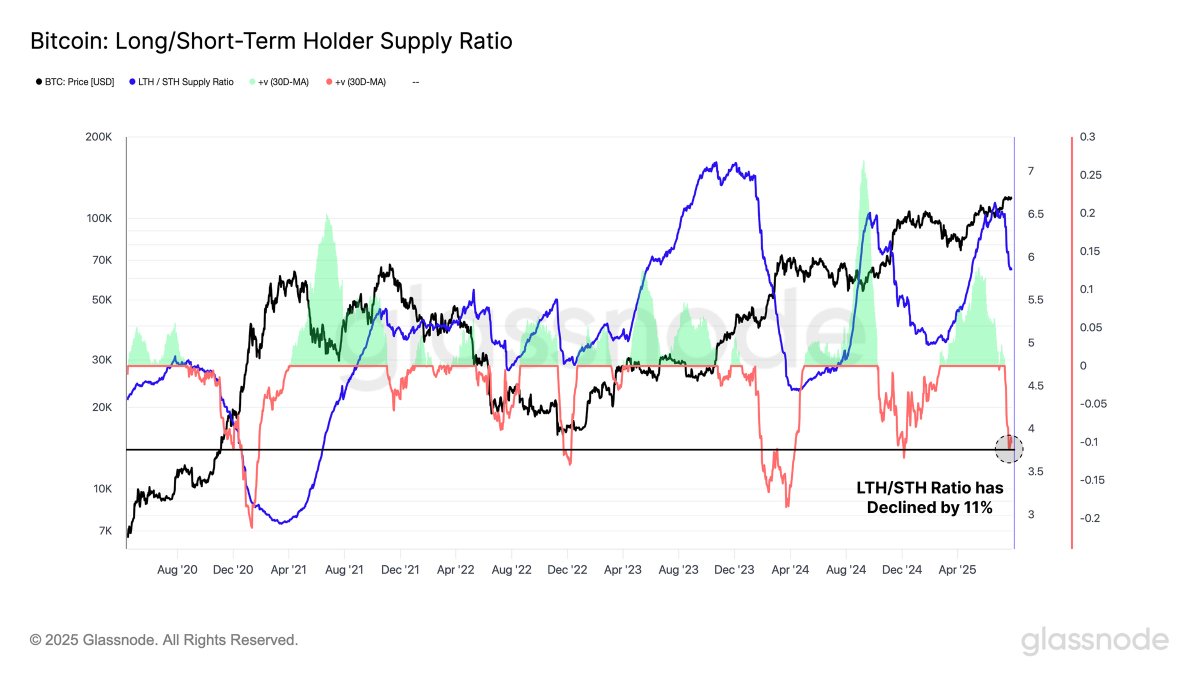 This is a clear sign of increased distribution: long-term holders are slowly releasing coins into the market, likely to capitalize on current price levels. Historically, this shift has preceded both price tops and sharp corrections.
Read More:
What It Means for Bitcoin Investors
This divergence signals a classic tension between conviction and caution. On one hand, the 53% LTH dominance reflects strong holding conviction, limiting available BTC for sale and supporting price stability. On the other, the 11% drop in the LTH/STH ratio implies a subtle rotation of capital—veteran holders are handing over coins to newer, potentially more reactive investors.
For traders, this could indicate a period of increased volatility, where upward moves face more sell pressure unless fresh demand absorbs the new supply. If Bitcoin’s price rises further, more LTHs could be incentivized to distribute, potentially capping near-term upside.
Ultimately, the data shows that while Bitcoin’s long-term fundamentals remain intact, the short-term structure suggests a critical test for market strength. Sustained accumulation and broader participation will be necessary to fuel the next leg up—and avoid a sharp reversal.
 Commentaries
Fill in necessary fields and publish